
Project
Alberto Peña Kay
Protecting the Santurban páramo from mining's damage
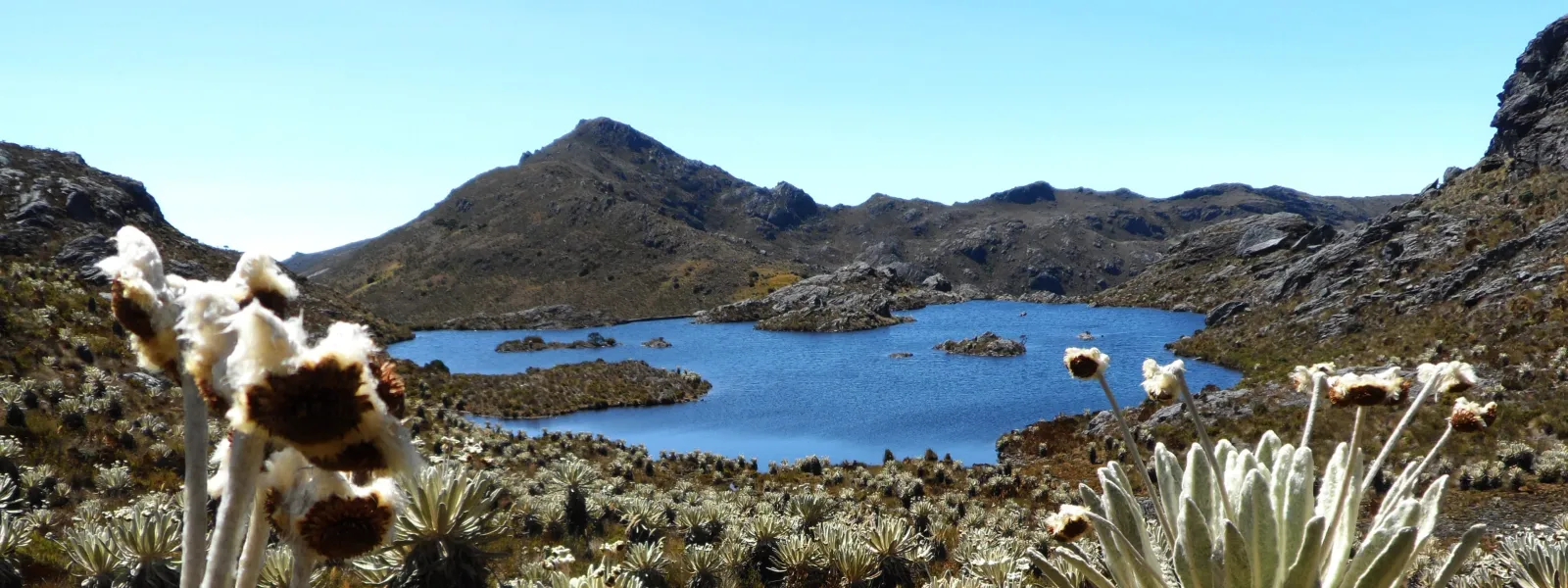
In the Andean region, high-mountain ecosystems known as páramos capture water from the fog and supply it to the lowlands. One such ecosystem is the Santurbán páramo, which provides fresh water to more than two million people in Colombia.
Santurbán, like the other páramos on the continent, also captures large amounts of carbon, making it a key ally in mitigating the climate crisis. It is also a refuge for hundreds of endangered species, including the iconic spectacled bear.
The land in and around the páramo contains gold and other minerals. This has put Santurbán in the spotlight of the multinational mining industry, which for decades has sought to establish large-scale projects in the ecosystem that threaten to degrade it.
The Committee for the Defense of Water and the Santurbán Páramo—a coalition of environmental advocates—has thwarted these ongoing attempts, with support from AIDA and other civil society organizations.
Background
The Santurbán páramo is located in the heart of the Eastern Cordillera of the Colombian Andes, in the departments of Santander and Norte de Santander, at an elevation ranging from 2,200 to 4,290 meters above sea level.
It covers an area of 129,743 hectares and is home to 57 lakes. It serves as a habitat for 457 plant species and 293 species of vertebrate fauna.
There are mineral deposits in Santurbán, primarily gold, but also silver and copper. This explains the region’s mining tradition, particularly in the part of the páramo located in Santander, in the province of Soto Norte. The communities in the area have built their culture and identity around gold mining, which is mainly artisanal and small-scale.
But since the 1990s, the gold deposits in the páramo have also attracted foreign mining conglomerates seeking to develop large-scale projects. This has raised concerns among the population that relies on the Santurbán water sources, who have mobilized in defense of water, their land, and life.
Although national and international regulations prohibit mining in páramos, the Colombian government has granted mining concessions to transnational corporations in Santurbán.
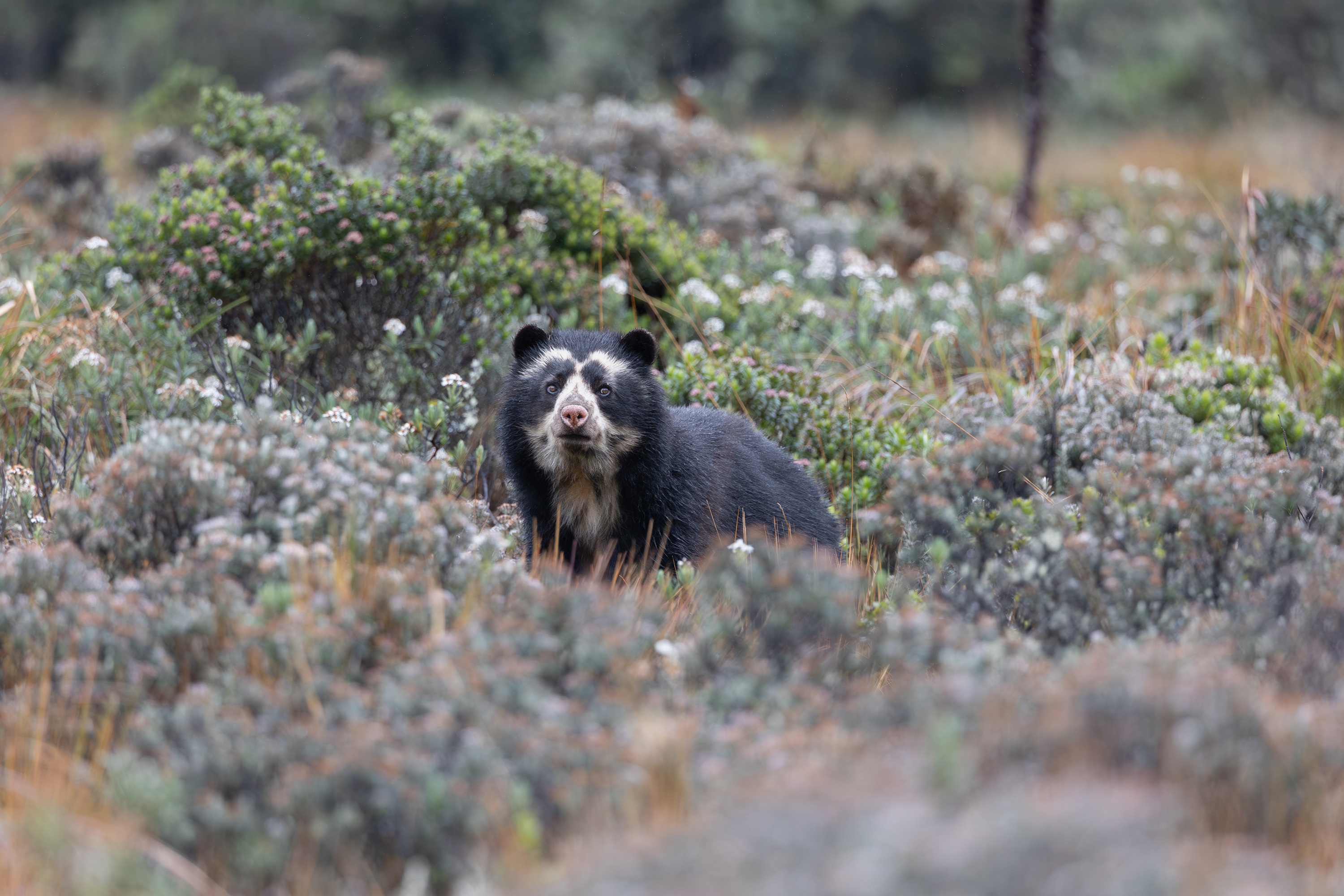
Photo: Keishpixl / Pixabay.
The long struggle to protect the páramo
One of the companies that sought to develop large-scale mining in Santurbán is Eco Oro Minerals Corp.—formerly Greystar Resources—a Canadian company that intended to establish the Angostura open-pit mine there to extract gold and silver. Between 1994 and 1995, the company acquired its mining titles and conducted exploration. And in 2010, it applied for a mining permit.
That was the year AIDA became involved in defending the ecosystem, supporting the Committee for the Defense of Water and the Santurbán Páramo. Our legal work helped convince the Colombian government to deny the mine an environmental permit in May 2011.
In January 2013, the government designated a portion of the páramo (11,700 hectares) as a Regional Natural Park. That year—together with the committee and partner organizations—we carried out a campaign and advocacy efforts to urge the government to recognize the entire Santurbán area as a páramo ecosystem through a delimitation based on scientific criteria. In December 2014, the Ministry of the Environment established a delimitation that protected 76% of the páramo (98,954 hectares).
Furthermore, as a result of a litigation supported by AIDA, in February 2016, Colombia’s highest court reaffirmed that mining in páramos is prohibited.
That same year, in December, the International Finance Corporation (IFC), the World Bank Group’s private sector arm, decided to divest from Eco Oro Minerals. This achievement was the result of a process that began in 2012, when the committee—advised and supported by AIDA and international partner organizations—filed a complaint before an independent accountability mechanism, which concluded that the IFC’s investment in the Angostura project failed to take into account the project’s social and environmental impacts, thereby contradicting the financial institution’s internal policies.
Also in 2016, Eco Oro Minerals filed an arbitration claim against the Colombian government with the International Centre for Settlement of Investment Disputes (ICSID), arguing that it had been adversely affected by government decisions aimed at protecting the country’s páramos, including the delimitation of Santurbán.
In 2017, the Constitutional Court invalidated the delimitation because the affected communities were not consulted. The high court ordered that a participatory delimitation be carried out.
And that year, a new threat to Santurbán emerged when the Canadian multinational Aris Mining applied for an environmental permit for Soto Norte, a gold mining project located near the páramo. Following citizen protests and technical objections, in October 2020, the National Environmental Licensing Authority shelved the project.
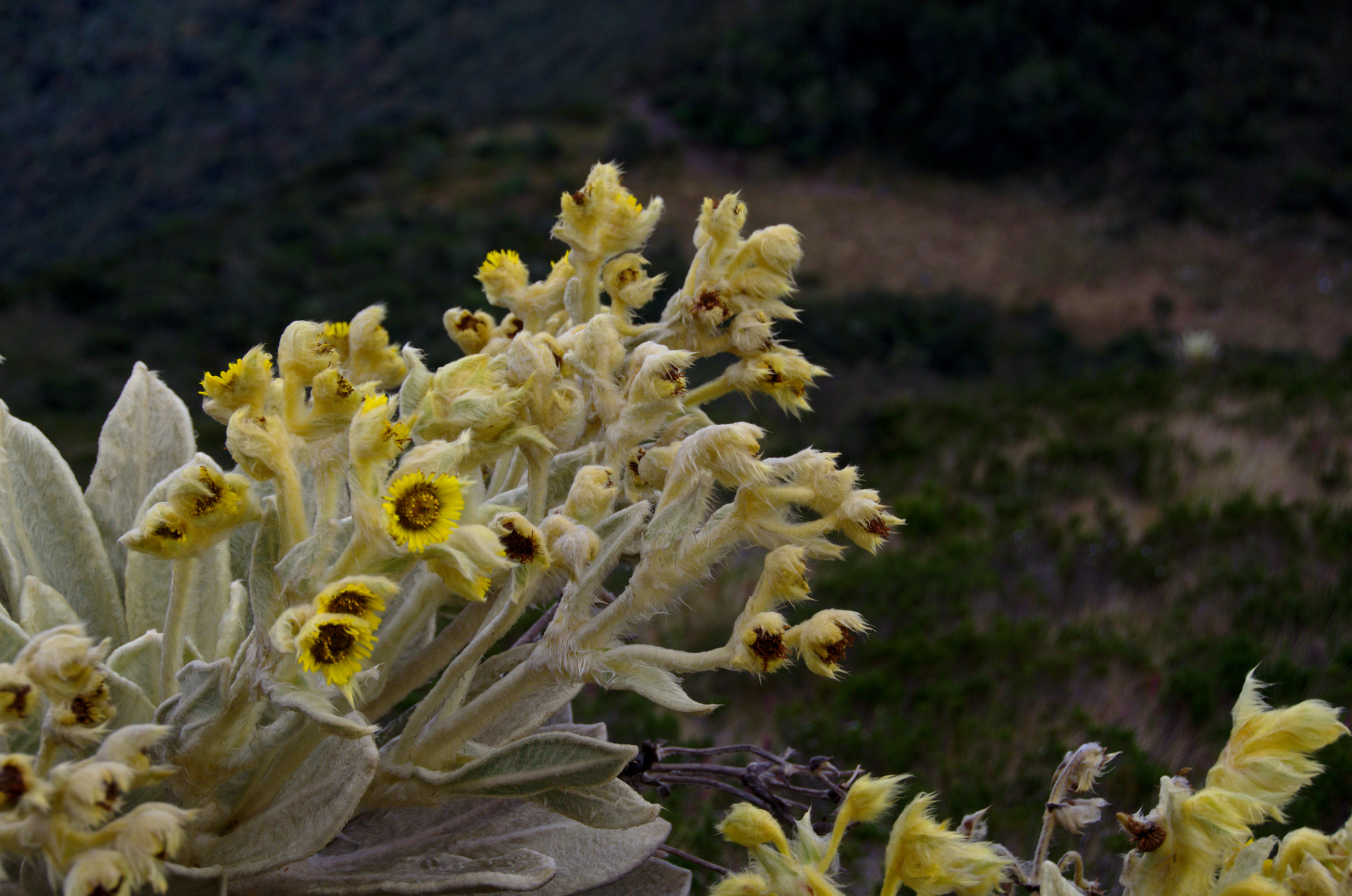
Photo: Aztlec.
Current situation
In March 2025, the Colombian government designated the western flank of the Santurbán massif as a temporary renewable natural resource reserve area, delimiting and protecting an area of 75,344.65 hectares. This resulted in a two-year suspension of the Soto Norte project. However, Aris Mining's contract to formalize Calimineros' small-scale mining activities through the purchase and processing of mineralized material remains in effect.
In addition, the Canadian mining company continues to move the project forward. In September 2025, it released its prefeasibility study, revising the mine’s original design.
Meanwhile, members of the Committee for the Defense of Water and the Santurbán Páramo face threats and stigmatization because of their work. In March 2025, UN Special Rapporteurs and the Working Group on Business and Human Rights denounced these incidents in communications sent to the governments of Colombia, Canada, and the United Arab Emirates, as well as to the companies Aris Mining and MDC Industry Holding Company LLC, the former co-owner of the Soto Norte project.
Regarding the arbitration claim filed by Eco Oro Minerals, in July 2024, ICSID ruled in favor of the Colombian government and rejected the Canadian company’s claim for USD 1.1 billion in compensation.
Concerning the delimitation of Santurbán, in July 2026, the Ministry of the Environment issued a resolution introducing the concept of "progressive delimitation." On that basis, the government proposes to progressively demarcate the páramo, covering 29,199 hectares across 19 municipalities—those where the participatory agreements required by the Constitutional Court in its 2017 ruling have already been finalized. It also proposes two measures on the creation and expansion of reserves to restrict mining in the ecosystem.
Learn more about the impacts of mining on the páramos of Latin America (in Spanish).
Partners:
Related projects
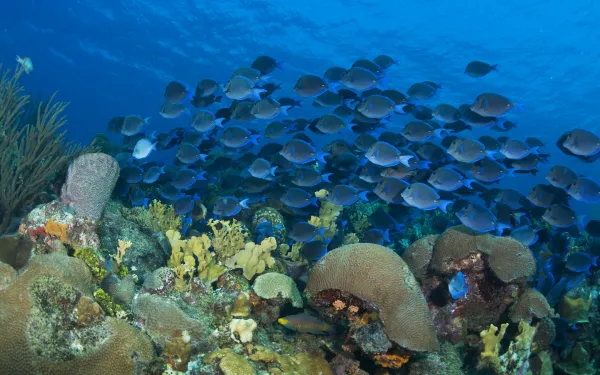
International Regulatory Best Practices for Coral Reef Protection
This Best Practices Guide provides examples of effective regulatory tools for protecting coral reefs. These tools can be adapted to the circumstances of various jurisdictions where reefs are at risk. It is not an exhaustive list of best practices, but rather a compilation of approaches that countries around the world have implemented to regulate human activities that harm coral reefs. This Guide presents basic legal and regulatory tools and practices that can be modified, improved, strengthened, and applied according to the unique circumstances and objectives of each country seeking to implement stronger protections for its coral reef resources. Download the guide Download the summary report
Read more
Belo Monte: The Urgency of Effectively Protecting Human Rights
Four years ago this month, the Inter-American Commission on Human Rights took an important step forward for the peoples of the Xingú River Basin. It requested that the Brazilian government adopt precautionary measures to prevent irreparable damage to the rights of indigenous communities along the Amazonian tributary. Their cultural integrity and way of life were, and still are, at risk from the construction of the world’s third-largest dam, Belo Monte. Yet that major victory for those fighting to protect life on the Xingú has been diluted with time. As the decision weakened, so too did confidence in the Commission, an organ of the Organization of American States (OAS) charged with ensuring the protection of human rights on the continent. The Initial Request In November 2010, AIDA and partner organizations in Brazil requested precautionary measures from the Commission in a context of gravity and urgency characterized by: An irregular licensing process. An insufficient Environmental and Social Impact Assessment (ESIA), which contained neither all possible impacts nor the mitigation measures needed to guarantee the communities’ rights, and was not translated into the indigenous languages of the affected populations. The project’s failure to comply with more than 60 social, environmental and indigenous provisions established in the previous license as safeguards for the rights of the affected. Absence of consultation with affected indigenous communities and lack of their free, prior and informed consent. In response, the Commission requested that Brazil immediately suspend construction and all licensing of the dam until the project complied with the following conditions: Undertake consultation processes that are of good faith and culturally appropriate, with the goal of achieving the free, prior, and informed consent of affected communities. Ensure that affected communities have access to the Environmental and Social Impact Statement in an understandable format, which includes translation into indigenous languages. Adopt measures to protect the cultural integrity and way of life of indigenous peoples, including those in voluntary isolation, and to prevent the spread of diseases and epidemics among affected communities. The Response of Brazil and the OAS The Brazilian Government rejected the measures, calling them "precipitous and unwarranted." In response, Brazil withdrew its envoy from the Commission and recalled its ambassador to the OAS. Then, claiming a need for economic austerity, Brazil suspended funding to the Commission and defaulted on its annual compulsory contribution to the OAS. The outlook worsened when the Secretary General of the OAS, José Miguel Insulza, told the BBC: "The Commission makes recommendations. They are never mandatory orders… no country will be violating a treaty if they don’t do what the Commission asks. The Commission has no such binding force." These undermining comments provided several hostile member States with justification for launching a process to "reform" the Inter-American Human Rights System. The controversial process lasted more than two years and, rather than strengthen the Commission, the hostile States actually attempted to undermine its autonomy and weaken its mechanisms. One Step Back On July 29, 2011, just four months after granting the precautionary measures, the Commission modified them. It withdrew its request for suspension of construction and licensing, claiming the fundamental argument had turned into a debate, which went beyond the scope of the precautionary measures, on whether prior consultation had been conducted with the indigenous communities and whether they had given their informed consent for the project. Instead, the Commission requested that Brazil adopt new measures to protect the way of life and personal and cultural integrity of indigenous peoples in voluntary isolation, as well as the health and territory of all affected indigenous communities. This change represented a major setback, not just for the indigenous communities of the Xingú, but also for the thousands of communities throughout the region whose cultural integrity and way of life are at risk from the heedless implementation of projects like Belo Monte. Brazil’s indigenous communities had hoped that the Commission would stand by its decision to suspend the dam, and would protect them while the case – presented in 2011 by AIDA and partner organizations from Brazil – was underway. Up Against Time After four years, Brazil has not only breached the precautionary measures, but has also repeatedly requested that they be lifted. Worse still, the government has allowed construction of the Belo Monte Dam to continue, and the project is now 70 percent complete. A few months ago, the company in charge of construction, Norte Energia S.A., requested the dam’s operating license from the Brazilian Institute of Environment and Natural Resources. Once granted the license, they will begin to fill the dam’s reservoir and, with it, flood a portion of the Amazon half the size of Rio de Janeiro. The Commission has yet to petition the Brazilian government to determine whether or not the project’s authorization included a process of prior consultation This important step remains despite the fact that, when modifying the precautionary measures, the Commission itself noted that the discussion had to happen in the context of a petition. What’s the risk? When the Commission finally makes a decision on the case it may be too late to prevent damages to affected communities. A Major Challenge Although there has been some progress in protecting affected communities as a direct result of the precautionary measures, which the Brazilian government has yet to recognize officially, the process thus far has clearly demonstrated that the Inter-American Human Rights System is imperfect and vulnerable to political pressure. This vulnerability must be overcome. We must focus on building a truly efficient System that works best for its beneficiaries: the victims of human rights abuses. Four years after what seemed like an important victory, Belo Monte has taught us that if we seek to protect human rights in the region effectively, governments must not be allowed to jeopardize the system established for that purpose through political and economic pressure. Due to the realities of the region, many cases like Belo Monte have come, and will continue to come, before the System. While they are not easy to resolve, we mustn’t choose inaction in the face of suffering. In the case of Belo Monte, the Commission still has time to act. It’s our hope that this case will become a model for equitable access to justice. At AIDA, we will continue working until we ensure that the environment and the rights of communities in Brazil’s Xingú River Basin are fully respected.
Read more
Toward a law to protect glaciers and water in Chile
More than 70 percent of the world’s fresh water is frozen in glaciers,[1] making these giants the most important freshwater reserves on the planet. The distribution of this wealth has been generous to some countries. According to the Randolph Inventory, the most complete map of glaciers in the world, Chile is the guardian of the largest area of glaciers in South America: 14,600 square miles distributed across thousands of glaciers that reach from the peaks of the Altiplano in the north to the extreme southern tip of the continent. The most dangerous threats to glaciers are climate change and industrial activities near them, especially mining. Through strategic litigation and advocacy, AIDA is working to halt the harms from both of these threats. Climate change has caused the decline of snow and rainfall, as well as an increase in temperature, which reduces the accumulation of ice and increases the melting of glaciers. Mining exploration and exploitation degrade glaciers with road construction, drilling, explosives, and toxic materials. These activities also generate dust that settles on glaciers, making them darker and accelerating their rate of melt. Although we know that water is fundamental for life, and that glaciers are dangerously threatened, surprising littleinternational law protects glaciers. No international treaty aims to preserve them, nor is any such treaty under consideration. At the national level, only Argentina has a law to protect its glaciers. In Chile, draft legislation to protect glaciers has been debated in Congress for many years. Bearing in mind the drought currently plaguing the country, what better reason could there be to develop a SMART legal tool to care for Chilean glaciers? In search of a law The first attempt to enact a law to protect Chile’s glaciers was in 2006. It was driven by the approval of the Pascua-Lama mining project, which threatened the mountainous glaciers in the north of the country. The unsuccessful initiative was shelved in 2007. On May 20, 2014 members of Congress, calling themselves "the Glacier Caucus," proposed a new law to preserve the glaciers. Mining and geothermal companies severely criticized their proposal, which forbade mining and other activities that harm glaciers. This March, the executive branch made a counterproposal. According to environmental organizations, the spirit of the Glacier Caucus law was completely changed in response to mining-industry demands. What follows are points for and against the government’s proposal, based on the minutes in (Spanish) of a collaborative meeting of environmental organizations: Positive Recognizes glaciers as freshwater reservoirs, as providers of ecosystem services, and as national public property. Prohibits applications for rights to harvest glacial water. Strengthens the power of the General Water Directorate to generate information, monitor the status of glaciers, and impose fines. Elevates the legal hierarchy of the glacier inventory. Negative Does not protect all glaciers, only those found in national parks or wildlife reserves. This is a serious oversight, considering that the most threatened glaciers are in the north, where national parks are rare and where they share territory with mining reserves. Worse, still, glaciers in the north supply drinking water to millions of people who live in areas where water is scarce. Could safeguard some glaciers outside of protected areas if the Committee of Ministers for Sustainability considers them "strategic water reserves." The proposal, however, makes no reference to the tools or public funds needed to make such an assessment. The risk is that this designation would eventually be left to consultants who frequently work for mining companies. Leaves glaciers that are not considered “strategic reserves” open to industrial projects, depending on the conclusions of Environmental Impact Assessments. In the past, EIAs have permitted such damaging projects as the Pacua-Lama, Andina 244, Los Bronces, and Los Pelambres mines. States that a project’s environmental permit will only be reviewed if the project currently impacts glaciers in national parks or those declared "strategic reserves." All other glaciers remain subject to the mining and energy projects that are already harming them. Internal debates in Congress will continue. We truly hope the resulting law will provide all glaciers with their due protection and that similar laws will be enacted in the rest of the countries where glaciers hold precious water for future generations. Meanwhile, AIDA’s dedicated legal advocates are working hard to prevent and minimize mining threats to the environment and people. AIDA is currently preparing a guide, Basic Guidelines for the Environmental Impact Assessment of Mining Projects: Recommended Terms of Reference (in Spanish), detailing the comprehensive analysis that must be completed for any proposed mining project. We are advocating with government agencies to conduct thorough assessments before approving new mine projects and, when necessary, we’re pursuing strategic litigation to compel agencies to improve their assessments. We’re also strengthening environmental laws and precedents that apply to extractive industries. In Colombia and Panama, AIDA is actively advocating revisions to the national mining codes, specifically to protect crucial water resources. Bringing international law to bear on the issue, we’re using international agreements to establish precedents that apply to mines broadly. We’ve also begun to create a pool of technical experts to help local communities and governments understand and evaluate proposals for mineral extraction. Please watch this blog for upcoming news about mines, water, and AIDA’s efforts to protect a healthy environment. [1] According to data from Global Water Partnership: http://www.gwp.org/
Read more