
Project
Alberto Peña Kay
Protecting the Santurban páramo from mining's damage
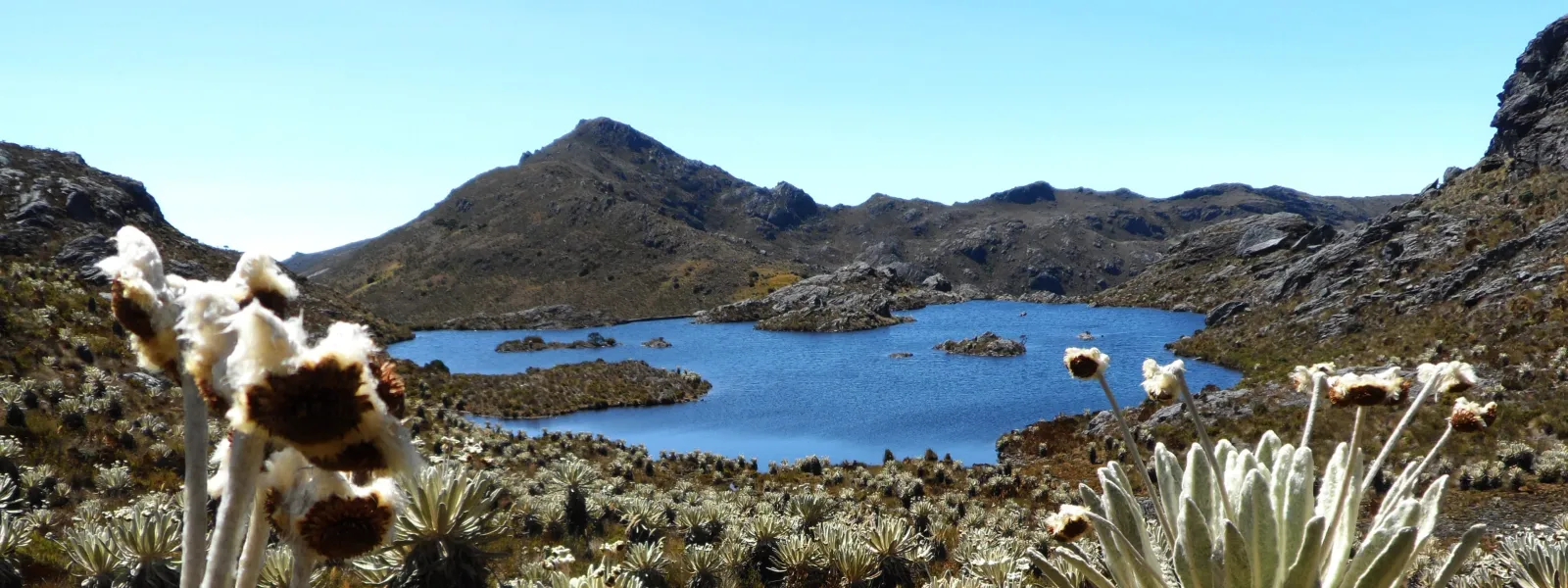
In the Andean region, high-mountain ecosystems known as páramos capture water from the fog and supply it to the lowlands. One such ecosystem is the Santurbán páramo, which provides fresh water to more than two million people in Colombia.
Santurbán, like the other páramos on the continent, also captures large amounts of carbon, making it a key ally in mitigating the climate crisis. It is also a refuge for hundreds of endangered species, including the iconic spectacled bear.
The land in and around the páramo contains gold and other minerals. This has put Santurbán in the spotlight of the multinational mining industry, which for decades has sought to establish large-scale projects in the ecosystem that threaten to degrade it.
The Committee for the Defense of Water and the Santurbán Páramo—a coalition of environmental advocates—has thwarted these ongoing attempts, with support from AIDA and other civil society organizations.
Background
The Santurbán páramo is located in the heart of the Eastern Cordillera of the Colombian Andes, in the departments of Santander and Norte de Santander, at an elevation ranging from 2,200 to 4,290 meters above sea level.
It covers an area of 129,743 hectares and is home to 57 lakes. It serves as a habitat for 457 plant species and 293 species of vertebrate fauna.
There are mineral deposits in Santurbán, primarily gold, but also silver and copper. This explains the region’s mining tradition, particularly in the part of the páramo located in Santander, in the province of Soto Norte. The communities in the area have built their culture and identity around gold mining, which is mainly artisanal and small-scale.
But since the 1990s, the gold deposits in the páramo have also attracted foreign mining conglomerates seeking to develop large-scale projects. This has raised concerns among the population that relies on the Santurbán water sources, who have mobilized in defense of water, their land, and life.
Although national and international regulations prohibit mining in páramos, the Colombian government has granted mining concessions to transnational corporations in Santurbán.

Photo: Keishpixl / Pixabay.
The long struggle to protect the páramo
One of the companies that sought to develop large-scale mining in Santurbán is Eco Oro Minerals Corp.—formerly Greystar Resources—a Canadian company that intended to establish the Angostura open-pit mine there to extract gold and silver. Between 1994 and 1995, the company acquired its mining titles and conducted exploration. And in 2010, it applied for a mining permit.
That was the year AIDA became involved in defending the ecosystem, supporting the Committee for the Defense of Water and the Santurbán Páramo. Our legal work helped convince the Colombian government to deny the mine an environmental permit in May 2011.
In January 2013, the government designated a portion of the páramo (11,700 hectares) as a Regional Natural Park. That year—together with the committee and partner organizations—we carried out a campaign and advocacy efforts to urge the government to recognize the entire Santurbán area as a páramo ecosystem through a delimitation based on scientific criteria. In December 2014, the Ministry of the Environment established a delimitation that protected 76% of the páramo (98,954 hectares).
Furthermore, as a result of a litigation supported by AIDA, in February 2016, Colombia’s highest court reaffirmed that mining in páramos is prohibited.
That same year, in December, the International Finance Corporation (IFC), the World Bank Group’s private sector arm, decided to divest from Eco Oro Minerals. This achievement was the result of a process that began in 2012, when the committee—advised and supported by AIDA and international partner organizations—filed a complaint before an independent accountability mechanism, which concluded that the IFC’s investment in the Angostura project failed to take into account the project’s social and environmental impacts, thereby contradicting the financial institution’s internal policies.
Also in 2016, Eco Oro Minerals filed an arbitration claim against the Colombian government with the International Centre for Settlement of Investment Disputes (ICSID), arguing that it had been adversely affected by government decisions aimed at protecting the country’s páramos, including the delimitation of Santurbán.
In 2017, the Constitutional Court invalidated the delimitation because the affected communities were not consulted. The high court ordered that a participatory delimitation be carried out.
And that year, a new threat to Santurbán emerged when the Canadian multinational Aris Mining applied for an environmental permit for Soto Norte, a gold mining project located near the páramo. Following citizen protests and technical objections, in October 2020, the National Environmental Licensing Authority shelved the project.
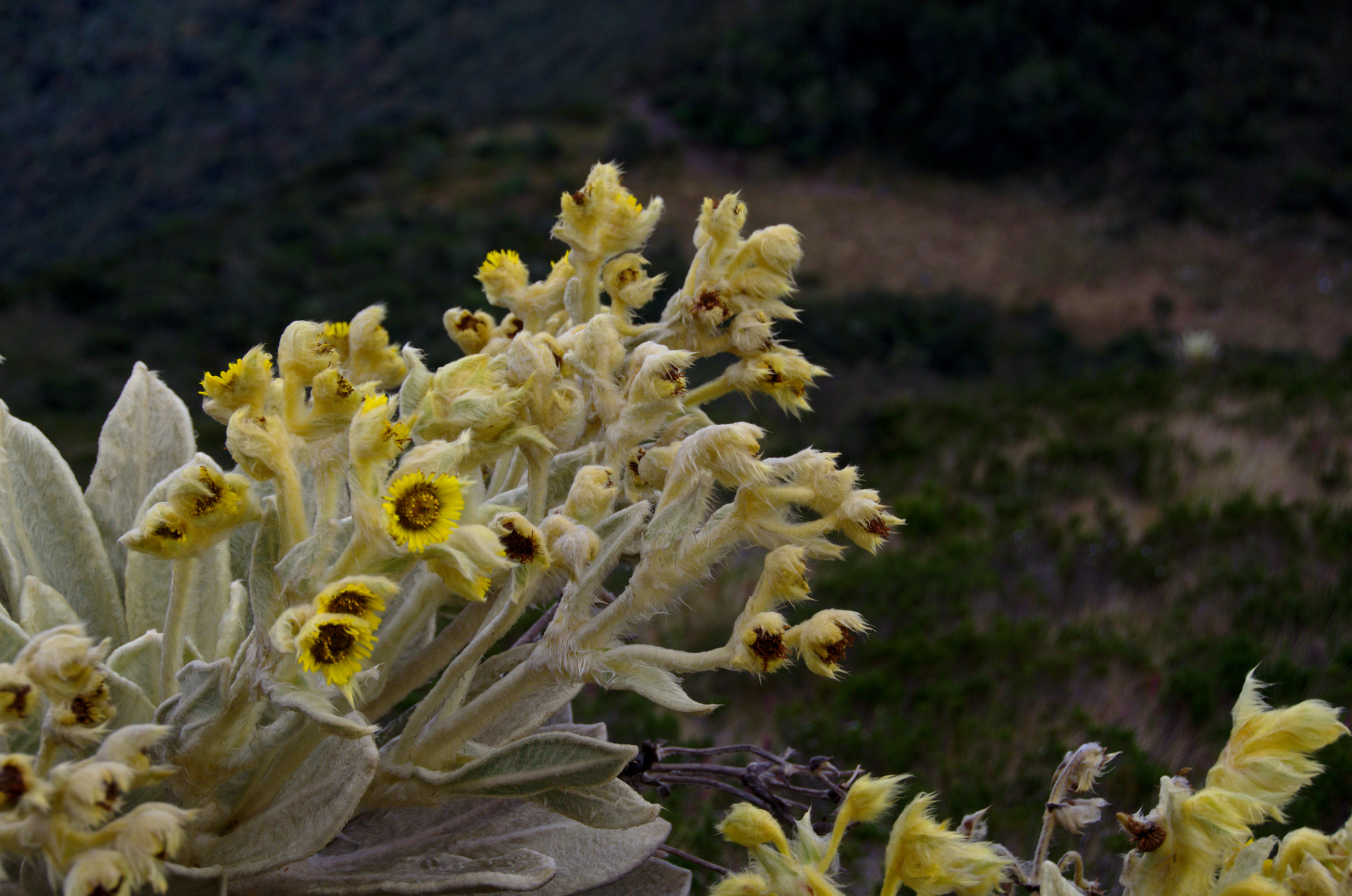
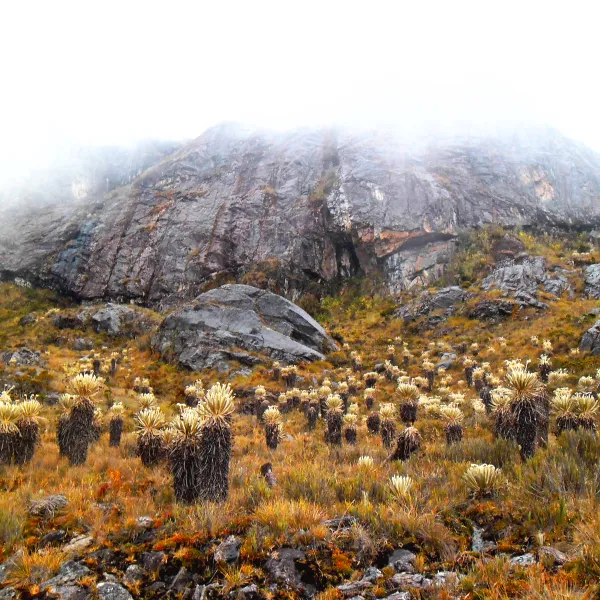
Photo: Aztlec.
Current situation
In March 2025, the Colombian government designated the western flank of the Santurbán massif as a temporary renewable natural resource reserve area, delimiting and protecting an area of 75,344.65 hectares. This resulted in a two-year suspension of the Soto Norte project. However, Aris Mining's contract to formalize Calimineros' small-scale mining activities through the purchase and processing of mineralized material remains in effect.
In addition, the Canadian mining company continues to move the project forward. In September 2025, it released its prefeasibility study, revising the mine’s original design.
Meanwhile, members of the Committee for the Defense of Water and the Santurbán Páramo face threats and stigmatization because of their work. In March 2025, UN Special Rapporteurs and the Working Group on Business and Human Rights denounced these incidents in communications sent to the governments of Colombia, Canada, and the United Arab Emirates, as well as to the companies Aris Mining and MDC Industry Holding Company LLC, the former co-owner of the Soto Norte project.
Regarding the arbitration claim filed by Eco Oro Minerals, in July 2024, ICSID ruled in favor of the Colombian government and rejected the Canadian company’s claim for USD 1.1 billion in compensation.
Concerning the delimitation of Santurbán, in July 2026, the Ministry of the Environment issued a resolution introducing the concept of "progressive delimitation." On that basis, the government proposes to progressively demarcate the páramo, covering 29,199 hectares across 19 municipalities—those where the participatory agreements required by the Constitutional Court in its 2017 ruling have already been finalized. It also proposes two measures on the creation and expansion of reserves to restrict mining in the ecosystem.
Learn more about the impacts of mining on the páramos of Latin America (in Spanish).
Partners:
Related projects
COP20: Fracking, an experimental, hazardous and contaminating technique
During an event at the People’s Summit on Climate Change, a parallel event to the COP20 in Lima, fracking took center stage. Activists expressed their central argument about the controversial oil extraction method: that fracking is an experimental technique that involves serious risks to health and the environment, including the worsening of climate change. Fracking, or hydraulic fracturing, is an extreme method of exploration and/or exploitation of unconventional oil and gas (as both shale and tight gas). Special drills bore holes vertically into the subsoil and then horizontally into rock formations. Drill teams inject a mixture of water, sand, and chemicals at high pressure to fracture the rock, releasing trapped gas and oil. "These chemicals have unknown effects due to contact with elements of the subsoil," explained Eduardo D’elia, petroleum engineer and member of the Citizens Environmental Assembly of Rio Gallegos in Argentina, during Fracking: A Challenge for Latin America, organized by the Heinrich Böll Foundation in the People's Summit. "The fracturing of horizontal wells is highly complex and unpredictable, so this makes fracking an experimental technique." Fracking affects people in a number of unfortunate ways: the massive use of water (from 9 to 29 million liters of water per well) reduces availability of fresh water for drinking water, agriculture or other needs; fracking fluids can contaminate surface and groundwaters; the chemicals used may cause cancer, allergies, and malformation, among other diseases. Aroa de la Fuente, member of FUNDAR and the Mexican Alliance Against Fracking, made it clear that fracking is not an option for confronting climate change. She said that in hydraulic fracturing projects, up to eight percent of the natural gas (methane) produced escapes directly into the atmosphere. And methane holds a global warming potential 25 times that of carbon dioxide. "In 20 years, the climate impact of electricity generated by fracked gas would be higher than 20 percent of the impact of coal-fired electric generation," she stated. Argentina, Bolivia, Colombia and Mexico, among other Latin American countries, are intending to develop fracking broadly in coming years. Attendees at the People’s Summit wondered, "What can people do in the face of these hazardous plans?" Ariel Perez Castellón, an attorney with AIDA, emphasized the existence of legal tools designed to safeguard human health and the environment against fracking. The first, he said, is the precautionary principle, which is recognized in international law and which States and civil society should apply to address the threats of fracking. This principle establishes that "where there are threats of serious or irreversible damage, lack of full scientific certainty shall not be used as a reason for postponing cost-effective measures to prevent environmental degradation". [1] This means that when in doubt about the occurrence, scope, or magnitude of severe environmental damage, States must take proactive and effective measures to prevent such damage. "Based in this principle, States have three obligations related to fracking: to generate broad, clear and impartial information regarding this activity and its impacts; to protect the environment and the people with a moratorium on fracking activities, until there is a demonstration of its innocuous development; and to promote opportunities for public debate about fracking", Pérez said. Attendees in Lima stressed that social mobilization is key in supporting the legal strategies against fracking. Various civil society organizations within Latin American spoke of their efforts to promote public discussions, disseminate information in their communities, and take the necessary steps to prevent the damage that fracking may bring to their countries. In recent times, these organizations are starting to share experiences and articulate advocacy efforts within the region. On the occasion of COP20, 80 Latin American organizations issued a statement (text in Spanish) warning that fracking will have disastrous consequences for the environment and the population of Latin America, and that it will worsen climate change. The organizations asked their national governments to "prevent the use of hydraulic fracturing in their territory under the state obligation of the principle of precaution, and ensure the protection of fresh water resources and their peoples' health." [1] Rio Declaration on the Environment and Development of 1992, principle 15
Read moreCOP 20: And what about the effective use of climate finance?
The amount of money required to confront the effects of extreme climate changes is much larger than currently sought in global negotiations. Clearly more resources are needed, but it is also important to track the effective use of climate finance now being mobipzed. "We must recognize the funding gap for adaptation programming," said Annaka Peterson Carvalho of Oxfam America. She was a panel member Wednesday at a COP20 event entitled, A fair and accountable cpmate finance regime: Confronting the contentious issues. In her opinion, we must determine, on the basis of science, the real costs that countries must rightfully bear, and we need a responsible finance system to determine how much money each country needs and where it will come from. Sandra Guzmán, General Coordinator of the Cpmate Finance Group of Latin America and the Caribbean (GFLAC), agreed that while it is necessary to have more resources for the fight, it’s also necessary to use them effectively. "It’s not just about asking for more money," she said. "We must change priorities at a national level to distribute funding by reassigning it to activities that allow for reduced emissions." Guzmán explained that the Climate Finance Group has developed a methodology to know how much money each country receives, and how much they spend in deapng with climate change. Their analysis encompasses many activities, including some that are not traditionally labeled as relating to cpmate change. She identified five challenges in the task of tracking the use of cpmate finance: Transparency and access to information; Definition of the criteria of climate finance; Institutional structure and communication between different institutions; Public participation in the evaluation of projects; and Better methodology for monitoring, reporting, and verification to analyze the effective use of the money. The experience of the Institute for Climate and Sustainable Cities (iCSC) in the Philippines demonstrates that accountability on climate finance is “everybody’s business,” according its Executive Director, Red Constantino. The Institute tracks not only committed funding for adaptation, but also how it is channeled locally. The work that Constantino has done has enabled him to identify difficulties in apgning funding with the real needs and priorities of vulnerable communities; provide limited opportunities to involve communities in decision-making about adaptation; and understand that while money flows, it is not necessarily used efficiently or completely. Andrea Rodríguez, senior lawyer at AIDA, also referred to the importance of ensuring that climate change programs and projects meet the requirements of individual countries and are directed by them. To be effective, she said, the new climate regime must find ways for countries to monitor climate finance, learn from the experiences of other institutions, and reallocate their resources to be effective. "Climate finance responds to a specific need, it is not general assistance for development," Rodríguez added. "Public participation is central to the process, and if we know how much money we need and how to use it, we will know how much to ask for in global negotiations. In this sense, Constantino highlighted coordination between local and national levels, between governments and civil society. For more information from COP20 and to post comments, visit our interactive blog at aida-cop.org
Read more
COP20: Protecting human rights in all climate actions
By Víctor Quintanilla, AIDA Communications Coordinator, @vico_qs All countries have an obligation to fight climate change. But they must also protect the human rights of their people. The fact that officially recognized clean development projects aimed at combating climate change often cause grave human rights violations was discussed Tuesday at a side event at the COP in Lima. Co-hosted by AIDA, the p for International Environmental Law (CIEL), and Carbon Market Watch, the side event asked the question, "How can the lessons learned from the Clean Development Mechanism (CDM) influence the design of climate finance mechanisms?" Máximo Ba Tiul stood before the room and spoke of the grave impacts of the Santa Rita hydroelectric project, which was registered under the CDMof the United Nations Framework Convention on Climate Change. A representative of the Tezulutlán Indigenous Council of Guatemala, Ba Tiul explained that the so-called clean development project has caused human rights violations, including the death of children, in at least 20 surrounding communities. Implementation of hydroelectric projects, Ba Tiul explained, often imply human rights violations: Shirking international standards, Santa Rita was approved without consulting or obtaining the free, prior, and informed consent of affected populations. Hugh Sealy, President of the Board of the CDM, replied that he was "disturbed" to hear that a CDM-registered project had allegedly violated human rights. While hydroelectric projects such as Santa Rita are promoted as clean energy solutions to climate change, scientific evidence has shown that large dams, particularly those in the tropics, release large quantities of methane, a greenhouse gas 20 to 40 times more potent than carbon dioxide. "All countries must respect human rights," Niranjali Amerasinghe, director of CIEL’s Climate & Energy Program, said during the event. He explained that the connection between climate change and human rights, or, more precisely, the impact of one on the other, has been recognized in previous climate agreements, such as those drafted at COP16 in Cancun, Mexico. Amerasinghe advocated for consistency within the Convention in terms of applying social and environmental safeguards. Andrea Rodriguez, an AIDA senior attorney, spoke of the importance of implementing such safeguards, particularly with respect to the Green Climate Fund. The Fund must adopt the strictest standards in the design of their social and environmental safeguards, she said. Only in this way can they ensure that projects financed won’t cause harm to the environment or violate human rights. Rodriguez said that the best international standards must be applied to projects at every phase of development, along with ongoing evaluation to learn from mistakes and to guide the choice of tools that have proved most effective. During its first three years of operation, the Green Climate Fund will use the standards of the International Finance Corporation (IFC), which Rodriguez considers "insufficient for preventing harm." Ba Tiul noted that the challenge is for all United Nations entities to honor differences and respect human rights. Amerasinghe added that projects registered with mechanisms like the CDM should be monitored throughout implementation, not just during the initial consultation and approval phases. And, faced with allegations of human rights abuses, he said, authorities must not hesitate to undertake an investigation. At the conclusion of the event, Sealy thanked the participants for the information provided and promised to do everything possible to strengthen the Clean Development Mechanism consultation process. For more information from COP20 and to post comments, visit our interactive blog at aida-cop.org
Read more