
Project
Alberto Peña Kay
Protecting the Santurban páramo from mining's damage
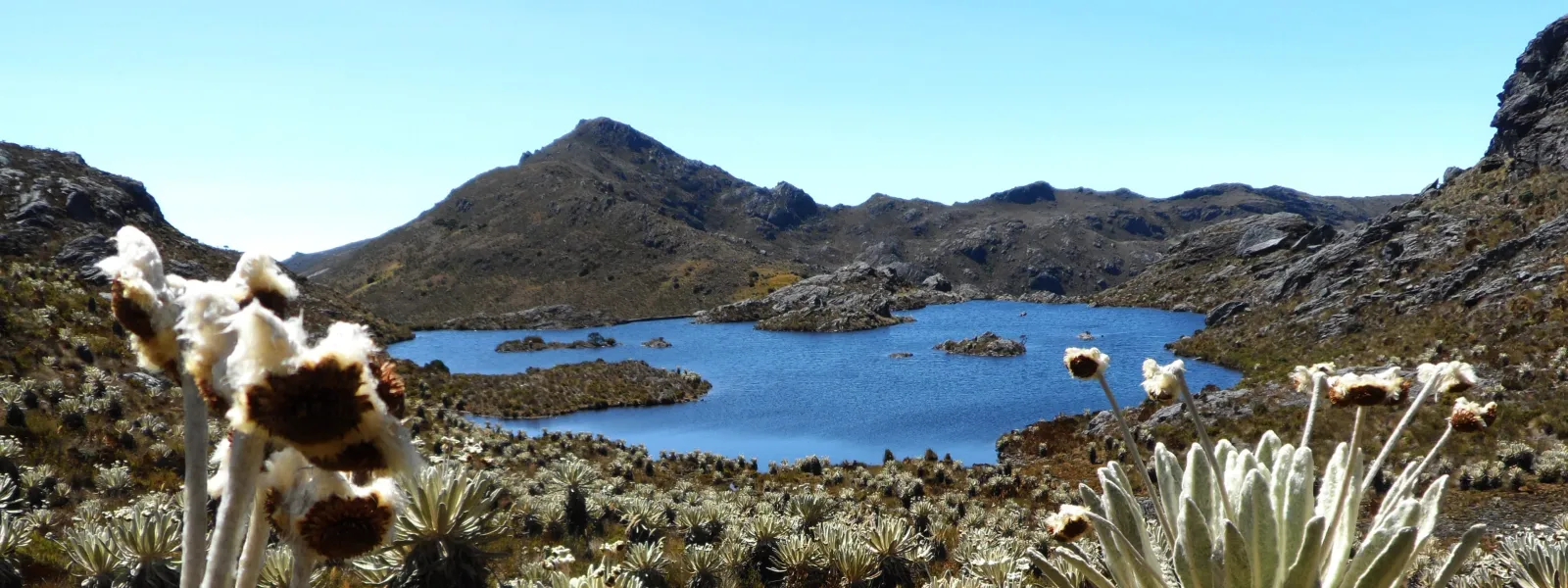
In the Andean region, high-mountain ecosystems known as páramos capture water from the fog and supply it to the lowlands. One such ecosystem is the Santurbán páramo, which provides fresh water to more than two million people in Colombia.
Santurbán, like the other páramos on the continent, also captures large amounts of carbon, making it a key ally in mitigating the climate crisis. It is also a refuge for hundreds of endangered species, including the iconic spectacled bear.
The land in and around the páramo contains gold and other minerals. This has put Santurbán in the spotlight of the multinational mining industry, which for decades has sought to establish large-scale projects in the ecosystem that threaten to degrade it.
The Committee for the Defense of Water and the Santurbán Páramo—a coalition of environmental advocates—has thwarted these ongoing attempts, with support from AIDA and other civil society organizations.
Background
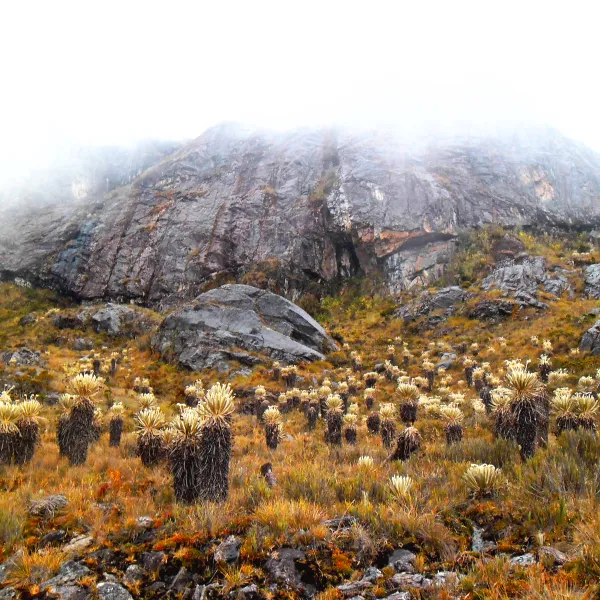
The Santurbán páramo is located in the heart of the Eastern Cordillera of the Colombian Andes, in the departments of Santander and Norte de Santander, at an elevation ranging from 2,200 to 4,290 meters above sea level.
It covers an area of 129,743 hectares and is home to 57 lakes. It serves as a habitat for 457 plant species and 293 species of vertebrate fauna.
There are mineral deposits in Santurbán, primarily gold, but also silver and copper. This explains the region’s mining tradition, particularly in the part of the páramo located in Santander, in the province of Soto Norte. The communities in the area have built their culture and identity around gold mining, which is mainly artisanal and small-scale.
But since the 1990s, the gold deposits in the páramo have also attracted foreign mining conglomerates seeking to develop large-scale projects. This has raised concerns among the population that relies on the Santurbán water sources, who have mobilized in defense of water, their land, and life.
Although national and international regulations prohibit mining in páramos, the Colombian government has granted mining concessions to transnational corporations in Santurbán.

Photo: Keishpixl / Pixabay.
The long struggle to protect the páramo
One of the companies that sought to develop large-scale mining in Santurbán is Eco Oro Minerals Corp.—formerly Greystar Resources—a Canadian company that intended to establish the Angostura open-pit mine there to extract gold and silver. Between 1994 and 1995, the company acquired its mining titles and conducted exploration. And in 2010, it applied for a mining permit.
That was the year AIDA became involved in defending the ecosystem, supporting the Committee for the Defense of Water and the Santurbán Páramo. Our legal work helped convince the Colombian government to deny the mine an environmental permit in May 2011.
In January 2013, the government designated a portion of the páramo (11,700 hectares) as a Regional Natural Park. That year—together with the committee and partner organizations—we carried out a campaign and advocacy efforts to urge the government to recognize the entire Santurbán area as a páramo ecosystem through a delimitation based on scientific criteria. In December 2014, the Ministry of the Environment established a delimitation that protected 76% of the páramo (98,954 hectares).
Furthermore, as a result of a litigation supported by AIDA, in February 2016, Colombia’s highest court reaffirmed that mining in páramos is prohibited.
That same year, in December, the International Finance Corporation (IFC), the World Bank Group’s private sector arm, decided to divest from Eco Oro Minerals. This achievement was the result of a process that began in 2012, when the committee—advised and supported by AIDA and international partner organizations—filed a complaint before an independent accountability mechanism, which concluded that the IFC’s investment in the Angostura project failed to take into account the project’s social and environmental impacts, thereby contradicting the financial institution’s internal policies.
Also in 2016, Eco Oro Minerals filed an arbitration claim against the Colombian government with the International Centre for Settlement of Investment Disputes (ICSID), arguing that it had been adversely affected by government decisions aimed at protecting the country’s páramos, including the delimitation of Santurbán.
In 2017, the Constitutional Court invalidated the delimitation because the affected communities were not consulted. The high court ordered that a participatory delimitation be carried out.
And that year, a new threat to Santurbán emerged when the Canadian multinational Aris Mining applied for an environmental permit for Soto Norte, a gold mining project located near the páramo. Following citizen protests and technical objections, in October 2020, the National Environmental Licensing Authority shelved the project.
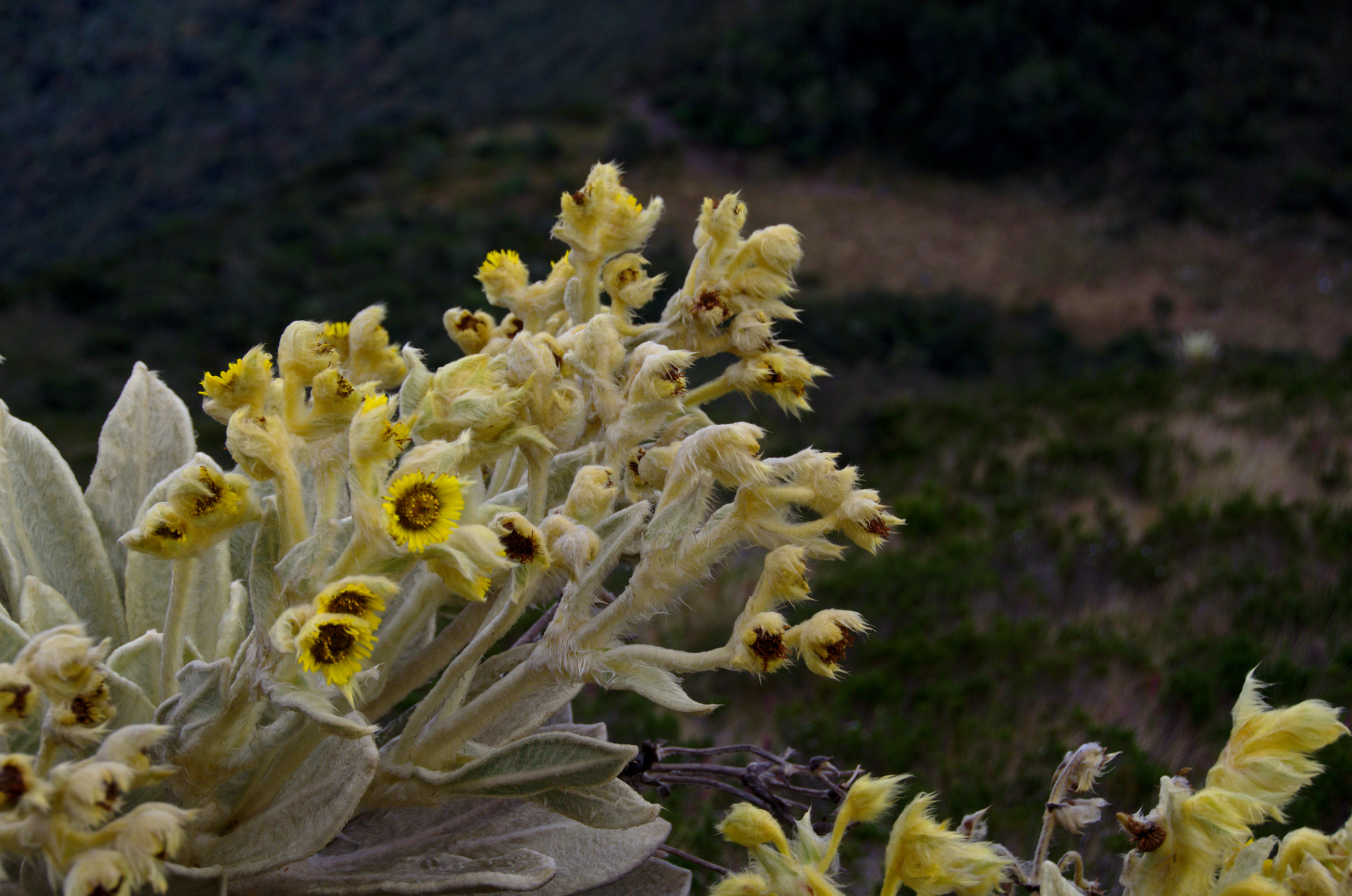
Photo: Aztlec.
Current situation
In March 2025, the Colombian government designated the western flank of the Santurbán massif as a temporary renewable natural resource reserve area, delimiting and protecting an area of 75,344.65 hectares. This resulted in a two-year suspension of the Soto Norte project. However, Aris Mining's contract to formalize Calimineros' small-scale mining activities through the purchase and processing of mineralized material remains in effect.
In addition, the Canadian mining company continues to move the project forward. In September 2025, it released its prefeasibility study, revising the mine’s original design.
Meanwhile, members of the Committee for the Defense of Water and the Santurbán Páramo face threats and stigmatization because of their work. In March 2025, UN Special Rapporteurs and the Working Group on Business and Human Rights denounced these incidents in communications sent to the governments of Colombia, Canada, and the United Arab Emirates, as well as to the companies Aris Mining and MDC Industry Holding Company LLC, the former co-owner of the Soto Norte project.
Regarding the arbitration claim filed by Eco Oro Minerals, in July 2024, ICSID ruled in favor of the Colombian government and rejected the Canadian company’s claim for USD 1.1 billion in compensation.
Concerning the delimitation of Santurbán, in July 2026, the Ministry of the Environment issued a resolution introducing the concept of "progressive delimitation." On that basis, the government proposes to progressively demarcate the páramo, covering 29,199 hectares across 19 municipalities—those where the participatory agreements required by the Constitutional Court in its 2017 ruling have already been finalized. It also proposes two measures on the creation and expansion of reserves to restrict mining in the ecosystem.
Learn more about the impacts of mining on the páramos of Latin America (in Spanish).
Partners:
Related projects
Tri-national organization to investigate Mexico for environmental enforcement in Gulf of California development
The Secretariat of the Commission for Environmental Cooperation (CEC) recommended a thorough investigation of Mexico’s systemic failure to enforce its environmental law when authorizing the construction of tourism resorts in the Gulf of California, Mexico. The Gulf region contains many vulnerable ecosystems, endangered species. Mexico City, Mexico. The Secretariat of the Commission for Environmental Cooperation (CEC) — an intergovernmental organization created under the North American Free Trade Agreement (NAFTA) between Canada, Mexico and the U.S. — has recommended a thorough investigation of Mexico’s systemic failure to enforce its environmental law when authorizing the construction of mega tourism resorts in an important area of the Gulf of California. This investigation comes in response to a citizen petition submitted by the Interamerican Association for Environmental Defense (AIDA) and its partner organization Earthjustice on behalf of 11 local and international organizations. The petition uses the permitting of four mega resorts in this vulnerable region to demonstrate how environmental violations are prevalent. The Gulf of California is a vast area—comprised of the States of Sonora, Sinaloa, Nayarit, Baja California and Southern Baja California. The area contains sensitive ecosystems such as coral reefs and coastal mangroves, and is home to endangered species (whales, manta rays, sharks and turtles, among others), migratory birds, and traditional fishing communities. The latter depend on the local tuna, sardine, shrimp and squid fisheries, which provide employment for nearly 50,000 people. Yet, the Mexican government authorized the construction of three mega resorts in that area—Paraíso del Mar, Entre Mares, and Playa Espíritu—without complying with laws related to environmental impact assessment, endangered species protection, and coastal ecosystem conservation. With these projects, the natural environment in the Gulf of California, and the wildlife and human communities that depend on it, have been put at risk. The CEC Secretariat based its recommendation to conduct a detailed investigation and prepare a "factual record" on the lack of appropriate environmental impact assessments for the projects. The decision does not include Cabo Cortés project, because this project’s environmental permit was recently revoked. "Projects like Playa Espíritu, located in Marismas Nacionales [one of Mexico’s largest wetlands and a key mangrove forest], impact small local companies and the fishing sector. Fisheries are harmed when the mangroves are damaged because these wetlands are a critical nursery and reproductive site for fish," said Carlos Simental of the Ecological Network for the Development of Escuinapa (Red Ecologista por el Desarrollo de Escuinapa - REDES), one of the petitioners. The Gulf of California and its rich biodiversity face a serious problem. Among many examples and according to recent studies, the brown pelicans in the area are not reproducing as they used to, likely due to climatic changes and lack of food due to overfishing. Tourism development that is poorly planned and fails to comply with the laws aggravates the situation. "We hope the Mexican government will receive feedback on how it makes decisions related to environmental impact assessments for tourism development in the region", said Sandra Moguel, an AIDA attorney. "With the preparation of this factual record, we are seeking improvements in the environmental impact assessment process on various fronts. These include the consideration of cumulative impacts—both from separate projects and from all components that comprise any single development—as well as the use of best available information, and inclusion of effective measures for protecting endangered species and mangroves, as required by Mexican law and treaties that Mexico has ratified." The investigation of what has happened in the Gulf of California could yield positive outcomes such as legal reforms, dialogue to improve environmental impact assessment processes, and the design of sustainable tourism projects that involve local communities from the outset. The Council of the CEC, a panel of high-ranking environmental officials from Canada, the United States and Mexico, will decide within two months whether or not they accept the recommendation to develop a factual record. "The Secretariat’s recommendation points to a serious concern that Mexico is failing to effectively enforce environmental laws in the Gulf of California," said Martin Wagner, Director of the International Program of Earthjustice. "This environmental treasure is home to incredible marine biodiversity; it is a critical source of protein for the Mexican people and needs long-term protection. No mega-resort, most of which stem from foreign investment, should be exempt from complying with Mexican environmental protections."
Read moreMexico illegally authorizes hydropower dam
The permit for the project on the San Pedro Mezquital River violates national and international environmental and human rights laws. Mexico City, Mexico. In violation of national and international environmental and human rights laws, on September 18, 2014 Mexico’s environmental authority (SEMARNAT) authorized construction of the Las Cruces hydroelectric project in the state of Nayarit. On behalf of communities and indigenous peoples who will be harmed by the project, the Interamerican Association for Environmental Defense (AIDA) will enlist the aid of United Nations Special Rapporteurs and of the Ramsar Secretariat, who oversees implementation of a wetlands-protection treaty. AIDA will ask these authorities to deem the permit process illegal and demand that the Mexican Government revoke its authorization. In its permit process, SEMARNAT ignored international laws requiring prior consultation with indigenous peoples, who must give their free, prior, and informed consent to the project. These actions are required by the International Labour Organization Convention No. 169 and by the United Nations Declaration on the Rights of Indigenous Peoples. In the permit, SEMARNAT recognizes that the communities of San Blasito and Saycota, which will be evicted as a result of construction, were unaware of the consultation notices that the Federal Electricity Commission (FEC) allegedly posted. "International standards require more than just telling the indigenous people about the project, as FEC did in this case [1]," said Maria José Veramendi, senior attorney at AIDA. "Affected communities must participate since the planning phase. And consultation has to followed by traditional decision-making methods. Before and during consultation, affected people must be provided with precise information on the consequences of the project, with the objective of reaching an agreement," she added. Construction of Las Cruces Dam will force eviction of indigenous peoples, most of them Cora, and harm 14 sacred Cora and Huichol sites. These impacts violate their human rights to adequate housing, water, sustainable livelihoods, culture, and education. The dam will also reduce flow to Marismas Nacionales, which is listed as a wetland of international importance under the Ramsar Convention, an international treaty for wetland protection. Reduced flow will harm fishing and agriculture that sustains river communities. In 2009, the Ramsar Secretariat exhorted the Mexican Government to consider the environmental goods and services, and the cultural heritage, of the region before authorizing Las Cruces. That recommendation was ignored. "The Ramsar Convention does not prohibit infrastructure in this kind of ecosystem, but it does establish criteria and standards to guide wetland management [2]," said AIDA attorney Sandra Moguel. "As the authority in charge of ensuring compliance with Mexico’s international environmental commitments, SEMARNAT should have taken the Convention’s guidelines into account. It’s especially regrettable that SEMARNAT ignored the Ramsar Secretariat’s specific recommendations for Marismas Nacionales," said Moguel. SEMARNAT also ignored the technical opinion of the National Aquaculture and Fisheries Commission (CONAPESCA). The Commission pointed out that if Las Cruces is built, fish populations in Nayarit and Sinaloa will dramatically decrease, because they depend on Marismas Nacionales, which in turn depend on the fresh water and nutrients supplied by the San Pedro River. "This permit is a setback," said Moguel. "But AIDA will work closely with international legal authorities until we secure justice for the environment and affected communities." [1] Autorización de Impacto Ambiental del proyecto hidroeléctrico Las Cruces, p. 57 (in Spanish) [2] Autorización de Impacto Ambiental del proyecto hidroeléctrico Las Cruces, p. 62 (in Spanish)
Read more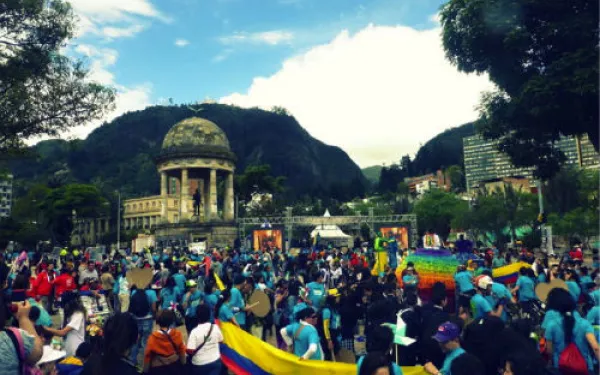
Thousands rally in Colombia's capital for Global Climate Action
By Seble Gameda, geographer The sounds of brass instruments, drumming, bike bells, and chants filled the streets of Bogota, Colombia on Sunday, September 21, as over three thousand people bearing banners, posters, flags and face paint, rallied for urgent climate action, as part of the International People's Climate March. "We are making a global petition to the heads of state to make a binding treaty that responds to the climate crisis, and we need national and local governments to commit as well," said Ana Sofía Suarez, Campaign Coordinator with the international citizen’s movement, Avaaz, and Event Coordinator for the People’s Climate March in Bogotá. Over 100 world leaders met in New York City to discuss the climate crisis and carbon emissions reductions, just months prior to the Conference of the Parties (COP) 20 that will take place in Lima, Peru as part of the United Nations Framework Convention on Climate Change. A binding agreement is planned to be signed at COP 21 in Paris in December 2015. The United Nations Climate Summit in New York City also focused on the Green Climate Fund, in which developed countries aim to raise $100 billion per year by 2020 in climate finance, in order to assist developing countries towards "low-carbon, climate resilient development." Hector Herrera, Coordinator of the Colombian Environmental Justice Network, spoke to the importance of developing countries participating in the climate marches, stating that "although the global north is primarily responsible for climate change, we in the global south are most affected, and less prepared to adapt to a changing climate." Demonstrations were organized worldwide to show the power of the people’s climate movement. "We are the first generation that is really aware of climate change, but we are the last that can do something about it," stated Juan David García, an organizer with the grassroots environmental organization 350.org. Bogotá’s Climate March was filled with diversity; artists, professors, youth, bankers, cyclists, the elderly. As Suarez commented, "in these spaces when everyone comes together, you begin to realize that you are not alone, that we are among many who are dreaming of something different, and if we begin to demand changes, then we can make this dream happen." Climate change is no longer just an isolated issue of scientists and environmentalists, we are reaching a critical mass, showing once again that protest is powerful; it is the movement of people that makes change: anti-war, civil rights, healthcare, education, and … climate justice.
Read more