
Project
Alberto Peña Kay
Protecting the Santurban páramo from mining's damage
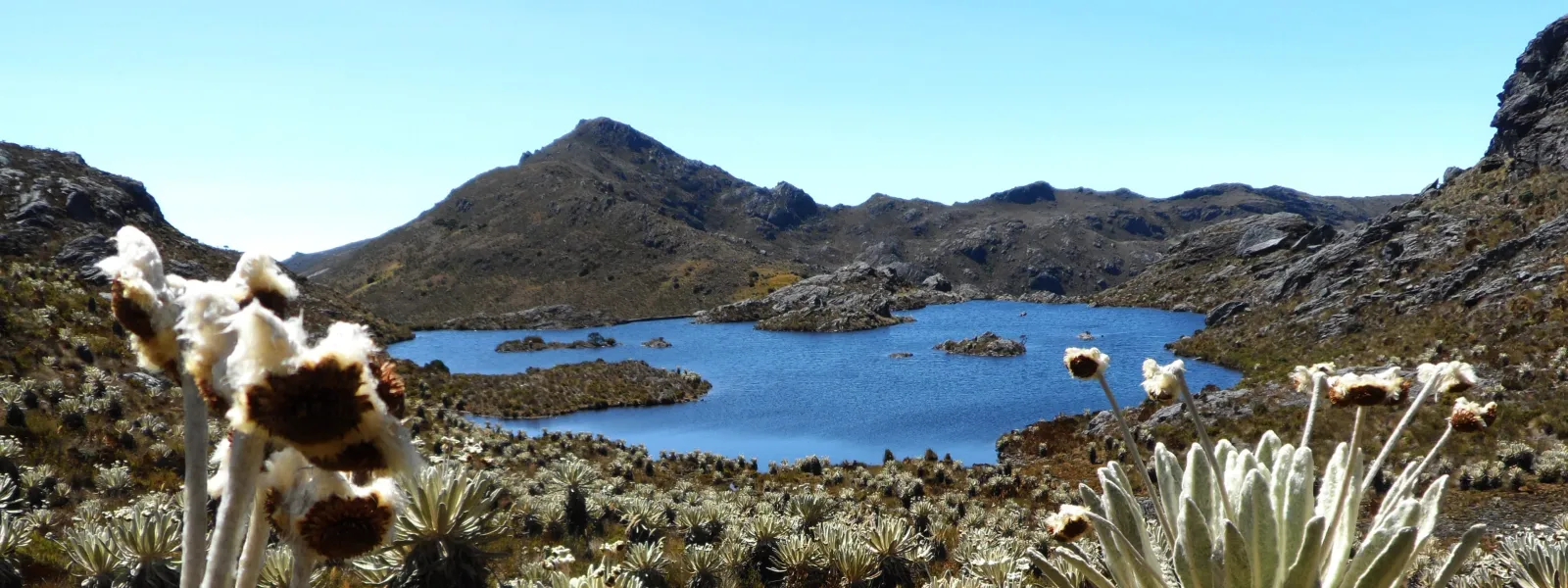
In the Andean region, high-mountain ecosystems known as páramos capture water from the fog and supply it to the lowlands. One such ecosystem is the Santurbán páramo, which provides fresh water to more than two million people in Colombia.
Santurbán, like the other páramos on the continent, also captures large amounts of carbon, making it a key ally in mitigating the climate crisis. It is also a refuge for hundreds of endangered species, including the iconic spectacled bear.
The land in and around the páramo contains gold and other minerals. This has put Santurbán in the spotlight of the multinational mining industry, which for decades has sought to establish large-scale projects in the ecosystem that threaten to degrade it.
The Committee for the Defense of Water and the Santurbán Páramo—a coalition of environmental advocates—has thwarted these ongoing attempts, with support from AIDA and other civil society organizations.
Background
The Santurbán páramo is located in the heart of the Eastern Cordillera of the Colombian Andes, in the departments of Santander and Norte de Santander, at an elevation ranging from 2,200 to 4,290 meters above sea level.
It covers an area of 129,743 hectares and is home to 57 lakes. It serves as a habitat for 457 plant species and 293 species of vertebrate fauna.
There are mineral deposits in Santurbán, primarily gold, but also silver and copper. This explains the region’s mining tradition, particularly in the part of the páramo located in Santander, in the province of Soto Norte. The communities in the area have built their culture and identity around gold mining, which is mainly artisanal and small-scale.
But since the 1990s, the gold deposits in the páramo have also attracted foreign mining conglomerates seeking to develop large-scale projects. This has raised concerns among the population that relies on the Santurbán water sources, who have mobilized in defense of water, their land, and life.
Although national and international regulations prohibit mining in páramos, the Colombian government has granted mining concessions to transnational corporations in Santurbán.
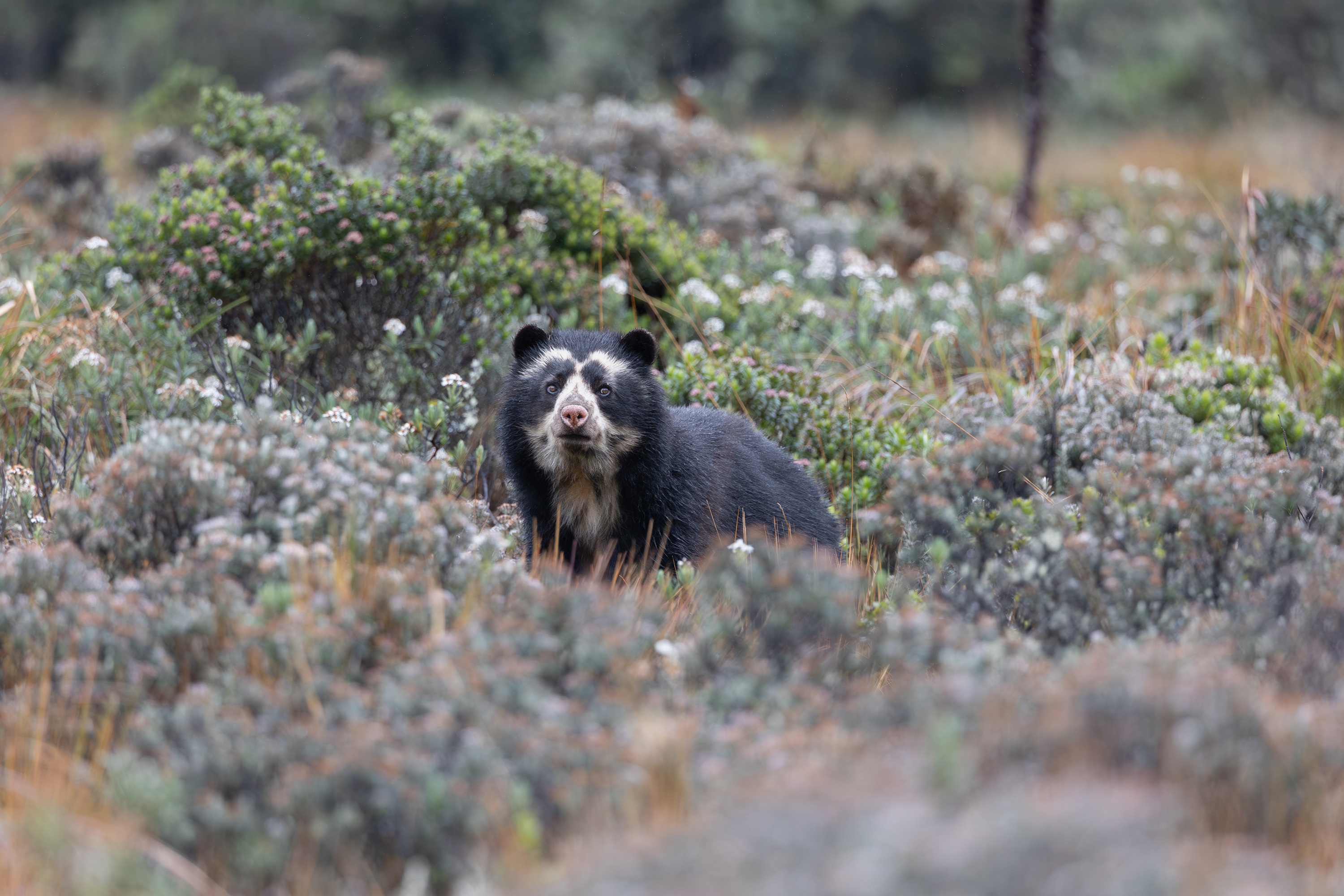
Photo: Keishpixl / Pixabay.
The long struggle to protect the páramo
One of the companies that sought to develop large-scale mining in Santurbán is Eco Oro Minerals Corp.—formerly Greystar Resources—a Canadian company that intended to establish the Angostura open-pit mine there to extract gold and silver. Between 1994 and 1995, the company acquired its mining titles and conducted exploration. And in 2010, it applied for a mining permit.
That was the year AIDA became involved in defending the ecosystem, supporting the Committee for the Defense of Water and the Santurbán Páramo. Our legal work helped convince the Colombian government to deny the mine an environmental permit in May 2011.
In January 2013, the government designated a portion of the páramo (11,700 hectares) as a Regional Natural Park. That year—together with the committee and partner organizations—we carried out a campaign and advocacy efforts to urge the government to recognize the entire Santurbán area as a páramo ecosystem through a delimitation based on scientific criteria. In December 2014, the Ministry of the Environment established a delimitation that protected 76% of the páramo (98,954 hectares).
Furthermore, as a result of a litigation supported by AIDA, in February 2016, Colombia’s highest court reaffirmed that mining in páramos is prohibited.
That same year, in December, the International Finance Corporation (IFC), the World Bank Group’s private sector arm, decided to divest from Eco Oro Minerals. This achievement was the result of a process that began in 2012, when the committee—advised and supported by AIDA and international partner organizations—filed a complaint before an independent accountability mechanism, which concluded that the IFC’s investment in the Angostura project failed to take into account the project’s social and environmental impacts, thereby contradicting the financial institution’s internal policies.
Also in 2016, Eco Oro Minerals filed an arbitration claim against the Colombian government with the International Centre for Settlement of Investment Disputes (ICSID), arguing that it had been adversely affected by government decisions aimed at protecting the country’s páramos, including the delimitation of Santurbán.
In 2017, the Constitutional Court invalidated the delimitation because the affected communities were not consulted. The high court ordered that a participatory delimitation be carried out.
And that year, a new threat to Santurbán emerged when the Canadian multinational Aris Mining applied for an environmental permit for Soto Norte, a gold mining project located near the páramo. Following citizen protests and technical objections, in October 2020, the National Environmental Licensing Authority shelved the project.
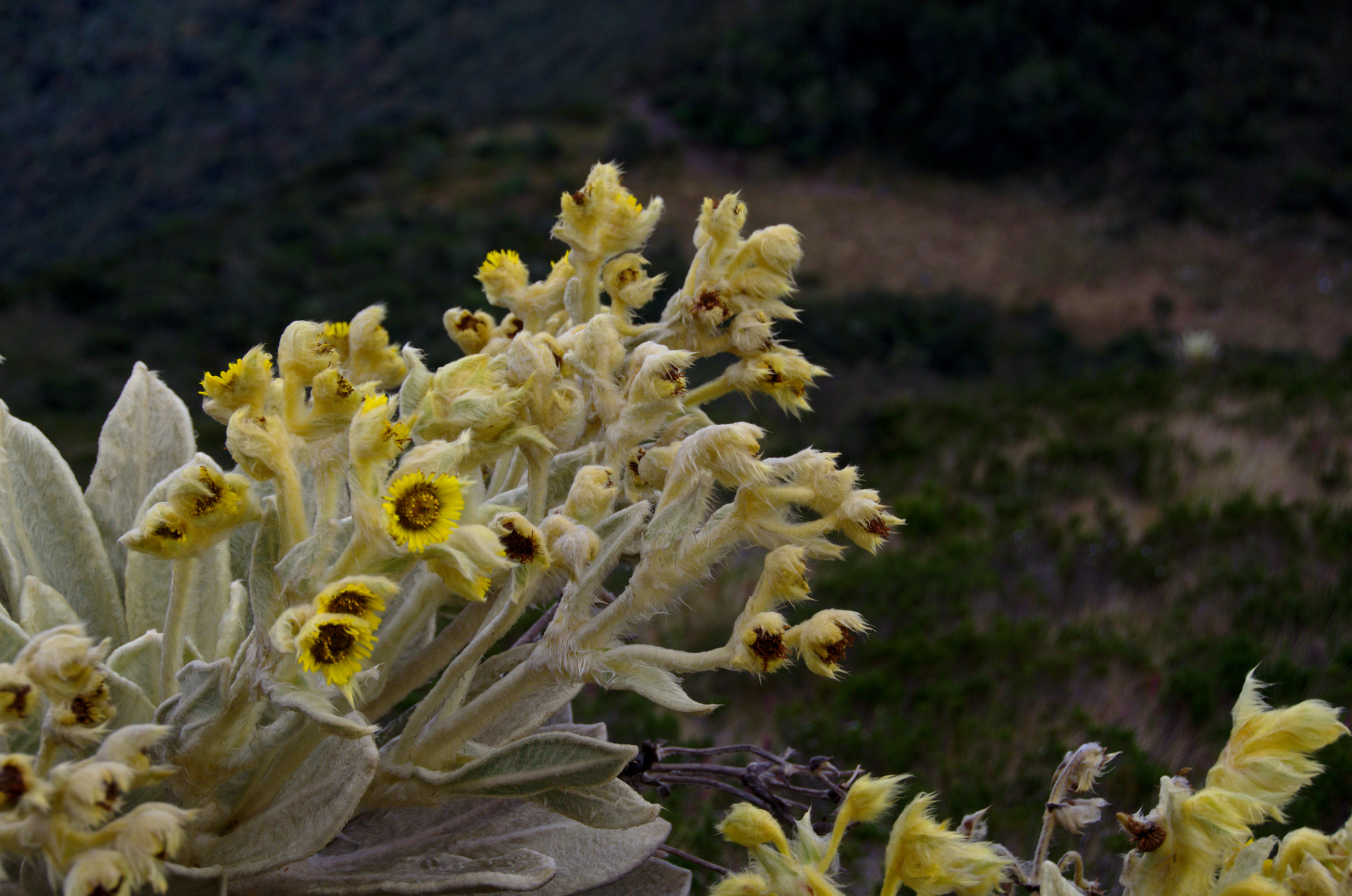
Photo: Aztlec.
Current situation
In March 2025, the Colombian government designated the western flank of the Santurbán massif as a temporary renewable natural resource reserve area, delimiting and protecting an area of 75,344.65 hectares. This resulted in a two-year suspension of the Soto Norte project. However, Aris Mining's contract to formalize Calimineros' small-scale mining activities through the purchase and processing of mineralized material remains in effect.
In addition, the Canadian mining company continues to move the project forward. In September 2025, it released its prefeasibility study, revising the mine’s original design.
Meanwhile, members of the Committee for the Defense of Water and the Santurbán Páramo face threats and stigmatization because of their work. In March 2025, UN Special Rapporteurs and the Working Group on Business and Human Rights denounced these incidents in communications sent to the governments of Colombia, Canada, and the United Arab Emirates, as well as to the companies Aris Mining and MDC Industry Holding Company LLC, the former co-owner of the Soto Norte project.
Regarding the arbitration claim filed by Eco Oro Minerals, in July 2024, ICSID ruled in favor of the Colombian government and rejected the Canadian company’s claim for USD 1.1 billion in compensation.
Concerning the delimitation of Santurbán, in July 2026, the Ministry of the Environment issued a resolution introducing the concept of "progressive delimitation." On that basis, the government proposes to progressively demarcate the páramo, covering 29,199 hectares across 19 municipalities—those where the participatory agreements required by the Constitutional Court in its 2017 ruling have already been finalized. It also proposes two measures on the creation and expansion of reserves to restrict mining in the ecosystem.
Learn more about the impacts of mining on the páramos of Latin America (in Spanish).
Partners:
Related projects
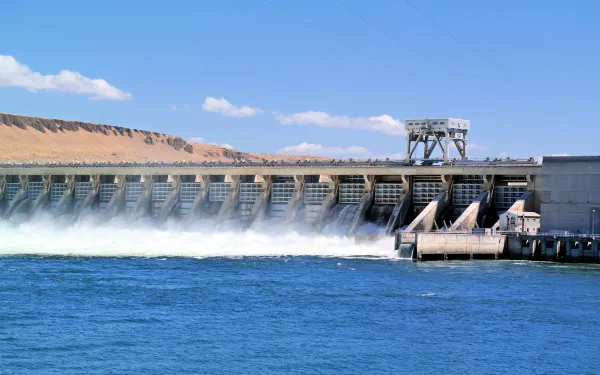
Open letter to governments, international institutions and financial mechanisms to stop considering large dams as clean energy and to implement real solutions to climate change
57 CIVIL SOCIETY ORGANIZATIONS AND COALITIONS IN LATIN AMERICA INSIST THAT LARGE DAMS ARE NOT CLEAN ENERGY SOURCES AND WE ASK GOVERNMENTS, INTERNATIONAL ORGANIZATIONS AND FINANCIAL INSTITUTIONS TO IMPLEMENT REAL SOLUTIONS TO CLIMATE CHANGE It is time to learn from the past and to implement alternatives appropriate to our time According to the World Commission on Dams, by the year 2000, fifty thousand dams had already been built, disrupting more than 60% of Earth’s rivers.[1] In Latin America alone, 973 dams of all sizes are operating, and roughly 1,600 more are being built or planned—254 in the Amazon Basin.[2] Scientific evidence reveals that large dams: emit greenhouse gases, including methane, especially in tropical regions,[3] aggravating climate change, and making adaptation more difficult; cost almost twice their initial budget, causing economic difficulties in the communities and countries where they are implemented;[4] take a long time to become operational, making them an inefficient solution to the urgent energy crisis that they are intended to tackle;[5] may cause great and irreparable environmental damage; and may cause human rights violations and impoverishment of communities if not implemented with appropriate safeguards. Nevertheless, they continue to be promoted as clean energy sources to meet increasing energy demand.[6] Why are dams not clean energy sources and why are alternatives needed? 1. Because they contribute to climate change and make adaptation more difficult Construction and operation of large dams in tropical regions causes emission of CO2 and methane from the large amounts of flooded and retained organic matter in reservoirs. The greenhouse gas effect of methane is between 20 to 40 times more powerful than that of CO2.[7] Dams also destroy large areas of surrounding lands needed to build them. Dams are not flexible enough to endure climate change. On the contrary, they are inefficient in droughts and unsafe in floods, which aggravates the risk of disasters. Moreover, they threaten communities’ entire hydrologic system, destroying key ecosystems and fisheries, thus compromising communities’ ability to adapt to climate change. 2. Because of the cost overruns, delays and economic damage that they entail Data show that the final cost of the majority of dams that have been built is 96% greater than their initial budgets. This expense has been linked to the increase of public debt and to economic crisis in several countries.[8] 3. Because they take a long time to become operational, making them an inefficient solution to the urgent energy crisis that they are intended to tackle Construction of large dams takes approximately 8.6 years, plus time to begin operating,[9] and they operate on average only 50 years.[10] Experts have documented that eight out of every ten dams exceed their initial construction-time estimates by more than 44%.[11] Dams are not an efficient solution to growing and urgent energy demand. 4. Because they may cause great and irreparable environmental damage Large dams cause environmental damages to rivers, hydrologic basins and surrounding ecosystems, including: worsening water quality in rivers; degradation of aquatic ecosystems and disappearance of many riparian ecosystems; and serious harms to biodiversity, including the extinction of species.[12] 5. Because environmental damage may violate human rights and impoverish communities The human rights of the people affected by large dams have been systematically unrecognized. Large dams have caused forced displacement;[13] health problems; loss of food sources and traditional ways of life; community impoverishment;[14] and criminalization of social protest. Additionally, permitting processes are generally flawed; permits are issued without comprehensive environmental or social impact assessments, and without adequate public participation and consultation. TODAY there are cleaner, more efficient, less costly and faster alternatives to respond to energy demand. Therefore we DEMAND that Governments, international organizations and financial institutions immediately: Stop considering large dams as clean energy sources, given the proved negative impacts mentioned above. These impacts must be considered comprehensively. Incorporate in the planning stage for new dams: scientific evidence of greenhouse gas emissions, including methane produced by reservoirs; the instability that climate change causes in the hydrologic regime; lessons learned regarding costs and real implementation time of large dams; comprehensive evaluation of environmental and social impacts that will be caused; an integrated, realistic energy strategy through a Comprehensive Plan for Electric Sector Energy Resources; Make decisions that account for impacts on the environment, human rights and climate change. Implement real energy solutions that prove to be effective, with benefits that outweigh the harms they cause. Adopt inclusive and transparent decision-making processes, taking into account the whole spectrum of energy alternatives. Abogadas y Abogados para la Justicia y los Derechos Humanos, A.C., México Alianza de Comunidades y Usuarios en Defensa del Río Biobos-Nautla, México Alianza para la Conservación y el Desarrollo (ACD), Panamá Amazon Watch, Estados Unidos Amazónicos por la Amazonía (AMPA), Perú Amigos del Río San Rodrigo, México Asamblea Veracruzana de Iniciativas y Defensa Ambiental (LAVIDA), México Asociación Ambiente y Sociedad, Colombia Asociación Amigos de los Parques Nacionales (AAPN), Argentina Asociación Ceiba, Guatemala Asociación de Ecología Social (AESO), Costa Rica Asociación Interamericana para la Defensa del Ambiente (AIDA), Regional Asociación Palmareña para la Recuperación del Ambiente (APRA), Costa Rica Asociación Peruana para la Conservación de la Naturaleza, Perú Asociación Pro Derechos Humanos (APRODEH), Perú Asociación Proyectos Alternativos para Desarrollo Social (PROAL), Costa Rica Bloque Verde, Costa Rica Centro de Desarrollo Étnico (CEDET), Perú Centro de Documentación en Derechos Humanos “Segundo Montes Mozo S.J.” (CSMM), Ecuador Centro de Estudios para la Justicia Social "Tierra Digna", Colombia Centro de Promoción y Defensa de Derechos Humanos Arequipa (CEPRODEH), Perú Centro Humboldt, Nicaragua Centro Mexicano de Derecho Ambiental, A.C. (CEMDA), México Centro para la Sostenibilidad Ambiental de la Universidad Peruana Cayetano Heredia (CSA-UPCH), Perú Colectivo Defensa Verde Naturaleza para Siempre, México Comisión de Derechos Humanos de Ica, Perú Comisión Ecuménica de Derechos Humanos (CEDHU), Ecuador Comité por los Derechos en América Latina (CEDHAL), Canadá Consejo de Ejidos y Comunidades Opositores a la Presa La Parota (CECOP), México Coordinadora de Afectados por Embalses y Trasvases (COAGRET), España Coordinadora Nacional de Derechos Humanos, Perú Derechos Humanos y Medio Ambiente, Perú Ecologia E Ação (ECOA), Brasil Federación Ecologista de Costa Rica (FECON), Costa Rica Finca Amalur, Costa Rica Fiscalía del Medio Ambiente (FIMA), Chile Foro Ciudadano de Participación por la Justicia y los Derechos Humanos (FORO), Argentina Fórum Solidaridad Perú, Perú Fundación Centro de Derechos Humanos y Ambiente (CEDHA), Argentina Fundación Ecuménica para el Desarrollo y la Paz (FEDEPAZ), Perú Fundación GaiaPacha, Bolivia Fundación POPOL NA, Nicaragua Fundar, México Grupo Ecologista Cuña Pirú, Argentina Instituto Madeira Vivo (IMV), Brasil International Rivers, Estados Unidos JASS, Asociadas por lo Justo, México Justicia para la Naturaleza, Costa Rica María Esperanza Alonso, especialista de Derecho Ambiental, Argentina Movimiento Ciudadano frente al Cambio Climático (MOCICC), Perú Oilwatch Mesoamérica, Costa Rica Plataforma Interamericana de Derechos Humanos, Democracia y Desarrollo (PIDHDD Regional), Ecuador Programa Chile Sustentable, Chile Pueblos Unidos de la Cuenca Antigua por los Ríos Libres, México Red Jurídica Amazónica (RAMA), Bolivia Sociedad Peruana de Derecho Ambiental (SPDA), Perú Unión Norte por la Vida, Costa Rica For more information: AIDA on dams: http://www.aida-americas.org/es/project/grandesrepresas International Rivers: http://www.internationalrivers.org/ Report: Grandes Represas en América: ¿Peor el Remedio que la Enfermedad? Blog: Desmantelando el mito de las represas, Grandes represas elefantes blancos, Hydropower Will Not Solve All Africa's Problems [1] World Commission on Dams Report. http://www.internationalrivers.org/files/attached-files/world_commission_on_dams_final_report.pdf [2] State of the World’s Rivers. http://www.internationalrivers.org/worldsrivers/ [3]2013 IPCC Supplement to the 2006 Guidelines for National GHG Inventories: Wetlands http://www.ipcc-nggip.iges.or.jp/public/wetlands/ [4]Ansar, Atif and Flyvbjerg, Bent and Budzier, Alexander and Lunn, Daniel, Should We Build More Large Dams? The Actual Costs of Hydropower Megaproject Development (March 10, 2014). Energy Policy, March 2014, pp.1-14. [5] Ibid [6] Directions for the World Bank Group’s Energy Sector. http://www.worldbank.org/content/dam/Worldbank/document/SDN/energy-2013-0281-2.pdf [7] Climate and Clear Air Coalition. Short-Lived Climate Pollutants. (2011). http://www.unep.org/ccac/ShortLivedClimatePollutants/tabid/101650/Default.aspx. [8] Ansar, A et al. Furthermore, the Brazilian Federal Court of Accountability carried out a study of the energy projects developed between 2005 and 2012, and it concluded that almost 80% of dams will not comply with their schedule. http://oglobo.globo.com/economia/tcu-constata-atrasos-nas-obras-de-energia-leiloadas-pelo-governo-de-2005-2012-13822128 (Spanish) [9] Ansar, A., et al. [10] Friends of the Earth, et al. Dam Removal Success Stories. (1999). http://www.michigandnr.com/publications/pdfs/fishing/dams/SuccessStoriesReport.pdf http://www.teachengineering.org/view_lesson.php?url=collection/cub_/lessons/cub_dams/cub_dams_lesson08.xml [11] Ansar, A., et al. [12] AIDA. Grandes Represas en América: ¿Peor el remedio que la enfermedad? http://www.aida-americas.org/sites/default/files/InformeAIDA_GrandesRepreseas_BajaRes_1.pdf (Spanish) [13] According to the World Commission on Dams, between 40 and 80 million people have been displaced due to big dams—approximately one out of every 100 people alive today. [14] Thayer Scudder, California Institute of Technology, promoted construction of dams for 58 years, believing that they were an option for the relief of poverty. He publicly changed his mind when he was 84 years old, declaring that they are not worth their cost and that many of the dams currently under construction will have disastrous consequences. New York Times. http://www.nytimes.com/2014/08/24/opinion/sunday/large-dams-just-arent-worth-the-cost.html?emc=eta1&_r=3
Read more
Brazil secures Belo Monte site, but not human rights of affected people
Time doesn’t stop and, unfortunately, nor does the construction of the Belo Monte Dam. Work is advancing at an impressive rate on the Xingu River, in the Brazilian Amazon; 65% of the dam is complete. As it grows, the ecosystem—and the lives of people living in the area—deteriorates. Construction of the gigantic dam has opened an enormous gash through the thick Amazonian vegetation. Seeing it from the air creates a feeling of helplessness. And on land, it’s frustrating to see that the situation of indigenous peoples, coastal communities, and residents of the city of Altamira worsens. Recently, AIDA lawyers, María José Veramendi Villa and Alexandre Andrade Sampaio, visited the Arara indigenous community, nestled in the Big Bend of the Xingu River. Once Belo Monte dams the river, it will reduce the river’s flow so drastically that fishing, the livelihood of the Arara, will no longer be possible. Furthermore, the Arara will lose the track that leads to their sacred sites. They await the arrival of vehicles and construction of a road and a suitable well, because the quality of drinking water is not the best. In Altamira, the deteriorating situation is similar. Veramendi and Sampaio went there too. Once dam construction began, the population of the city grew massively. This boom has overwhelmed health services and the sanitation system and, worse, led to an increase in cases of sexual violence and human trafficking. Norte Energia, the consortium of government and private enterprises building the dam, has caused pisions among the affected population by paying more for some lands than for others. Many people were forced to sell their homes at a minimum price before they were evicted. And the small cinderblock cubes built for the relocation of displaced families do not qualify as adequate housing. Relocation also involves a change in lifestyle: from fishing to farming or hauling bags of cement. "This frays the social fabric,” explained Veramendi. “We work daily, along with our colleagues in Brazil, to make clear in the country and internationally that what is happening in Belo Monte constitutes human rights violations. We are constantly working to compel the government of Brazil to comply with the precautionary measures issued by the Inter-American Commission on Human Rights." On April 1, 2011, the Commission issued precautionary measures that Brazil should take to protect the life, health, and personal and cultural integrity of indigenous peoples in voluntary isolation; the health of other indigenous communities affected by the project; and demarcation of the ancestral lands of indigenous peoples. Our work, like the work of the human rights and environmental defenders we support in Brazil, is not easy. State security forces guard the construction site and Altamira. "We are surrounded, intimidated and harassed; there is no guarantee for our work," said Sampaio. With your help, we will continue fighting to see that the Belo Monte case progresses with the Commission, and that the Government of Brazil complies with its international human rights obligations rather than use the dam to bolster its electoral campaign at the cost of the environment and human welfare. Follow us on Twitter: @AIDAorg "Like" our page on Facebook: www.facebook.com/AIDAorg
Read moreClimate Marchers to Global Leaders: No dirty energy in the Green Climate Fund
New York, NY – As world leaders prepared to announce pledges of climate action and money for the Green Climate Fund, thousands of people flooded the streets of New York City yesterday demanding a financial commitment to clean energy and climate-resilient solutions. Heads of state are gathering at the United Nations tomorrow, at the invitation of UN Secretary General Ban Ki-Moon, in an attempt to jump-start negotiations for a new global climate deal. According to Janet Redman, climate policy director at the Institute for Policy Studies, “Reaching an agreement to stabilize the climate rests on developed countries making good on their promises. Contributions to the Green Climate Fund are past due. We need to see serious commitments from our governments to deliver financing for low-carbon, climate-friendly development now.” Andrea Rodríguez, Mexico-based legal advisor for the climate change program of the Interamerican Association for Environmental Defense (AIDA), added, “Billions of people still lack access to energy. The Green Climate Fund should support communities to meet that need through truly clean, decentralized, sustainable renewable energy. Despite the interest from various sectors in promoting carbon capture, natural gas, and large dams as climate solutions, this institution should not provide financial support for any project that emits greenhouse gas pollution.” The policies established by the Fund's 24 board members, from both developed and developing countries, have so far not excluded any energy sector from receiving finance, increasing the risk that dirty projects could ultimately receive support. “Dirty energy is more than fossil fuels,” noted Zachary Hurwitz, a consultant for International Rivers. “Hydropower dams can release methane, they can destroy carbon-sequestering forests, and they can displace thousands of people. And there’s nothing clean about the human rights violations that all too often result.” Lidy Nacpil, director of Jubilee South Asia Pacific Movement on Debt and Development, based in the Philippines, said, “In my country, we’re already facing the devastation of climate change. Wealthy industrialized countries have a legal and moral obligation to repay their climate debt and support adaptation through the Green Climate Fund. But that’s not enough. The fund must not exacerbate climate change and its impacts by financing dirty energy.” Additional information: Read the latest commentary from the Institute for Policy Studies on the Green Climate Fund. Read the Global South Position Statement on the Green Climate Fund. Read the open letter to governments, international institutions and financial mechanisms to stop considering large dams as clean energy and to implement real solutions to climate change.
Read more