
Project
Alberto Peña Kay
Protecting the Santurban páramo from mining's damage
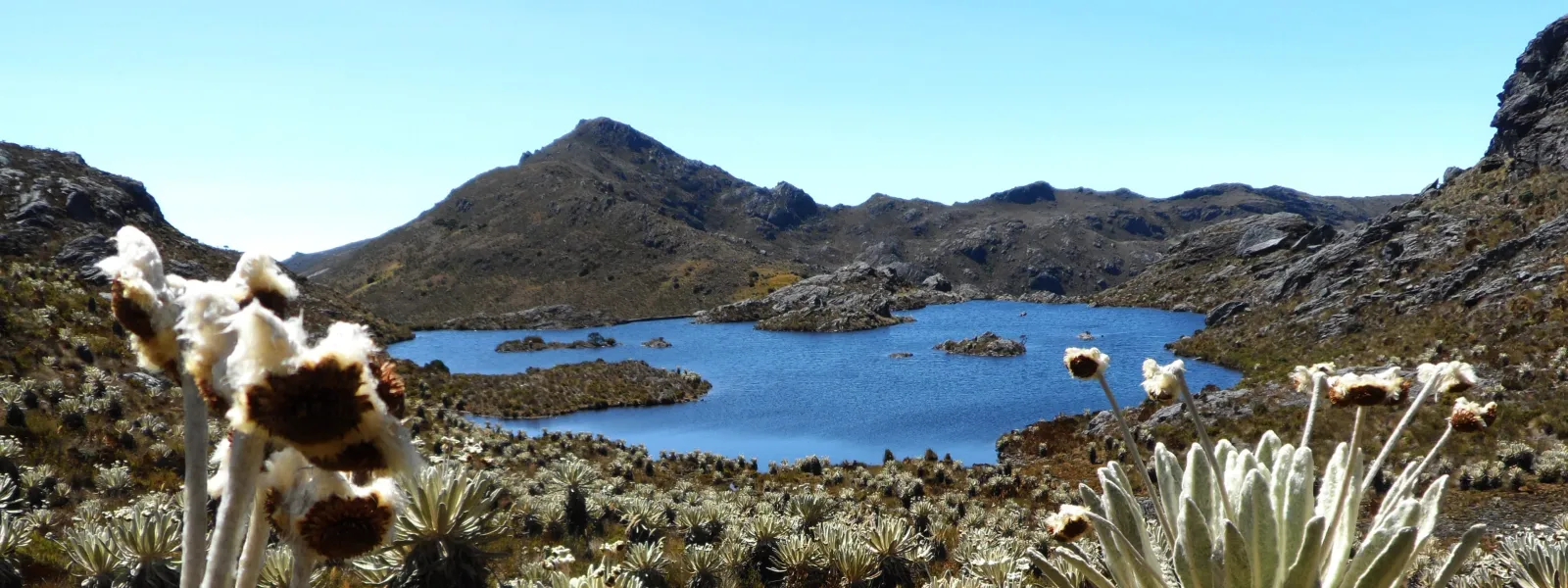
In the Andean region, high-mountain ecosystems known as páramos capture water from the fog and supply it to the lowlands. One such ecosystem is the Santurbán páramo, which provides fresh water to more than two million people in Colombia.
Santurbán, like the other páramos on the continent, also captures large amounts of carbon, making it a key ally in mitigating the climate crisis. It is also a refuge for hundreds of endangered species, including the iconic spectacled bear.
The land in and around the páramo contains gold and other minerals. This has put Santurbán in the spotlight of the multinational mining industry, which for decades has sought to establish large-scale projects in the ecosystem that threaten to degrade it.
The Committee for the Defense of Water and the Santurbán Páramo—a coalition of environmental advocates—has thwarted these ongoing attempts, with support from AIDA and other civil society organizations.
Background
The Santurbán páramo is located in the heart of the Eastern Cordillera of the Colombian Andes, in the departments of Santander and Norte de Santander, at an elevation ranging from 2,200 to 4,290 meters above sea level.
It covers an area of 129,743 hectares and is home to 57 lakes. It serves as a habitat for 457 plant species and 293 species of vertebrate fauna.
There are mineral deposits in Santurbán, primarily gold, but also silver and copper. This explains the region’s mining tradition, particularly in the part of the páramo located in Santander, in the province of Soto Norte. The communities in the area have built their culture and identity around gold mining, which is mainly artisanal and small-scale.
But since the 1990s, the gold deposits in the páramo have also attracted foreign mining conglomerates seeking to develop large-scale projects. This has raised concerns among the population that relies on the Santurbán water sources, who have mobilized in defense of water, their land, and life.
Although national and international regulations prohibit mining in páramos, the Colombian government has granted mining concessions to transnational corporations in Santurbán.

Photo: Keishpixl / Pixabay.
The long struggle to protect the páramo
One of the companies that sought to develop large-scale mining in Santurbán is Eco Oro Minerals Corp.—formerly Greystar Resources—a Canadian company that intended to establish the Angostura open-pit mine there to extract gold and silver. Between 1994 and 1995, the company acquired its mining titles and conducted exploration. And in 2010, it applied for a mining permit.
That was the year AIDA became involved in defending the ecosystem, supporting the Committee for the Defense of Water and the Santurbán Páramo. Our legal work helped convince the Colombian government to deny the mine an environmental permit in May 2011.
In January 2013, the government designated a portion of the páramo (11,700 hectares) as a Regional Natural Park. That year—together with the committee and partner organizations—we carried out a campaign and advocacy efforts to urge the government to recognize the entire Santurbán area as a páramo ecosystem through a delimitation based on scientific criteria. In December 2014, the Ministry of the Environment established a delimitation that protected 76% of the páramo (98,954 hectares).
Furthermore, as a result of a litigation supported by AIDA, in February 2016, Colombia’s highest court reaffirmed that mining in páramos is prohibited.
That same year, in December, the International Finance Corporation (IFC), the World Bank Group’s private sector arm, decided to divest from Eco Oro Minerals. This achievement was the result of a process that began in 2012, when the committee—advised and supported by AIDA and international partner organizations—filed a complaint before an independent accountability mechanism, which concluded that the IFC’s investment in the Angostura project failed to take into account the project’s social and environmental impacts, thereby contradicting the financial institution’s internal policies.
Also in 2016, Eco Oro Minerals filed an arbitration claim against the Colombian government with the International Centre for Settlement of Investment Disputes (ICSID), arguing that it had been adversely affected by government decisions aimed at protecting the country’s páramos, including the delimitation of Santurbán.
In 2017, the Constitutional Court invalidated the delimitation because the affected communities were not consulted. The high court ordered that a participatory delimitation be carried out.
And that year, a new threat to Santurbán emerged when the Canadian multinational Aris Mining applied for an environmental permit for Soto Norte, a gold mining project located near the páramo. Following citizen protests and technical objections, in October 2020, the National Environmental Licensing Authority shelved the project.
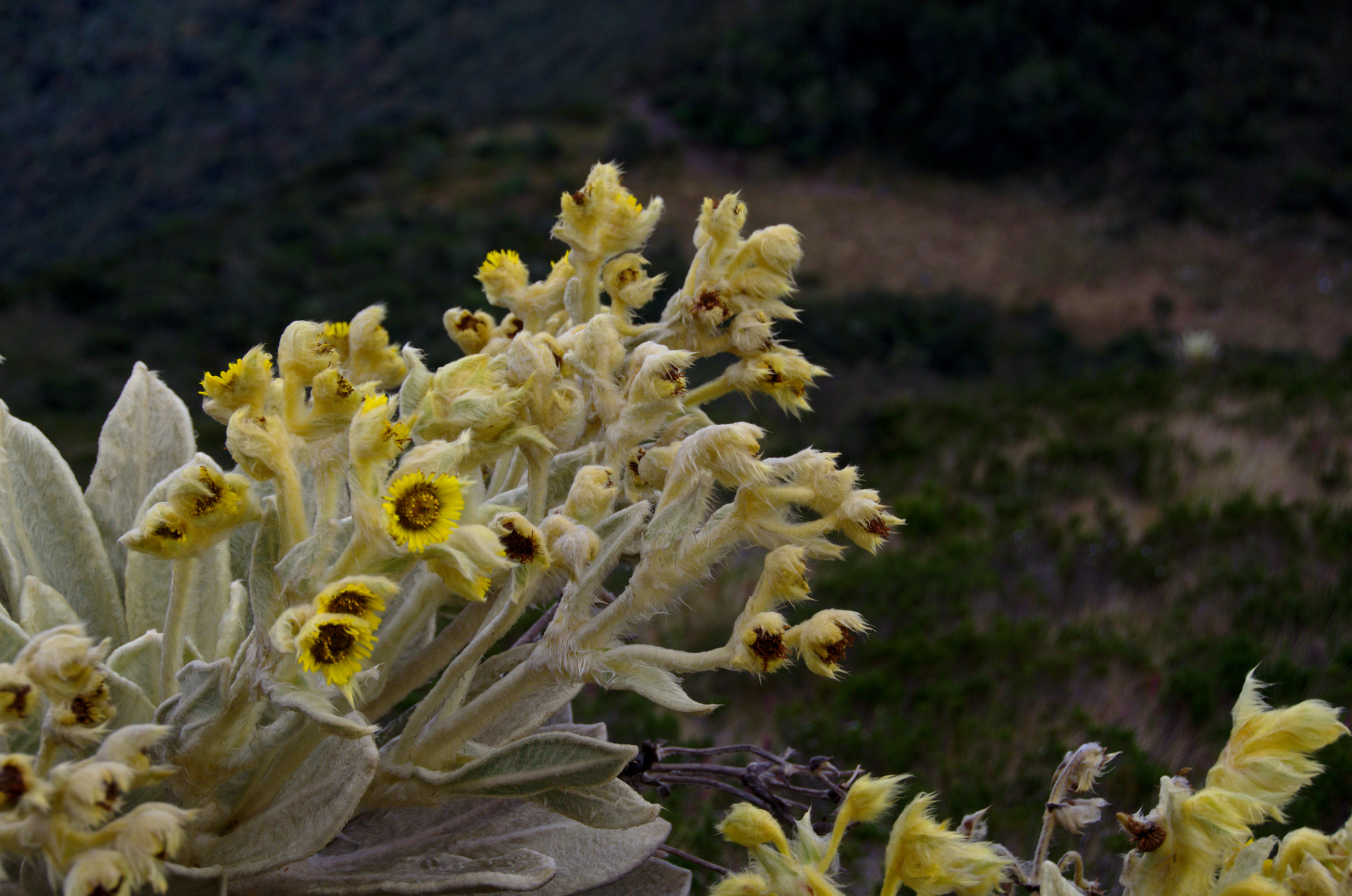
Photo: Aztlec.
Current situation
In March 2025, the Colombian government designated the western flank of the Santurbán massif as a temporary renewable natural resource reserve area, delimiting and protecting an area of 75,344.65 hectares. This resulted in a two-year suspension of the Soto Norte project. However, Aris Mining's contract to formalize Calimineros' small-scale mining activities through the purchase and processing of mineralized material remains in effect.
In addition, the Canadian mining company continues to move the project forward. In September 2025, it released its prefeasibility study, revising the mine’s original design.
Meanwhile, members of the Committee for the Defense of Water and the Santurbán Páramo face threats and stigmatization because of their work. In March 2025, UN Special Rapporteurs and the Working Group on Business and Human Rights denounced these incidents in communications sent to the governments of Colombia, Canada, and the United Arab Emirates, as well as to the companies Aris Mining and MDC Industry Holding Company LLC, the former co-owner of the Soto Norte project.
Regarding the arbitration claim filed by Eco Oro Minerals, in July 2024, ICSID ruled in favor of the Colombian government and rejected the Canadian company’s claim for USD 1.1 billion in compensation.
Concerning the delimitation of Santurbán, in July 2026, the Ministry of the Environment issued a resolution introducing the concept of "progressive delimitation." On that basis, the government proposes to progressively demarcate the páramo, covering 29,199 hectares across 19 municipalities—those where the participatory agreements required by the Constitutional Court in its 2017 ruling have already been finalized. It also proposes two measures on the creation and expansion of reserves to restrict mining in the ecosystem.
Learn more about the impacts of mining on the páramos of Latin America (in Spanish).
Partners:
Related projects

COP20: It’s All On Our Shoulders Now
ECO/Climate Action Network We are very happy to be in Lima, and ECO is ready to get right to it. COP20 needs to deliver on enough confidence building measures to ensure climate action and a successful outcome from next year’s COP in Paris. The wheels have already started turning: The Peruvian COP presidency has shown commitment and substantial effort to guide the negotiations onto the right track. The US-China climate announcement, on the heels of similar action by the EU, has injected positive impetus into the political aspect of the negotiations – and is pressuring significant laggards and defaulters, who can no longer claim inaction by the G2 to wiggle out of doing their part. The IPCC is shining clear light on the latest science, pointing urgently to deeper climate action as well as the fast-rising costs of delay. The GCF is seeing some light at the dim end of the climate finance tunnel with pledges at $9.7 billion for initial capitalization – though that’s welcome, it must not distract from the pressing need to scale up finance within the new agreement. Are these announcements and developments enough to create the right confidence building measures across countries, cement the foundation for greater political will and achieve success in Paris? ECO surely hopes so – but let’s be clear, this opening round of mitigation announcements must not be a resting place but rather a starting point that Parties will broaden and expand. The agreement in Paris is going to rest on three key decisions here in Lima: the elements of the 2015 agreement, the iNDC upfront information requirements, and ways to ramp up pre-2020 ambition. These outcomes are going to define the contours of the new global agreement. So let’s look a bit closer. The elements text must include a long-term goal of phasing out all fossil fuel emissions and phasing in 100% renewable energy as early as possible, but not later than 2050. We also expect to see goals for public finance along with a robust and honest MRV regime for them; a global adaptation goal that enables adaptation to be mainstreamed; and a strengthened two-year work plan to immediately operationalize the Warsaw loss and damage mechanism and to ensure that loss and damage has its appropriate place within the 2015 agreement. Not so easy, right? Well, don’t worry, as always, ECO is here to help. And with that in mind, we also look forward to seeing the inclusion of an enhanced role for civil society in the text. To be clear, we have high hopes for the iNDC text. The iNDCs should include mitigation with regular 5-year cycles of contributions, starting with countries putting forward their contributions for the 2020-2025 cycle, provision and mobilization of finance as part of countries’ fair share of the global effort, and voluntary adaptation contributions. Not only that, all current and future contributions must undergo a sound, robust equity and adequacy assessment phase to help drive up ambition and ensure that low ambition is not locked in by any country. The first round of iNDCs will set the tone for the future. We’ve really got to get it right on this one – it is no exaggeration to say the future of human civilization is weighing on all our shoulders. And every step counts. The effectiveness of the post-2020 agreement to be reached in Paris next year depends on the progress we make between now and 2020. On pre-2020 finance it’s simple: developed countries have to present a credible roadmap on how they are going to meet their $100 billion promise, deliver additional pledges to the GCF (this means you, Australia, Austria, Belgium, Iceland and Ireland) and also not let the Adaptation Fund dry up. We need finance and a full set of means of implementation and support to unlock untapped potential in countries and sectors that can deliver greater ambition for reducing emissions, as well as assisting vulnerable communities that are already facing impacts from climate change. On mitigation, what has the latest IPCC report taught us? All countries need to increase their pre-2020 mitigation commitments, and deliver on them through real mitigation actions. As session after session has shown, climate impacts do not stick to UNFCCC timelines; the atmosphere sees what we do, not what we think. The pressure is on but ECO is confident we can respond. We’ve got a lot of work to do, and there is no time to lose. Archivado en: English
Read moreWelcome!
Each year, representatives of a variety of nations unite with one purpose: to spur international action to combat climate change. However, in the 20 years that these meetings have been taking place, the international community has yet to reach a definitive agreement. The topics covered are many, but the most important demands are that the nations commit to reducing their greenhouse gas emissions, and that they assist in the creation of a joint economic fund that will help to mitigate the impacts of climate change in developing countries. With the purpose of informing and representing civil society, AIDA‘s team will be present in Lima to take part in the activities of the COP20 and the People’s Summit. We will be closely following the themes of climate finance, the Green Climate Fund, human rights and climate change, dams and fracking. Thank you for following along with us! Archivado en: English, Noticias
Read more
Revealing the Impact of Development on Human Rights and the Environment
"There we were – men and women, boys and girls, elders and community leaders – who dared to reject the burning of our homes on the river’s edge, the theft and loss of our things, the mistreatment, the insults, the humiliation from the police, the Army and public companies of Medellín, who forcibly emptied the river banks to make way for development." With these words, Isabel Cristina Zuleta gave testimony before the Inter-American Commission on Human Rights last month, describing the situation that she and thousands of Colombians have been suffering through. Zuleta, the leader of Movimiento Rios Vivos (Living Rivers Movement), is a victim of forced displacement – caused by the Hidroituango hydroelectric project in Colombia – and she is not alone. AIDA’s Co-Executive Director Astrid Puentes participated in the hearing alongside Rios Vivos, Tierra Digna, Asoquimbo, Comisión Intereclesial de Justicia y Paz, Corporación Jurídica Libertad, and other partner organizations from Colombia. She argued before the Commission that, in Colombia, forced displacement caused by development projects, such as mines and dams, is not recognized as a human rights violation by the State, which leaves affected communities unprotected. During the hearing Puentes introduced the three primary causes of forced displacement from these projects: the close relationship between armed conflict and major development projects; the flexibility and violation of rules in their authorization and implementation; and the direct impacts of their operation. She asked the Commission to urge the Colombian State to guarantee rights to the victims, repair damages, and take appropriate measures to prevent displacement in the future. Puentes described human rights violations caused by specific projects, such as El Quimbo dam, which displaced hundreds of families in Huila Department, and coal mines in La Jagua de Ibirico, in Cesar Department, where air pollution displaced entire communities. The inadequate implementation of development projects in Colombia, and in the region, also violates Economic, Social and Cultural Rights (ESCR), especially the right to a healthy environment. In this regard, AIDA and organizations from the region participated in a hearing called by the Commission to analyze the situation of ESCR on the continent. In it, Maria José Veramendi Villa, a senior AIDA attorney, noted that States mainly fail to protect the right to a healthy environment by implementing mining, energy, and infrastructure projects. The problem has only worsened in recent years. "The Commission has found different manifestations of this problem over the course of at least 40 hearings, conducted over the last decade, which have illustrated the serious territorial, cultural, and environmental conflicts created by the violations of ESCR," said Veramendi during the hearing. We need an Inter-American Human Rights Commission that is firm and decided in its position towards development projects that violate human rights and that brings justice to those who cannot find it in their countries.
Read more