
Project
Alberto Peña Kay
Protecting the Santurban páramo from mining's damage
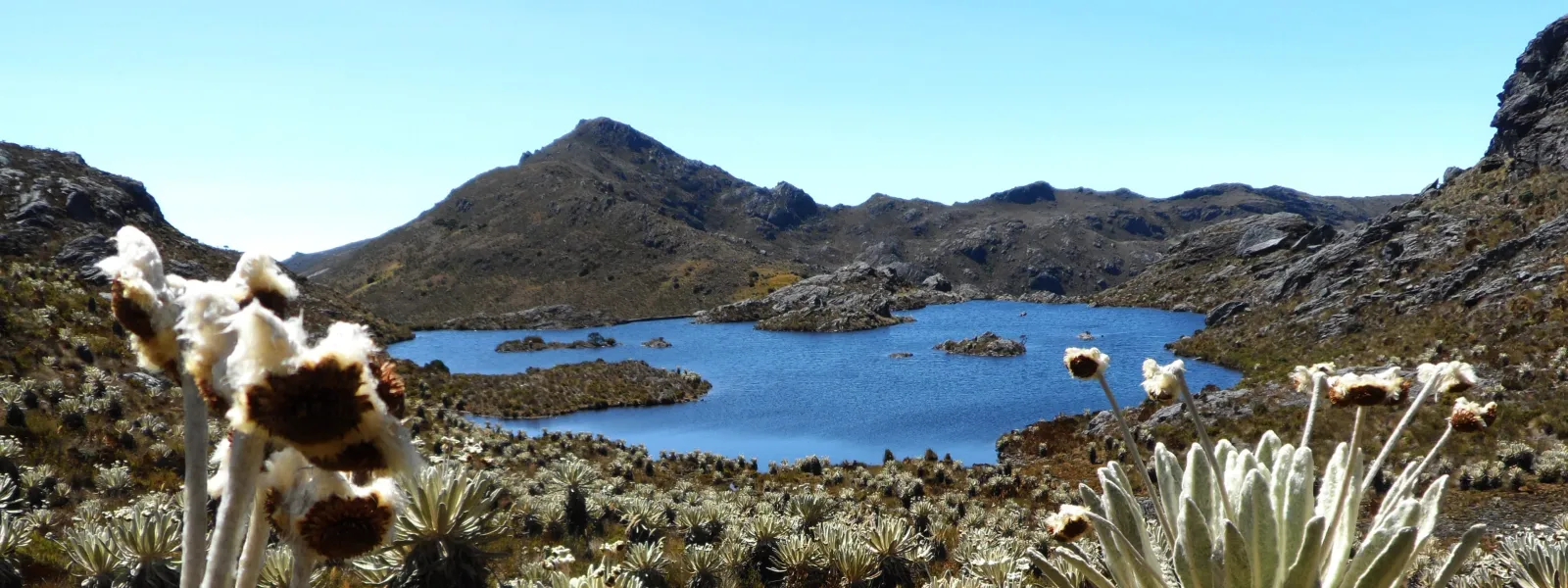
In the Andean region, high-mountain ecosystems known as páramos capture water from the fog and supply it to the lowlands. One such ecosystem is the Santurbán páramo, which provides fresh water to more than two million people in Colombia.
Santurbán, like the other páramos on the continent, also captures large amounts of carbon, making it a key ally in mitigating the climate crisis. It is also a refuge for hundreds of endangered species, including the iconic spectacled bear.
The land in and around the páramo contains gold and other minerals. This has put Santurbán in the spotlight of the multinational mining industry, which for decades has sought to establish large-scale projects in the ecosystem that threaten to degrade it.
The Committee for the Defense of Water and the Santurbán Páramo—a coalition of environmental advocates—has thwarted these ongoing attempts, with support from AIDA and other civil society organizations.
Background
The Santurbán páramo is located in the heart of the Eastern Cordillera of the Colombian Andes, in the departments of Santander and Norte de Santander, at an elevation ranging from 2,200 to 4,290 meters above sea level.
It covers an area of 129,743 hectares and is home to 57 lakes. It serves as a habitat for 457 plant species and 293 species of vertebrate fauna.
There are mineral deposits in Santurbán, primarily gold, but also silver and copper. This explains the region’s mining tradition, particularly in the part of the páramo located in Santander, in the province of Soto Norte. The communities in the area have built their culture and identity around gold mining, which is mainly artisanal and small-scale.
But since the 1990s, the gold deposits in the páramo have also attracted foreign mining conglomerates seeking to develop large-scale projects. This has raised concerns among the population that relies on the Santurbán water sources, who have mobilized in defense of water, their land, and life.
Although national and international regulations prohibit mining in páramos, the Colombian government has granted mining concessions to transnational corporations in Santurbán.

Photo: Keishpixl / Pixabay.
The long struggle to protect the páramo
One of the companies that sought to develop large-scale mining in Santurbán is Eco Oro Minerals Corp.—formerly Greystar Resources—a Canadian company that intended to establish the Angostura open-pit mine there to extract gold and silver. Between 1994 and 1995, the company acquired its mining titles and conducted exploration. And in 2010, it applied for a mining permit.
That was the year AIDA became involved in defending the ecosystem, supporting the Committee for the Defense of Water and the Santurbán Páramo. Our legal work helped convince the Colombian government to deny the mine an environmental permit in May 2011.
In January 2013, the government designated a portion of the páramo (11,700 hectares) as a Regional Natural Park. That year—together with the committee and partner organizations—we carried out a campaign and advocacy efforts to urge the government to recognize the entire Santurbán area as a páramo ecosystem through a delimitation based on scientific criteria. In December 2014, the Ministry of the Environment established a delimitation that protected 76% of the páramo (98,954 hectares).
Furthermore, as a result of a litigation supported by AIDA, in February 2016, Colombia’s highest court reaffirmed that mining in páramos is prohibited.
That same year, in December, the International Finance Corporation (IFC), the World Bank Group’s private sector arm, decided to divest from Eco Oro Minerals. This achievement was the result of a process that began in 2012, when the committee—advised and supported by AIDA and international partner organizations—filed a complaint before an independent accountability mechanism, which concluded that the IFC’s investment in the Angostura project failed to take into account the project’s social and environmental impacts, thereby contradicting the financial institution’s internal policies.
Also in 2016, Eco Oro Minerals filed an arbitration claim against the Colombian government with the International Centre for Settlement of Investment Disputes (ICSID), arguing that it had been adversely affected by government decisions aimed at protecting the country’s páramos, including the delimitation of Santurbán.
In 2017, the Constitutional Court invalidated the delimitation because the affected communities were not consulted. The high court ordered that a participatory delimitation be carried out.
And that year, a new threat to Santurbán emerged when the Canadian multinational Aris Mining applied for an environmental permit for Soto Norte, a gold mining project located near the páramo. Following citizen protests and technical objections, in October 2020, the National Environmental Licensing Authority shelved the project.
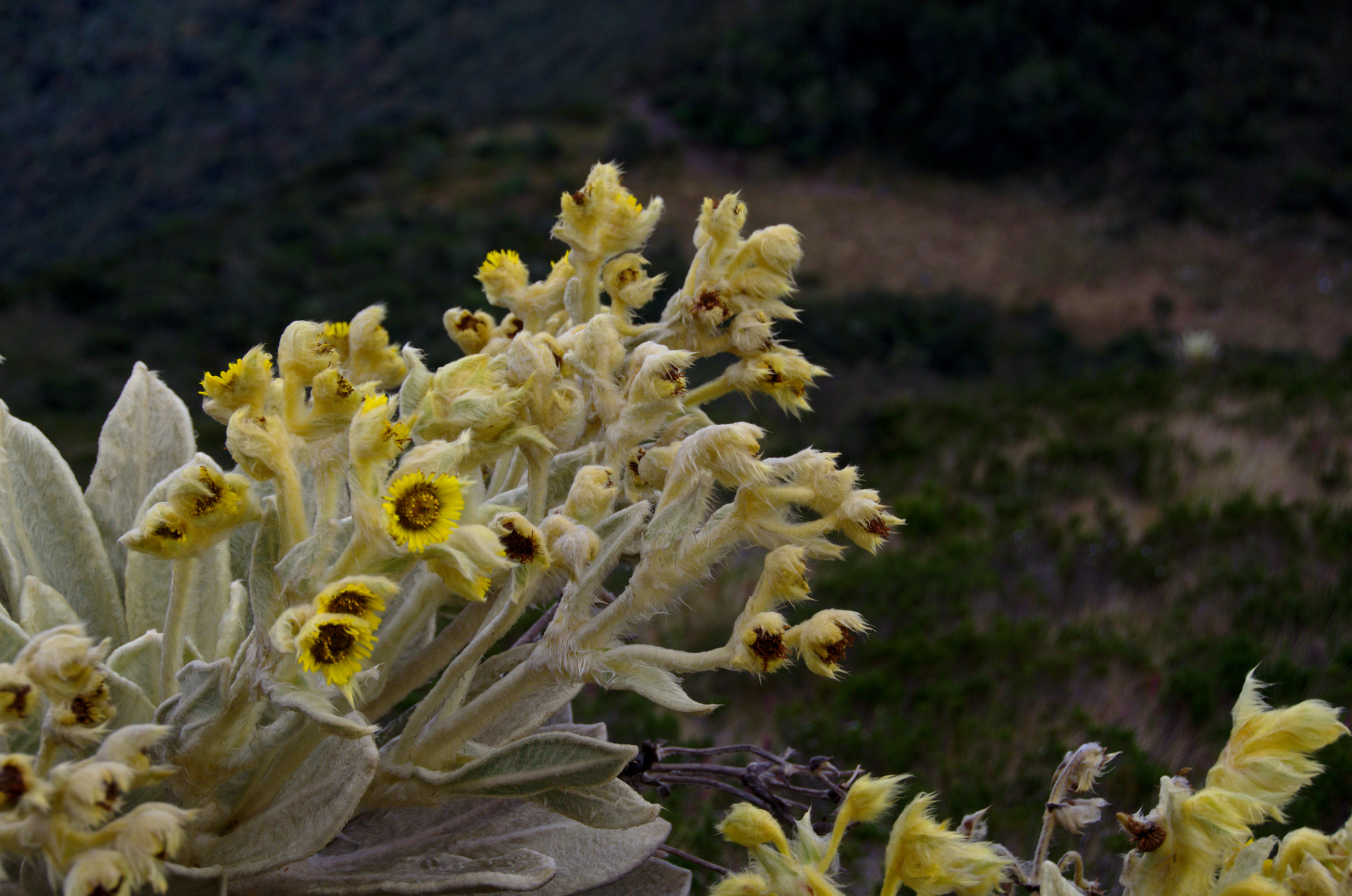
Photo: Aztlec.
Current situation
In March 2025, the Colombian government designated the western flank of the Santurbán massif as a temporary renewable natural resource reserve area, delimiting and protecting an area of 75,344.65 hectares. This resulted in a two-year suspension of the Soto Norte project. However, Aris Mining's contract to formalize Calimineros' small-scale mining activities through the purchase and processing of mineralized material remains in effect.
In addition, the Canadian mining company continues to move the project forward. In September 2025, it released its prefeasibility study, revising the mine’s original design.
Meanwhile, members of the Committee for the Defense of Water and the Santurbán Páramo face threats and stigmatization because of their work. In March 2025, UN Special Rapporteurs and the Working Group on Business and Human Rights denounced these incidents in communications sent to the governments of Colombia, Canada, and the United Arab Emirates, as well as to the companies Aris Mining and MDC Industry Holding Company LLC, the former co-owner of the Soto Norte project.
Regarding the arbitration claim filed by Eco Oro Minerals, in July 2024, ICSID ruled in favor of the Colombian government and rejected the Canadian company’s claim for USD 1.1 billion in compensation.
Concerning the delimitation of Santurbán, in July 2026, the Ministry of the Environment issued a resolution introducing the concept of "progressive delimitation." On that basis, the government proposes to progressively demarcate the páramo, covering 29,199 hectares across 19 municipalities—those where the participatory agreements required by the Constitutional Court in its 2017 ruling have already been finalized. It also proposes two measures on the creation and expansion of reserves to restrict mining in the ecosystem.
Learn more about the impacts of mining on the páramos of Latin America (in Spanish).
Partners:
Related projects
Brazilian judicial abuses questioned on anniversary of military coup
Human rights commission hears case questioning state use of dictatorship-era legal device. Washington, D.C. Marking the 50th anniversary of Brazil’s military coup, Brazilian community representatives and their legal advocates questioned President Dilma Rousseff’s administration at the Inter-American Commission on Human Rights (IACHR) over its flagrant use of a legal mechanism that dates to the country’s dictatorship (1964-1985). The speakers argued that the law allows for Brazil’s chief justices to arbitrarily overturn legal decisions that protect the environment and rights of indigenous and traditional peoples who are threatened by powerful economic interests. Known as “Security Suspension” (“Suspensão de Segurança”), this legal artifice permits the federal government to request the suspension of judicial decisions based on supposed threats to national security and the country’s “social and economic order”. The device has notably been used to suspend lawsuits that favor the indigenous right to free, prior and informed consent, allowing for notorious projects such as the Belo Monte hydroelectric dam to proceed in violation of the Brazilian Constitution and international conventions. Decisions based on “Security Suspension” may not be overturned until the final phase of court appeals, effectively blocking due process of the law and paving the way for controversial mega-projects to proceed as fait accompli. Indigenous leader Josias Munduruku, who represents one of the Amazon’s largest remaining tribes, traveled to the hearing to denounce Brazil’s plans to construct a complex of mega-dam projects on the Tapajos river and its tributaries, which threaten to bring devastating impacts on their lands and livelihood. “We are suffering the consequences of the dams that are being built on five of our rivers,” said Josias. “Federal prosecutors filed a lawsuit to stop the Tapajós dams, but the government overruled the court’s decision using Security Suspension, allowing the projects to continue in spite of the fact that we were not consulted.” Federal judge Célia Bernardes mirrored these concerns, speaking on behalf of the Brazilian Association of Judges for Democracy, whose decision on the lack of prior consultations of the Munduruku and other indigenous peoples was overturned by “Security Suspension”, permitting controversial dam projects to proceed in violation of the law. During the hearing, representatives of the Brazilian government argued that Security Suspension has been used only to defend the public interest, including that of indigenous peoples. However, there was no mention of the specific cases raised by the delegates. Judge Célia Bernardes countered the government’s point, stating: “Security Suspension differs from other legal tools as it permits the chief justice of a regional court to override rulings based on exclusively political and economic arguments, without considering judicial opinions.” “Employing broad and subjective criteria, Security Suspension violates the American Convention on Human Rights and destroys any chance for the effective protection of human rights in the Brazilian legal system," said Alexandre Andrade Sampaio, a lawyer with the Inter-American Association for Environmental Defense (AIDA). “Security Suspension is in flagrant violation of the rights to due process and access to justice, specifically cited in Articles 8 and 25 of the Convention." “Security Suspension is a dire remnant of Brazil’s military dictatorship that prevents the judiciary to act independently and impartially," affirmed Edward Baker, a lawyer with Global Justice. "When it comes to mega-projects that are directly linked to state policy for economic growth, the Brazilian judicial system has been used in order to deny, or simply disregard, the rights of the affected populations." The hearing before the IACHR the Organization of American States echoes another official complaint, made on March 10th at the 25th session of the United Nations Human Rights Council in Geneva, denouncing the Brazilian government’s systematic use of this legal instrument to the detriment of communities affected by mega-projects. The hearing was requested by the organizations Justiça Global, Justiça Nos Trilhos, the Interamerican Association for Environmental Defense (AIDA), International Rivers, Terra de Direitos and the Sociedade Paraense de Defesa dos Direitos Humanos (SDDH). Download the civil society document presented in the hearing (in Portuguese). Watch the video of the hearing (Spanish/Portuguese).
Read more
Organizations alert the United Nations that construction of the Las Cruces hydropower plant will violate human rights in Nayarit, Mexico
UN Special Rapporteurs are asked to urge the Mexican government to guarantee the rights of indigenous peoples and coastal communities that would be affected by the project. Mexico City. The Interamerican Association for Environmental Defense (AIDA) has sent an urgent appeal to several United Nations Special Rapporteurs showing that construction of the Las Cruces hydropower plant will violate the human rights of communities in western Mexico. The project will affect coastal communities as well as the Cora, Tepehuano, Huichol and Mexicanero indigenous peoples along the San Pedro Mezquital river basin in the state of Nayarit. We sent the appeal to Special Rapporteurs on the issues of adequate housing, indigenous rights, extreme poverty as well as the rights to food, safe drinking water and sanitation and to the Independent Expert on the enjoyment of a safe, clean, healthy and sustainable environment. We filed the appeal on the behalf of economic, environmental and community organizations in areas that would be affected by the project. These include the Inter-Community Council of the San Pedro River, the Náyeri Indigenous Council, the Nayarit Riverside Federation, Nuiwari, the Mexican Center for Environmental Law (CEMDA), the Ecological Mangrove Group, SuMar and representatives of the town of Boca Camichín. In the appeal, we asked the Special Rapporteurs to urge the Mexican government “to guarantee the rights of the indigenous peoples and coastal communities of the San Pedro Mezquital river to information and participation, consultation and consent, as well as to food, clean water and sanitation, and to the right to enjoy a safe, clean, healthy and sustainable environment.” We also asked the UN experts to visit the site of the proposed hydropower project to find out first hand the damages it will cause on the environment and human rights. The project will affect indigenous lands – mostly those of the Coras – by forcibly evicting inhabitants and damaging sacred sites. This would violate the human rights to adequate housing, water and livelihoods as well as to culture and education. “Our lands and natural resources are the most important aspects of our culture," said Julián López Cánare, coordinator of the Náyeri Indigenous Council and a member of the Intercommunity Council of the San Pedro River. “Every day we fear that our sacred sites will be flooded or damaged.” Ernesto Bolado, director of SuMar, said the appeal to the UN is a demonstration of how the Cora, Huichol, Tepehuana and Mexicanera communities were never consulted on the project as required by Convention 169 of the International Labour Organization (ILO). What is more, consent for the expropriation of land and changing its use was requested at community assemblies under false pretenses, the promise of government benefits and even with bullying. Mexico’s state-owned electric utility Comisión Federal de Electricidad plans to build and operate the Las Cruces hydropower dam on the San Pedro Mezquital river at a location 65 km north of the city of Tepic, Nayarit. The plant will have 240 MW of installed capacity generated by three turbines fed by water from a 188-meter high dam holding a reservoir measuring 5,349 hectares. The project will operate only four months a year at regular output, and it will meeting 0.9% of the energy demand of the West Central Mexico in 2026, equivalent to 0.28% of the total installed capacity in the country[1]. “The urgent appeal is a request for United Nations Rapporteurs to investigate the facts concerning the full enjoyment of human rights of the people and communities that will be affected by the hydroelectric project," said AIDA attorney Sandra Moguel. The environmental assessment report for Las Cruces acknowledges that the project will lead to the substitution of agriculture and small-scale livestock ranching for a dependence on fishing in the reservoir. “It is unthinkable to convert subsistence farmers into fishermen or tour operators,” said Marcos Moreno, an oyster farmer in Boca Camichín and a member of the Intercommunity Council of the San Pedro River. You can read the alert sent to the UN Special Rapporteurs (in Spanish). [1] Las Cruces Environmental Impact Assessment, Chapter II, pages 4-12, 18, 19 and 77.
Read moreLegal ways to protect the environment in Colombia
By Héctor Herrera, AIDA legal advisor and coordinator of the Colombian Environmental Justice Network, @RJAColombia Our activities make an impact on biodiversity and the environment every day. The trouble is that our impact is getting increasingly harsher such as with climate change and the extinction of species like the Colombian Grebe (Podicepsandinus, in Spanish). In Colombia, in response to the above situation, the law has been improved to help protect the environment. The Colombian Constitution, for example, recognizes the importance of protecting the environment and the right to a healthy environment in Article 79, while national environmental laws and in other legal instruments offer more help. The following are some of the most important legal proceedings in Colombia designed to achieve and protect the right to a healthy environment. Action of "tutela" This legal remedy was created with the 1991 Constitution to provide immediate protection for fundamental rights such as the right to life. To protect the right to a healthy environment, the Constitutional Court of Colombia ruled in Sentence T-1527 in 2000: “While the right to a healthy environment is not considered a fundamental right in our constitution, it is a collective right that can be protected by popular actions. It can be protected through the exceptional mechanism of the action of tutela when actions or omissions by public authorities or private individuals threaten or violate fundamental rights, such as to life, health, physical integrity, or if it affects the public right to a healthy environment. It is thus a fundamental right by connection."[1] Compared to other legal proceedings, the action of tutela is simpler and swifter in its procedures. Popular Action This action is enshrined in Article 88 of the Colombian Constitution. It provides protections for collective interests and rights associated with public health and the environment. Article 88 was further developed in Law 472 of 1998, whose Article 4 contains a non-exhaustive list of collective rights and interests that can be protected by this legal proceeding. These include the enjoyment of a healthy environment, the existence of ecologic balance and access to public services. The goal of this popular action is to eliminate hazards, threats or violations to collective rights, and restore things to their previous state when possible. This action is preventive, restorative and compensational in nature. An emblematic case involving popular action was taken by the Corporación para el Desarrollo Sostenible del Archipiélago de San Andrés, Providencia y Santa Catalina (CORALINA) before the Dispute Tribunal of San Andrés, Providencia and Santa Catalina. CORALINA demanded protection for the right to a healthy environment, the existence of ecological balance, and the rational management and use of natural resources as well as the protection and attention to regional species and ecosystems to permit a sustainable development of the community and the environment. The tribunal ruled in favor of CORALINA in a sentence that can be consulted here (in Spansih). Group Action This action is contained in Article 88 of the Colombian Constitution and should be considered in combination with Article 79, which stipulates the right to a healthy environment. Unlike popular action, which seeks to prevent damage to a public right, group action seeks economic compensation for damages caused to a group of people with homogeneous characteristics with respect to the activity that caused the damage. A symbolic case was the group action taken by peasants and fishermen affected by an oil spill on the Trans-Andean pipeline, which is operated by Colombia’s state oil company Ecopetrol, in 2000 on the Rosario river in Nariño, a southeastern department on border with Ecuador. The oil spill caused serious environmental damage. For a detailed explanation and better understanding of this subject, you can consult the legal sources for the aforementioned proceedings. These include the Political Constitution, Law 472 of 1998, and the jurisprudence of the Constitutional Court (in Spanish). [1] Sentence T-1527 of 2000 MP Alfredo Beltrán Sierra.
Read more