
Project
Alberto Peña Kay
Protecting the Santurban páramo from mining's damage
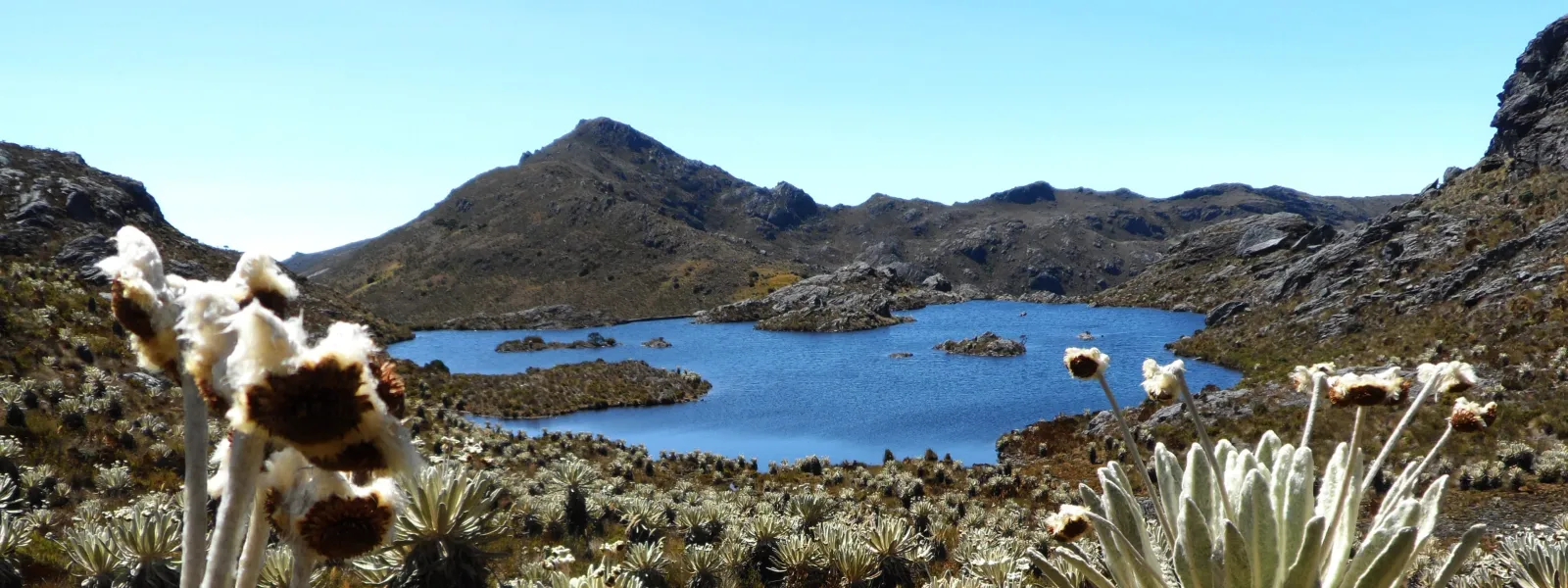
In the Andean region, high-mountain ecosystems known as páramos capture water from the fog and supply it to the lowlands. One such ecosystem is the Santurbán páramo, which provides fresh water to more than two million people in Colombia.
Santurbán, like the other páramos on the continent, also captures large amounts of carbon, making it a key ally in mitigating the climate crisis. It is also a refuge for hundreds of endangered species, including the iconic spectacled bear.
The land in and around the páramo contains gold and other minerals. This has put Santurbán in the spotlight of the multinational mining industry, which for decades has sought to establish large-scale projects in the ecosystem that threaten to degrade it.
The Committee for the Defense of Water and the Santurbán Páramo—a coalition of environmental advocates—has thwarted these ongoing attempts, with support from AIDA and other civil society organizations.
Background
The Santurbán páramo is located in the heart of the Eastern Cordillera of the Colombian Andes, in the departments of Santander and Norte de Santander, at an elevation ranging from 2,200 to 4,290 meters above sea level.
It covers an area of 129,743 hectares and is home to 57 lakes. It serves as a habitat for 457 plant species and 293 species of vertebrate fauna.
There are mineral deposits in Santurbán, primarily gold, but also silver and copper. This explains the region’s mining tradition, particularly in the part of the páramo located in Santander, in the province of Soto Norte. The communities in the area have built their culture and identity around gold mining, which is mainly artisanal and small-scale.
But since the 1990s, the gold deposits in the páramo have also attracted foreign mining conglomerates seeking to develop large-scale projects. This has raised concerns among the population that relies on the Santurbán water sources, who have mobilized in defense of water, their land, and life.
Although national and international regulations prohibit mining in páramos, the Colombian government has granted mining concessions to transnational corporations in Santurbán.

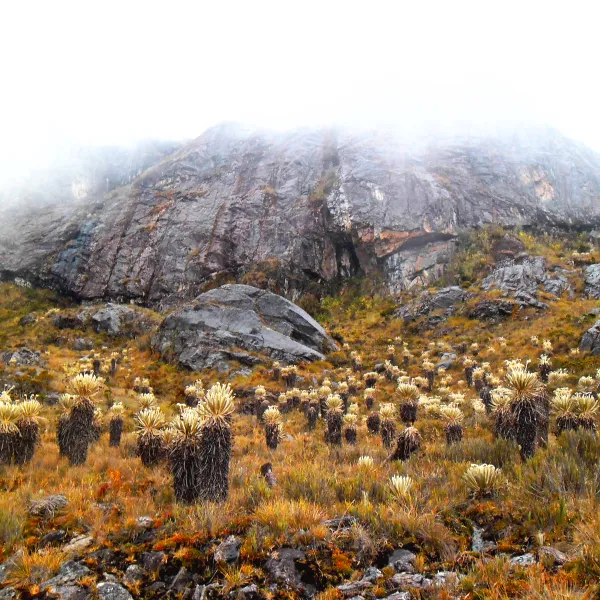
Photo: Keishpixl / Pixabay.
The long struggle to protect the páramo
One of the companies that sought to develop large-scale mining in Santurbán is Eco Oro Minerals Corp.—formerly Greystar Resources—a Canadian company that intended to establish the Angostura open-pit mine there to extract gold and silver. Between 1994 and 1995, the company acquired its mining titles and conducted exploration. And in 2010, it applied for a mining permit.
That was the year AIDA became involved in defending the ecosystem, supporting the Committee for the Defense of Water and the Santurbán Páramo. Our legal work helped convince the Colombian government to deny the mine an environmental permit in May 2011.
In January 2013, the government designated a portion of the páramo (11,700 hectares) as a Regional Natural Park. That year—together with the committee and partner organizations—we carried out a campaign and advocacy efforts to urge the government to recognize the entire Santurbán area as a páramo ecosystem through a delimitation based on scientific criteria. In December 2014, the Ministry of the Environment established a delimitation that protected 76% of the páramo (98,954 hectares).
Furthermore, as a result of a litigation supported by AIDA, in February 2016, Colombia’s highest court reaffirmed that mining in páramos is prohibited.
That same year, in December, the International Finance Corporation (IFC), the World Bank Group’s private sector arm, decided to divest from Eco Oro Minerals. This achievement was the result of a process that began in 2012, when the committee—advised and supported by AIDA and international partner organizations—filed a complaint before an independent accountability mechanism, which concluded that the IFC’s investment in the Angostura project failed to take into account the project’s social and environmental impacts, thereby contradicting the financial institution’s internal policies.
Also in 2016, Eco Oro Minerals filed an arbitration claim against the Colombian government with the International Centre for Settlement of Investment Disputes (ICSID), arguing that it had been adversely affected by government decisions aimed at protecting the country’s páramos, including the delimitation of Santurbán.
In 2017, the Constitutional Court invalidated the delimitation because the affected communities were not consulted. The high court ordered that a participatory delimitation be carried out.
And that year, a new threat to Santurbán emerged when the Canadian multinational Aris Mining applied for an environmental permit for Soto Norte, a gold mining project located near the páramo. Following citizen protests and technical objections, in October 2020, the National Environmental Licensing Authority shelved the project.
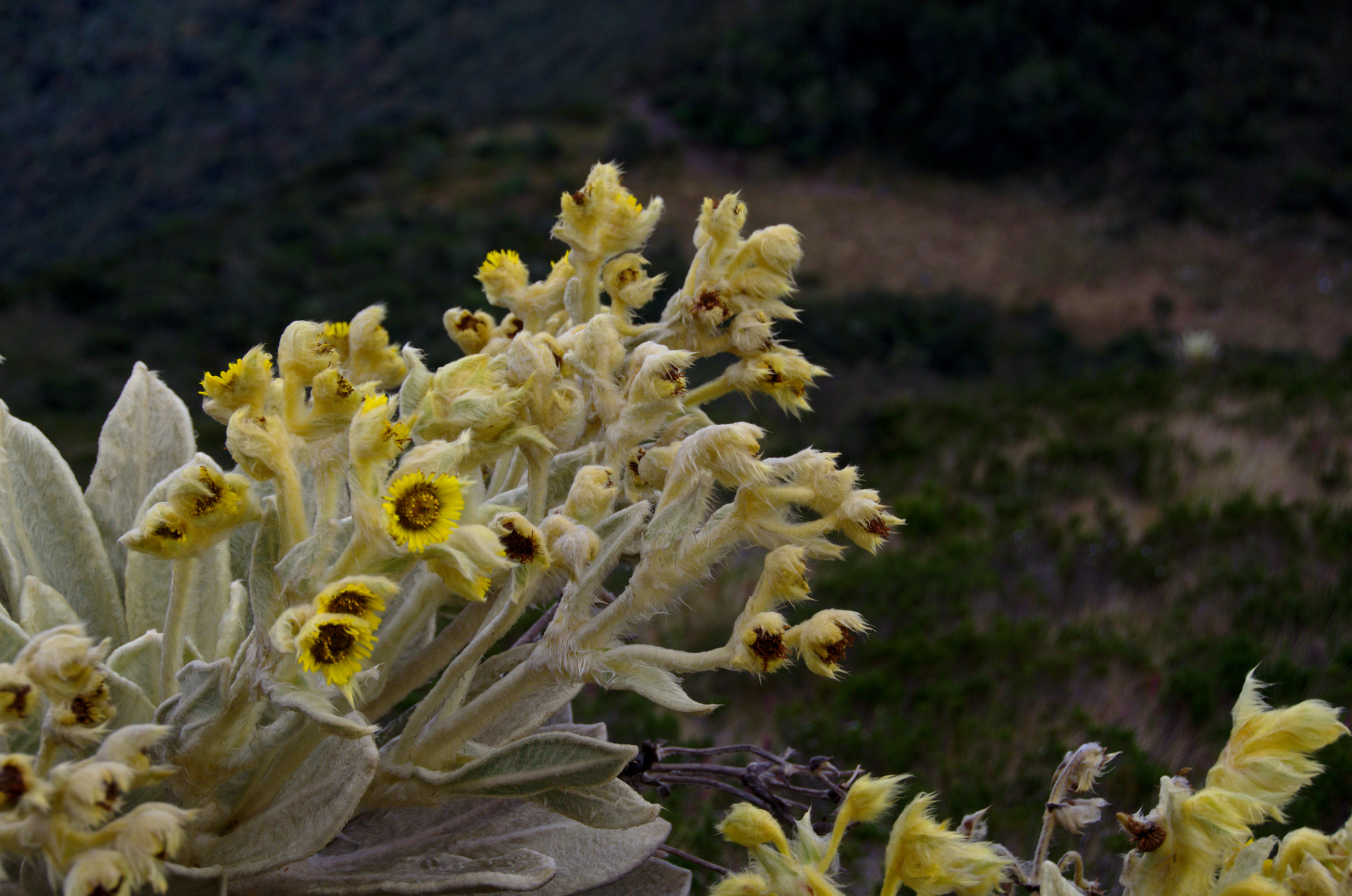
Photo: Aztlec.
Current situation
In March 2025, the Colombian government designated the western flank of the Santurbán massif as a temporary renewable natural resource reserve area, delimiting and protecting an area of 75,344.65 hectares. This resulted in a two-year suspension of the Soto Norte project. However, Aris Mining's contract to formalize Calimineros' small-scale mining activities through the purchase and processing of mineralized material remains in effect.
In addition, the Canadian mining company continues to move the project forward. In September 2025, it released its prefeasibility study, revising the mine’s original design.
Meanwhile, members of the Committee for the Defense of Water and the Santurbán Páramo face threats and stigmatization because of their work. In March 2025, UN Special Rapporteurs and the Working Group on Business and Human Rights denounced these incidents in communications sent to the governments of Colombia, Canada, and the United Arab Emirates, as well as to the companies Aris Mining and MDC Industry Holding Company LLC, the former co-owner of the Soto Norte project.
Regarding the arbitration claim filed by Eco Oro Minerals, in July 2024, ICSID ruled in favor of the Colombian government and rejected the Canadian company’s claim for USD 1.1 billion in compensation.
Concerning the delimitation of Santurbán, in July 2026, the Ministry of the Environment issued a resolution introducing the concept of "progressive delimitation." On that basis, the government proposes to progressively demarcate the páramo, covering 29,199 hectares across 19 municipalities—those where the participatory agreements required by the Constitutional Court in its 2017 ruling have already been finalized. It also proposes two measures on the creation and expansion of reserves to restrict mining in the ecosystem.
Learn more about the impacts of mining on the páramos of Latin America (in Spanish).
Partners:
Related projects

Indigenous leader condemns Brazil’s rights abuses at United Nations
Speakers highlight violations stemming from Amazon dams at Human Rights Council. Geneva, Switzerland. In a groundbreaking event at the 25th United Nations Human Rights Council, the national coordinator of Brazil’s Association of Indigenous Peoples (APIB) Sônia Guajajara exposed an alarming disregard for indigenous peoples’ rights by the Brazilian government as it rushes to promote an unprecedented wave of large dam construction across the Amazon basin with devastating impacts on their territories and livelihoods. In her testimony, Ms. Guajajara argued that the violation of indigenous rights to prior consultations concerning the federal government’s dam-building plans has set a troubling precedent for the rule of law and the future of Brazil’s indigenous peoples. The side event, entitled ‘Indigenous peoples’ right to consultation on large dam projects in Brazil’, also featured Alexandre Andrade Sampaio, a Brazilian lawyer with the Interamerican Association for Environmental Defense (AIDA), who critiqued the use of a legal mechanism known as “Security Suspension” (Suspensão de Segurança) that allows chief justices, upon request from the government, to indefinitely suspend legal rulings in favor of indigenous peoples’ rights. Among the most egregious use of this legal artifice that was originally created during Brazil’s military dictatorship, is the suspension of court decisions on the illegality of large hydroelectric dam projects, such as Belo Monte, where the federal government has failed to ensure indigenous peoples’ right to prior consultations, as enshrined in the Brazilian constitution. According to Sampaio, the Security Suspension also constitutes an obstacle to Brazil’s compliance with international agreements concerning free, prior, and informed consultation and consent (FPIC), including Convention 169 of the International Labor Organization ILO), ratified by the Brazilian Congress in 2002, and the 2007 UN Declaration on Rights of Indigenous Peoples (UNDRIP). “The alliance of economic interests and political power represent a major crisis for the implementation of indigenous rights in today’s Brazil,” said Ms. Guajajara. “However, even if the government denies our rights, it cannot deny its responsibility to this convention.” “The Suspension of Security Violates Human rights. The very people that could dismiss it are the same ones who personally benefit from its existence,” said Mr. Sampaio. “That is why it is important for the international community to turn its eyes to this matter and request the Brazilian government adopt effective measures that lead to the respect of human rights.” Joint declarations were submitted to the UN General Assembly by a coalition of Brazilian and international groups, including NGO France Libertés. In discussing growing threats to indigenous rights, both documents highlight the Brazilian government’s plans to build a massive complex of up to 29 large dams along the Amazon’s Tapajós River and its tributaries in the next ten years. Lesser-known than the controversial Belo Monte project on the neighboring Xingu River, the Tapajós complex would provoke flooding and other devastating consequences for indigenous peoples and other traditional populations both upstream and downstream of planned dams, including elimination of migratory fish that are a dietary stable and a basis of local economies. The federal government’s rush to construct a series of large dams in the Tapajós region, in the absence of prior consultations with indigenous peoples, has led to growing protests from local tribes, such as the Munduruku, Kayabi and Apiaká people. “We are watching a dark history repeat itself on the rivers of the Amazon where Belo Monte’s tragedy threatens to be reproduced on the Tapajós,” said Christian Poirier of Amazon Watch. “While the Brazilian government claims to respect its indigenous peoples, it is in fact working to dismantle their rights to open their lands and rivers to unconstrained exploitation.” Prior to the side event the delegates met with Ambassador Regina Dunlop of Brazil’s Permanent Mission to the United Nations in order to present their grievances. While the Ambassador stated that the information would be more relevant if presented to government representatives in Brasilia, Ms. Guajajara and Mr. Sampaio countered that these criticisms are frequently ignored by government decision makers until problems are exposed in international forums, such as the United Nations. “Brazil’s reputation is at stake on this international stage,” said Sônia Guajajara. “We are here to bring visibility to the unacceptable prejudice and discrimination suffered by indigenous peoples and to demand that it stops.” The side event in Geneva was organized by France Liberté (Fondation Danielle Mitterand) with support from Amazon Watch and International Rivers.
Read moreIndigenous leader condemns Brazil’s rights abuses at United Nations
Speakers highlight violations stemming from Amazon dams at Human Rights Council. Geneva, Switzerland. In a groundbreaking event at the 25th United Nations Human Rights Council, the national coordinator of Brazil’s Association of Indigenous Peoples (APIB) Sônia Guajajara exposed an alarming disregard for indigenous peoples’ rights by the Brazilian government as it rushes to promote an unprecedented wave of large dam construction across the Amazon basin with devastating impacts on their territories and livelihoods. In her testimony, Ms. Guajajara argued that the violation of indigenous rights to prior consultations concerning the federal government’s dam-building plans has set a troubling precedent for the rule of law and the future of Brazil’s indigenous peoples. The side event, entitled ‘Indigenous peoples’ right to consultation on large dam projects in Brazil’, also featured Alexandre Andrade Sampaio, a Brazilian lawyer with the Interamerican Association for Environmental Defense (AIDA), who critiqued the use of a legal mechanism known as “Security Suspension” (Suspensão de Segurança) that allows chief justices, upon request from the government, to indefinitely suspend legal rulings in favor of indigenous peoples’ rights. Among the most egregious use of this legal artifice that was originally created during Brazil’s military dictatorship, is the suspension of court decisions on the illegality of large hydroelectric dam projects, such as Belo Monte, where the federal government has failed to ensure indigenous peoples’ right to prior consultations, as enshrined in the Brazilian constitution. According to Sampaio, the Security Suspension also constitutes an obstacle to Brazil’s compliance with international agreements concerning free, prior, and informed consultation and consent (FPIC), including Convention 169 of the International Labor Organization ILO), ratified by the Brazilian Congress in 2002, and the 2007 UN Declaration on Rights of Indigenous Peoples (UNDRIP). “The alliance of economic interests and political power represent a major crisis for the implementation of indigenous rights in today’s Brazil,” said Ms. Guajajara. “However, even if the government denies our rights, it cannot deny its responsibility to this convention.” “The Suspension of Security Violates Human rights. The very people that could dismiss it are the same ones who personally benefit from its existence,” said Mr. Sampaio. “That is why it is important for the international community to turn its eyes to this matter and request the Brazilian government adopt effective measures that lead to the respect of human rights.” Joint declarations were submitted to the UN General Assembly by a coalition of Brazilian and international groups, including NGO France Libertés. In discussing growing threats to indigenous rights, both documents highlight the Brazilian government’s plans to build a massive complex of up to 29 large dams along the Amazon’s Tapajós River and its tributaries in the next ten years. Lesser-known than the controversial Belo Monte project on the neighboring Xingu River, the Tapajós complex would provoke flooding and other devastating consequences for indigenous peoples and other traditional populations both upstream and downstream of planned dams, including elimination of migratory fish that are a dietary stable and a basis of local economies. The federal government’s rush to construct a series of large dams in the Tapajós region, in the absence of prior consultations with indigenous peoples, has led to growing protests from local tribes, such as the Munduruku, Kayabi and Apiaká people. “We are watching a dark history repeat itself on the rivers of the Amazon where Belo Monte’s tragedy threatens to be reproduced on the Tapajós,” said Christian Poirier of Amazon Watch. “While the Brazilian government claims to respect its indigenous peoples, it is in fact working to dismantle their rights to open their lands and rivers to unconstrained exploitation.” Prior to the side event the delegates met with Ambassador Regina Dunlop of Brazil’s Permanent Mission to the United Nations in order to present their grievances. While the Ambassador stated that the information would be more relevant if presented to government representatives in Brasilia, Ms. Guajajara and Mr. Sampaio countered that these criticisms are frequently ignored by government decision makers until problems are exposed in international forums, such as the United Nations. “Brazil’s reputation is at stake on this international stage,” said Sônia Guajajara. “We are here to bring visibility to the unacceptable prejudice and discrimination suffered by indigenous peoples and to demand that it stops.” The side event in Geneva was organized by France Liberté (Fondation Danielle Mitterand) with support from Amazon Watch and International Rivers.
Read more
Mexico Threatens to Dam a River of Life
Every June 24, the Cora indigenous community celebrates the Day of San Juan. Gathering on the banks of a full-flowing river in western Mexico, they swap figures of the saint and offer him flowers in exchange for food, health, work and other favors. They also pay respect to San Pedro Mezquital, a river that is critical to their culture, livelihoods and spirituality. San Pedro Mezquital is the only dam-free river left in the Sierra Madre Occidental mountains where the Cora live. Starting in Durango, the river flows freely to the Pacific Ocean, where it feeds the Marismas Nacionales, a wetland of international importance and home to 20% of Mexico’s mangroves. But the river could be destroyed. Mexico’s state power company, the Comision Federal de Electricidad (CFE), wants to dam the San Pedro Mezquital to produce electricity, a project that would harm the environment and the human rights of indigenous people in the area, including the Cora. AIDA wants to stop this. We are working with local organizations and scientists to prepare a legal case based on environmental and human rights arguments. The aim is to deter the Mexican government from approving the environmental impact assessment (EIA) that would allow the CFE to start building the Las Cruces hydropower project. We have also launched a national campaign to raise awareness on why Las Cruces should never be built, with a website (in Spanish) focused exclusively on the issue. Arguments Against Las Cruces Dam Here are a few of the arguments against Las Cruces: Blocking the natural flow of the river will increase sedimentation and damage the mangroves of Marismas Nacionales. The project’s EIA fails to evaluate the cumulative environmental impacts and doesn’t use the best available scientific information. Construction of the dam will forcibly displace people and communities, possibly without compensation. The latter is not mentioned in the EIA. Indigenous peoples were not consulted on the feasibility studies of the project or its construction. Reduced river flow will affect the daily activities (agriculture, livestock, fishing, oysters, etc.) that provide food and work for the surrounding communities. Ceremonial locations will be flooded, destroying significant aspects of the spiritual life and ancient cultures of the natives in the area. On any given day, Coras and other local people jump into the San Pedro Mezquital for a swim in waters that provide a refreshing break – and their livelihoods. With your help, we can keep this and other rivers from getting destroyed by large dams like Las Cruces! Thank you!
Read more