
Project
Alberto Peña Kay
Protecting the Santurban páramo from mining's damage
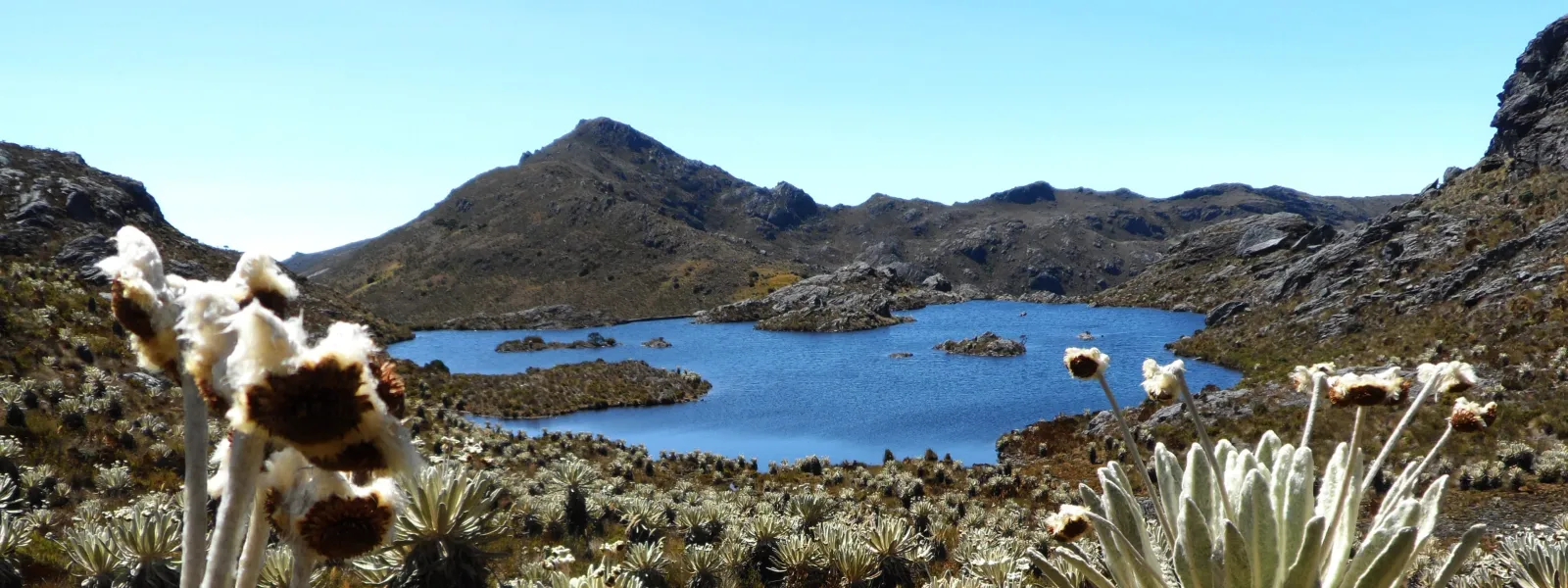
In the Andean region, high-mountain ecosystems known as páramos capture water from the fog and supply it to the lowlands. One such ecosystem is the Santurbán páramo, which provides fresh water to more than two million people in Colombia.
Santurbán, like the other páramos on the continent, also captures large amounts of carbon, making it a key ally in mitigating the climate crisis. It is also a refuge for hundreds of endangered species, including the iconic spectacled bear.
The land in and around the páramo contains gold and other minerals. This has put Santurbán in the spotlight of the multinational mining industry, which for decades has sought to establish large-scale projects in the ecosystem that threaten to degrade it.
The Committee for the Defense of Water and the Santurbán Páramo—a coalition of environmental advocates—has thwarted these ongoing attempts, with support from AIDA and other civil society organizations.
Background
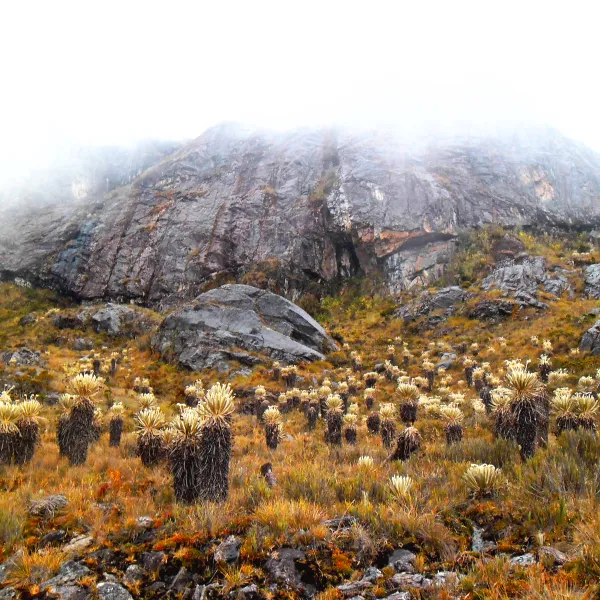
The Santurbán páramo is located in the heart of the Eastern Cordillera of the Colombian Andes, in the departments of Santander and Norte de Santander, at an elevation ranging from 2,200 to 4,290 meters above sea level.
It covers an area of 129,743 hectares and is home to 57 lakes. It serves as a habitat for 457 plant species and 293 species of vertebrate fauna.
There are mineral deposits in Santurbán, primarily gold, but also silver and copper. This explains the region’s mining tradition, particularly in the part of the páramo located in Santander, in the province of Soto Norte. The communities in the area have built their culture and identity around gold mining, which is mainly artisanal and small-scale.
But since the 1990s, the gold deposits in the páramo have also attracted foreign mining conglomerates seeking to develop large-scale projects. This has raised concerns among the population that relies on the Santurbán water sources, who have mobilized in defense of water, their land, and life.
Although national and international regulations prohibit mining in páramos, the Colombian government has granted mining concessions to transnational corporations in Santurbán.
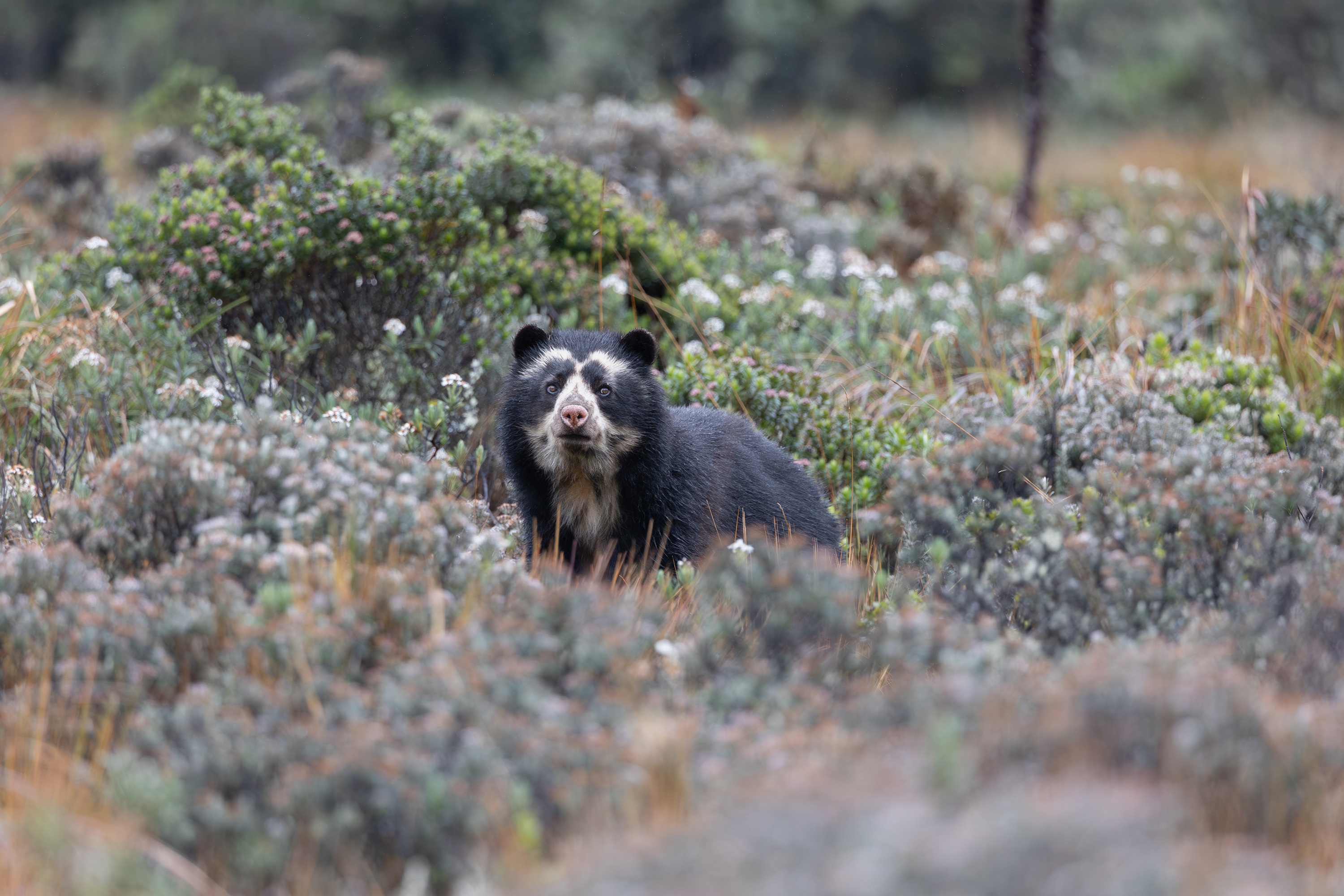
Photo: Keishpixl / Pixabay.
The long struggle to protect the páramo
One of the companies that sought to develop large-scale mining in Santurbán is Eco Oro Minerals Corp.—formerly Greystar Resources—a Canadian company that intended to establish the Angostura open-pit mine there to extract gold and silver. Between 1994 and 1995, the company acquired its mining titles and conducted exploration. And in 2010, it applied for a mining permit.
That was the year AIDA became involved in defending the ecosystem, supporting the Committee for the Defense of Water and the Santurbán Páramo. Our legal work helped convince the Colombian government to deny the mine an environmental permit in May 2011.
In January 2013, the government designated a portion of the páramo (11,700 hectares) as a Regional Natural Park. That year—together with the committee and partner organizations—we carried out a campaign and advocacy efforts to urge the government to recognize the entire Santurbán area as a páramo ecosystem through a delimitation based on scientific criteria. In December 2014, the Ministry of the Environment established a delimitation that protected 76% of the páramo (98,954 hectares).
Furthermore, as a result of a litigation supported by AIDA, in February 2016, Colombia’s highest court reaffirmed that mining in páramos is prohibited.
That same year, in December, the International Finance Corporation (IFC), the World Bank Group’s private sector arm, decided to divest from Eco Oro Minerals. This achievement was the result of a process that began in 2012, when the committee—advised and supported by AIDA and international partner organizations—filed a complaint before an independent accountability mechanism, which concluded that the IFC’s investment in the Angostura project failed to take into account the project’s social and environmental impacts, thereby contradicting the financial institution’s internal policies.
Also in 2016, Eco Oro Minerals filed an arbitration claim against the Colombian government with the International Centre for Settlement of Investment Disputes (ICSID), arguing that it had been adversely affected by government decisions aimed at protecting the country’s páramos, including the delimitation of Santurbán.
In 2017, the Constitutional Court invalidated the delimitation because the affected communities were not consulted. The high court ordered that a participatory delimitation be carried out.
And that year, a new threat to Santurbán emerged when the Canadian multinational Aris Mining applied for an environmental permit for Soto Norte, a gold mining project located near the páramo. Following citizen protests and technical objections, in October 2020, the National Environmental Licensing Authority shelved the project.
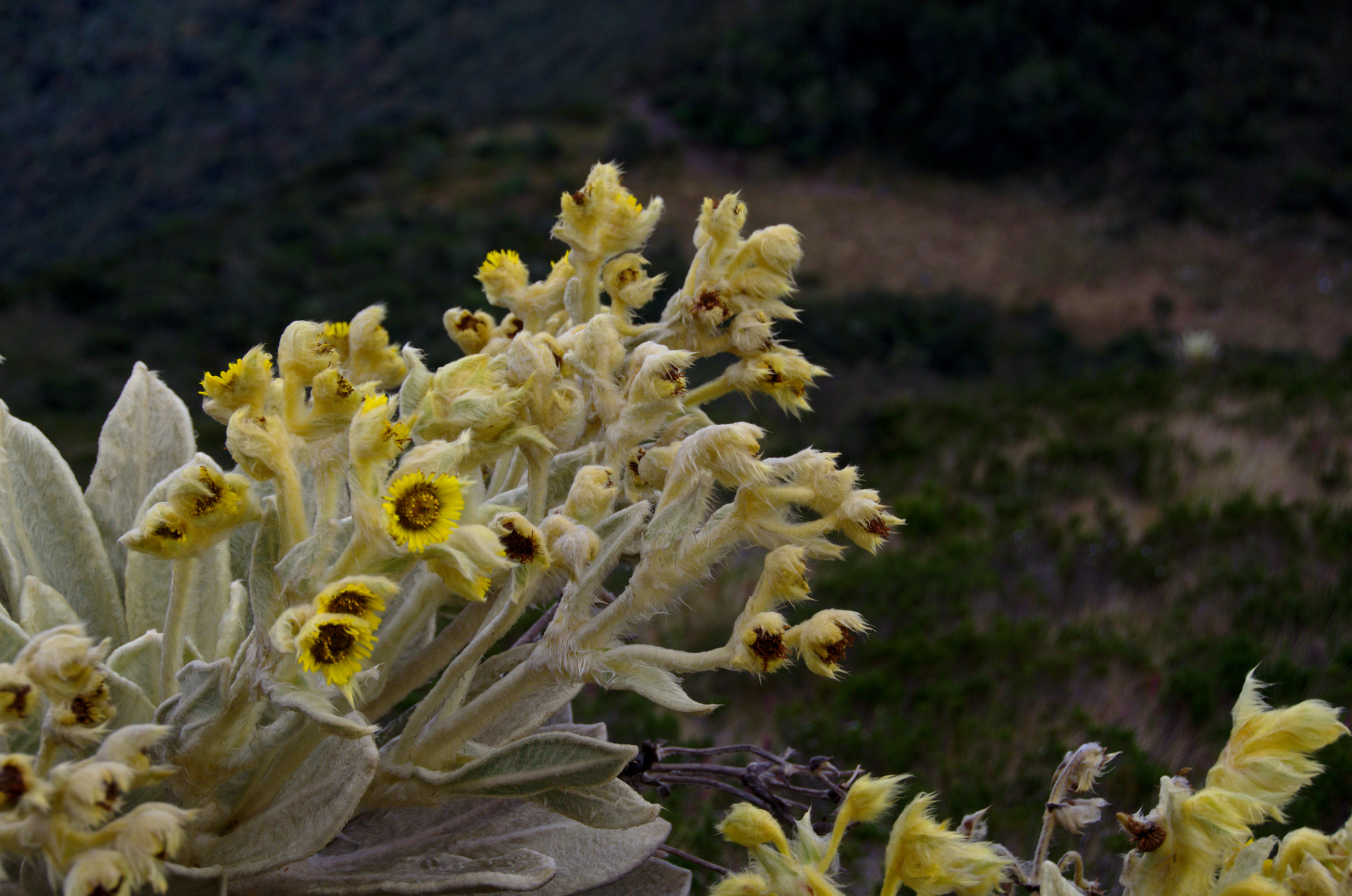
Photo: Aztlec.
Current situation
In March 2025, the Colombian government designated the western flank of the Santurbán massif as a temporary renewable natural resource reserve area, delimiting and protecting an area of 75,344.65 hectares. This resulted in a two-year suspension of the Soto Norte project. However, Aris Mining's contract to formalize Calimineros' small-scale mining activities through the purchase and processing of mineralized material remains in effect.
In addition, the Canadian mining company continues to move the project forward. In September 2025, it released its prefeasibility study, revising the mine’s original design.
Meanwhile, members of the Committee for the Defense of Water and the Santurbán Páramo face threats and stigmatization because of their work. In March 2025, UN Special Rapporteurs and the Working Group on Business and Human Rights denounced these incidents in communications sent to the governments of Colombia, Canada, and the United Arab Emirates, as well as to the companies Aris Mining and MDC Industry Holding Company LLC, the former co-owner of the Soto Norte project.
Regarding the arbitration claim filed by Eco Oro Minerals, in July 2024, ICSID ruled in favor of the Colombian government and rejected the Canadian company’s claim for USD 1.1 billion in compensation.
Concerning the delimitation of Santurbán, in July 2026, the Ministry of the Environment issued a resolution introducing the concept of "progressive delimitation." On that basis, the government proposes to progressively demarcate the páramo, covering 29,199 hectares across 19 municipalities—those where the participatory agreements required by the Constitutional Court in its 2017 ruling have already been finalized. It also proposes two measures on the creation and expansion of reserves to restrict mining in the ecosystem.
Learn more about the impacts of mining on the páramos of Latin America (in Spanish).
Partners:
Related projects
Belo Monte: Never say never!
By María José Veramendi Villa, senior attorney, AIDA, @MaJoVeramendi We won’t give up. This is AIDA’s motto for defending the rights of local Brazilians who face forced relocation as construction of the Belo Monte mega-dam moves forward in the Amazon. The Brazilian government is building the world’s third-largest dam on the Xingu River under the guise of meeting a growing demand for energy. One of the costs, according to official estimates, is the displacement of at least 20,000 people from indigenous and river communities. Their traditional lands will be flooded and their ways of life destroyed. But the people of the Xingu won’t be drowned quietly. They have organized to stand up for their rights. The government is so determined that it has hired spies to infiltrate the opposition movement. It has deployed public security forces to patrol the construction site and break up protests. And it plans to beef up controls in June and July, when global attention will focus on Brazil for the World Cup. Now Brazil’s government wants to criminalize protests against infrastructure projects, even if the affected communities are only voicing their dismay that they’ve been denied a basic constitutional and internationally recognized right to have a say in what happens. Throw in the towel? Not us. With your donations, AIDA is working to ensure that the people of the Xingu will be assured the right to be heard, to be consulted, and to live in a healthy environment. One focus of AIDA’s strategy is to tackle a legal instrument called Suspension of Security, which Brazil established during a military dictatorship. Higher courts have used it several times to “protect the public interest” by overruling lower courts, which, in the case of Belo Monte, have halted dam construction until the government consults and provides adequate protection and compensation for affected communities. At the sessions of the United Nations Human Rights Council in Geneva on March 10, AIDA’s attorney Alexandre Sampaio will explain how Brazil is using Suspension of Security to violate the human rights of Brazil’s indigenous peoples. Additionally, we are advocating, through the preparation and presentation of legal briefs, for the Supreme Court to reject Suspension of Security and determine that the project was illegal from the beginning. We have also asked the Inter-American Commission on Human Rights to analyze the human rights implications of Suspension of Security. AIDA provides all of its work free of charge to the people we help. Your donations through Global Giving provide the critical support that allows AIDA’s attorneys to pursue this challenging and important legal work, which empowers Amazon communities to defend their rights. Please consider making another gift in support of this work, helping in our “never-say-never” fight against Belo Monte. With great appreciation, The AIDA Team
Read more
Responsible fishing: Preserving our fish stocks for future generations
By Gladys Martínez, AIDA legal advisor What could be better than a plate of ceviche or fried fish and patacones (plantain chips)? OK, I must confess that I’m a sucker for seafood! And that’s why one of my favorite projects to come out of AIDA’s Marine Protection Program is the reportTools for Sustainable Fisheries and Coastal Management. Like me, over 4.2 billion people get 15% of their proteins from seafood. So you can see why it’s so important to put in place measures to encourage sustainable fishing and the conservation of marine biodiversity. After more than 10 years of research, AIDA has taken a stab at this. We have developed an 11-chapter report examining the plight of our oceans and the causes behind a crisis in the fishing industry. The report looks at what we can do to limit the impacts of the crisis, and it offers case studies drawing on comparative law and detailing the international obligations that states have to protect and conserve our oceans and their biodiversity. The report also explores the regulatory framework for marine conservation. We look at the various regulatory instruments that countries use to try to control fishing. These include programs for reducing the number of fishing boat licenses, seizing vessels, retraining industry workers and reducing long-haul fishing times, or the amount of time that this technique can be practiced at any given time. Specific mention is paid to the “bycatch” phenomenon, or when fishing methods fail to discriminate between a targeted species and others caught in the process. Recommendations are offered on how to scale back this damaging practice. We also explore the advantages of using marine protected areas (MPAs) as a conservation tool. Different MPAs are discussed, as defined by the type of protected ecosystem and their classification by international bodies like United Nations Educational, Scientific and Cultural Organization (UNESCO) and the International Union for Conservation of Nature. We describe MPAs in Brazil, Costa Rica and Mexico, and we offer suggestions for protecting our ocean resources with transnational MPAs. We also examine the differences between fishing reserves and protected areas where fishing is banned. As responsible fishing has so much potential to make a real impact, the report also gets into the main economic instruments that if designed and implemented effectively could promote the protection, renewal, preservation and sustainable use of our marine resources. These instruments can be divided into three categories: market- based (fish certification and eco-labeling), tax based (green taxes, rights and subsidies) and financial (creating funds and loans). The report also looks at the socio-environmental issues of the fishing industry. These issues are hugely important because a large percentage of the world population relies on fishing for jobs, food security and a potential way out of poverty. We examine how things stand in the industry and look at its problems of endemic poverty and tough working conditions. Tools for Sustainable Fisheries and Coastal Management is a study of aquaculture in the Americas, from its environmental impact to the risk to human health and the alternative methods that could be used. Examples are taken from different countries across the continent and the world to illustrate what works and what doesn’t. The report is concise. It explains the bare minimum we need to develop aquaculture while still reducing its impact. Of these essentials are the adequate zoning of projects and targeted species, the development of suitable techniques for feeding fish and disposing of waste, and ensuring that states monitor the industry properly. New techniques such as polyculture, inland saline cultivation and environmental certification are potential alternatives to mainstream fishing methods that have less impact on humans and the environment. I don’t know about you, but I want to keep eating seafood and I want my descendents to also share in this simple pleasure without feeling guilty. The future can often look bleak, but after reading AIDA’s report, I’m inclined to think that this desire of mine is a real possibility. So if you like what we do and you think you can help, please donate!
Read more
Mexico takes action to protect its wetlands from unsustainable development
AIDA and the members of the National Wetlands Committee have won a big victory after years of legal work to protect Mexico’s estuaries, coral reefs, mangroves and other wetlands. On February 4, 2014, Mexico’s Natural Protected Areas Commission (CONANP) announced a national wetlands policy, a legal framework we had been calling for since 2009. “It’s not a panacea, but it’s a good start,” says Sandra Moguel, an AIDA attorney who participated on the National Wetlands Committee, a CONANP -led group that helped develop the policy. Mexico is rich in wetlands. The country ranks second after the U.K. in the number of protected wetland areas under the Ramsar Convention, an international treaty for the conservation and sustainable use of these ecosystems. Centuries-old coral reefs serve as breeding pens for fish that feed the populace and delight divers. Mangrove forests house endangered species and perform increasingly important ecosystem services: they absorb carbon emissions and buffer the coastline against storms made harsher by a warmer climate. But many coral reefs, mangroves, estuaries, and rivers have suffered from poorly planned development. On the Sea of Cortez, for example, plans for mega-resorts have kept us busy defending Cabo Pulmo’s coral reefs, and now a proposed port expansion is threatening reefs in Veracruz. To protect these and other wetlands, we have had to draw on a jumble of laws and policies. Not any more. Now we have a specific instrument that is in line with the laws and policies for the protection of wetlands. The new policy sets actions, goals and priorities for the management and protection of wetlands. It is a vast improvement. And while a national wetlands policy is a Ramsar requirement, Mexico’s policy stands out from many others in the world for creating not just principles and guidelines, but also an action plan to make them happen. For example, the government will soon set and sustain minimum water levels to preserve mangroves. Other actions will guarantee the reasonable use of wetlands. Fishing, tourism, and other activities that rely on wetlands must be carried out sustainably. If damages occur, the state must ensure ecosystem restoration. A key element that AIDA pushed for is the principle of environmental progress. The new policy stops the government from continuing to modify and reduce natural protected areas to make way for large infrastructure projects or to benefit private interests. Now the authorities must preserve and promote environmental progress by respecting protected-area status and by improving safeguards. We are thrilled. This principle could help AIDA in our legal battle to stop construction of the Las Cruces hydropower project on the San Pedro Mezquital river. The dam would reduce water flows and sediments needed to feed and sustain mangroves in Marismas Nacionales, a protected wetlands area on the Sea of Cortez. Construction of the dam would clearly reverse environmental progress. The new policy has its weak spots—for example, it doesn’t set dates for reviewing the progress of the action plan, and the actions could be supplemented for more effect—but comparatively, it is at the forefront of wetlands policies in Latin America. “Mexico is setting an example,” Moguel says. “Let’s hope that this encourages other countries to follow suit.” Your contributions helped us press for and contribute to the development of the new policy, and with your continued help we will be able to aid Mexico in its efforts to protect its vital wetlands.
Read more