
Project
Alberto Peña Kay
Protecting the Santurban páramo from mining's damage
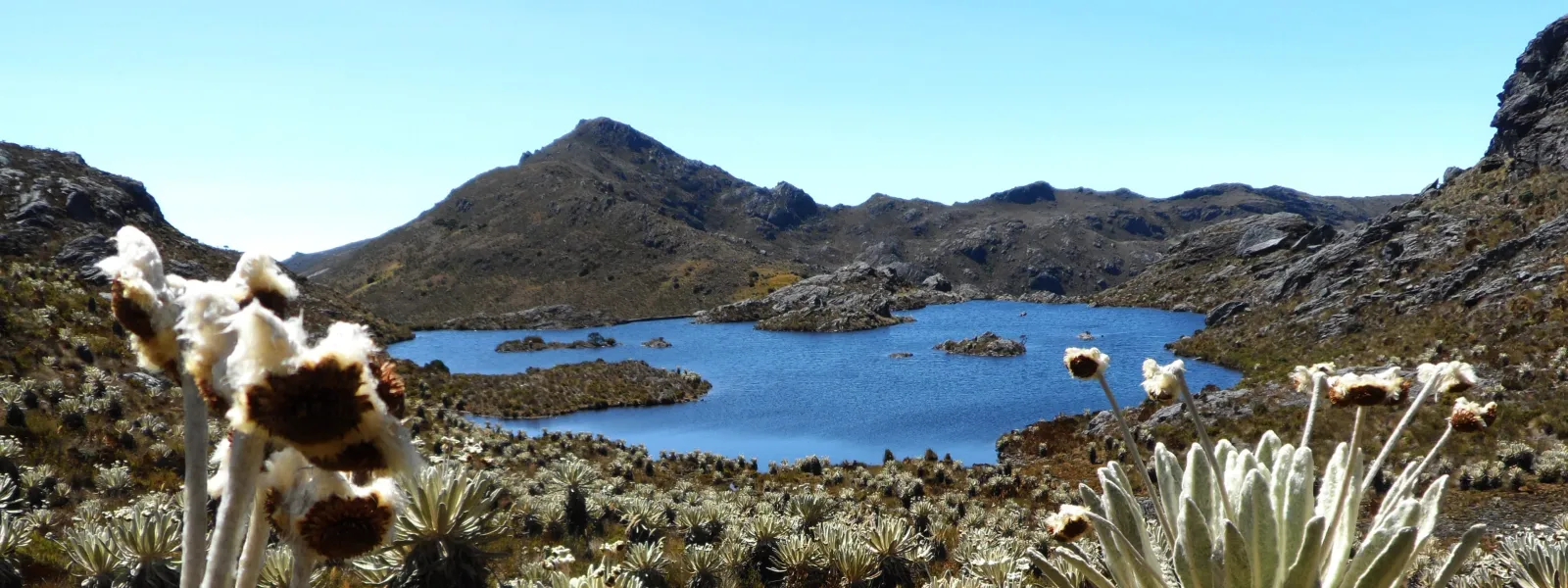
In the Andean region, high-mountain ecosystems known as páramos capture water from the fog and supply it to the lowlands. One such ecosystem is the Santurbán páramo, which provides fresh water to more than two million people in Colombia.
Santurbán, like the other páramos on the continent, also captures large amounts of carbon, making it a key ally in mitigating the climate crisis. It is also a refuge for hundreds of endangered species, including the iconic spectacled bear.
The land in and around the páramo contains gold and other minerals. This has put Santurbán in the spotlight of the multinational mining industry, which for decades has sought to establish large-scale projects in the ecosystem that threaten to degrade it.
The Committee for the Defense of Water and the Santurbán Páramo—a coalition of environmental advocates—has thwarted these ongoing attempts, with support from AIDA and other civil society organizations.
Background
The Santurbán páramo is located in the heart of the Eastern Cordillera of the Colombian Andes, in the departments of Santander and Norte de Santander, at an elevation ranging from 2,200 to 4,290 meters above sea level.
It covers an area of 129,743 hectares and is home to 57 lakes. It serves as a habitat for 457 plant species and 293 species of vertebrate fauna.
There are mineral deposits in Santurbán, primarily gold, but also silver and copper. This explains the region’s mining tradition, particularly in the part of the páramo located in Santander, in the province of Soto Norte. The communities in the area have built their culture and identity around gold mining, which is mainly artisanal and small-scale.
But since the 1990s, the gold deposits in the páramo have also attracted foreign mining conglomerates seeking to develop large-scale projects. This has raised concerns among the population that relies on the Santurbán water sources, who have mobilized in defense of water, their land, and life.
Although national and international regulations prohibit mining in páramos, the Colombian government has granted mining concessions to transnational corporations in Santurbán.

Photo: Keishpixl / Pixabay.
The long struggle to protect the páramo
One of the companies that sought to develop large-scale mining in Santurbán is Eco Oro Minerals Corp.—formerly Greystar Resources—a Canadian company that intended to establish the Angostura open-pit mine there to extract gold and silver. Between 1994 and 1995, the company acquired its mining titles and conducted exploration. And in 2010, it applied for a mining permit.
That was the year AIDA became involved in defending the ecosystem, supporting the Committee for the Defense of Water and the Santurbán Páramo. Our legal work helped convince the Colombian government to deny the mine an environmental permit in May 2011.
In January 2013, the government designated a portion of the páramo (11,700 hectares) as a Regional Natural Park. That year—together with the committee and partner organizations—we carried out a campaign and advocacy efforts to urge the government to recognize the entire Santurbán area as a páramo ecosystem through a delimitation based on scientific criteria. In December 2014, the Ministry of the Environment established a delimitation that protected 76% of the páramo (98,954 hectares).
Furthermore, as a result of a litigation supported by AIDA, in February 2016, Colombia’s highest court reaffirmed that mining in páramos is prohibited.
That same year, in December, the International Finance Corporation (IFC), the World Bank Group’s private sector arm, decided to divest from Eco Oro Minerals. This achievement was the result of a process that began in 2012, when the committee—advised and supported by AIDA and international partner organizations—filed a complaint before an independent accountability mechanism, which concluded that the IFC’s investment in the Angostura project failed to take into account the project’s social and environmental impacts, thereby contradicting the financial institution’s internal policies.
Also in 2016, Eco Oro Minerals filed an arbitration claim against the Colombian government with the International Centre for Settlement of Investment Disputes (ICSID), arguing that it had been adversely affected by government decisions aimed at protecting the country’s páramos, including the delimitation of Santurbán.
In 2017, the Constitutional Court invalidated the delimitation because the affected communities were not consulted. The high court ordered that a participatory delimitation be carried out.
And that year, a new threat to Santurbán emerged when the Canadian multinational Aris Mining applied for an environmental permit for Soto Norte, a gold mining project located near the páramo. Following citizen protests and technical objections, in October 2020, the National Environmental Licensing Authority shelved the project.
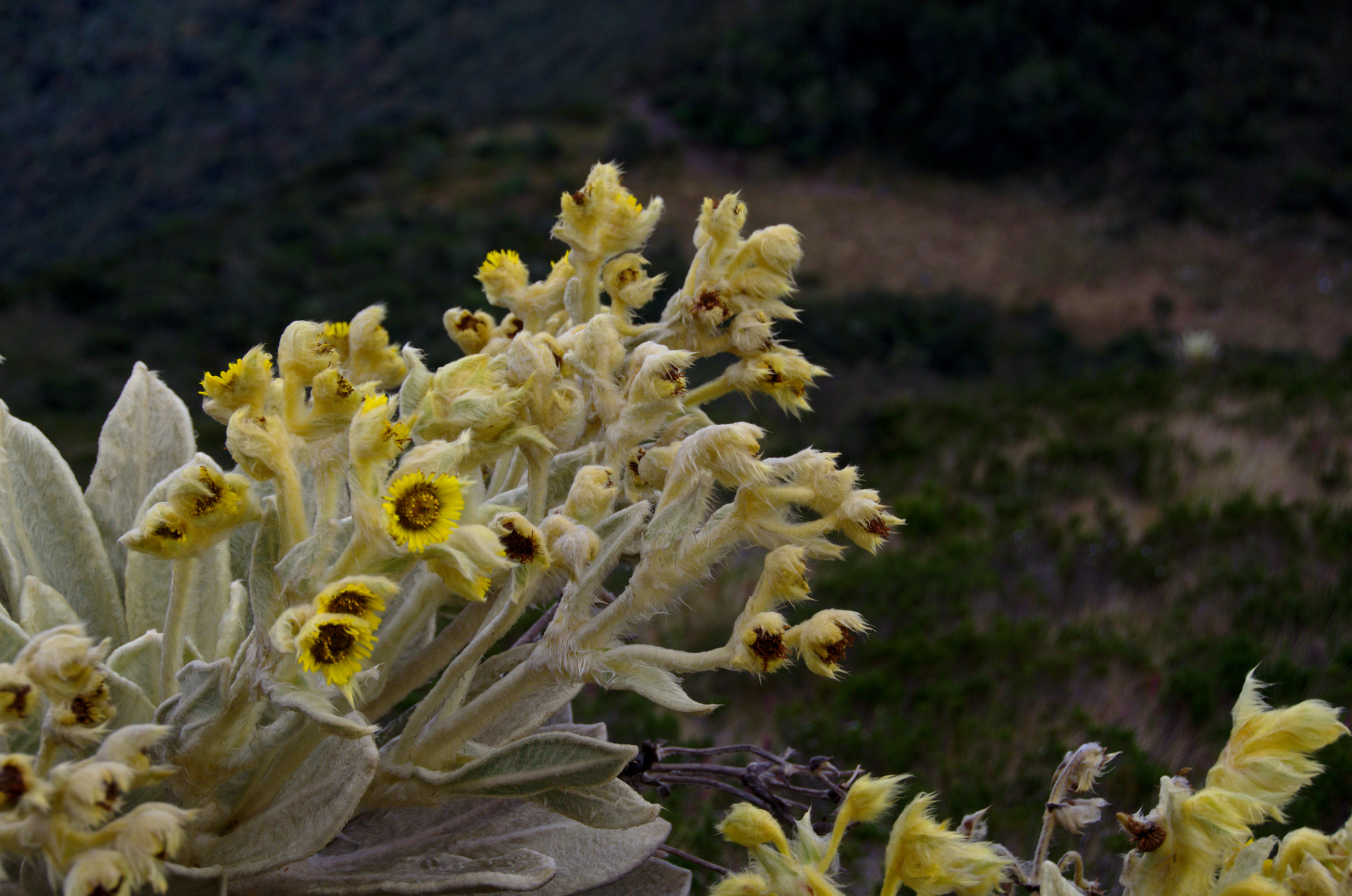
Photo: Aztlec.
Current situation
In March 2025, the Colombian government designated the western flank of the Santurbán massif as a temporary renewable natural resource reserve area, delimiting and protecting an area of 75,344.65 hectares. This resulted in a two-year suspension of the Soto Norte project. However, Aris Mining's contract to formalize Calimineros' small-scale mining activities through the purchase and processing of mineralized material remains in effect.
In addition, the Canadian mining company continues to move the project forward. In September 2025, it released its prefeasibility study, revising the mine’s original design.
Meanwhile, members of the Committee for the Defense of Water and the Santurbán Páramo face threats and stigmatization because of their work. In March 2025, UN Special Rapporteurs and the Working Group on Business and Human Rights denounced these incidents in communications sent to the governments of Colombia, Canada, and the United Arab Emirates, as well as to the companies Aris Mining and MDC Industry Holding Company LLC, the former co-owner of the Soto Norte project.
Regarding the arbitration claim filed by Eco Oro Minerals, in July 2024, ICSID ruled in favor of the Colombian government and rejected the Canadian company’s claim for USD 1.1 billion in compensation.
Concerning the delimitation of Santurbán, in July 2026, the Ministry of the Environment issued a resolution introducing the concept of "progressive delimitation." On that basis, the government proposes to progressively demarcate the páramo, covering 29,199 hectares across 19 municipalities—those where the participatory agreements required by the Constitutional Court in its 2017 ruling have already been finalized. It also proposes two measures on the creation and expansion of reserves to restrict mining in the ecosystem.
Learn more about the impacts of mining on the páramos of Latin America (in Spanish).
Partners:
Related projects

Climate change is real and will have a serious impact on human rights
By Héctor Herrera, AIDA legal advisor and coordinator of the Colombian Environmental Justice Network, @RJAColombia The impact of human-induced global climate change is already being felt, and going forward it will have a profound effect on the global population. Many people already believe the phenomenon exists, and they know about its likely impacts. But many others ignore the problem or deny it. In fact, the Climate Name Change initiative has compiled a list of policymakers who still deny climate change in the United States, a country with the greatest emissions of greenhouse gases in the Western Hemisphere. Watch the video Climate Name Change. Source: YouTube New and compelling evidence of climate change was published this year in the first part of the fifth report by the Intergovernmental Panel on Climate Change (IPCC), which was commissioned by the governments of 195 countries and with input from over 800 international scientists. The most recent IPCC report found that: · The warming of the climate system is ‘unequivocal,’ · The odds that humans are the principal cause of climate change are at least 95%, · The Earth’s average surface temperature rose 0.85ºC between the years 1880 and 2012, · The Earth’s sea level rose 0.19 meters between 1901 and 2010, · Average global temperatures could rise between 1.5ºC and 4.5ºC by the year 2100, and · Sea levels could rise between 26 and 82 centimeters by 2100. There is scientific unanimity on climate change, and it will have a negative impact on human rights. It is worth noting that in 2008 the General Assembly of the Organization of American States (OAS) requested the Inter-American Commission on Human Rights (IACHR) to investigate the link between climate change and human rights. Within this framework, AIDA published the report “A Human Crisis: Climate Change and Human Rights in Latin America,” which explains how the impact of global warming affects people’s ability to exercise their basic human rights in Latin America. It concludes that the IACHR should recognize the negative impacts of climate change on human rights and make recommendations to the OAS member states to fulfill their obligations to protect and guarantee human rights as global warming becomes more pronounced. The report mentions that the harmful effects of global warming include the loss of resources such as clean water as well as more extreme floods and storms, rising sea levels, more intense forest fires and droughts, and an increase in the spread of heat- and vector-borne diseases. These impacts, the document states, will have a profound effect on fundamental human rights such as the rights to a healthy environment, food, water, housing and a dignified life. AIDA says that in the face of such a scenario it is important to recognize that some communities are more vulnerable than others because they suffer from poverty or discrimination. The responsibility to take care of these communities is shared between different governments to varying degrees, which is to say that more responsibility falls on the states that have historically polluted the most. In sum, the report recommends that governments and other relevant bodies including intergovernmental organizations and international financial institutions adopt and promote measures to prevent human rights violations brought about by climate change. Althoughthese actions are executed on an institutional level, there are still many things we can do on a personal level. We can become informed of the problem, learn how to mitigate the effects of climate change and reduce greenhouse gas emissions, and apply these principles to our everyday lives. For example, you can ride a bike, reduce your electricity consumption or lessen your red meat intake. In short, the scientific community is certain that human-induced climate change is a reality. As AIDA notes in its report, the impact of global warming will seriously affect human rights in Latin America and around the globe. Now is the time to act! To learn more, visit the section on climate change on AIDA’s website.
Read more
The International Coral Reef Initiative and the role of AIDA
By Sandra Moguel, legal advisor, AIDA, @sandra_moguel Made up of government representatives, scientists and civil society members, the International Coral Reef Initiative (ICRI) meets annually to discuss and make decisions on priority issues regarding the protection of international coral reefs. This year the meeting was held in Belize from October 14 to 17, hosted by ICRI Secretariat co-chairs Australia and Belize. The ICRI describes itself as an informal partnership between nations and organizations. It was created out of concern for the degradation of coral reefs, mainly as a consequence of human activities including land pollution, anchoring and more. Its objectives are to: 1) Encourage the adoption of best practices in the sustainable management of coral reefs and associated ecosystems; 2) Build capacity; and 3) Raise awareness at all levels on the plight of coral reefs around the world. Although ICRI decisions are not binding among members, they have been crucial in highlighting the important role of coral reefs and similar ecosystems in guaranteeing environmental sustainability, food security and social and cultural welfare. In its own documents, the United Nations has recognized the work and cooperation efforts of the ICRI in the international area. Much of AIDA’s work runs in parallel with the ICRI’s efforts. AIDA’s Marine Biopersity and Coastal Protection Program aims to ensure that Latin American coral reefs are legally protected and managed in a way that safeguards their biological integrity. This was reason enough for us to apply for ICRI membership so we could take part in this platform for dialogue. By participating in Belize, AIDA sought to identify opportunities to expand our work in high-priority countries and islands in the Americas. We also think it is important that the ICRI should take into account our expertise in international law and our partnerships with participating organizations. It is also key to apply a legal framework to the ICRI discussion, and there are some interesting ad hoc committees involved in the initiative that could explore this aspect. We are particularly interested in the economic value of coral reefs and similar ecosystems, a topic that also addresses the issue of compensation. Another interest is in the law enforcement committee that performs research on the assessment of the evidence and standardization of rules in different countries. Colombia, Costa Rica, Granada, Panama and the Marine Ecosystem Services Partnership (MESP) all attended the ICRI meeting in Belize as new members. Ricardo Gómez, Mexico’s representative to the ICRI, made a formal presentation of his paper entitled Regional Strategy for the Control of Invasive Lionfish in the Wider Caribbean[1]. In addition, the International Union for Conservation of Nature (IUCN) presented its paper Status and Trends of Caribbean Coral Reefs: 1970-2012, edited by Jeremy Jackson, Mary Donovan and others. The paper looks at the changing patterns in coral reefs such as overfishing, coastal pollution, global warming and invasive species. The analysis concludes that rising tourism and overfishing are the most apparent causes of coral decline over the past 40 years. Coastal pollution is undoubtedly increasing, but no specific data are available to properly estimate its effects. Global warming also is a threat, but its effect was found to be of limited importance for now in the study. As a result of the study, the delegates approved a motion to ban fish traps, spearfishing and parrotfish fishing throughout the wider Caribbean and its adjacent ecosystems, and provide economic alternatives for affected fishermen. It also prompted a proposal to increase co-management agreements between government and civil society. At the meeting the delegates also discussed a simplification and standardization for monitoring the reefs and to make the results available in a database to facilitate adaptive management. It would be accompanied by a data exchange for local managers to benefit from others’ experiences. At the closing of the event, the delegates revised the ICRI Action Plan and held a ceremony to transfer the Secretariat responsibilities to Japan and possibly Thailand, which will be in charge of the administration of the ICRI in 2014. I really enjoyed working with my colleague and friend Haydée Rodríguez, another legal advisor at AIDA, who I talk with on a daily basis even though we live in different countries. I very much enjoyed discussing the scientific and management aspects of the coral reefs with experts in the protected marine environments of different countries. Although faced with similar problems, they resolve them in different ways because the same solutions cannot always be replicated in different contexts. In my point of view, the biggest challenge the ICRI faces is financing its platform. I also think it’s important to invite new members to encourage a greater representation from the government, scientific and civil society communities. [1] ReadEl Pez León y la necesidad de combatir especies invasoras(in Spanish, 20-noviembre-2012).
Read moreBrazilian Federal Court rules for public scrutiny over BNDES loans
Unprecedented decision calls for transparency in use of taxpayer funds, critics say. Rio de Janeiro, Brazil. A federal appeals court based in Rio de Janeiro (TRF-2) has ruled that the Brazilian National Development Bank (BNDES) must publicly disclose technical reports used for justifying approval of major loans. The court decision was provoked by a lawsuit filed in 2011 by Folha de São Paulo, one of Brazil’s largest newspapers, after BNDES refused a request for access to “analytical reports” produced by bank staff to appraise loans above BRL 100 million (USD 46 million) approved between January 2008 and March 2011. The reports analyze the situation of intended borrowers, justifications for bank financing and credit risks of proposed operations. Despite its status as a public financial institution, ultimately funded by Brazilian taxpayers, BNDES has refused to publicly disclose such documents, citing federal legislation on banking secrecy (Complementary Law no. 105/2001). Last year, a federal judge in Rio de Janeiro, Dario Ribeiro Machado Junior ruled partially in favor of the Folha de São Paulo lawsuit, authorizing public disclosure of reports on BNDES loans to public enterprises, but not on operations involving private companies. The newspaper appealed the decision to the TRF-2, calling for disclosure of all documents, while BNDES also appealed, demanding that all reports on loan operations remain secret. In a 2-1 decision last week, the appeals court determined that reports on BNDES loan operations requested by the Folha de São Paulo should be made public, except for “banking and fiscal information of borrowers”. It is expected that BNDES will appeal the court’s decision. In casting her vote, Judge Carmen Silvia Lima de Arruda of TRF-2 concluded that the Folha de São Paulo possesses a Constitutional right, supported by a previous Supreme Court decision, to request public disclosure of BNDES documents that illustrate criteria for loan approval. Arruda’s decision argues that “in reality, BNDES does not publicize any data relevant to the analysis carried out by its technical departments concerning the opportunity and convenience of loans that have been contracted. The absence of publicity regarding such criteria in the operations of BNDES reveals a system of planned obscurity”. In a similar vein, fellow judge Guilherme Couto de Castro of TRF-2 voted that BNDES documents concerning its loan operations are “essential and of unquestionable public interest; there should be no impediments to the disclosure of such data”. The judge also argued that an unstated goal of BNDES, in denying public access to loan documents, is to avoid disclosure of “favors granted to the friends of the king”. Such mistrust reflects a growing controversy over a marked tendency within BNDES to favor a select group of powerful Brazilian multinational corporate actors in its lending portfolio, while failing to publicly disclose justifications for loan approval and credit risks. A particularly notorious example involves mining and oil tycoon Eike Batista, a so-called ‘national champion’ of the Lula and Rousseff administrations, that was the recipient of BRL 10.4 billion (USD 4.175 billion) in low-interest loans. Once Brazil's wealthiest individual, Batista dramatically fell from grace in 2013 when a series of high-risk business ventures failed to produce high returns promised by the billionaire causing widespread alarm that BNDES had no effective system for managing risks associated with its loans. The TRF-2 decision benefitted from a legal opinion provided by the Federal Public Prosecutors’ Office (Ministério Público Federal - MPF). In a document signed by federal prosecutor Luis Pereira Claudio Leiva, MPF argued that transparency is an essential element of BNDES’ operations, given that it is a public financial institution funded by Brazilian taxpayers that should be financing projects in the public interest. "The performance of BNDES deserves severe criticism due to its manipulation by political interests, with fuzzy criteria that reach the extreme of complacency in the face of defaults by borrowers and concessionaires," he said. “This ruling is a victory for transparency. The bank uses taxpayer money to back some of the riskiest loans in Brazil and abroad, and the costs of so many of these investments end up being shouldered by the public” said Brazilian lawyer Maíra Irigaray Castro, of Amazon Watch. “BNDES must open its books to the Brazilian public. That’s the only way to guarantee that taxpayer funds are used correctly.” In November 2011, the Brazilian Congress passed a bill on public access to information (Federal Law 12.527/2011) within the context of a voluntary multilateral initiative known as Open Government Partnership[1] which allows individuals to request information from government institutions that must be disclosed unless a clear justification can be provided on the need for confidentiality. Civil society organizations have long lobbied for transparency regarding BNDES loans in Brazil and elsewhere – claiming that the public has the right to scrutinize the bank's use of capital obtained from the country’s taxpayers. Particular attention has focused on controversial projects such as the Belo Monte mega-dam complex in the Brazilian Amazon, generously financed through a record-breaking loan package of BRL 25.5 billion (USD 11.6 billion). Despite the new legislation, BNDES has repeatedly denied requests for access to information on key aspects of its loans operations, such as analysis of social, environmental and economic risks. “This decision (of TRF-2) is a positive sign from the Brazilian judiciary that represents a small and important step for human rights protection and accountability of BNDES operations. The bank’s investments in large-scale development projects, such as Belo Monte and other large dams in the Amazon, have had serious impacts on the human rights of communities and on the environment.” said María José Veramendi from AIDA. “Belo Monte, for example, has precautionary measures from the Inter-American Commission on Human Rights because of the lack of protection of indigenous communities that are impacted.” Lack of transparency linked to deficient social and environmental safeguards In February 2012, the federal environmental agency, IBAMA, fined Norte Energia, S.A. a public-private consortium that holds the concession for the Belo Monte dam complex, a total for BRL $7 million for failing to implement required actions to mitigate the social and environmental impacts of the project, as stipulated in licenses granted in 2010 and 2011. The fine, which is under appeal at IBAMA, apparently provoked no concrete action from BNDES to address non-compliance with environmental legislation. During the implementation of BNDES-funded projects, monitoring of human rights and environmental legislation, including compliance with other specific loan conditions, has been notoriously deficient, critics say. When violations have been documented, BNDES has typically failed to take corrective action, including suspension of loan disbursements, unless environmental licenses themselves are suspended by IBAMA or court decision. According to Brent Millikan from International Rivers, suspension of environmental licenses is highly unlikely, given the high levels of political intervention within IBAMA and the judicial system. The number of civil lawsuits filed against BNDES-funded projects for violations of the rights of affected communities, labor legislation at construction sites and environmental legislation has become the focus of increasing attention in Brazil. A just-released study by investigative journals Agência Pública and O ECO identified a total of 80 lawsuits filed by state and federal Public Prosecutors against 17 of 20 large infrastructure projects financed by BNDES in the Brazilian Amazon between 2008 and 2012. According to the report, the most common motivations for lawsuits include defective environmental impact assessments, lack of prior consultations with affected communities as legally mandated, non-compliance with conditions of environmental licenses and violations of workers’ rights at dam sites, including unsafe conditions contributing to accidental deaths. The’ champion’ among infrastructure projects under litigation was Belo Monte, with 21 lawsuits filed over more than a decade. In September, the Federal Public Prosecutor`s Office (MPF) filed a lawsuit that included BNDES as a co-defendant with Norte Energia and IBAMA, citing a chronic failure to assess and mitigate impacts of Belo Monte on the Xikrin indigenous people that live near the dam site on the Xingu River. Further information Read the press release from the Ministério Público Federal on the TRF-2 decision (in Portuguese). Read the article in Folha de São Paulo on their lawsuit demanding transparency at BNDES (in Portuguese). See article on the Folha de São Paulo lawsuit against BNDES with link to the TRF-2 decision (in Portuguese). http://www.migalhas.com.br/Quentes/17,MI188278,101048-Inexiste+sigilo+bancario+em+relatorios+de+financiamento+produzidos Read the Bloomberg story “Batista Collapse Has Prosecutors at BNDES's Door”. See the article by investigative journalists on civil action lawsuits filed against BNDES-funded infrastructure projects in the Brazilian Amazon (in Portuguese). See MPF press release on new lawsuit against violations of Xikrin indigenous rights and environmental legislation at Belo Monte, including BNDES as a co-defendant (in Portuguese). [1] http://www.opengovpartnership.org/
Read more