
Project
Alberto Peña Kay
Protecting the Santurban páramo from mining's damage
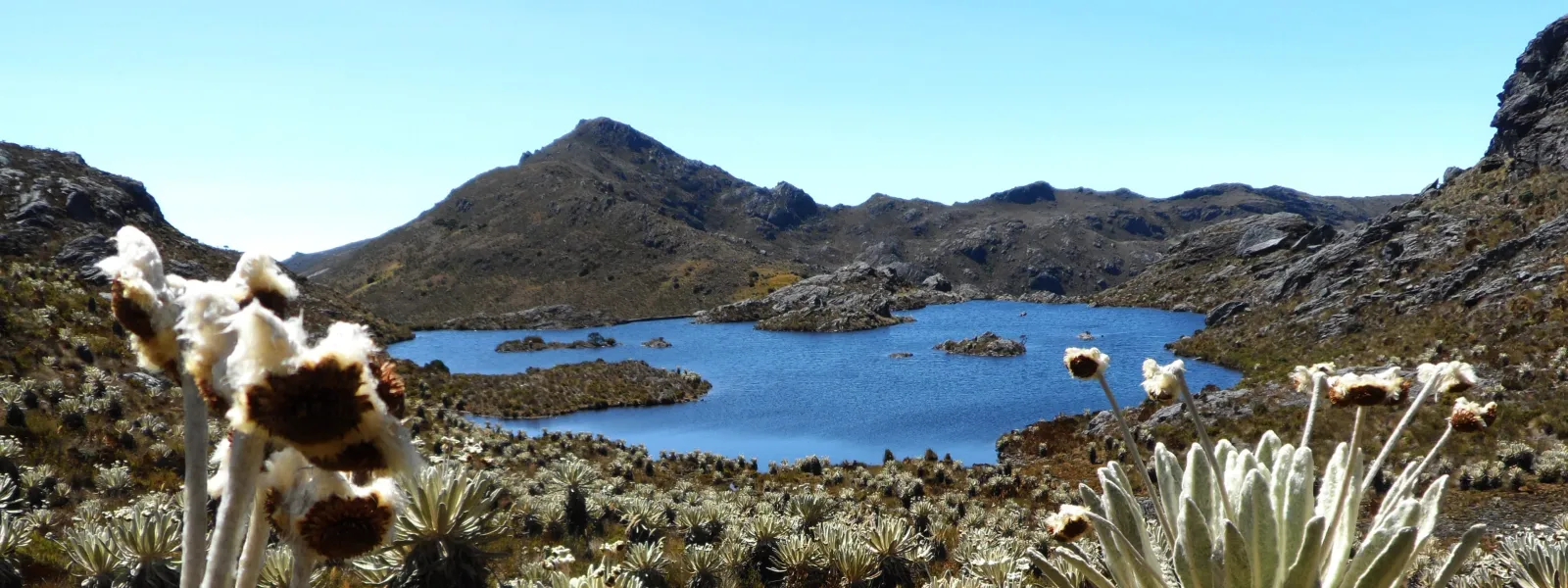
In the Andean region, high-mountain ecosystems known as páramos capture water from the fog and supply it to the lowlands. One such ecosystem is the Santurbán páramo, which provides fresh water to more than two million people in Colombia.
Santurbán, like the other páramos on the continent, also captures large amounts of carbon, making it a key ally in mitigating the climate crisis. It is also a refuge for hundreds of endangered species, including the iconic spectacled bear.
The land in and around the páramo contains gold and other minerals. This has put Santurbán in the spotlight of the multinational mining industry, which for decades has sought to establish large-scale projects in the ecosystem that threaten to degrade it.
The Committee for the Defense of Water and the Santurbán Páramo—a coalition of environmental advocates—has thwarted these ongoing attempts, with support from AIDA and other civil society organizations.
Background
The Santurbán páramo is located in the heart of the Eastern Cordillera of the Colombian Andes, in the departments of Santander and Norte de Santander, at an elevation ranging from 2,200 to 4,290 meters above sea level.
It covers an area of 129,743 hectares and is home to 57 lakes. It serves as a habitat for 457 plant species and 293 species of vertebrate fauna.
There are mineral deposits in Santurbán, primarily gold, but also silver and copper. This explains the region’s mining tradition, particularly in the part of the páramo located in Santander, in the province of Soto Norte. The communities in the area have built their culture and identity around gold mining, which is mainly artisanal and small-scale.
But since the 1990s, the gold deposits in the páramo have also attracted foreign mining conglomerates seeking to develop large-scale projects. This has raised concerns among the population that relies on the Santurbán water sources, who have mobilized in defense of water, their land, and life.
Although national and international regulations prohibit mining in páramos, the Colombian government has granted mining concessions to transnational corporations in Santurbán.
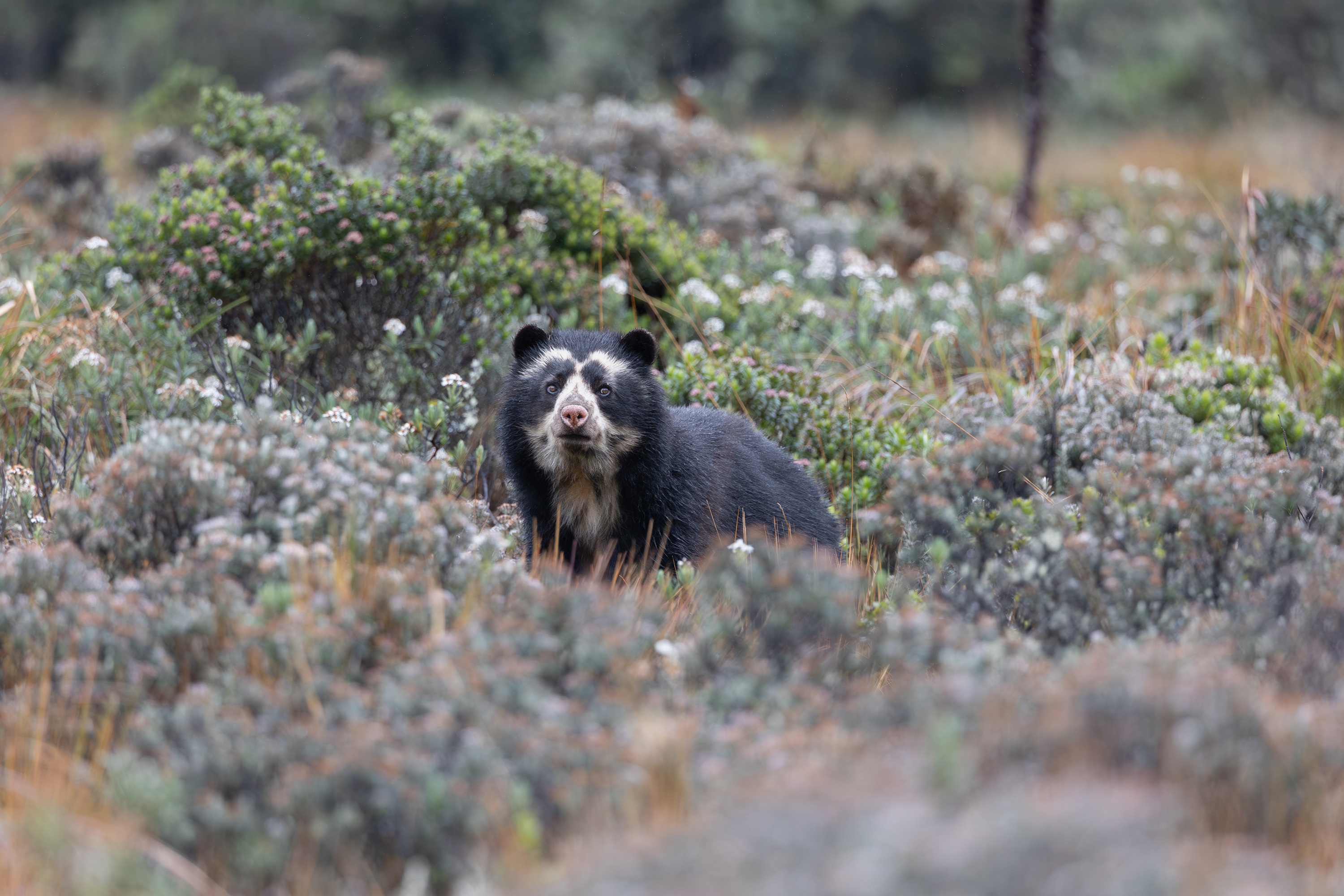
Photo: Keishpixl / Pixabay.
The long struggle to protect the páramo
One of the companies that sought to develop large-scale mining in Santurbán is Eco Oro Minerals Corp.—formerly Greystar Resources—a Canadian company that intended to establish the Angostura open-pit mine there to extract gold and silver. Between 1994 and 1995, the company acquired its mining titles and conducted exploration. And in 2010, it applied for a mining permit.
That was the year AIDA became involved in defending the ecosystem, supporting the Committee for the Defense of Water and the Santurbán Páramo. Our legal work helped convince the Colombian government to deny the mine an environmental permit in May 2011.
In January 2013, the government designated a portion of the páramo (11,700 hectares) as a Regional Natural Park. That year—together with the committee and partner organizations—we carried out a campaign and advocacy efforts to urge the government to recognize the entire Santurbán area as a páramo ecosystem through a delimitation based on scientific criteria. In December 2014, the Ministry of the Environment established a delimitation that protected 76% of the páramo (98,954 hectares).
Furthermore, as a result of a litigation supported by AIDA, in February 2016, Colombia’s highest court reaffirmed that mining in páramos is prohibited.
That same year, in December, the International Finance Corporation (IFC), the World Bank Group’s private sector arm, decided to divest from Eco Oro Minerals. This achievement was the result of a process that began in 2012, when the committee—advised and supported by AIDA and international partner organizations—filed a complaint before an independent accountability mechanism, which concluded that the IFC’s investment in the Angostura project failed to take into account the project’s social and environmental impacts, thereby contradicting the financial institution’s internal policies.
Also in 2016, Eco Oro Minerals filed an arbitration claim against the Colombian government with the International Centre for Settlement of Investment Disputes (ICSID), arguing that it had been adversely affected by government decisions aimed at protecting the country’s páramos, including the delimitation of Santurbán.
In 2017, the Constitutional Court invalidated the delimitation because the affected communities were not consulted. The high court ordered that a participatory delimitation be carried out.
And that year, a new threat to Santurbán emerged when the Canadian multinational Aris Mining applied for an environmental permit for Soto Norte, a gold mining project located near the páramo. Following citizen protests and technical objections, in October 2020, the National Environmental Licensing Authority shelved the project.
Photo: Aztlec.
Current situation
In March 2025, the Colombian government designated the western flank of the Santurbán massif as a temporary renewable natural resource reserve area, delimiting and protecting an area of 75,344.65 hectares. This resulted in a two-year suspension of the Soto Norte project. However, Aris Mining's contract to formalize Calimineros' small-scale mining activities through the purchase and processing of mineralized material remains in effect.
In addition, the Canadian mining company continues to move the project forward. In September 2025, it released its prefeasibility study, revising the mine’s original design.
Meanwhile, members of the Committee for the Defense of Water and the Santurbán Páramo face threats and stigmatization because of their work. In March 2025, UN Special Rapporteurs and the Working Group on Business and Human Rights denounced these incidents in communications sent to the governments of Colombia, Canada, and the United Arab Emirates, as well as to the companies Aris Mining and MDC Industry Holding Company LLC, the former co-owner of the Soto Norte project.
Regarding the arbitration claim filed by Eco Oro Minerals, in July 2024, ICSID ruled in favor of the Colombian government and rejected the Canadian company’s claim for USD 1.1 billion in compensation.
Concerning the delimitation of Santurbán, in July 2026, the Ministry of the Environment issued a resolution introducing the concept of "progressive delimitation." On that basis, the government proposes to progressively demarcate the páramo, covering 29,199 hectares across 19 municipalities—those where the participatory agreements required by the Constitutional Court in its 2017 ruling have already been finalized. It also proposes two measures on the creation and expansion of reserves to restrict mining in the ecosystem.
Learn more about the impacts of mining on the páramos of Latin America (in Spanish).
Partners:
Related projects

"A full belly makes a happy heart": How does food waste affect the environment?
By Gladys Martínez, legal advisor, AIDA It’s the weekend and we’re at the beach in Costa Rica. The sun is shining, we’re surrounded by nature and listening to the sound of the sea as we enjoy a delicious traditional breakfast of tropical fruit, gallopinto (rice and beans), eggs, home-made tortillas and coffee brewed in a cloth filter. I wish I could say, “And we lived happily ever after". But I can’t. I get upfrom the table to see a heapof leftovers... The problem of food waste and its impacts On World Environment Day this past June 5, the Food and Agriculture Organization of the United Nations (FAO) presented alarming data about the impact of food waste on the environment. In the report Food wastage footprint: Impacts on natural resources, the FAO states that food production accounts for: - 25% of the earth’s surface, - 70% of water consumption, - 80% of deforestation, - and 30% of the greenhouse gas emissions that contribute to climate change. The report notes that producing one liter of milk requires 1,000 liters of water! This means that pouring a glass of milk down the sink is equivalent to dumping 250 liters of water. Throwing out one hamburger is like tossing more than 60,000 liters of water. In terms of total food wastage, 54% is generated during the production, handling and storage at harvests. The remaining 46% is generated during the processing, distribution and consumption of food. The direct economic cost of food wastage is estimated at more than USD $750 billion annually. This figure seems unthinkable on a planet where one in every seven people go hungry and more than 20,000 children under the age of five die from hunger every day. A lot can done inpidually and as a country Costa Rica has campaigns aimed at motivating people to consume responsibly and raise awareness about sensible eating to preserve the environment and other people’s right to food. Working together with the United Nations Environment Programme (UNEp) and the FAO on the campaign Think.Eat.Save, Costa Rican singers Debi Nova, José Cañas (in Spanish) and Manuel Obregón (in Spanish), who doubles as the country’s minister of culture and youth, composed a song against food wastage called “Alimento para el alma” (“Food for the Soul”). ”Food for the Soul" video (in Spanish). Source: YouTube The Food Bank (Banco de Alimentos) is another Costa Rican initiative. Fourteen private companies have agreed to donate products unfit for sale because of damaged labels or packaging. The social and environmental awareness of these companies has made it possible for 15,169 poor people to receive about two plates of food every day over the past year and a half. What can I do at home? Everyone can helpreduce food waste. The campaign Think.Eat.Save offers these helpful tips: ▪ Purchase wisely: Don’t buy more than you need and choose products withless packaging. ▪ Better planning: Cook what you can eat and freeze the leftovers to eat later. ▪ Support distributors of organic and “wonky” fruits and vegetables. Eating organic food has a minimal impact on your health and the environment, and misshapen fruits and vegetables still taste delicious even if they do not look perfect. ▪ Read food labels carefully so as not to throw away perfectly good food. Nine out of 10 people throw out food because they don’t understand what the labels mean.Did you know that if you put an egg in a bowl of water and it floats, that means the egg is bad? If it sinks, it’s still edible. Find out more at FixFoodDates.com ▪ Reduce your food waste and compost what you don’t eat. You can find more useful advice at thinkeatsave.org. Bon appétit!
Read more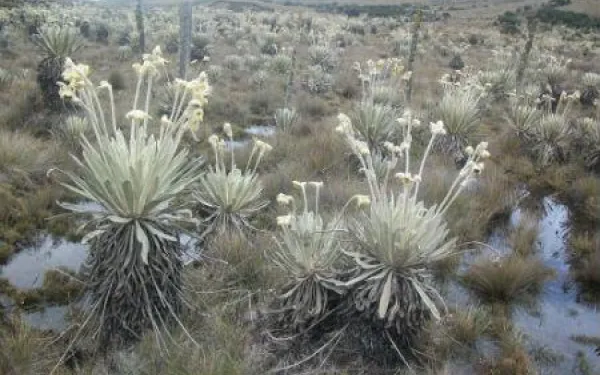
What are the páramos and what can you do to protect them?
By Carlos Lozano, legal advisor, AIDA, @CLozanoAcosta What are páramos? The answers to this question are the very reasons why we must support their conservation. They are rare and unique ecosystems. The páramos provide an environmental service to more than 100 million people. They possess the greatest botanical biopersity of all high-altitude ecosystems: 60% of their plant species are endemic (that is, they are found only in the páramos). Their formation is a slow and steady process that has taken hundreds of thousands of years. Although the Colombian páramo is considered tropical because it is situated near the equator, the climate is not hot. It is rather cool due to its high altitude of 3,000 meters (9,842 feet) above sea level. The páramo is a geographical paradox: a frosty ecosystem found in a tropical zone. It alsois an incredible beauty. They form a major part of Latin American history. The páramo was dubbed “the land of the mist” by the conquistadores. The indigenous inhabitants incorporated the páramo in traditional ceremonies as it was considered to be a sacred area. The Muisca people of Colombia’s central highlands believed that the páramo gave birth to their primordial mother, the mythological Bachué. The famous legend of El Dorado also originated in the páramo; A Muisca chief was said to have covered himself in gold and thrown himself into Lake Guatavita, prompting the conquistadores to go on a great gold rush in the search of his treasures. During the Colombian War of Independence, Simón Bolívar crossed the Pisba páramo to elude Spanish army sentinels stationed on the main roads. They are a vital water source and a carbon sink that combats climate change. The páramos feed streams, rivers, aquifers and water catchment areas. These in turn supply water to major South American cities including Bogotá and Quito. The páramo also have a remarkable ability to store water through its vegetation and unique geological and ecological features. It also acts as a carbon sink, accumulating carbon through organic matter in the soil. Invasive activities like mining have a detrimental impact on this process by releasing carbon stored in the soil, contributing to global warming. These points demonstrate how the páramos play an important role as a vital source of water and an ally in combating climate change. Their protection is crucial for our future. In Colombia, where more than half of the world’s páramos are located, the government is making a decision on the future of these valuable and fragile ecosystems through a process of officially demarcating their territorial boundaries. Despite the ecological and environmental importance, the boundaries of the Colombian páramos still have not been defined. This poses a serious risk to the area as it is left vulnerable to harmful activities that could destroy it. To truly protect the páramos from irreparable damage it is essential to clearly define its territorial boundaries. The Santurbán páramo, located between the departments of Santander and North Santander, will soon become the first area to be officially demarcated, according to government plans. Mining interestsalready pose a threat to the area. What is urgent now is for Colombia’s minister of environment to demarcate the Santurbán páramo territory based on scientific criteria. AIDA is taking online action to call for this proposal. With YOUR SIGNATURE, you can support the cause and pressure the government to protect the páramos. Join us to protect the páramos!YOU CAN SIGN too (in Spanish)!ASK Colombia’s president and minister of environment to properly delineate the Santurbán páramo NOW! #SaveSanturbán
Read more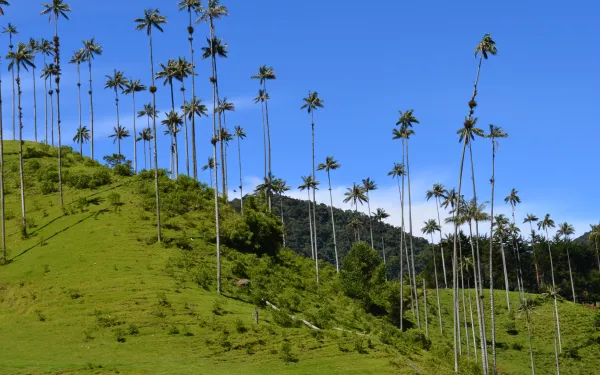
Letter to the Board of the Green Climate Fund
Organizations, movements and civil society groups from developing countries -with decades of experience working for the rights and aspirations of peoples and communities- express their unified call for the adoption of the most robust environmental and social protections at the Green Climate Fund.
Read more