
Project
Alberto Peña Kay
Protecting the Santurban páramo from mining's damage
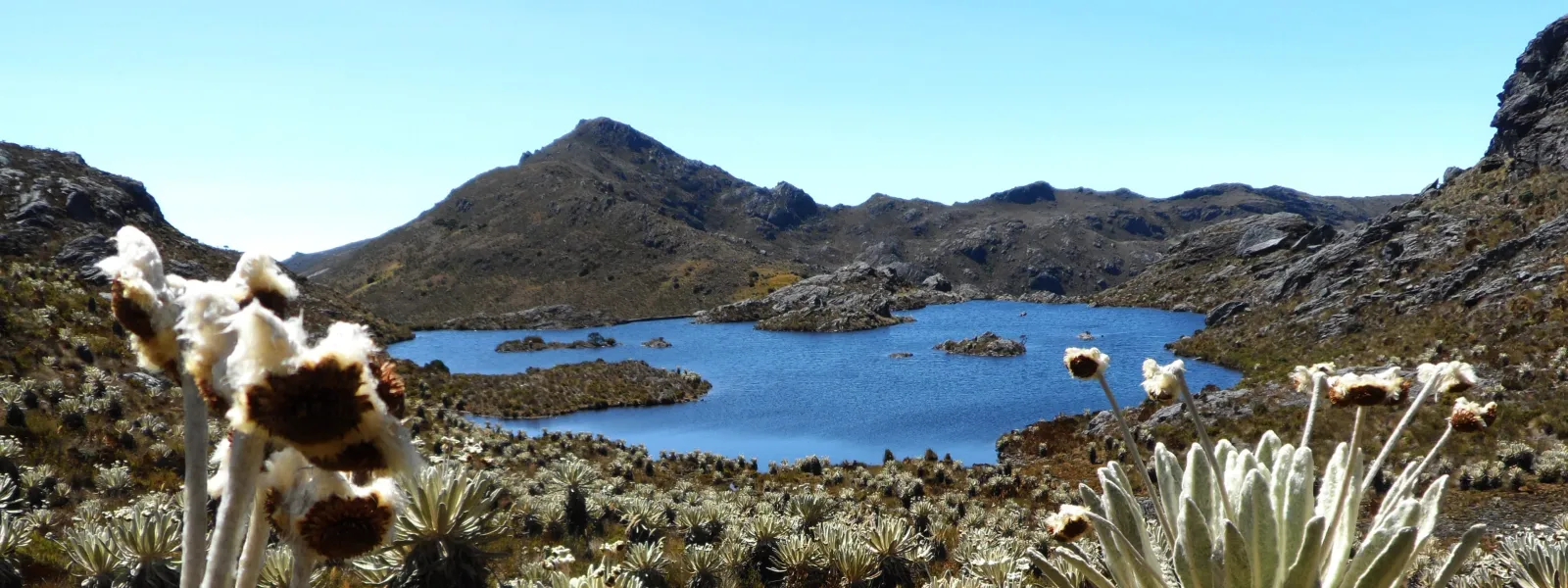
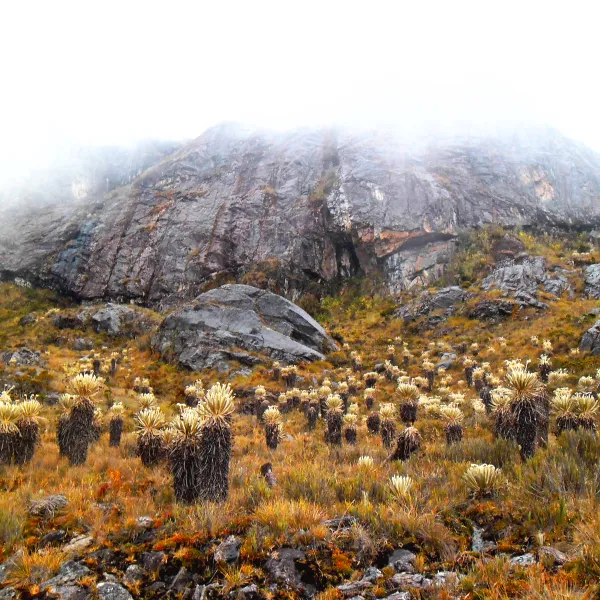
In the Andean region, high-mountain ecosystems known as páramos capture water from the fog and supply it to the lowlands. One such ecosystem is the Santurbán páramo, which provides fresh water to more than two million people in Colombia.
Santurbán, like the other páramos on the continent, also captures large amounts of carbon, making it a key ally in mitigating the climate crisis. It is also a refuge for hundreds of endangered species, including the iconic spectacled bear.
The land in and around the páramo contains gold and other minerals. This has put Santurbán in the spotlight of the multinational mining industry, which for decades has sought to establish large-scale projects in the ecosystem that threaten to degrade it.
The Committee for the Defense of Water and the Santurbán Páramo—a coalition of environmental advocates—has thwarted these ongoing attempts, with support from AIDA and other civil society organizations.
Background
The Santurbán páramo is located in the heart of the Eastern Cordillera of the Colombian Andes, in the departments of Santander and Norte de Santander, at an elevation ranging from 2,200 to 4,290 meters above sea level.
It covers an area of 129,743 hectares and is home to 57 lakes. It serves as a habitat for 457 plant species and 293 species of vertebrate fauna.
There are mineral deposits in Santurbán, primarily gold, but also silver and copper. This explains the region’s mining tradition, particularly in the part of the páramo located in Santander, in the province of Soto Norte. The communities in the area have built their culture and identity around gold mining, which is mainly artisanal and small-scale.
But since the 1990s, the gold deposits in the páramo have also attracted foreign mining conglomerates seeking to develop large-scale projects. This has raised concerns among the population that relies on the Santurbán water sources, who have mobilized in defense of water, their land, and life.
Although national and international regulations prohibit mining in páramos, the Colombian government has granted mining concessions to transnational corporations in Santurbán.
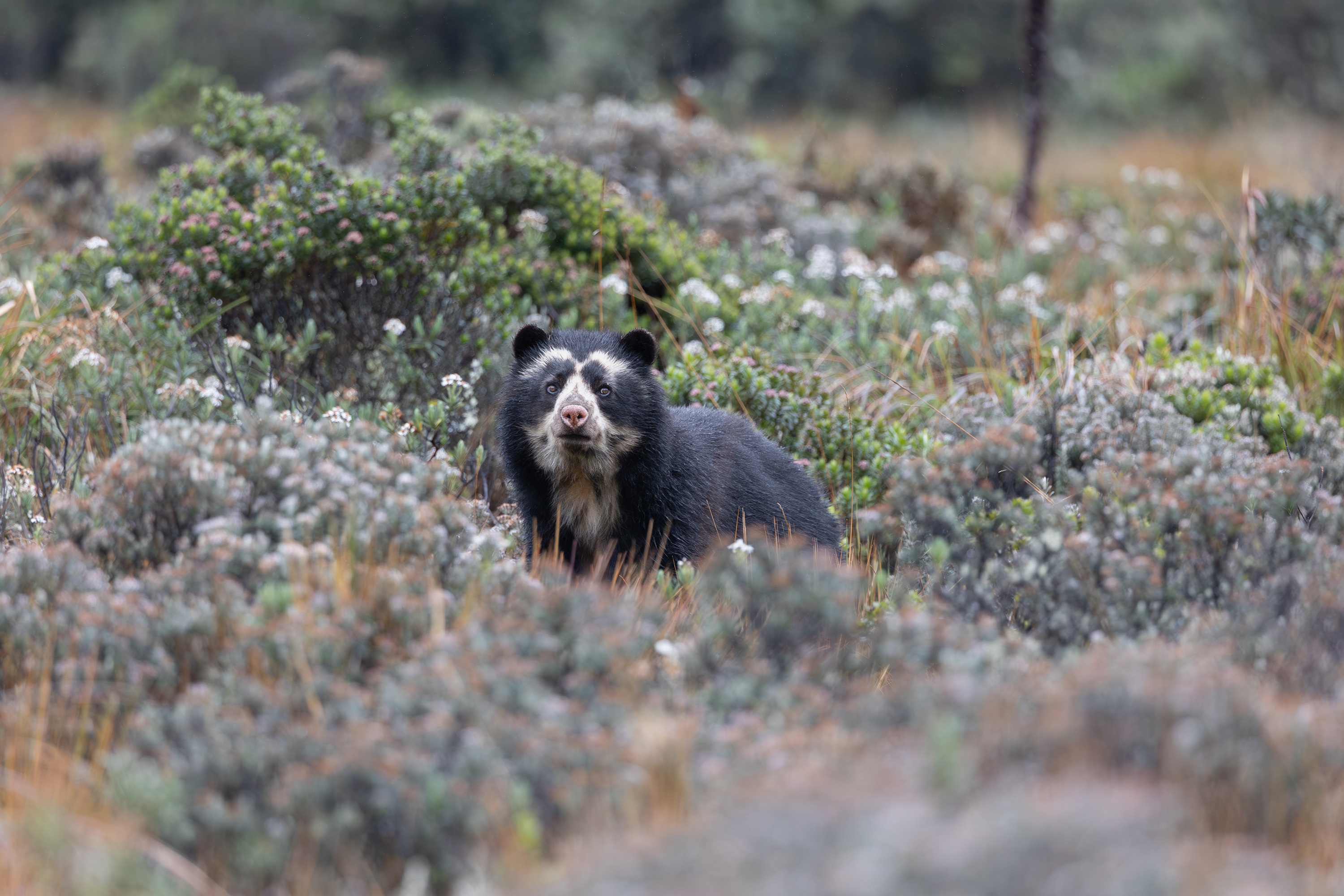
Photo: Keishpixl / Pixabay.
The long struggle to protect the páramo
One of the companies that sought to develop large-scale mining in Santurbán is Eco Oro Minerals Corp.—formerly Greystar Resources—a Canadian company that intended to establish the Angostura open-pit mine there to extract gold and silver. Between 1994 and 1995, the company acquired its mining titles and conducted exploration. And in 2010, it applied for a mining permit.
That was the year AIDA became involved in defending the ecosystem, supporting the Committee for the Defense of Water and the Santurbán Páramo. Our legal work helped convince the Colombian government to deny the mine an environmental permit in May 2011.
In January 2013, the government designated a portion of the páramo (11,700 hectares) as a Regional Natural Park. That year—together with the committee and partner organizations—we carried out a campaign and advocacy efforts to urge the government to recognize the entire Santurbán area as a páramo ecosystem through a delimitation based on scientific criteria. In December 2014, the Ministry of the Environment established a delimitation that protected 76% of the páramo (98,954 hectares).
Furthermore, as a result of a litigation supported by AIDA, in February 2016, Colombia’s highest court reaffirmed that mining in páramos is prohibited.
That same year, in December, the International Finance Corporation (IFC), the World Bank Group’s private sector arm, decided to divest from Eco Oro Minerals. This achievement was the result of a process that began in 2012, when the committee—advised and supported by AIDA and international partner organizations—filed a complaint before an independent accountability mechanism, which concluded that the IFC’s investment in the Angostura project failed to take into account the project’s social and environmental impacts, thereby contradicting the financial institution’s internal policies.
Also in 2016, Eco Oro Minerals filed an arbitration claim against the Colombian government with the International Centre for Settlement of Investment Disputes (ICSID), arguing that it had been adversely affected by government decisions aimed at protecting the country’s páramos, including the delimitation of Santurbán.
In 2017, the Constitutional Court invalidated the delimitation because the affected communities were not consulted. The high court ordered that a participatory delimitation be carried out.
And that year, a new threat to Santurbán emerged when the Canadian multinational Aris Mining applied for an environmental permit for Soto Norte, a gold mining project located near the páramo. Following citizen protests and technical objections, in October 2020, the National Environmental Licensing Authority shelved the project.
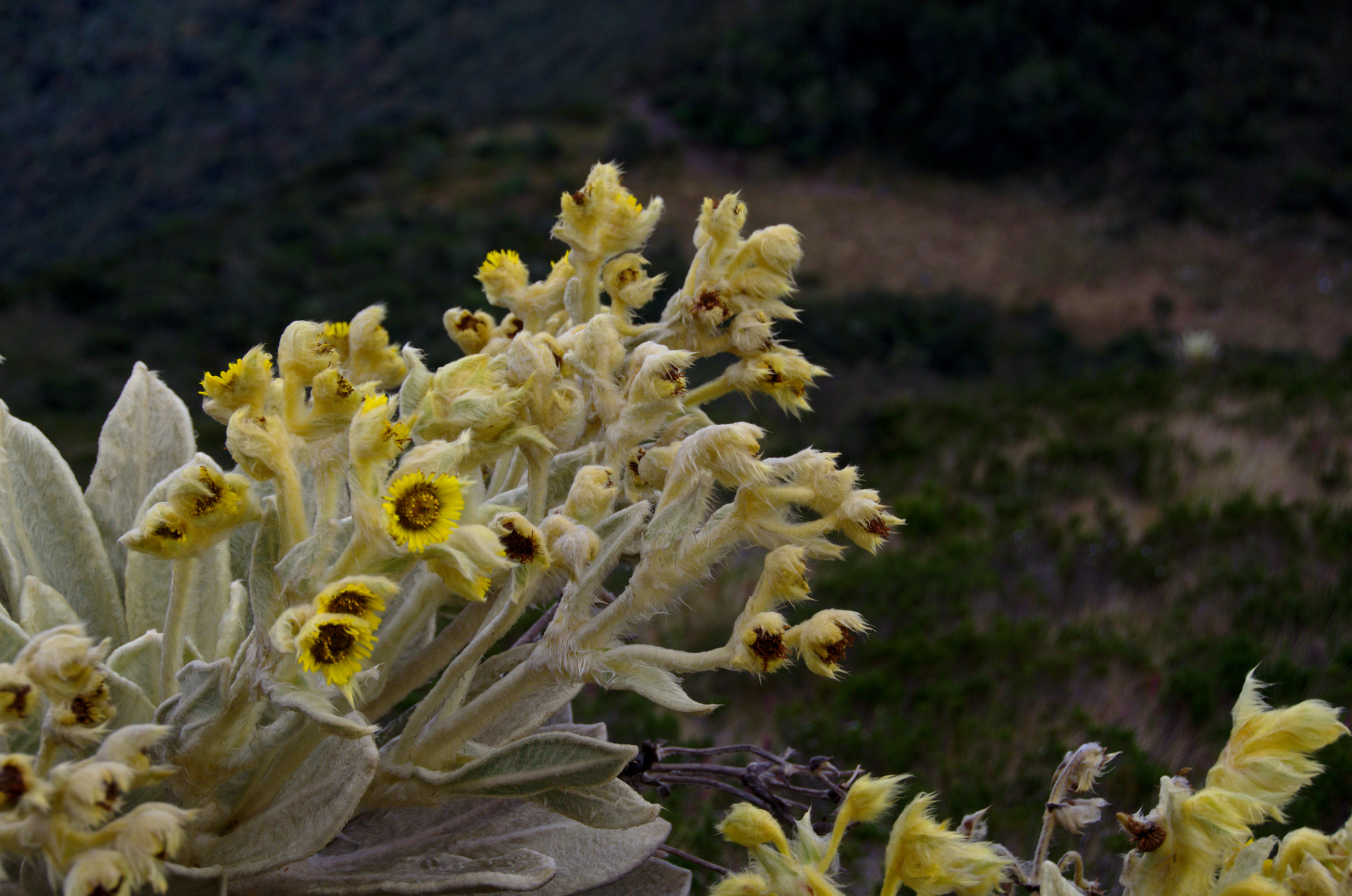
Photo: Aztlec.
Current situation
In March 2025, the Colombian government designated the western flank of the Santurbán massif as a temporary renewable natural resource reserve area, delimiting and protecting an area of 75,344.65 hectares. This resulted in a two-year suspension of the Soto Norte project. However, Aris Mining's contract to formalize Calimineros' small-scale mining activities through the purchase and processing of mineralized material remains in effect.
In addition, the Canadian mining company continues to move the project forward. In September 2025, it released its prefeasibility study, revising the mine’s original design.
Meanwhile, members of the Committee for the Defense of Water and the Santurbán Páramo face threats and stigmatization because of their work. In March 2025, UN Special Rapporteurs and the Working Group on Business and Human Rights denounced these incidents in communications sent to the governments of Colombia, Canada, and the United Arab Emirates, as well as to the companies Aris Mining and MDC Industry Holding Company LLC, the former co-owner of the Soto Norte project.
Regarding the arbitration claim filed by Eco Oro Minerals, in July 2024, ICSID ruled in favor of the Colombian government and rejected the Canadian company’s claim for USD 1.1 billion in compensation.
Concerning the delimitation of Santurbán, in July 2026, the Ministry of the Environment issued a resolution introducing the concept of "progressive delimitation." On that basis, the government proposes to progressively demarcate the páramo, covering 29,199 hectares across 19 municipalities—those where the participatory agreements required by the Constitutional Court in its 2017 ruling have already been finalized. It also proposes two measures on the creation and expansion of reserves to restrict mining in the ecosystem.
Learn more about the impacts of mining on the páramos of Latin America (in Spanish).
Partners:
Related projects
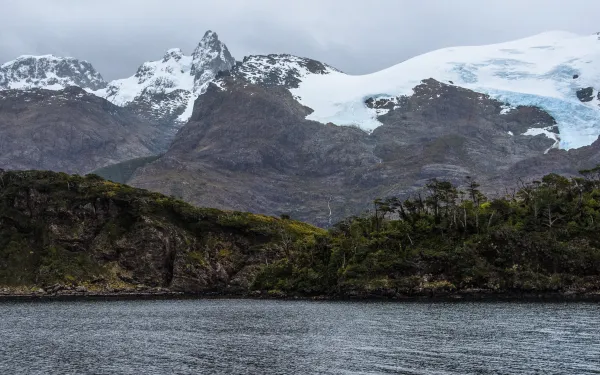
5 years of the Kawésqar National Reserve: pending issues for its protection
Local communities denounce that the area is highly affected by salmon farming, which is failing to comply with environmental regulations.On January 30, 2019, the Official Gazette published the decree creating the Kawésqar National Reserve in Magallanes, which extends over 2,842 hectares between fjords and Patagonian peninsulas. The purpose of this classification was to guarantee the protection of the area, its territory and biodiversity, as well as to establish that it is the duty of the State to ensure its conservation. This year, 2024, marks the fifth anniversary of this milestone, which begs the question: is the reserve's objective being achieved? The community's claimsWith the qualification of National Reserve, this area was separated from the Kawéskar National Park, which offers broader protection. In the opinion of the local communities, this administrative division determines in a whimsical way what to prioritize and separates the land from the sea, as if they were independent elements, which causes "divisions and confusion to grow at all levels," says Eric Huaiquil Caro, a member of the Kawésqar Communities Kawésqar Family Groups Nomads of the Sea. He also says that the "agreements that were made in the indigenous consultation have not been responded to." Finally, Caro asks that the conservation of this reserve be done "without salmon farms and we hope that this will be established in the Management Plan that will be submitted for consultation in March 2024." An overstressed areaWithin the Kawésqar National Reserve lie the richest kelp forests in the country, an ecosystem considered key to combating climate change, as they can absorb high levels of carbon dioxide and regenerate marine systems. Although the State must guarantee their protection, the area is experiencing great pressure from the salmon farming industry. For example, there are 133 approved concessions in the entire Magallanes Region and 85 in process, of which 68 approved and 57 in process are in the Kawésqar National Reserve, "which seems unusual to us because it has been proven that the salmon farming industry is neither sustainable nor compatible with the ecosystemic care of the reserve. This is fundamental to the creation of the Reserve's Management Plan, which is currently being designed and which should establish the incompatibility of the industry within the zone's protection mandate, as documented in the report we have prepared together with the communities," says Cristina Lux, an attorney with the Interamerican Association for Environmental Defense (AIDA)."Forty-three percent of the concessions approved within the Kawésqar National Reserve have presented anaerobic conditions within the framework of their operations, according to information obtained from the Environmental Reports for Aquaculture. This means that they suffer or have suffered total or partial loss of oxygen, which affects the living conditions of all of the area's biodiversity," adds Estefanía González, Campaigns subdirector at Greenpeace Chile.The impact, explains Sofía Barrera , an attorney for FIMA, is "enormous and highly destructive.""To begin with, these farming centers are concentrated in just seven sectors (Staines Peninsula, Taraba Sound, Poca Esperanza Strait and Vlados Channel, Glacier Sound, Skyring Sound, Desolation Island and Xaltegua Gulf), which also concentrates their synergistic effects. Some of these are the impact of boat routes, the killing of sea lions to prevent them from attacking the salmon cages, the overproduction of salmon, the presence of garbage outside the concession polygons and the detection of the ISA virus in the farming centers, which ends up making the rest of the marine ecosystem sick, something that has been recognized by Environmental Courts," adds Barrera. "In addition, the dispersion of organic matter from the cultivation centers causes eutrophication and harmful algal bloom events (HAB), generating significant changes in water quality and affecting marine life," adds González.In the opinion of the representatives of these three organizations, despite the legal prohibitions and environmental requirements, the fact that many of these projects have been submitted and approved through environmental impact statements raises legal and political questions. "Why are the authorities not ensuring the real care of this area, whose interests are being taken care of, and how is the salmon industry influencing our authorities," asks Barrera.Unfortunately, González adds, when explanations have been requested, "we have not received answers or certainty. That is why it is urgent to advance towards a management plan that really protects this ecosystem and does not allow more centers that put biodiversity at risk." Press contactVíctor Quintanilla (AIDA), [email protected], +521 5570522107
Read more
Our vision for a just future
Latin America is key to protecting biodiversity and combating the global climate crisis. Its forests, wetlands and marine ecosystems are among the most important carbon sinks on the planet, a service weakened by activities such as the exploitation and use of fossil fuels. At AIDA, we envision a region where the environment and communities, especially those in highly vulnerable situations, have lasting protections. To achieve this, we select precedent-setting cases that result in new, replicable tools and strategies that add to the protection of a healthy environment in the region. Having celebrated 25 years of working for the right to a healthy environment in the region, AIDA is poised to enter a new quarter century as a robust, multidisciplinary organization. In the coming years, we will continue and strengthen our pursuit of environmental and climate justice through two interconnected initiatives, each with defined lines of work: 1. Promotion of a just energy transition A just energy transition implies transforming the power relations between those who pollute the most and the rest of the world, avoiding the deepening of socio-environmental conflicts and protecting the rights of communities and people involved in energy generation processes. As this is an issue that cannot be addressed only at the national level, AIDA will contribute its regional vision to increase the scope of local and national decisions, enhance legal strategies, and strengthen a proposal for the continent’s transition. We will focus on: Avoiding dependence on oil and gas. Halting the extraction and use of coal. Promoting renewable and sustainable energies. Advocating for human rights-based climate finance and governance. 2. Protection of life-sustaining systems The ecosystem services that sustain life in Latin America and the world—including natural carbon capture and storage to mitigate the climate crisis, and the provision of clean food, air, and water - are at risk due to the lack of ambitious and effective actions. To ensure the livelihoods of life systems on the continent, both in rural communities and large cities, AIDA will focus its efforts on: Protecting the ocean, from the coasts to the high seas. Preserving freshwater sources and traditional territories. Defending culture and traditional livelihoods. Improving air quality. In the coming years, from our regional perspective, we will continue to contribute to solutions that center nature and communities, and that effectively address the continent’s social and environmental challenges.
Read more
After COP28 in Dubai: The complex road to Baku and Belém
By Javier Dávalos, Claudia Velarde and Marcella Ribeiro* The twenty-eighth United Nations Climate Change Conference (COP28), held in Dubai, United Arab Emirates, was the largest ever in terms of the number of participants. The representatives of the States Parties to the United Nations Framework Convention on Climate Change and the Paris Agreement held intense discussions under the scrutiny of stakeholders from various sectors. The final results lack the clarity and ambition needed to define the next round of Nationally Determined Contributions (NDCs). However, the fact that for the first time in almost 30 years all fossil fuels (coal, oil and gas) were mentioned in the main decision of the meeting represents a before and after in climate negotiations. This fact also marks the way towards the next conferences: COP29 in Baku (Azerbaijan) and COP30 in Belém do Pará (Brazil). Below we take stock of COP28 and analyze its implications for the future of climate action in Latin America and the Caribbean. Progress at COP28 For the first time, the outcome document mentioned the need for a transition away from fossil fuels in energy systems in a fair, orderly and equitable manner, accelerating action in this critical decade. The text of the global stocktake of the state of implementation of the Paris Agreement also clearly stated the goals of tripling renewable energy and doubling energy efficiency. The Glasgow target for reducing methane emissions by 2030 was affirmed, as was the exit from inefficient fossil fuel subsidies. Key elements of the work program on just transition pathways were defined, including its scope, objectives, results and institutional arrangements. What was missing at COP28 With regard to the energy transition, there was a need for greater determination to close the door on false climate solutions. On the one hand, there was a call to accelerate nuclear energy and abatement and elimination technologies (carbon capture, utilization and storage) and, on the other, it was noted that "transition fuels" could facilitate this process while ensuring energy security, implicitly giving a free pass to fossil gas. In terms of adaptation, no real progress was made towards a framework for climate action based on the protection of the ocean, wetlands and forests. Nor was there reinforcement of operational synergies between the key policy processes governing terrestrial, freshwater, coastal and marine ecosystems worldwide. While the first step was taken to operationalize the Loss and Damage Fund, the decision did not include a reference to human rights in its objectives and mission. In addition, it limited the participation of indigenous peoples and local communities on the Board of the Fund under the category of invited observers. It also failed to mention the principle of common but differentiated responsibilities, meaning that the fund would be financed solely by grants. In addition, the World Bank was designated as the fund's administrator, putting at risk that the communities most affected by the impacts of the climate crisis would have access to resources in an agile, direct and debt-free manner. Regarding the just transition, it was not recognized that the energy transition puts different pressures on the territories where raw materials or critical minerals such as lithium, copper and cobalt are obtained. This affects Latin America in particular. As a result, developed and developing nations disagreed on whether to keep the transition at the national or international level. And so the transition was not considered an integral and plural transformation process that implies creating socio-political conditions to restructure the organization, ownership and distribution of the current production and consumption systems for the enjoyment of the right to energy. The countries failed to reach an agreement on the substantive elements of the new quantified financing target. Progress was limited to definitions of the process and procedures for defining it. In 2024, there will be at least three technical dialogues to discuss the elements of the target such as amounts, timelines, financing targets by area, and how progress will be measured. What's next: Heading towards COP29 and COP30 The next climate conferences will have to navigate complex contexts, marked by the long-standing crisis of multilateralism, the unfair distribution of burdens for the energy transition—particularly in terms of the exploitation of critical minerals—,and the growing co-optation of negotiations by the corporate interests of fossil-related companies. In this context, the performance of Latin American countries at COP28 is an indication of how their positions for COP29 and COP30 will be constructed: Brazil sought to position itself as a "climate champion" but could not hide its strong fossil fuel extraction agenda. As host of the upcoming COP30, Brazil tried and failed to explain away membership in the expanded Organization of the Petroleum Exporting Countries (OPEC+) without success. Then, days after COP28, it tendered 613 oil blocks in the Amazon with a view to becoming the world's fourth largest oil producer by 2030. Despite this, Brazil created a new work program on the goal of limiting global warming to 1.5 degrees Celsius, which it will take as a banner to COP30, together with the protection of nature and the fight against deforestation. Colombia, for its part, was the most vocal leader on the urgent need for transition, announcing its accession to the Fossil Fuel Non-Proliferation Treaty and maintaining clear interventions on the exit from fossil fuels in its panels and public interventions, which positions it as a regional leader for the upcoming conferences. Ecuador missed the opportunity to obtain funding and support from the international community to implement the Ecuadorian people's decision to close the ITT oil field in Yasuni Park. This omission could be remedied at COP29 because, beyond the delicate internal context, the South American country has just under a year to comply with the legal obligation to implement this decision and the international community can and should support the decision to close the ITT oil field in Yasuní Park. In another area, and within the process of the Advisory Opinion on the Climate Emergency, AIDA, together with other organizations, requested that the Inter-American Court of Human Rights refer to the decision adopted at COP28 regarding the Loss and Damage Fund, as it does not comply with or satisfy the obligations of States under international human rights law. It is expected that the Court will recognize the right to climate reparations and clarify that the establishment, implementation and operation of this fund does not exclude the possibility of making claims for reparations for losses and damages, nor does it block other judicial or administrative processes, measures or mechanisms for access to justice and comprehensive reparations for people affected by climate impacts. *Javier Dávalos is coordinator of AIDA's Climate Program, Claudia Velarde is co-coordinator of the Ecosystems Program, and Marcella Ribeiro is a senior attorney with the Human Rights and Environment Program.
Read more