
Project
Alberto Peña Kay
Protecting the Santurban páramo from mining's damage
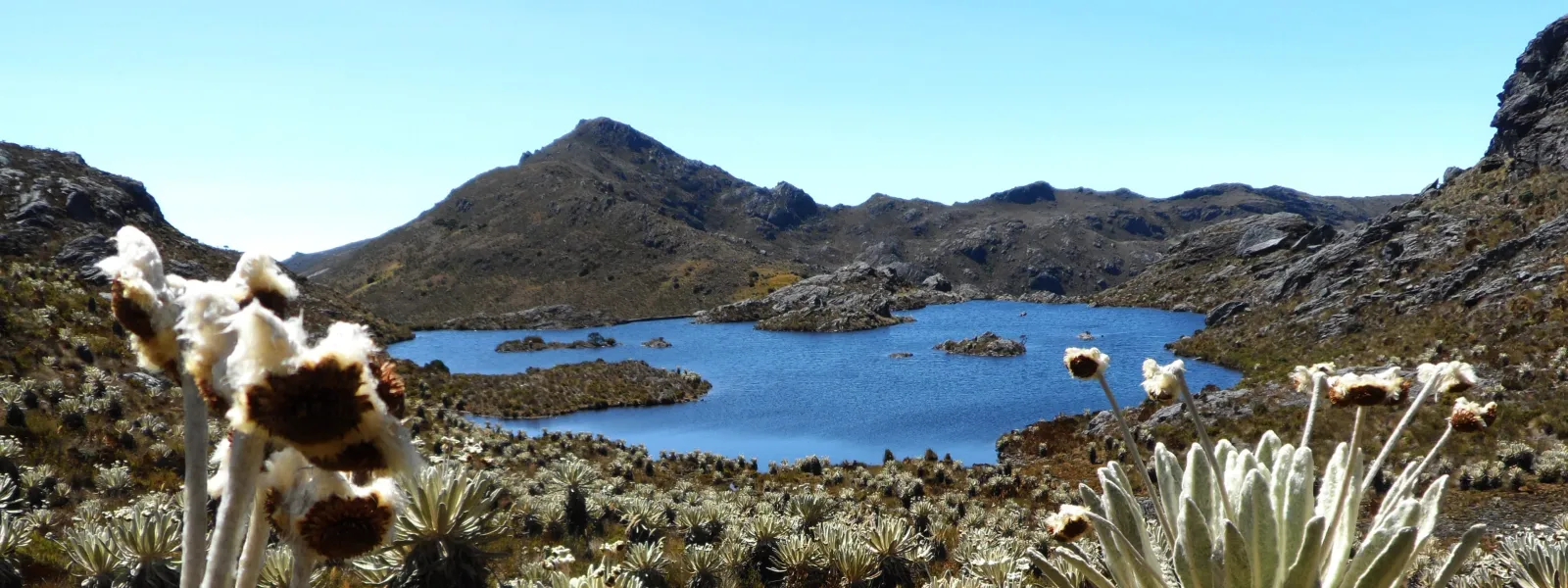
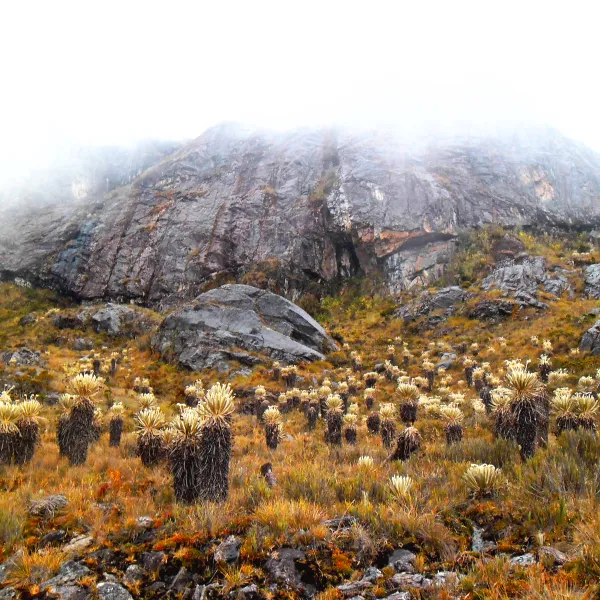
In the Andean region, high-mountain ecosystems known as páramos capture water from the fog and supply it to the lowlands. One such ecosystem is the Santurbán páramo, which provides fresh water to more than two million people in Colombia.
Santurbán, like the other páramos on the continent, also captures large amounts of carbon, making it a key ally in mitigating the climate crisis. It is also a refuge for hundreds of endangered species, including the iconic spectacled bear.
The land in and around the páramo contains gold and other minerals. This has put Santurbán in the spotlight of the multinational mining industry, which for decades has sought to establish large-scale projects in the ecosystem that threaten to degrade it.
The Committee for the Defense of Water and the Santurbán Páramo—a coalition of environmental advocates—has thwarted these ongoing attempts, with support from AIDA and other civil society organizations.
Background
The Santurbán páramo is located in the heart of the Eastern Cordillera of the Colombian Andes, in the departments of Santander and Norte de Santander, at an elevation ranging from 2,200 to 4,290 meters above sea level.
It covers an area of 129,743 hectares and is home to 57 lakes. It serves as a habitat for 457 plant species and 293 species of vertebrate fauna.
There are mineral deposits in Santurbán, primarily gold, but also silver and copper. This explains the region’s mining tradition, particularly in the part of the páramo located in Santander, in the province of Soto Norte. The communities in the area have built their culture and identity around gold mining, which is mainly artisanal and small-scale.
But since the 1990s, the gold deposits in the páramo have also attracted foreign mining conglomerates seeking to develop large-scale projects. This has raised concerns among the population that relies on the Santurbán water sources, who have mobilized in defense of water, their land, and life.
Although national and international regulations prohibit mining in páramos, the Colombian government has granted mining concessions to transnational corporations in Santurbán.

Photo: Keishpixl / Pixabay.
The long struggle to protect the páramo
One of the companies that sought to develop large-scale mining in Santurbán is Eco Oro Minerals Corp.—formerly Greystar Resources—a Canadian company that intended to establish the Angostura open-pit mine there to extract gold and silver. Between 1994 and 1995, the company acquired its mining titles and conducted exploration. And in 2010, it applied for a mining permit.
That was the year AIDA became involved in defending the ecosystem, supporting the Committee for the Defense of Water and the Santurbán Páramo. Our legal work helped convince the Colombian government to deny the mine an environmental permit in May 2011.
In January 2013, the government designated a portion of the páramo (11,700 hectares) as a Regional Natural Park. That year—together with the committee and partner organizations—we carried out a campaign and advocacy efforts to urge the government to recognize the entire Santurbán area as a páramo ecosystem through a delimitation based on scientific criteria. In December 2014, the Ministry of the Environment established a delimitation that protected 76% of the páramo (98,954 hectares).
Furthermore, as a result of a litigation supported by AIDA, in February 2016, Colombia’s highest court reaffirmed that mining in páramos is prohibited.
That same year, in December, the International Finance Corporation (IFC), the World Bank Group’s private sector arm, decided to divest from Eco Oro Minerals. This achievement was the result of a process that began in 2012, when the committee—advised and supported by AIDA and international partner organizations—filed a complaint before an independent accountability mechanism, which concluded that the IFC’s investment in the Angostura project failed to take into account the project’s social and environmental impacts, thereby contradicting the financial institution’s internal policies.
Also in 2016, Eco Oro Minerals filed an arbitration claim against the Colombian government with the International Centre for Settlement of Investment Disputes (ICSID), arguing that it had been adversely affected by government decisions aimed at protecting the country’s páramos, including the delimitation of Santurbán.
In 2017, the Constitutional Court invalidated the delimitation because the affected communities were not consulted. The high court ordered that a participatory delimitation be carried out.
And that year, a new threat to Santurbán emerged when the Canadian multinational Aris Mining applied for an environmental permit for Soto Norte, a gold mining project located near the páramo. Following citizen protests and technical objections, in October 2020, the National Environmental Licensing Authority shelved the project.
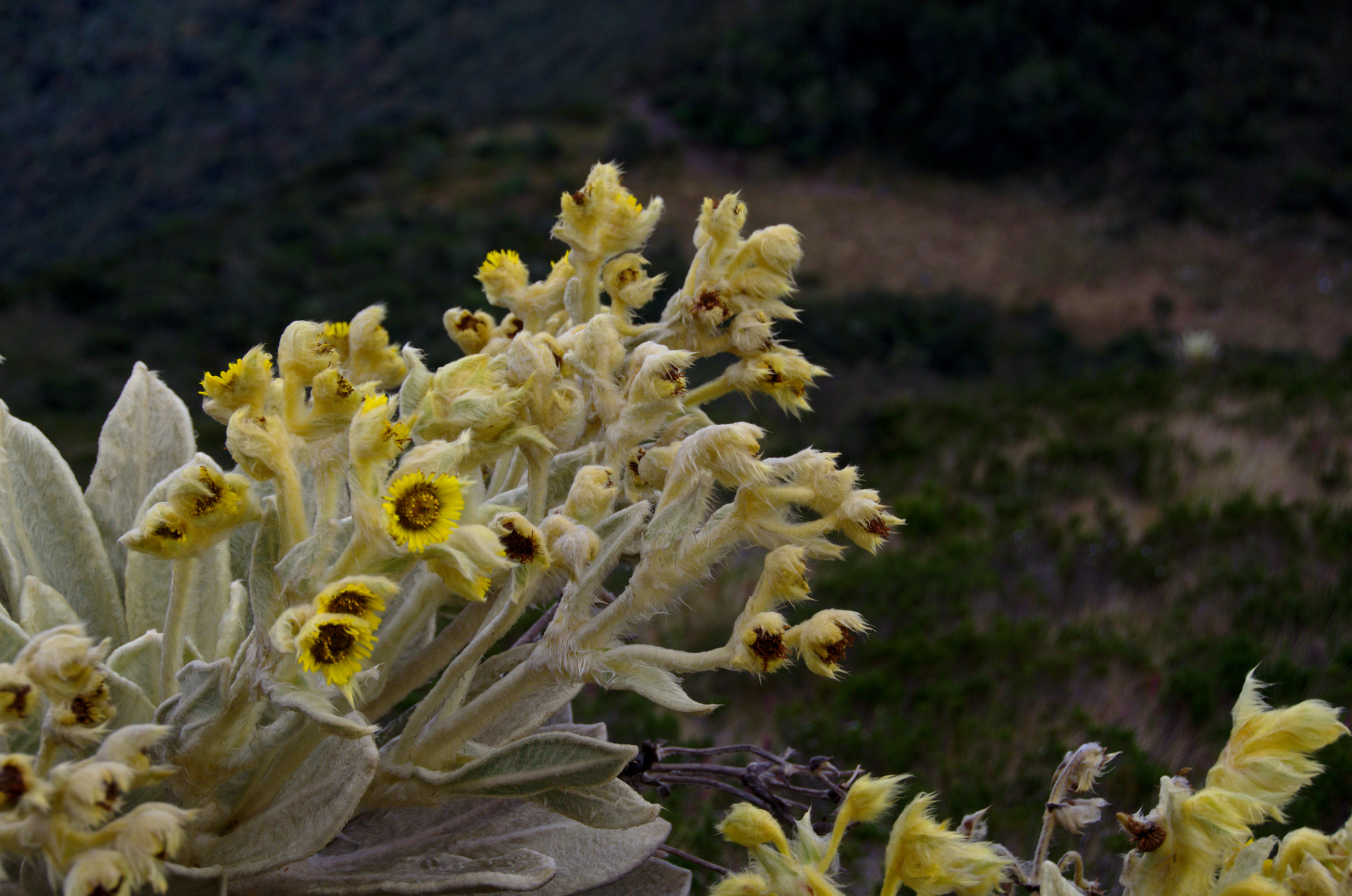
Photo: Aztlec.
Current situation
In March 2025, the Colombian government designated the western flank of the Santurbán massif as a temporary renewable natural resource reserve area, delimiting and protecting an area of 75,344.65 hectares. This resulted in a two-year suspension of the Soto Norte project. However, Aris Mining's contract to formalize Calimineros' small-scale mining activities through the purchase and processing of mineralized material remains in effect.
In addition, the Canadian mining company continues to move the project forward. In September 2025, it released its prefeasibility study, revising the mine’s original design.
Meanwhile, members of the Committee for the Defense of Water and the Santurbán Páramo face threats and stigmatization because of their work. In March 2025, UN Special Rapporteurs and the Working Group on Business and Human Rights denounced these incidents in communications sent to the governments of Colombia, Canada, and the United Arab Emirates, as well as to the companies Aris Mining and MDC Industry Holding Company LLC, the former co-owner of the Soto Norte project.
Regarding the arbitration claim filed by Eco Oro Minerals, in July 2024, ICSID ruled in favor of the Colombian government and rejected the Canadian company’s claim for USD 1.1 billion in compensation.
Concerning the delimitation of Santurbán, in July 2026, the Ministry of the Environment issued a resolution introducing the concept of "progressive delimitation." On that basis, the government proposes to progressively demarcate the páramo, covering 29,199 hectares across 19 municipalities—those where the participatory agreements required by the Constitutional Court in its 2017 ruling have already been finalized. It also proposes two measures on the creation and expansion of reserves to restrict mining in the ecosystem.
Learn more about the impacts of mining on the páramos of Latin America (in Spanish).
Partners:
Related projects
The triple planetary crisis: What is it and what can we do about it?
You may have heard that humanity is facing "a triple planetary crisis.” In the words of United Nations Secretary-General António Guterres, this crisis "threatens the well-being and survival of millions of people around the world." But what exactly does it mean? The triple planetary crisis refers to three interrelated problems: climate change, pollution, and biodiversity loss. Each of these problems is a crisis with its own causes and effects, but all three converge and feed on each other. All three affect human rights, and more intensely impact people in vulnerable conditions. The climate crisis The United Nations considers climate change to be humanity's most urgent problem and the greatest threat to human rights. Climate change, which involves long-term changes to the planet's temperatures and weather patterns, can completely alter ecosystems. Although changes in climate can occur due to the natural patterns of the planet, what we are facing is caused by human activities. Since the Industrial Revolution, there has been an accelerated change in the planet's average temperatures. One of the primary causes of that change is the exploitation and use of fossil fuels. The climate crisis, then, refers to the consequences of climate change caused by human activities, which include: an increase in the intensity and severity of natural events such as droughts, fires, and storms; rising sea levels and the melting of the poles; changes in the hydrological and climatic cycles that affect biodiversity; and impacts on the enjoyment of human rights. The pollution and waste crisis The dominant economic system, dependent on consumption, implies the generation of high levels of pollution and waste that have a great impact on human and ecosystem health. Air pollution is the leading cause of disease and premature death worldwide. The World Health Organization estimates that 7 million people die prematurely each year because of poor air quality. Air degradation is caused by emissions from factories, transportation, and forest fires. Those who lack access to less harmful technologies for cooking or keeping warm also breathe polluted air in their homes. Air pollution is related to climate change, as many of the emissions also warm the planet. Pollution caused by plastics and microplastics is another global concern, as it directly affects biodiversity. An increasing number of studies are finding that plastics are affecting the health of people and other living things. They take centuries to decompose, and are derived from petroleum, a fossil fuel. And we can’t forget pollution caused by extractive activities which, in addition to generating greenhouse gas emissions and leaving in their wake chemicals that are toxic to health, degrade freshwater sources and large tracts of land. The biodiversity loss crisis Biodiversity loss refers to the decrease and disappearance of biological diversity: flora, fauna, and ecosystems. This crisis is caused by the two previous crises, in addition to the overexploitation of resources and changes in land use—which cause overfishing, illegal hunting and trafficking, and deforestation—and the introduction of non-native and invasive species. This loss also implies the decline of many of the species on which we depend. Its impacts extend to affect food supplies and access to fresh water. One example is the Amazon, the world's largest tropical forest and a global climate stabilizer. It is home to 10 percent of the planet's known biodiversity and is the ancestral home of more than 470 indigenous and traditional peoples. The Amazon is endangered by colonization, deforestation, and extractive activities, among other threats. The situation is so serious that the point of no return for the Amazon, in which deforestation levels cancel out its capacity for regeneration, is no longer a future scenario. Actions to confront the triple planetary crisis The triple planetary crisis is a complex problem involving diverse stakeholders and requiring multidisciplinary solutions. Although local actions and individual lifestyle changes can help, many of the necessary actions require decisions on a global scale and profound changes to economic, political, and social systems. According to the United Nations, global actions to confront the crises must include: Limiting global temperature increase to 1.5 degrees: this means that global emissions should be reduced by 45 percent by 2030, with the goal of achieving carbon neutrality by 2050. Accelerating the expansion of clean renewable energies: to achieve the above, a drastic reduction in the use of fossil fuels is required to make way for energy systems based on renewable sources that are sustainable over time and respectful of the environment and people. In addition to combating climate change, this would reduce air pollution. Investing in adaptation and resilience: this means considering those who are already suffering the impacts of the climate crisis in the solutions, with emphasis on the nations, people, and communities in vulnerable situations and who are least responsible for these crises. Conserving and protecting 30 percent of the planet: this applies particularly to areas of biodiversity importance, including the ocean. It also implies actions to mitigate climate change. Improving the food system: this includes changes in irrigation and soil management, as well as producing healthier food and reducing food waste. Leaving no one behind: the measures described above must be carried out simultaneously and with a focus on protecting human rights, as they represent an opportunity to reduce the inequalities that are both a cause and a consequence of the crises. Making progress before the triple crisis These crises threaten not only our basic sources of livelihood, but even our mental health. And while much remains to be done, progress has been made that demonstrates the global cooperation needed to advance on a large scale. We’re happy to share some recent examples of global progress: The High Seas Treaty, designed to protect two-thirds of the ocean, was adopted in June 2023, and will need to be ratified by 60 countries before entering into force. The United Nations recognized the right to a clean, healthy, and sustainable environment as a universal right. 175 nations agreed to develop a global instrument to address plastic pollution. The steps we take as individuals help us to act locally: to live our values and contribute to our communities. But it’s also important we think globally, and demand that our representatives in decision-making bodies guarantee widespread participation and commit to taking key and concerted actions.
Read more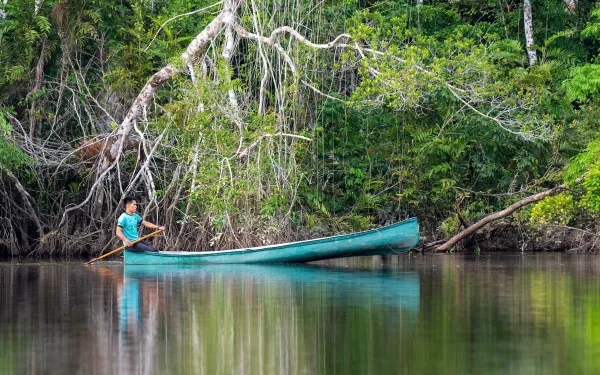
10 positive advances for the environment in Latin America in 2023
It has been a tumultuous year for the world in many ways, and the climate crisis remains one of the greatest challenges we face as a human race. However, it is always worthwhile to assess and recognize the progress made in the quest for environmental and climate justice. So, as we close 2023, let’s celebrate the agreements, decisions, and milestones that give us hope as we continue to defend the planet and all the creatures that call it home. 1. The world has a treaty to preserve life on the high seas. After two long weeks of final negotiations, and decades of previous work, United Nations member states have agreed on a High Seas Treaty to protect two-thirds of the ocean, representing nearly half of the surface of the planet. The new treaty will provide a blueprint for establishing protected areas on the high seas and for assessing and managing human activities that could affect life in this vast area. It will also help achieve the global goal of protecting 30 percent of the ocean by 2030. It has been signed by nearly 80 countries and is in the process of ratification to enter into force. 2. The Ecuadorian people decide to protect the Amazon. Ecuador held a popular consultation to decide whether to stop oil exploration in part of the Yasuní National Park, one of the most biodiverse areas on the planet. The great news is that about 60 percent of the population chose to protect this region of the Amazon, leaving some of the oil in the ground. By recognizing the value of a key ecosystem for stabilizing the global climate, this result transcends national boundaries. It is a hopeful sign of climate ambition that can drive the necessary just energy transition worldwide. 3. The UN recognizes activism for the right to a healthy environment. The United Nations has awarded the 2023 Human Rights Prize to the Global Coalition of Civil Society, Indigenous Peoples, Social Movements and Local Communities for the Universal Recognition of the Human Right to a Clean, Healthy and Sustainable Environment. The prize is awarded every five years, and this is the first time since its inception that it has been given to a global coalition. It recognizes the coalition's essential role in the recognition of the right to a healthy environment by the UN General Assembly in 2022, as well as decades of civil society efforts and spaces for public participation. 4. Support grows for moratorium on deep-sea mining. There is currently a call for the International Seabed Authority to pause negotiations on the regulation of undersea mineral exploitation while the necessary information is gathered to understand the impact of this extractive activity on the ocean, species, and people. Mexico was the most recent signatory in November, joining other countries of the region— including Brazil, Chile, Costa Rica, Ecuador, Panama, and the Dominican Republic— in calling for a moratorium on deep-sea mining. You can join their efforts and learn more by following the hashtag #DefendTheDeep. 5. A Fossil Fuel Non-Proliferation Treaty is in the making. Colombia, a major coal producer, was the first Latin American country to join the call for a Fossil Fuel Non-Proliferation Treaty, a global initiative to complement the Paris Agreement. Cities, elected officials, and international organizations such as the World Health Organization have joined the call. The goal of the proposal, led by Pacific Island countries, is to create a follow-up plan to halt the expansion of fossil fuel use and initiate a just transition. For more information, visit the Fossil Fuels Treaty website. 6. There are signs of hope for a "sacrifice zone" in Chile. Although much remains to be done, recent events give hope that things may be looking up in Quintero and Puchuncaví bays, whose residents have suffered decades of pollution from a series of companies. In May, after 58 years of operation, the furnaces and boilers of the Ventanas smelter were finally shut down. Similarly, the multinational company that owns the Ventanas II thermoelectric plant, also located in the bay, announced its definitive closure by the end of this year. Furthermore, the Supreme Court has issued three rulings related to the failure to comply with a 2019 judgment—which orders the state to adopt 15 measures to identify the sources of contamination and repair the environmental situation in the area—and provides tools for its enforcement. Read more about the case in Chao Carbón. 7. Court rules the Colombia must take concrete climate action. Within one year, Colombia's Ministry of Environment and Sustainable Development must adopt concrete measures to adapt to and mitigate the climate crisis. This order was issued by the Council of State, a high court, as the result of a lawsuit alleging that the ministry had failed to comply with the climate commitments contained in national legislation. Colombia, as the largest exporter of thermal coal in Latin America, has an obligation to include in its climate commitments the real dimension of the impacts of extracting, transporting, and burning coal. This case could become a precedent for strategic and successful climate litigation at the regional and international levels. 8. Cajamarca, Colombia continues to set an example for environmental democracy. Popular consultations will be respected. A Colombian court made this clear by upholding the legality of the popular consultation in which the people of Cajamarca rejected AngloGold Ashanti's La Colosa gold mega-mining project. The ruling represents a triumph for participatory democracy and the defense of peasant territories against extractivism. It sets an important precedent for respecting other popular consultations throughout the country and serves as an example for the rest of the region. 9. A regional alliance to protect Andean wetlands is born. The Alliance for Andean Wetlands is a coalition of social and environmental organizations that aims to promote the protection and conservation of Andean wetlands, water, biodiversity, territories, and the lives of indigenous and campesino communities in Latin America, particularly in Argentina, Bolivia, and Chile. Andean wetlands— including salt flats, lakes, and lagoons —are globally recognized as ecosystems of high ecological and social importance. However, they are also very fragile and threatened by the climate crisis and by extractive activities such as the mining of lithium, copper, and other minerals considered "critical" for the transition to new forms of energy production. 10. AIDA celebrates 25 years of working for a healthy environment. This year we celebrate our 25th anniversary, a quarter century of defending the right to a healthy environment in Latin America. Our journey and our impact have been made possible by a great community of allies with whom we have worked and with whom we share this year of celebration. This milestone enabled us to reflect on our accomplishments, which are reflected in our 2023 Annual Report, and to define a vision for the coming years focused on the quest for climate and environmental justice in the region. Thank you for being part of these 25 years and the decades to come!
Read more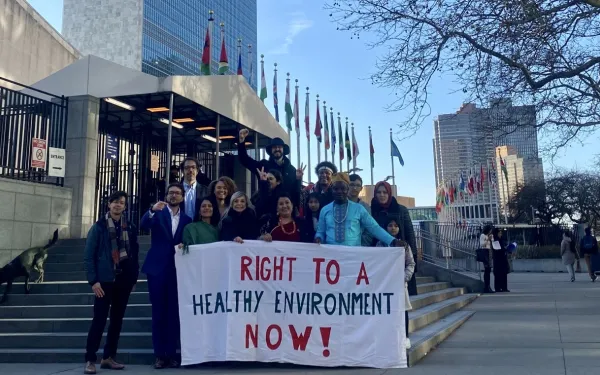
Right to a Healthy Environment Global Coalition awarded UN Human Rights Prize
New York — Today the Global Coalition of Civil Society, Indigenous Peoples, Social Movements, and Local Communities for the Universal Recognition of the Right to a Clean, Healthy, and Sustainable Environment accepted the prestigious 2023 United Nations Human Rights Prize in a ceremony in New York. This month also marks the 75th anniversary of the Universal Declaration of Human Rights.The coalition is recognized for its vital role in advocating for the universal recognition of the right to a healthy environment by the UN General Assembly (UNGA) in 2022. The UN Human Rights Prize is awarded once every five years to several recipients at a time. This year is the first time since its inception in 1966 that it has been granted to a global coalition.The prize was presented at a ceremony with UN leadership, including General Assembly President Dennis Francis, Secretary-General António Guterres, and High Commissioner for Human Rights Volker Türk. The award was accepted by a delegation of representatives illustrating the diversity of the coalition’s members.The ceremony took place alongside a workshop with advocates from around the world and UN and State representatives to assess progress since the recognition of the right to a healthy environment and to discuss next steps to build on that progress and ensure the effective promotion of the right.Read reactions to the announcement from the members of the coalition here.At the ceremony, the following acceptance speech was delivered by a representative of the coalition: We, Civil Society, Indigenous Peoples, Social Movements, and Local Communities in coalition for the Universal Recognition of the Human Right to a Clean, Healthy, and Sustainable Environment are honored to receive this prestigious prize acknowledging our vital role towards the UN recognition of this human right.This incredible achievement was only possible thanks to the tireless collaborative efforts of thousands of people from 143 countries who joined for this historic milestone. A process that started fifty years ago by visionaries gained momentum in 2020 when we called the UN to finally recognize this human right.First, this prize highlights the importance of truly collaborating to advance the imperative protections of our planet and our rights. No single organization, movement, or person would have been able to make it on their own, but together, our global and diverse coalition made it possible. We are humbled and proud that our efforts are recognized, evidencing to the world that working together is possible and worth it.Cooperation is just as needed for States, none of whom can, on their own, solve today’s multiple planetary crises of biodiversity loss, climate change, and pollution, aggravated by increasing inequalities. We call on States to effectively collaborate towards the solutions needed.Second, this prize reinforces the historic recognition of the right to a clean, healthy, and sustainable environment as a human right. That requires protecting the dignity of all persons, individually and collectively, substantively and procedurally, from human-made environmental degradation and climate change impacts. Affirming also the interdependence and indivisibility of human rights and the urgency to protect them from environmental threats, including systemic risks, irreversible degradation, and loss and damage.The UN recognition clarifies international human rights law and is now a powerful instrument for States to fulfill their obligations, enhance environmental justice, and guarantee all rights, especially of those in more vulnerable situations.As we witness increasing ecosystem degradation and lives lost due to pollution and climate change, this universal right can guide us toward stronger policies and practices, based on gender and intergenerational equity and the empowerment of all persons and communities. It can help in better protecting those defending the environment, including Indigenous Peoples, children, women, peasants, and other people working in rural areas.We are profoundly grateful for the recognition of our collective efforts, inspiring governments, businesses, and institutions to fulfill their responsibility and effectively protect our universal right to a clean, healthy, and sustainable environment. This is our priority, one we invite you to commit to. Thank you! Press contactsVíctor Quintanilla (Mexico), Content Coordinator at the Interamerican Association for Environmental Defense (AIDA), [email protected] Furbank, Communications Campaign Specialist at the Center for International Environmental Law, [email protected] Esther de la Rosa, Communications Coordinator at ESCR-Net [email protected]
Read more