
Project
Alberto Peña Kay
Protecting the Santurban páramo from mining's damage
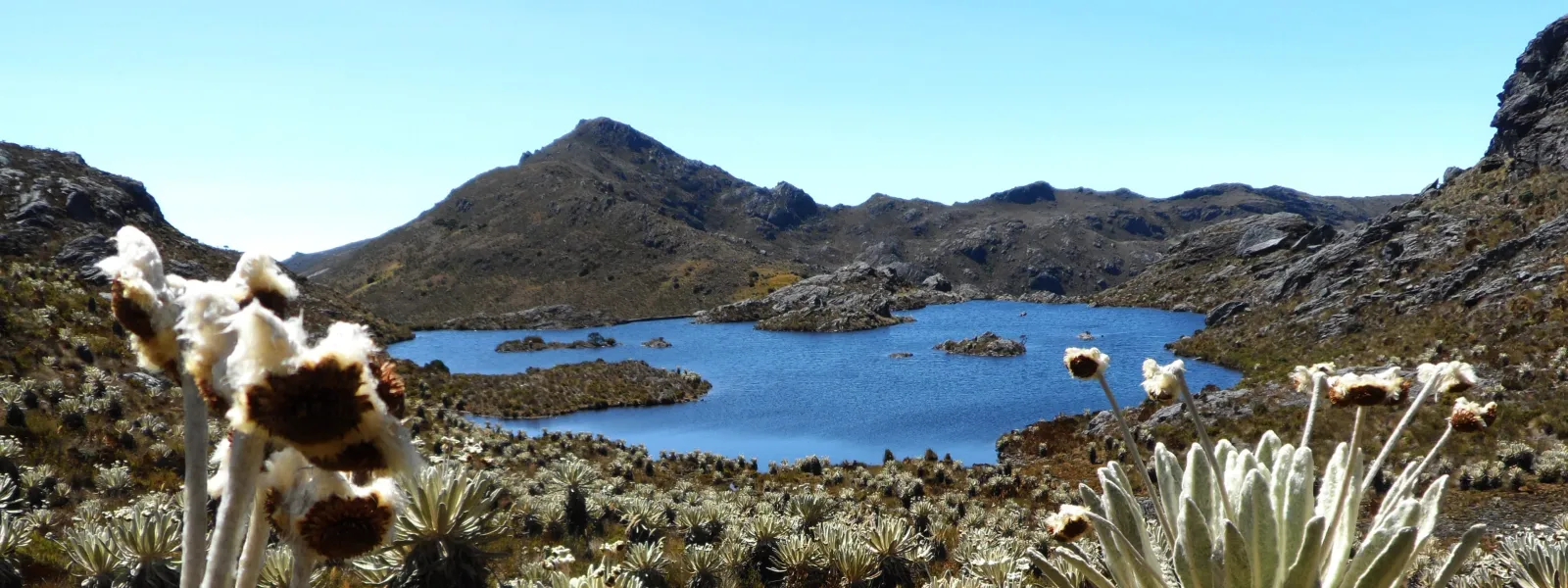
In the Andean region, high-mountain ecosystems known as páramos capture water from the fog and supply it to the lowlands. One such ecosystem is the Santurbán páramo, which provides fresh water to more than two million people in Colombia.
Santurbán, like the other páramos on the continent, also captures large amounts of carbon, making it a key ally in mitigating the climate crisis. It is also a refuge for hundreds of endangered species, including the iconic spectacled bear.
The land in and around the páramo contains gold and other minerals. This has put Santurbán in the spotlight of the multinational mining industry, which for decades has sought to establish large-scale projects in the ecosystem that threaten to degrade it.
The Committee for the Defense of Water and the Santurbán Páramo—a coalition of environmental advocates—has thwarted these ongoing attempts, with support from AIDA and other civil society organizations.
Background
The Santurbán páramo is located in the heart of the Eastern Cordillera of the Colombian Andes, in the departments of Santander and Norte de Santander, at an elevation ranging from 2,200 to 4,290 meters above sea level.
It covers an area of 129,743 hectares and is home to 57 lakes. It serves as a habitat for 457 plant species and 293 species of vertebrate fauna.
There are mineral deposits in Santurbán, primarily gold, but also silver and copper. This explains the region’s mining tradition, particularly in the part of the páramo located in Santander, in the province of Soto Norte. The communities in the area have built their culture and identity around gold mining, which is mainly artisanal and small-scale.
But since the 1990s, the gold deposits in the páramo have also attracted foreign mining conglomerates seeking to develop large-scale projects. This has raised concerns among the population that relies on the Santurbán water sources, who have mobilized in defense of water, their land, and life.
Although national and international regulations prohibit mining in páramos, the Colombian government has granted mining concessions to transnational corporations in Santurbán.
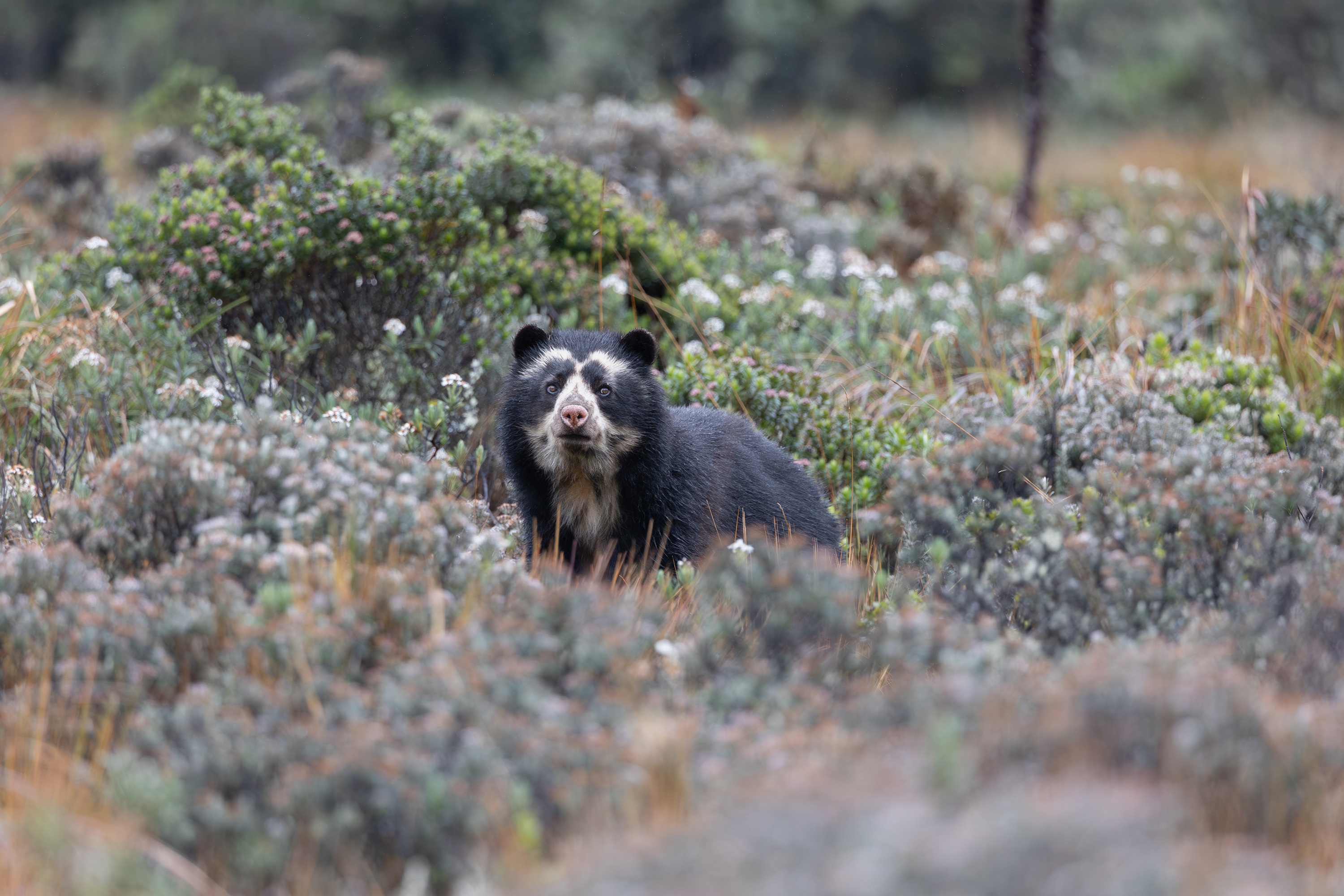
Photo: Keishpixl / Pixabay.
The long struggle to protect the páramo
One of the companies that sought to develop large-scale mining in Santurbán is Eco Oro Minerals Corp.—formerly Greystar Resources—a Canadian company that intended to establish the Angostura open-pit mine there to extract gold and silver. Between 1994 and 1995, the company acquired its mining titles and conducted exploration. And in 2010, it applied for a mining permit.
That was the year AIDA became involved in defending the ecosystem, supporting the Committee for the Defense of Water and the Santurbán Páramo. Our legal work helped convince the Colombian government to deny the mine an environmental permit in May 2011.
In January 2013, the government designated a portion of the páramo (11,700 hectares) as a Regional Natural Park. That year—together with the committee and partner organizations—we carried out a campaign and advocacy efforts to urge the government to recognize the entire Santurbán area as a páramo ecosystem through a delimitation based on scientific criteria. In December 2014, the Ministry of the Environment established a delimitation that protected 76% of the páramo (98,954 hectares).
Furthermore, as a result of a litigation supported by AIDA, in February 2016, Colombia’s highest court reaffirmed that mining in páramos is prohibited.
That same year, in December, the International Finance Corporation (IFC), the World Bank Group’s private sector arm, decided to divest from Eco Oro Minerals. This achievement was the result of a process that began in 2012, when the committee—advised and supported by AIDA and international partner organizations—filed a complaint before an independent accountability mechanism, which concluded that the IFC’s investment in the Angostura project failed to take into account the project’s social and environmental impacts, thereby contradicting the financial institution’s internal policies.
Also in 2016, Eco Oro Minerals filed an arbitration claim against the Colombian government with the International Centre for Settlement of Investment Disputes (ICSID), arguing that it had been adversely affected by government decisions aimed at protecting the country’s páramos, including the delimitation of Santurbán.
In 2017, the Constitutional Court invalidated the delimitation because the affected communities were not consulted. The high court ordered that a participatory delimitation be carried out.
And that year, a new threat to Santurbán emerged when the Canadian multinational Aris Mining applied for an environmental permit for Soto Norte, a gold mining project located near the páramo. Following citizen protests and technical objections, in October 2020, the National Environmental Licensing Authority shelved the project.
Photo: Aztlec.
Current situation
In March 2025, the Colombian government designated the western flank of the Santurbán massif as a temporary renewable natural resource reserve area, delimiting and protecting an area of 75,344.65 hectares. This resulted in a two-year suspension of the Soto Norte project. However, Aris Mining's contract to formalize Calimineros' small-scale mining activities through the purchase and processing of mineralized material remains in effect.
In addition, the Canadian mining company continues to move the project forward. In September 2025, it released its prefeasibility study, revising the mine’s original design.
Meanwhile, members of the Committee for the Defense of Water and the Santurbán Páramo face threats and stigmatization because of their work. In March 2025, UN Special Rapporteurs and the Working Group on Business and Human Rights denounced these incidents in communications sent to the governments of Colombia, Canada, and the United Arab Emirates, as well as to the companies Aris Mining and MDC Industry Holding Company LLC, the former co-owner of the Soto Norte project.
Regarding the arbitration claim filed by Eco Oro Minerals, in July 2024, ICSID ruled in favor of the Colombian government and rejected the Canadian company’s claim for USD 1.1 billion in compensation.
Concerning the delimitation of Santurbán, in July 2026, the Ministry of the Environment issued a resolution introducing the concept of "progressive delimitation." On that basis, the government proposes to progressively demarcate the páramo, covering 29,199 hectares across 19 municipalities—those where the participatory agreements required by the Constitutional Court in its 2017 ruling have already been finalized. It also proposes two measures on the creation and expansion of reserves to restrict mining in the ecosystem.
Learn more about the impacts of mining on the páramos of Latin America (in Spanish).
Partners:
Related projects
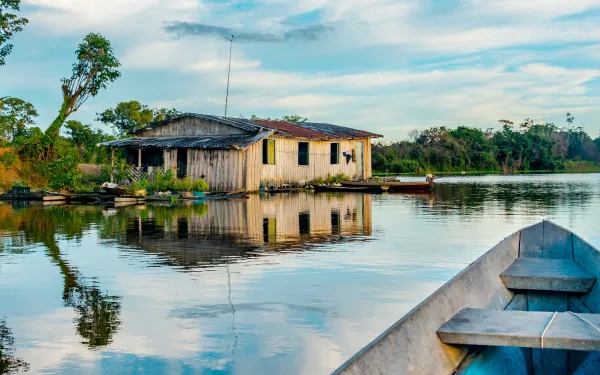
Brazilian court reaffirms the power of litigation to strengthen climate action
In July, Brazil's high court ruled that the government has a constitutional duty to allocate the necessary economic resources to support the operation of its Climate Fund, a tool created to combat the climate crisis, which has been paralyzed in recent years. With this ruling, the Supreme Federal Court resolved the first climate litigation in its history and set an important precedent for Brazil and the world. The decision equates the Paris Agreement—which seeks to strengthen the global response to the climate emergency—with a human rights treaty, granting it a higher status than ordinary laws and other inferior norms such as Executive Branch decrees. This may give way for courts and judges in other Latin American countries to make the same recognition. "The Supreme Federal Court created a privileged framework of protection for climate change mitigation and adaptation, one that ensures one of the fundamental pillars of climate action: financing," explains Marcella Ribeiro, an AIDA attorney. "Furthermore, it made clear that the Executive Branch, by restricting resources that by law are destined for climate action, is failing to comply with international agreements and conventions on human rights to which Brazil is a party." The Brazilian Socialist Party, the Socialism and Liberty Party, the Workers’ Party and the Sustainability Network Party filed the lawsuit over the Brazilian government’s failure to provide resources to the Climate Fund in 2020, with support from the Climate Observatory and the Alana Institute. Litigation as a strategic tool The case of the Climate Fund in Brazil demonstrates that strategic climate litigation is an effective and necessary way to help the continent's governments and companies meet their climate commitments. In its most recent report, the Intergovernmental Panel on Climate Change (IPCC) highlighted that climate-related litigation is on the rise and, in some cases, has influenced the results and ambition of climate governance, understood as the way in which different actors—state, civil society, academia and the private sector—define, implement and monitor actions aimed at addressing the causes and consequences of climate change. "In the global south, Brazil is one of the countries where climate litigation is developing most strongly," highlights Javier Dávalos, AIDA senior attorney. "The country is characterized by a growing ecosystem of litigants and organizations that are taking the climate fight to court." Brazil's push for climate litigation in the region is critical because the country is home to 65 percent of the Amazon, a key ecosystem for global climate regulation and one that is at serious risk. Brazil emits the most carbon dioxide of any Latin American nation, with deforestation representing the largest source of these emissions. In this sense, it is fundamental that one of the judges who heard the Climate Fund case explicitly pointed out the large increase in deforestation in the Amazon in 2021— the highest in 15 years: more than 22 percent, and a total area of 13,235km². It is therefore essential to demand in court that the Brazilian state fulfill its obligations to protect the Amazon and the global climate. The importance of financing solutions Transitioning to a zero carbon economy and avoiding the worst physical impacts of climate change requires investing nearly $125 billion USD by 2050, according to the Net Zero Financing Roadmaps study commissioned by the United Nations High Level Champions. These resources must come from two complementary sources, private and public financing. Government financing of climate action represents a relevant public policy and thus must conform to a country's laws. In its ruling, the Brazilian Supreme Federal Court recognized the Climate Fund as the main federal instrument for financing climate action and meeting national greenhouse gas emission reduction targets. It also noted that the government kept the fund paralyzed for two years. Considering that the resources intended to fight the climate crisis seek to materialize fundamental human rights, the court concluded that the government couldn’t restrict them. "Guaranteeing the allocation of resources for climate action means setting a clear limit from which we cannot retreat," Ribeiro said. "Despite the clear violation of the Brazilian state's duties regarding the right to a healthy environment, reflected in the dismantling of environmental norms and institutions, the Brazilian Supreme Court's ruling put a brake on the erosion of the legal protection of the environment and climate in the country." Learn about this and other cases on AIDA’s Plataforma de Litigio Climático para América Latina y el Caribe.
Read more
AIDA applauds recognition of healthy environment as a universal human right
The decision adopted by the UN General Assembly is a call for States to recognize that the defense of the environment is essential for existence on the planet. The historic resolution strengthens longtime efforts to guarantee this right in practice. New York, USA. In a landmark resolution, the UN General Assembly recognized a safe, healthy, clean and sustainable environment as a universal human right. Since this right was absent from then Universal Declaration of Human Rights in 1948, the decision marks a milestone for international human rights law. The resolution endorses language similar to that proposed in October 2021 by the UN Human Rights Council, which issued a draft resolution in June to the 193 members of the General Assembly. Sponsored by Costa Rica, Maldives, Morocco, Slovenia and Switzerland, the universal recognition of the right to a healthy environment was unanimously approved today, by a vote of 161-0. Liliana Avila, senior attorney of AIDA’s Human Rights and Environment Program, responds: "The United Nations recognition is a very important call for States to recognize that the environment involves essential elements without which our existence on the planet would not be possible. Most of the Constitutions in the continent already recognize the healthy environment as a right and citizens claim it daily through different mechanisms. The step taken today undoubtedly strengthens these efforts and advances us towards the construction of societies where this right is a reality." Gladys Martinez de Lemos, Executive Director, states: “Today marks a historic moment, one that enables citizens to demand the creation of measures to guarantee in practice a right that is now universally recognized. At AIDA we celebrate this new tool and reaffirm our 25-year commitment to protecting a healthy environment as a fundamental human right. The UN recognition represents a hope for justice for those who suffer from environmental degradation around the world—people like the residents of La Oroya, Peru, who have for decades breathed polluted air; families in Central America, forced to migrate due to the impacts of the climate crisis; coastal communities in the Caribbean who lost their homes due to the destruction of mangroves and reefs, natural barriers against storms and hurricanes; and the thousands of environmental defenders risking their lives to protect their territories." As a regional organization, AIDA would like to highlight the fact that a Latin American nation, Costa Rica, has led the proposal for recognition before the General Assembly. Its role was key to the result we are celebrating today. We also highlight the hard work of civil society organizations, social movements, local communities and indigenous peoples to promote this recognition. A healthy environment – recognized as a right by more than 150 States around the world – is a prerequisite for the realization of other human rights. Its recognition as a universal human right can lead to more effective laws and policies, and can help to empower local communities in the protection of their territory. Press ConTACT: Victor Quintanilla (Mexico), [email protected], +525570522107
Read more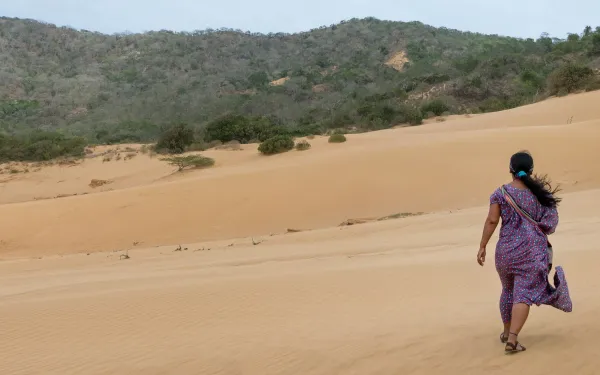
Irish company buying Colombian coal to be investigated for lack of due diligence with regard to human rights
The OECD accepted a complaint filed by civil society against the Irish state-owned company ESB for its failure of responsible business conduct in the purchase of coal from Cerrejón. The National Contact Point (NCP) for the Organization for Economic Cooperation and Development (OECD) in Ireland agreed to evaluate the complaint filed against an Irish state-owned company, The Electricity Supply Board (ESB), for its lack of due diligence on human rights. ESB is a buyer of coal from Carbones del Cerrejón, the operator of the largest open-pit coal mine in Latin America. The complaint was filed in January 2021 by a coalition of national and international organizations, including CAJAR, CINEP, AIDA, GLAN, ABColombia, Ask, and Christian Aid. The complaint also had the support of several leaders of Wayuu and Afro-Campesino indigenous communities that have been historically affected by this extractive coal mining megaproject. For years ESB, considered Ireland's largest energy company, has purchased coal from the Cerrejón mine, located in La Guajira, Colombia, for use in its Moneypoint power plant in County Clare. The complaint alleges non-compliance by the company, as the purchaser, with the OECD's standards of due diligence and responsible business conduct in environmental and human rights matters. In addition, the complaint alleges that ESB has failed to take the necessary actions to influence Carbones de Cerrejón's own due diligence in identifying, mitigating, and preventing human rights abuses linked to the mine. This failure comes despite well-documented evidence of serious violations against Wayuu and Afro-Colombian indigenous communities, including environmental impacts and threats to human rights defenders. Following an initial assessment of the complaint, the Irish government's NCP released an initial statement on Monday, July 18, stating that it found sufficient grounds for further examination of the issues raised. From the perspective of the denouncing organizations, the purchase of Colombian coal by ESB has been made in spite of the company having been aware of ample evidence of serious human rights violations and environmental impacts in the territory of indigenous Wayuu and Afro-descendant communities. The company itself, on its official website, stated: "ESB is well aware of Colombia's difficult history that has had serious impacts on its population for many years. We are also aware of the issues reported in the media regarding the Cerrejón mine, many of which are related to Colombia's past. We are committed to remaining attentive to all of these issues and will continue to work with Bettercoal to influence and drive improvements. We bring these issues to Bettercoal for assessment as a matter of course." Although ESB had indicated that it stopped buying coal from Cerrejón in 2018 because of human rights violations, it recently announced that in the wake of the Russia-Ukraine war it was resuming its purchase of this coal for the coming months. "Six years ago, Ireland stopped buying Colombian coal, citing human rights concerns, and turned to Russia for the fossil fuel. Now, the European nation has resumed purchases from Colombia." On his recent visit to La Guajira in April of this year, Irish TD Gary Gannon criticized ESB for restarting coal imports from Cerrejón. Gary Gannon, who traveled to Colombia in April as part of the parliamentary delegation, said he had seen with his own eyes the devastating environmental impact of the mine and the pain of the indigenous communities displaced from their land for its expansion. "There is a disturbing double standard in this return to Cerrejón," he said. "We rightly say no to Russian coal after the invasion of Ukraine, recognizing the impact our business decisions can have on human rights. But that standard must apply everywhere, including Colombia." In the words of Wayuu leader Jakeline Romero Epiayu: "European countries, with total hypocrisy, send us messages of decarbonization, of abandoning the use of fossil fuels; but suddenly they put Colombia and La Guajira back in their focus to buy this coal that they continue to need, this coal that we have tirelessly said is stained with blood, stained with the lives of Wayuu men, women, boys, and girls." The complaint requested, among other recommendations, that ESB: end its commercial relationship with the purchase of Colombian coal, issue a public statement acknowledging the need for its cessation, request the mine's parent companies initiate progressive closure of the mine and remediate its impacts, compile and publish an effective human rights policy, and issue a formal apology to the affected communities. Following the issuance of this initial assessment, the Irish NCP will formally ask the parties if they are willing to participate in mediation, with the objective of reaching a resolution to the issues raised in the complaint. The goodwill offer is voluntary for both parties. If a mediated solution is not possible, the Irish NCP will conduct a review of the complaint. The outcome will be reflected in a Final Statement which may include recommendations on the implementation of the OECD guidelines. The Irish NCP also noted that it is still processing another complaint against CMC Coal Marketing Company, a Dublin-based company responsible for the marketing and sale of coal from the Cerrejón mine. In the wake of the war between Russia and Ukraine and the current context of increasing demand for Cerrejón coal, this complaint sends an important message that countries and companies that buy this coal must continue meeting their obligations with respect to human rights and corporate due diligence duties. José Alvear Restrepo Lawyers' Collective Center for Research and Popular Education Interamerican Association for Environmental Defense (AIDA) press contact: Víctor Quintanilla (Mexico), AIDA, [email protected], +525570522107
Read more