
Project
Amazon Watch / Maíra Irigaray
Barragem de Belo Monte no rio Xingu: 10 anos de impactos na Amazônia e de busca por reparações
A usina hidrelétrica de Belo Monte causou um desastre ambiental e social no coração da Amazônia: um dos ecossistemas mais importantes do planeta.
Essa situação só piorou desde que a usina começou a operar em 2016. A busca por justiça e reparação para as comunidades indígenas e ribeirinhas afetadas continua até hoje.
Em 2011, a Comissão Interamericana de Direitos Humanos (CIDH) concedeu a essas comunidades medidas de proteção, que até hoje não foram totalmente implementadas pelo Estado brasileiro.
E, desde junho daquele mesmo ano, a CIDH mantém um processo contra o Estado por sua responsabilidade internacional no caso.
A CIDH pode encaminhar o caso à Corte Interamericana de Direitos Humanos, que tem o poder de emitir uma sentença condenatória contra o Estado brasileiro.
Consulta o expediente de fatos do caso
Após 10 anos de operação da usina hidrelétrica e mais de 15 anos de violações de direitos humanos documentadas, é hora da justiça ser feita para as comunidades afetadas.
Leia a carta aberta das organizações que levam o caso à CIDH
Leia nosso comunicado à imprensa
Contexto
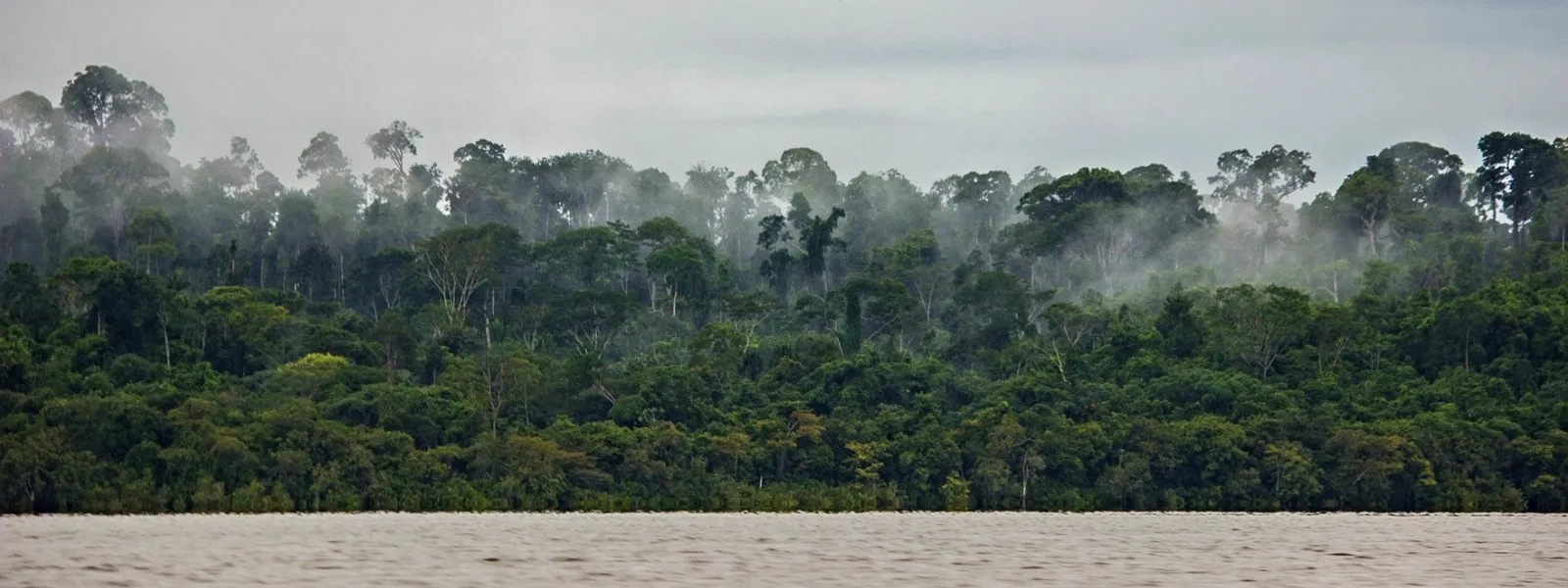
A usina hidrelétrica de Belo Monte — a quarta maior do mundo em capacidade instalada (11.233 MW) — foi construída no rio Xingu, no estado do Pará, norte do Brasil.
Foi inaugurada em 5 de maio de 2016, com uma única turbina. Naquela época, 80% do curso do rio foi desviado e 516 km² de terra foram inundados, uma área maior que a cidade de Chicago. Desse total, 400 km² eram de mata nativa. A usina começou a operar em plena capacidade em novembro de 2019.
Belo Monte foi construída e é operada pelo consórcio Norte Energia S.A., composto principalmente por empresas estatais. Foi financiada pelo Banco Nacional de Desenvolvimento Econômico e Social (BNDES), que aportou ao consórcio 25,4 bilhões de reais (aproximadamente US$ 10,16 bilhões), o maior investimento de sua história. Portanto, o BNDES também é legalmente responsável pelos impactos socioambientais associados ao projeto hidrelétrico.
Décadas de danos ambientais e humanos
As violações dos direitos humanos e a degradação da Amazônia remontam ao início do projeto. Em março de 2011, a Norte Energia iniciou a construção da barragem sem consulta adequada e sem o consentimento prévio, livre e informado das comunidades afetadas.
A construção levou ao deslocamento forçado de mais de 40.000 pessoas, rompendo laços sociais e culturais. O plano de reassentamento em Altamira — cidade diretamente afetada pelo projeto hidrelétrico — incluía moradias na periferia da cidade, sem serviços públicos adequados, moradias dignas para as famílias reassentadas e moradias diferenciadas para aqueles pertencentes a comunidades indígenas.
A operação da barragem de Belo Monte impôs uma seca permanente e artificial na Volta Grande do rio Xingu, agravada pelas secas históricas na Amazônia em 2023 e 2024. Como resultado, a morte de milhões de ovos de peixe foi documentada por quatro anos consecutivos (de 2021 a 2024) e, nos últimos três anos, não houve migração de peixes rio acima para desovar e se reproduzir. Assim, a pesca artesanal, principal fonte de proteína para os povos indígenas e comunidades ribeirinhas, foi severamente afetada: o consumo de peixe caiu de 50% para 30% do total de proteínas consumidas, sendo substituído por alimentos processados. Em suma, houve um colapso ambiental e humanitário que resultou no colapso da pesca como modo de vida tradicional, insegurança alimentar e falta de acesso à água potável para milhares de famílias, empobrecimento e doenças.
Além disso, a construção da barragem aumentou o desmatamento e intensificou a extração ilegal de madeira e a insegurança em terras indígenas e tribais, colocando em risco a sobrevivência dessas comunidades. Outra consequência foi o agravamento da pobreza e dos conflitos sociais, bem como a sobrecarga dos sistemas de saúde, educação e segurança pública em Altamira, cidade considerada a mais violenta do país em 2017, onde houve aumento do tráfico de pessoas e da violência sexual. Também foram registrados casos de violência contra defensores de direitos humanos envolvidos no caso.
Em 2025, durante a 30ª Conferência das Nações Unidas sobre Mudanças Climáticas (COP30), realizada no Brasil, o Ministério Público Federal classificou os danos causados por Belo Monte como ecocídio.
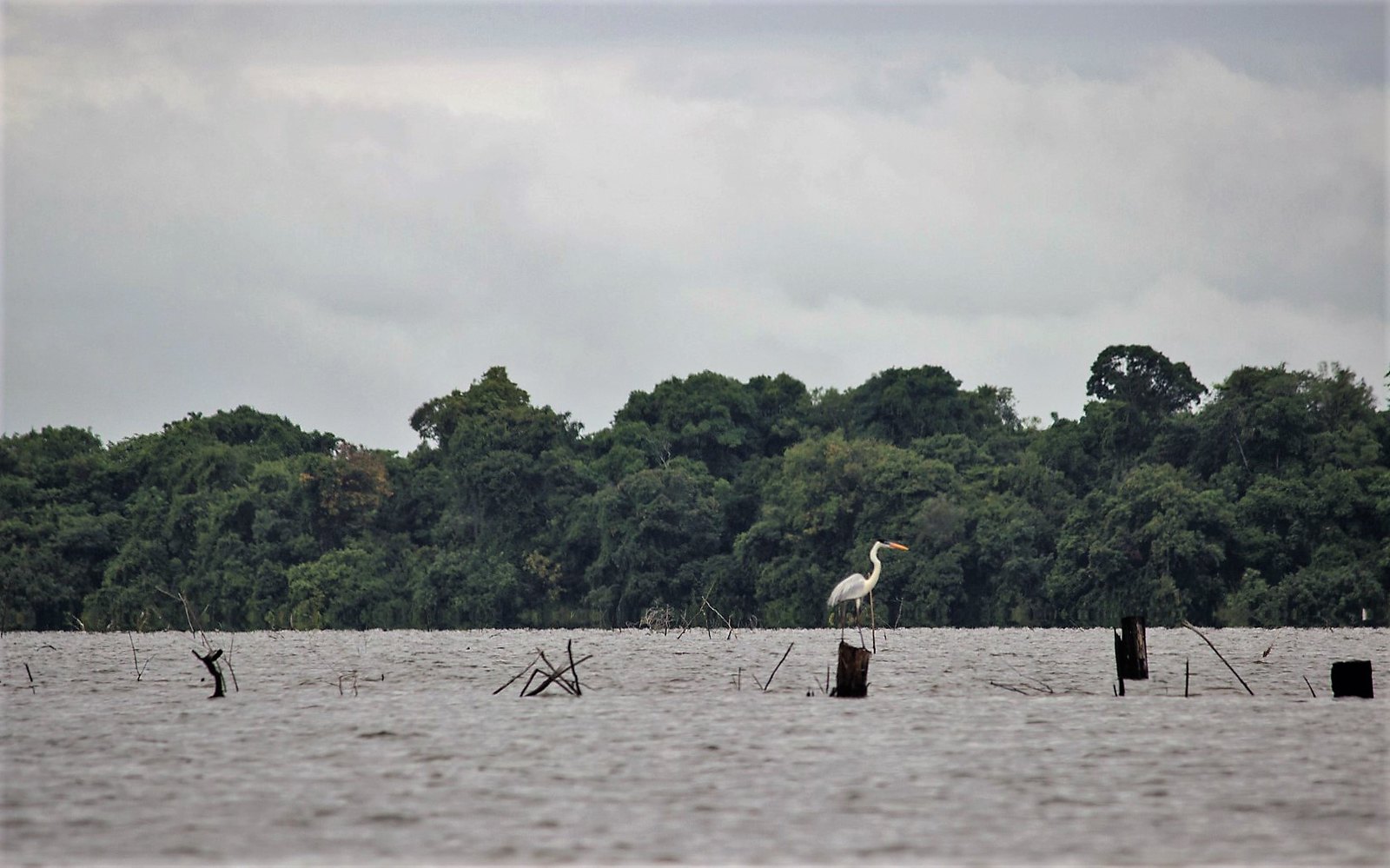
Foto: Amazon Watch / Maíra Irigaray.
A busca por justiça e reparação
Ao longo dos anos, o Ministério Público Federal do Pará, a Defensoria Pública e organizações da sociedade civil impetraram dezenas de ações judiciais em tribunais brasileiros para contestar as diversas irregularidades do projeto, bem como seus impactos. A maioria das ações permanece sem solução, algumas há mais de 10 anos.
Essas ações não obtiveram sucesso porque o governo federal tem reiteradamente anulado decisões favoráveis às comunidades afetadas, recorrendo a um mecanismo pelo qual o presidente do Supremo Tribunal Federal pode suspender uma decisão judicial com base unicamente em argumentos genéricos como "interesse nacional" ou "ordem econômica".
Diante da falta de respostas eficazes em nível nacional, a AIDA — juntamente com uma coalizão de organizações aliadas — levou o caso à Comissão Interamericana de Direitos Humanos (CIDH) e, em 2010, solicitou medidas cautelares para proteger a vida, a integridade e a saúde das comunidades indígenas afetadas.
Em 1º de abril de 2011, a CIDH concedeu essas medidas e solicitou ao Estado brasileiro a suspensão das licenças ambientais e de quaisquer obras de construção até que as condições relativas à consulta prévia e à proteção da saúde e integridade das comunidades fossem atendidas.
E, em 16 de junho de 2011, apresentamos uma denúncia formal à CIDH — juntamente com o Movimento Xingu Vivo Para Siempre, a Coordenação das Organizações Indígenas da Amazônia Brasileira, a Diocese de Altamira, o Conselho Missionário Indígena, a Sociedade Pará de Defesa dos Direitos Humanos e a Global Justice — contra o Estado brasileiro por sua responsabilidade internacional nas violações de direitos humanos contra os povos afetados neste caso. A denúncia foi apresentada em dezembro de 2015.
Em 3 de agosto de 2011, a CIDH modificou as medidas cautelares para solicitar — em vez da suspensão de licenças e obras — a proteção dos povos que vivem em isolamento voluntário, a saúde das comunidades indígenas e a regularização e proteção das terras ancestrais.
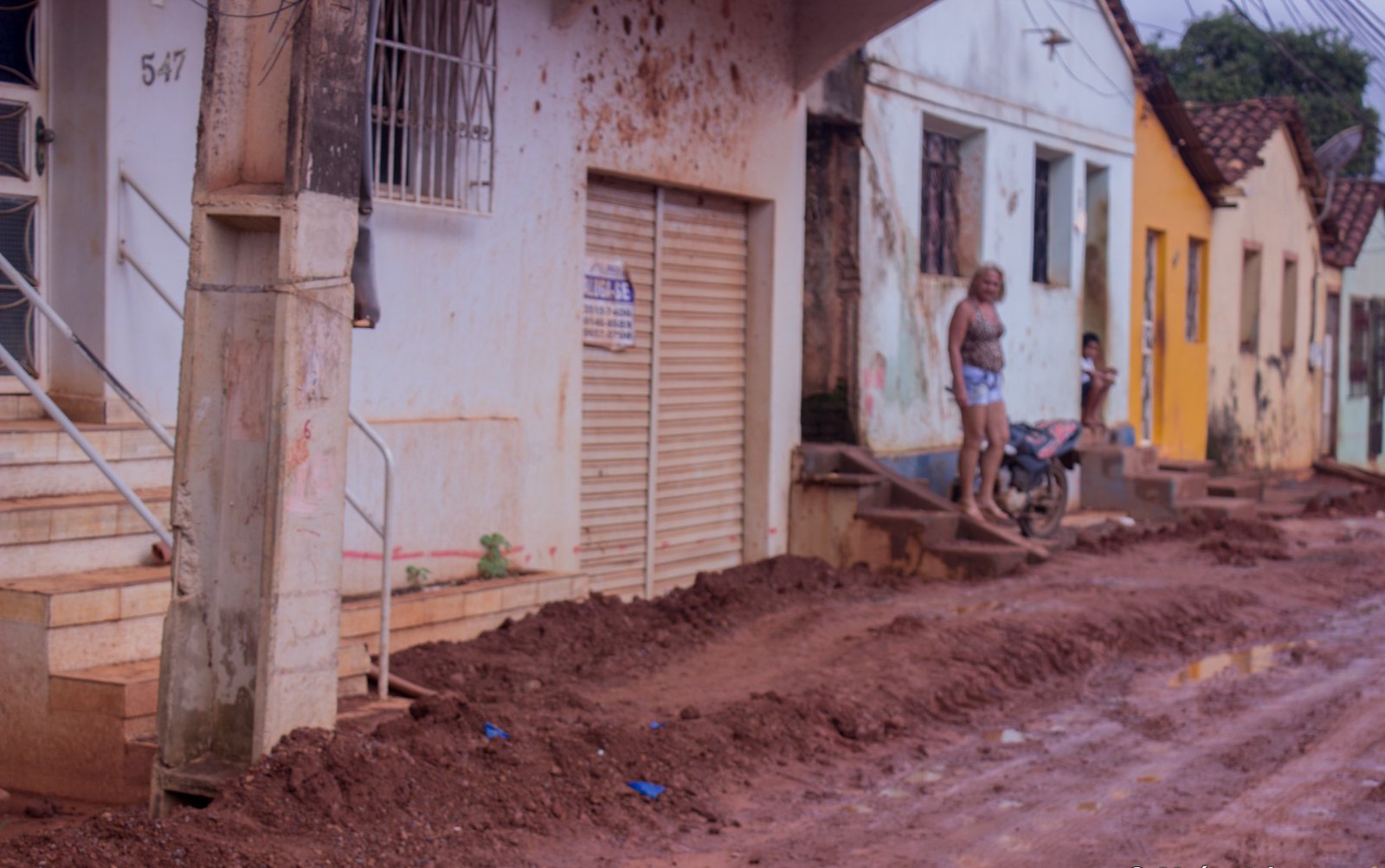
Foto: Amazon Watch / Maíra Irigaray.
Situação atual
As medidas de proteção concedidas pela CIDH permanecem em vigor, mas o Estado brasileiro não as cumpriu integralmente, relatando apenas ações genéricas. As comunidades documentaram as contínuas violações de seus direitos. A situação que motivou o pedido dessas medidas — o risco à vida, à segurança e aos meios de subsistência das comunidades — persiste e se agravou com a usina hidrelétrica operando em plena capacidade e com as recentes secas extremas na Amazônia.
Além do ocorrido em Belo Monte, existe o risco de maiores danos sociais e ambientais decorrentes da implementação de outro megaprojeto de mineração na Volta Grande do Xingu. Lá, a empresa canadense Belo Sun pretende construir a maior mina de ouro a céu aberto do Brasil.
Os impactos sinérgicos e cumulativos da usina e da mina não foram avaliados. O Estado excluiu povos indígenas, comunidades ribeirinhas e comunidades camponesas do processo de licenciamento ambiental do projeto. Apesar disso, dos protestos indígenas e de outras irregularidades em torno do projeto, o governo do estado do Pará autorizou formalmente a mina em abril de 2026.
Belo Monte, assim como outras usinas hidrelétricas, agrava a emergência climática ao gerar emissões de gases de efeito estufa em seu reservatório. Além disso, é ineficiente diante das secas prolongadas e intensas causadas pela crise, pois perde capacidade de geração de energia.
O caso perante a Comissão Interamericana
Em outubro de 2017, a CIDH anunciou que decidiria conjuntamente sobre a admissibilidade (se o caso preenche os requisitos para admissão) e o mérito (se houve, de fato, violação de direitos humanos) da denúncia internacional contra o Estado brasileiro.
Quinze anos após a apresentação da denúncia, as comunidades afetadas e as organizações que as representam ainda aguardam essa decisão. Caso a CIDH conclua que houve violações de direitos humanos e emita recomendações que o Estado brasileiro não cumpra, poderá encaminhar o caso à Corte Interamericana de Direitos Humanos, cujas decisões são vinculativas.
Uma possível decisão da Corte Internacional de Direitos Humanos neste caso estabeleceria um precedente jurídico regional em relação aos direitos dos povos indígenas e ribeirinhos, à participação pública em megaprojetos e à responsabilidade do Estado no contexto da crise climática. Isso é particularmente relevante à luz do Parecer Consultivo nº 32 da Corte, que reafirmou as obrigações dos Estados de proteger pessoas e comunidades em todo o continente da emergência climática.
Partners:
Related projects
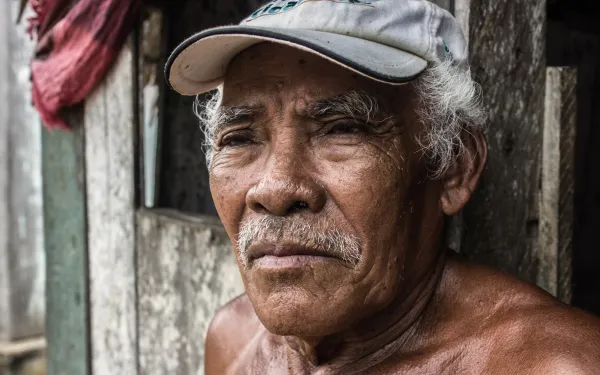
Brazil must respond to human rights violations caused by the Belo Monte Dam
In representation of communities affected by the Belo Monte Dam, we have submitted final arguments in the case against Brazil before the Inter-American Commission on Human Rights. The report presents scientific evidence of the forced displacement of indigenous and traditional communities, the mass die-off of fish, differentiated harms to men and women, and threats to the survival of local communities in the Brazilian Amazon. Washington, DC, United States and Altamira, Brazil. Furthering the formal complaint against the State of Brazil for human rights violations caused by the construction of the Belo Monte Dam, organizations representing affected communities presented their final arguments before the Inter-American Commission on Human Rights. They demonstrate the damages Belo Monte has caused to indigenous and traditional communities, and residents of Altamira, the city closest to the dam. “Human rights violations are a daily occurence for those affected by the dam, so it’s urgent that our petition before the Commission advance to sanction the government and guarantee our rights,” proclaimed Antônia Melo, coordinator of the Movimiento Xingu Vivo para Siempre, a citizens’ collective formed in the face of the dam’s implementation. The report presented before the Commission shows that the damages resulted from a severe lack of foresight and inadequate evaluation, as well as from failure to comply with the conditions for operation established by the government. The many risks denounced prior to the dam’s construction have since become long-term damages—many of which have affected men and women, and youth and the elderly, in different ways. “This report is a vital step forward for the people of the Xingu River basin, who are now closer than ever to achieving justice, forcing Brazil to respond to the violations committed, and ensuring that what happened on the Xingu never happens again,” said Astrid Puentes Riaño, co-director of the Inter-American Association for Environmental Defense (AIDA). Together with the Paraense Society for Human Rights (SDDH) and Justiça Global, AIDA represents the affected communities before the Commission. The report also documents the displacement of indigenous and traditional communities forced to leave their territories without adequate alternatives, placing their cultural survival at risk. Among the affected populations are communities dedicated to fishing, who have not yet been compensated for the loss of livelihood. The dam has caused mass die-offs of fish and, although authorities have imposed millions in fines, the report demonstrates that the underlying problem has not been resolved. Local communities now have limited use of the Xingu River as a source of food, sustenance, transportation and entertainment. The report also documents—among other serious harms—the disappearance of traditional trades, such as brickmakers and cart drivers, and of traditional cultural practices. Women, for example, have stopped giving birth in their homes and must now go to a hospital, a reality that has drastically worsened due to the oversaturation of health and education services in Altamira caused by the recent population surge. The complaint against Brazil was presented before the Commission in 2011, the year the international organism granted protective measures to indigenous people affected by the dam’s construction. The case against Brazil officially opened in December 2015. Then, last October, in a rare move designed to speed up the processing of the case, the Commission decided to unite two stages that, as a rule, are normally processed separately. Under this framework, the organizations and the State are required to present their final arguments, after which the Commission will make a decision. “We hope the Commission refers the case to the Inter-American Court of Human Rights as soon as possible, and that it recommends Brazil adopt the measures necessary to protect the life, integrity, and right to property of the indigenous and traditional communities affected by the dam,” said Raphaela Lopes, attorney at Justiça Global. “After being subject to all forms of rights violations, starting from the very beginning of this project, these communities need integral reparation; their right to free, prior and informed consent was not honored.” The Commission must now prepare a report to conclude whether or not human rights violations occurred as a result of the Belo Monte Dam, in which it may issue recommendations for remediation. If those recommendations are unfulfilled, the case may be referred to the Inter-American Court on Human Rights, which has the power to issue a ruling condemning Brazil. Belo Monte has been in operation since early 2015, though a series of judicial suspensions resulting from non-compliance with its permits means that construction has yet to be completed. Although Belo Monte has caused great harm to the people of the Xingu, Brazil now has an opportunity to avoid inflicting more damage and begin making efforts to better their quality of life. For that to happen, a prompt decision by the Commission is vital. Find more information about the case here. Press contacts: Víctor Quintanilla (México), AIDA, [email protected], +521 5570522107 Raphaela Lopes (Brasil), Justiça Global, [email protected], + 55 21 99592-7017
Read more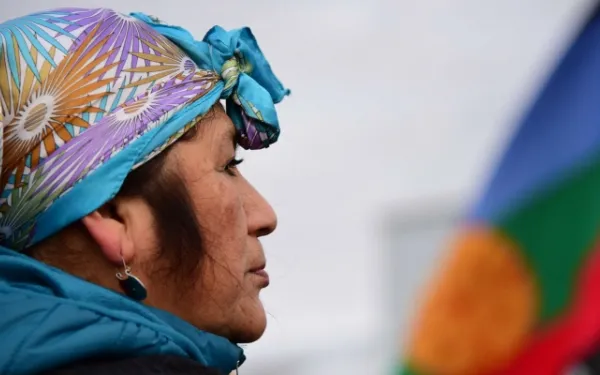
Defending communities from fracking’s advance in Argentina
In a country highly dependent on hydrocarbons, human rights and those of nature are often overlooked. That's why in Argentina, AIDA and our allies are supporting the efforts of communities and organizations to avoid the damages caused by fracking.In Neuquén province in Argentine Patagonia, a large metal structure rises high above the apple trees. It’s one of many fracking wells that have been installed in this rich natural area. A single well like this one requires roughly 11 million liters of water for operation, the equivalent to 18 years of water consumption for an average family. Despite being internationally recognized as an experimental, risky and contaminating process, fracking is spreading rapidly through Argentina, affecting the land and water of the Mapuche people and other local communities. Much of the nation’s exploration is taking place at Vaca Muerta, the largest unconventional gas reserve in Latin America. Roughly 30 thousand square kilometers, the site covers four Argentine provinces: Neuquén, Rio Negro, La Pampa and Mendoza. The expansion of fracking has brought with it problems like pollution and great harm to the livelihoods of local communities, including the Mapuche, who are forced to find new ways of living on their land in order to avoid migration to urban centers. Oil companies generate unstable and short-term employment. And, due to the increase in the price of land, the residents of the area must earn more money to maintain their standard of living. In a country that gets 90 percent of its energy from hydrocarbons, the government has failed to prioritize the rights of indigenous peoples, of children and of nature. Instead, it has favored the economic income of a highly unsustainable activity. That’s why the efforts of communities and civil society organizations to resist the blind advance of fracking are fundamental. “What motivates me is caring for our land and water; nature is not ours, we belong to it,” stated Santiago Cane, member of the Environment and Natural Resources Foundation (FARN), an organization that is using the courts to stop fracking. FARN filed a writ of amparo to invalidate the authorizations granted for the exploitation of four fracking wells in Mendoza. The environmental authority granted the permits in July 2017, in a record time of six days, without requiring an Environmental Impact Assessment. The lawsuit, which AIDA is supporting from our experience in international environmental law, remains in process. “In Mendoza, fracking is advancing at a rapid pace,” Santiago explained. “The national and provincial governments are not taking into account the potentially irreversible pollution of water sources that serve several cities.” In fact, Mendoza is a province that has suffered from water scarcity for years, a problem aggravated by climate change. Those who promote fracking in Mendoza also overlook the fact that, by contaminating both surface and ground water supplies, the toxic chemicals used in fracking will likely reach the Llancanelo lagoon, a wetland of international importance located in the foothills of the Andes Mountains. The lagoon is a mandatory passage and rest area for more than 130 species of resident and migratory birds. Additionally, the region is home to the Mapuche people. According to international law, indigenous peoples like the Mapuche must give their free, prior and informed consent to any activity that affects their territory. That right is not being respected in this case. “I am motivated by the idea of a different economy that does not deprecate nature and that does not generate the accumulation of wealth within small groups of society,” Santiago adds. FARN, together with AIDA, is part of the Latin American Alliance on Fracking, a coalition of organizations that work to slow fracking’s advance in the region. Together we will continue our work to avoid fracking’s damages to our land and water. We are convinced that the power to stop fracking lies with the people.
Read more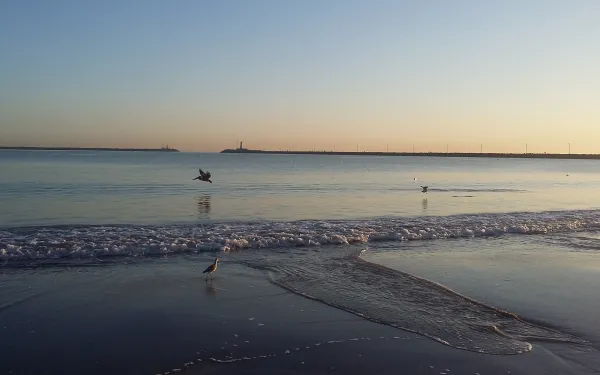
The shortsighted expansion of the Port of Veracruz
The powers behind the Port of Veracruz expansion project share a trait all too common in Mexico: a vision of development as the sum of short-term gains. But achieving those often requires squashing all possible obstacles, including our natural environments and the laws that protect them. “The first stage of the expansion of the Port of Veracruz will provide oxygen to the surrounding area for 15 or 20 years,” stated Juan Ignacio Fernández Carbajal, director of the Veracruz Port Authority. By oxygen, the director means economic income and new sources of employment derived from the port’s increased capacity. But this vision of development—so clearly shortsighted— ignores the social, environmental and economic benefits that the Veracruz Reef System has long provided, and which it will continue to provide for far more than 20 years. The second most important infrastructure project in Mexico’s recent history will irreversibly damage the largest coral ecosystem in the Gulf of Mexico, the Veracruz Reef System National Park. The reefs of Veracruz provide oxygen to Mexico and our planet in the most literal sense. The oceans and their ecosystems, particularly coral reefs, generate about half the oxygen we breathe and absorb almost a third of the carbon dioxide we emit. Coral reefs also produce 17 percent of all proteins consumed worldwide—a percentage that rises to 70 percent for coastal nations, according to a report by the United Nations Food and Agriculture Organization. They harbor more than 100 thousand different species of marine fauna, including thousands of commercial fish, which share their home with herbivorous fish, sea turtles and sharks. In good conditions, reefs protect coastal populations from storms, hurricanes and tsunamis—natural phenomena aggravated by climate change. They absorb up to 95 percent of the impact of waves generated by strong winds. The people of Veracruz know particularly well how the reefs have protected them. When hurricane Karl (a category four) hit the city in 2001, the Veracruz reefs provided a buffer that protected the city from the worst of the storm. Despite the fact that the reef system was designated a national protected area in 1975, and named a national park in 1992, the government decided to change the park’s boundaries in 2012 to allow for the expansion of the Port of Veracruz—effectively excluding the Punta Gorda reefs and Vergara Bay from the protected area. In purely economic terms—those clearly prioritized by the project’s promoters—by taking away the protection of those reefs, and putting their future at risk, Mexico’s oceans are losing value. The value of the environmental services provided by the now-unprotected Punta Gorda and Vergara Bay reefs is estimated around $290.5 million USD, a dramatic figure in light of the estimated value of the expanded port's activities. The port expansion project has an estimated value of $85,600 USD per square kilometer, according to an article by the University of Veracruz, a figure that pales in comparison to the estimated value of ecosystem services provided by coral reefs, which ranges between $100,000 and $600,000 USD dollars per square kilometer, according to the United Nations Environment Program. The obligations Mexico ignored to promote the port “Unfortunately, when we thought the project was about to begin, we began to have environmental problems, which delayed the project for about three and a half years,” Fernández Carbajal explained. The “problems” to which the director is referring is the existence of protected coral reefs on site. “Since the problem was a national park, the government figured they’d remove it from the area so they could build the port without facing any legal obstacles,” Leonardo Ortiz, a researcher at the University of Veracruz, explained in our documentary short Battle for the Reefs of Veracruz. According to national law, the only activities permitted within the Veracruz Reef System National Park are those related to the protection of its natural resources, the increase in flora and fauna, and the preservation of its ecosystems and their elements. Port activities are clearly in violation of this law. So rather than stop the expansion project, the government chose instead to change the park’s boundaries, effectively unprotecting the reefs that fell within the port’s proposed limits. In doing so, the government failed to conserve the natural characteristics of the nation’s ecosystems for future generations. It also violated its obligations under the Ramsar Convention, an intergovernmental treaty for the protection of wetlands, under which the Veracruz Reef System is recognized as a Wetland of International Importance. What’s more, the project’s Environmental Impact Assessment was highly flawed in the following ways: The Port Authority requested a fragmented authorization of the project, which prevented an adequate and comprehensive assessment of the project’s cumulative impacts over time. By ignoring the existence of the once-protected reef located in the construction zone, the assessment failed to provide the best possible scientific data. It did not include protective measures for sea turtles that spend an important part of their life cycle in the park—particularly hawksbill turtles, a threatened species recognized by the Inter-American Convention for the Protection and Conservation of Sea Turtles. It failed to consider the impacts on the reef due to sedimentation, the dredging of the Bay of Vergara and Punta Gorda, and the increase in the quantity and size of the vessels in the new port. It ignored the fact that, by transporting an increased quantity of hydrocarbons, the port’s expansion increases the risk of spills in a region highly vulnerable to these incidents, which could seriously damage the highly biodiverse reef system in the Southeast corridor of the Gulf of Mexico. For all of the above reasons, residents of the city of Veracruz have filed a writ of amparo, denouncing the government’s blatant violations of human rights and environmental law. In the legal action—presented by the Mexico Center for Environmental Law (CEMDA) and supported by AIDA—residents attest that the port expansion project is violating their human right to a healthy environment. The question we must consider then, is this: Does the short-term economic advancement of a region matter more than the preservation of a 10,000-year-old reef system that guarantees biodiversity, sustainable tourism, food security, and enduring protection against climate change? For those of us who think of the long game, and consider the natural world to be our best ally on the path toward a sustainable future, the answer is clear. The port expansion must be stopped.
Read more