
Project
Amazon Watch / Maíra Irigaray
Barragem de Belo Monte no rio Xingu: 10 anos de impactos na Amazônia e de busca por reparações
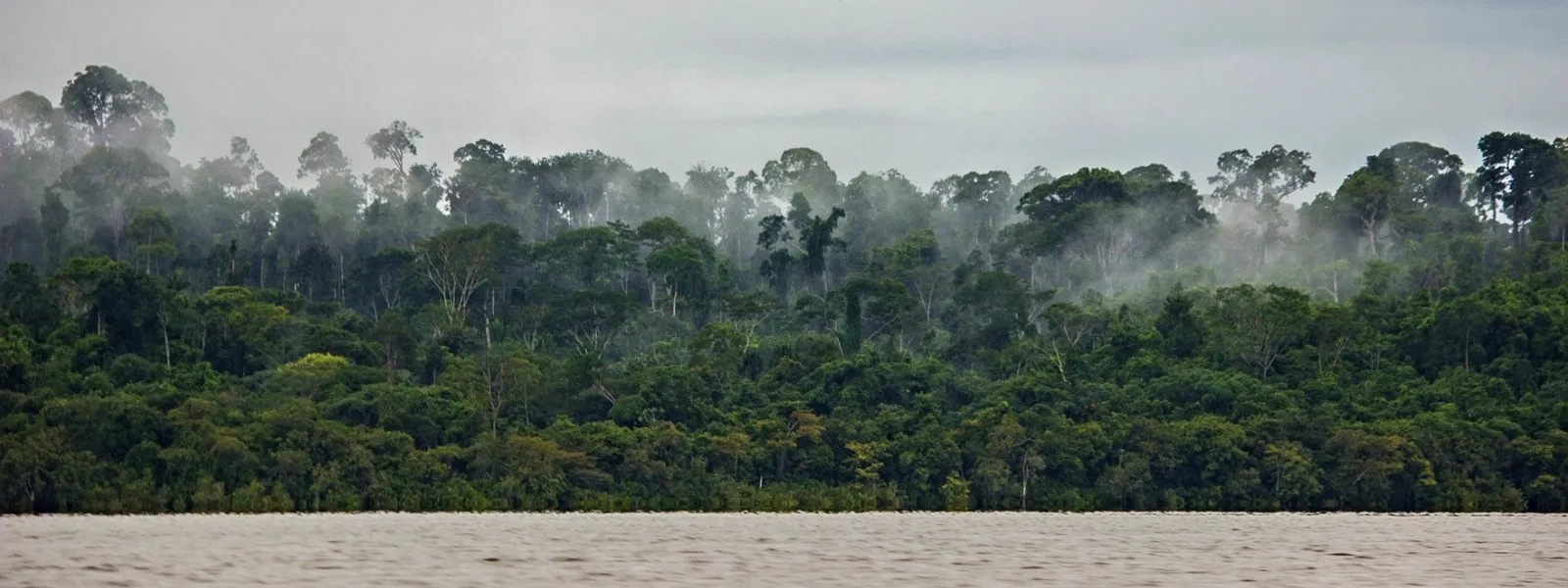
A usina hidrelétrica de Belo Monte causou um desastre ambiental e social no coração da Amazônia: um dos ecossistemas mais importantes do planeta.
Essa situação só piorou desde que a usina começou a operar em 2016. A busca por justiça e reparação para as comunidades indígenas e ribeirinhas afetadas continua até hoje.
Em 2011, a Comissão Interamericana de Direitos Humanos (CIDH) concedeu a essas comunidades medidas de proteção, que até hoje não foram totalmente implementadas pelo Estado brasileiro.
E, desde junho daquele mesmo ano, a CIDH mantém um processo contra o Estado por sua responsabilidade internacional no caso.
A CIDH pode encaminhar o caso à Corte Interamericana de Direitos Humanos, que tem o poder de emitir uma sentença condenatória contra o Estado brasileiro.
Consulta o expediente de fatos do caso
Após 10 anos de operação da usina hidrelétrica e mais de 15 anos de violações de direitos humanos documentadas, é hora da justiça ser feita para as comunidades afetadas.
Leia a carta aberta das organizações que levam o caso à CIDH
Leia nosso comunicado à imprensa
Contexto
A usina hidrelétrica de Belo Monte — a quarta maior do mundo em capacidade instalada (11.233 MW) — foi construída no rio Xingu, no estado do Pará, norte do Brasil.
Foi inaugurada em 5 de maio de 2016, com uma única turbina. Naquela época, 80% do curso do rio foi desviado e 516 km² de terra foram inundados, uma área maior que a cidade de Chicago. Desse total, 400 km² eram de mata nativa. A usina começou a operar em plena capacidade em novembro de 2019.
Belo Monte foi construída e é operada pelo consórcio Norte Energia S.A., composto principalmente por empresas estatais. Foi financiada pelo Banco Nacional de Desenvolvimento Econômico e Social (BNDES), que aportou ao consórcio 25,4 bilhões de reais (aproximadamente US$ 10,16 bilhões), o maior investimento de sua história. Portanto, o BNDES também é legalmente responsável pelos impactos socioambientais associados ao projeto hidrelétrico.
Décadas de danos ambientais e humanos
As violações dos direitos humanos e a degradação da Amazônia remontam ao início do projeto. Em março de 2011, a Norte Energia iniciou a construção da barragem sem consulta adequada e sem o consentimento prévio, livre e informado das comunidades afetadas.
A construção levou ao deslocamento forçado de mais de 40.000 pessoas, rompendo laços sociais e culturais. O plano de reassentamento em Altamira — cidade diretamente afetada pelo projeto hidrelétrico — incluía moradias na periferia da cidade, sem serviços públicos adequados, moradias dignas para as famílias reassentadas e moradias diferenciadas para aqueles pertencentes a comunidades indígenas.
A operação da barragem de Belo Monte impôs uma seca permanente e artificial na Volta Grande do rio Xingu, agravada pelas secas históricas na Amazônia em 2023 e 2024. Como resultado, a morte de milhões de ovos de peixe foi documentada por quatro anos consecutivos (de 2021 a 2024) e, nos últimos três anos, não houve migração de peixes rio acima para desovar e se reproduzir. Assim, a pesca artesanal, principal fonte de proteína para os povos indígenas e comunidades ribeirinhas, foi severamente afetada: o consumo de peixe caiu de 50% para 30% do total de proteínas consumidas, sendo substituído por alimentos processados. Em suma, houve um colapso ambiental e humanitário que resultou no colapso da pesca como modo de vida tradicional, insegurança alimentar e falta de acesso à água potável para milhares de famílias, empobrecimento e doenças.
Além disso, a construção da barragem aumentou o desmatamento e intensificou a extração ilegal de madeira e a insegurança em terras indígenas e tribais, colocando em risco a sobrevivência dessas comunidades. Outra consequência foi o agravamento da pobreza e dos conflitos sociais, bem como a sobrecarga dos sistemas de saúde, educação e segurança pública em Altamira, cidade considerada a mais violenta do país em 2017, onde houve aumento do tráfico de pessoas e da violência sexual. Também foram registrados casos de violência contra defensores de direitos humanos envolvidos no caso.
Em 2025, durante a 30ª Conferência das Nações Unidas sobre Mudanças Climáticas (COP30), realizada no Brasil, o Ministério Público Federal classificou os danos causados por Belo Monte como ecocídio.
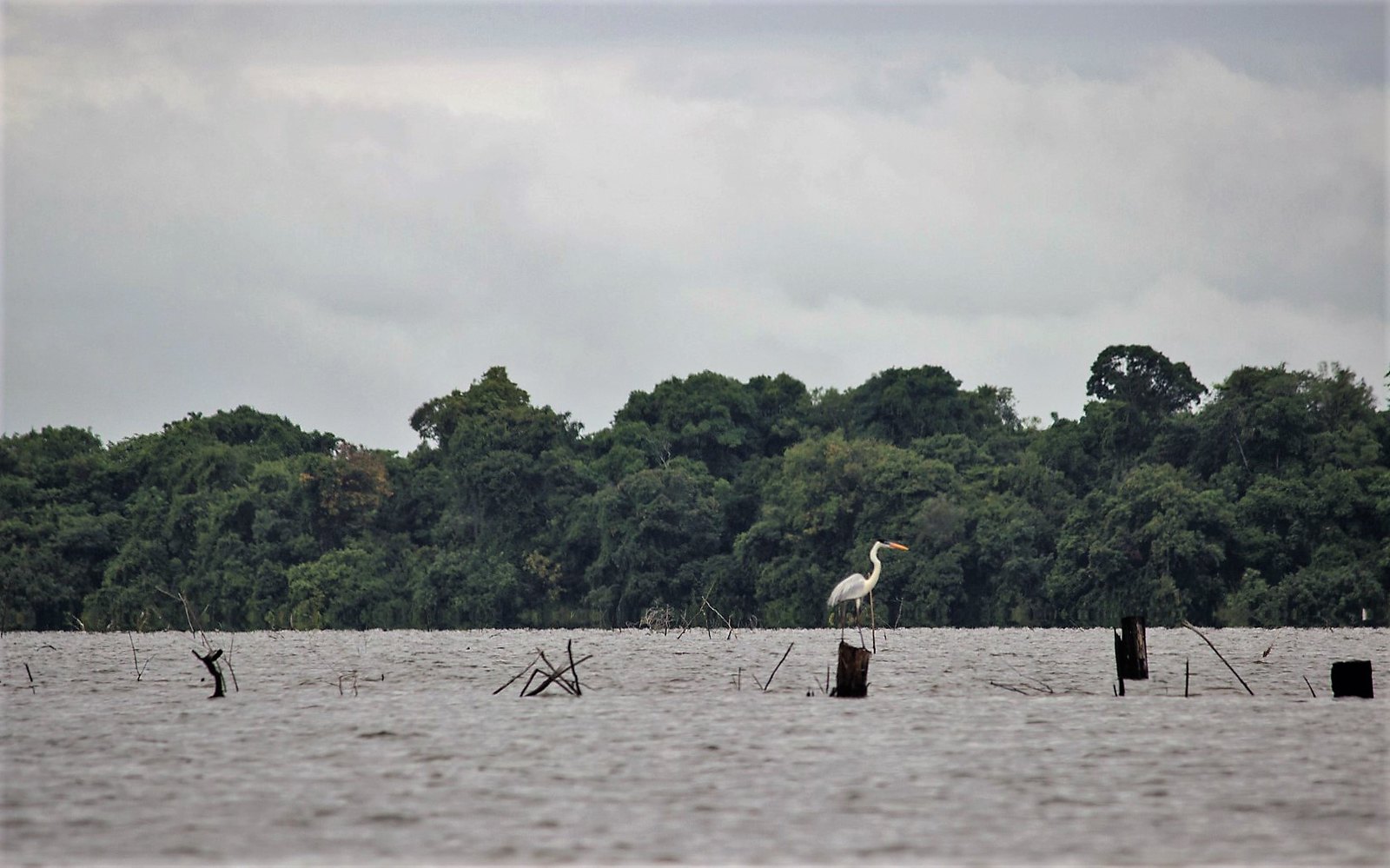
Foto: Amazon Watch / Maíra Irigaray.
A busca por justiça e reparação
Ao longo dos anos, o Ministério Público Federal do Pará, a Defensoria Pública e organizações da sociedade civil impetraram dezenas de ações judiciais em tribunais brasileiros para contestar as diversas irregularidades do projeto, bem como seus impactos. A maioria das ações permanece sem solução, algumas há mais de 10 anos.
Essas ações não obtiveram sucesso porque o governo federal tem reiteradamente anulado decisões favoráveis às comunidades afetadas, recorrendo a um mecanismo pelo qual o presidente do Supremo Tribunal Federal pode suspender uma decisão judicial com base unicamente em argumentos genéricos como "interesse nacional" ou "ordem econômica".
Diante da falta de respostas eficazes em nível nacional, a AIDA — juntamente com uma coalizão de organizações aliadas — levou o caso à Comissão Interamericana de Direitos Humanos (CIDH) e, em 2010, solicitou medidas cautelares para proteger a vida, a integridade e a saúde das comunidades indígenas afetadas.
Em 1º de abril de 2011, a CIDH concedeu essas medidas e solicitou ao Estado brasileiro a suspensão das licenças ambientais e de quaisquer obras de construção até que as condições relativas à consulta prévia e à proteção da saúde e integridade das comunidades fossem atendidas.
E, em 16 de junho de 2011, apresentamos uma denúncia formal à CIDH — juntamente com o Movimento Xingu Vivo Para Siempre, a Coordenação das Organizações Indígenas da Amazônia Brasileira, a Diocese de Altamira, o Conselho Missionário Indígena, a Sociedade Pará de Defesa dos Direitos Humanos e a Global Justice — contra o Estado brasileiro por sua responsabilidade internacional nas violações de direitos humanos contra os povos afetados neste caso. A denúncia foi apresentada em dezembro de 2015.
Em 3 de agosto de 2011, a CIDH modificou as medidas cautelares para solicitar — em vez da suspensão de licenças e obras — a proteção dos povos que vivem em isolamento voluntário, a saúde das comunidades indígenas e a regularização e proteção das terras ancestrais.
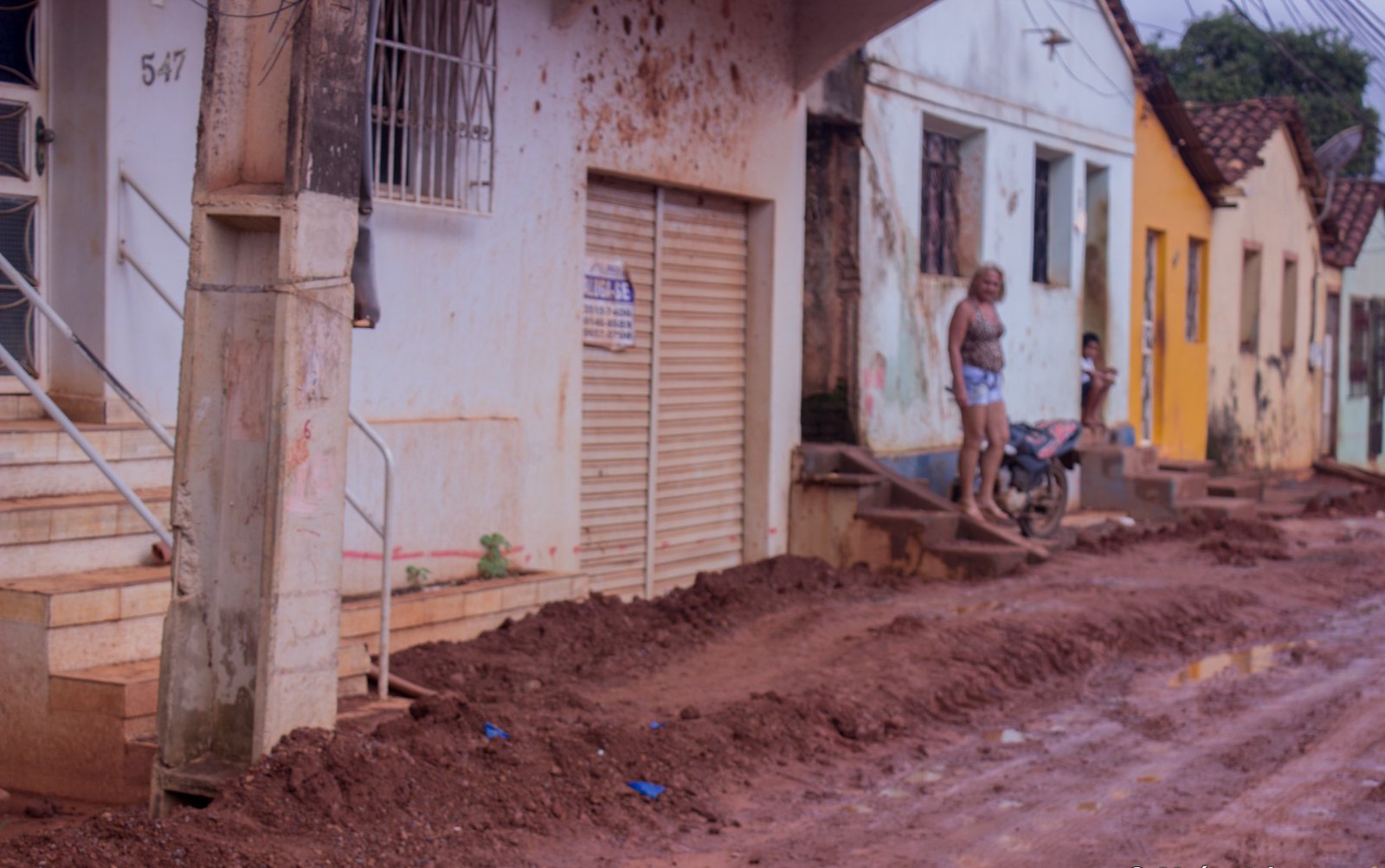
Foto: Amazon Watch / Maíra Irigaray.
Situação atual
As medidas de proteção concedidas pela CIDH permanecem em vigor, mas o Estado brasileiro não as cumpriu integralmente, relatando apenas ações genéricas. As comunidades documentaram as contínuas violações de seus direitos. A situação que motivou o pedido dessas medidas — o risco à vida, à segurança e aos meios de subsistência das comunidades — persiste e se agravou com a usina hidrelétrica operando em plena capacidade e com as recentes secas extremas na Amazônia.
Além do ocorrido em Belo Monte, existe o risco de maiores danos sociais e ambientais decorrentes da implementação de outro megaprojeto de mineração na Volta Grande do Xingu. Lá, a empresa canadense Belo Sun pretende construir a maior mina de ouro a céu aberto do Brasil.
Os impactos sinérgicos e cumulativos da usina e da mina não foram avaliados. O Estado excluiu povos indígenas, comunidades ribeirinhas e comunidades camponesas do processo de licenciamento ambiental do projeto. Apesar disso, dos protestos indígenas e de outras irregularidades em torno do projeto, o governo do estado do Pará autorizou formalmente a mina em abril de 2026.
Belo Monte, assim como outras usinas hidrelétricas, agrava a emergência climática ao gerar emissões de gases de efeito estufa em seu reservatório. Além disso, é ineficiente diante das secas prolongadas e intensas causadas pela crise, pois perde capacidade de geração de energia.
O caso perante a Comissão Interamericana
Em outubro de 2017, a CIDH anunciou que decidiria conjuntamente sobre a admissibilidade (se o caso preenche os requisitos para admissão) e o mérito (se houve, de fato, violação de direitos humanos) da denúncia internacional contra o Estado brasileiro.
Quinze anos após a apresentação da denúncia, as comunidades afetadas e as organizações que as representam ainda aguardam essa decisão. Caso a CIDH conclua que houve violações de direitos humanos e emita recomendações que o Estado brasileiro não cumpra, poderá encaminhar o caso à Corte Interamericana de Direitos Humanos, cujas decisões são vinculativas.
Uma possível decisão da Corte Internacional de Direitos Humanos neste caso estabeleceria um precedente jurídico regional em relação aos direitos dos povos indígenas e ribeirinhos, à participação pública em megaprojetos e à responsabilidade do Estado no contexto da crise climática. Isso é particularmente relevante à luz do Parecer Consultivo nº 32 da Corte, que reafirmou as obrigações dos Estados de proteger pessoas e comunidades em todo o continente da emergência climática.
Partners:
Related projects
Chile fails to advance towards adequate oversight of the salmon industry
An administrative summary carried out by Sernapesca investigating serious irregularities in salmon farming concessions ended up absolving the officials involved of all charges, without valid arguments. The results of the audits of Chile’s Subsecretariat of Fishing and Aquaculture (Subpesca) and the National Service of Fishing and Aquaculture (Sernapesca), carried out in 2016 by the Comptroller General's Office, showed serious irregularities in salmon farming concessions. This led to Sernapesca undertaking an internal administrative investigation to establish the facts and assign responsibility for those irregularities. However, the officials who were the subject of the investigation were absolved of all charges without sufficient evidence. The audits identified that a significant number of the concessions were operating in anaerobic conditions (generating a lack or absence of oxygen). They also found that concession holders (at least 100) took samples at alternate sites so as to demonstrate the presence of aerobic conditions. Thirty-one percent of the centers reviewed had operated outside of their authorized concession area. Also, Sernapesca did not confirm that the concessions had not expired for failing to starting operations one full year after their material delivery. Despite the seriousness of the fact that a significant percentage of the concessions are creating anaerobic conditions—under which marine life cannot survive—the investigation did not address this reality. Without any justification, the officials called to answer for this lack of oversight simply refused to accept any responsibility. To mention just a few examples: they excused displaced concessions citing a tolerance range for displacement that contradicts the law, lacks scientific basis, and is often violated; they excused themselves from taking samples at different sites on the grounds that the concessions were displaced; and, to explain the lack of declarations for expired concessions, they argued that there are no legal or regulatory provisions that order Sernapesca to officially confirm the expiration of a concession. Such statements cannot be used as an excuse to allow companies to continue maintaining their concessions when they have legally expired. Based on the process described, the Interamerican Association for Environmental Defense (AIDA), the NGO FIMA, and Greenpeace Chile consider that, despite the declared intent of the authorities, there are still serious problems with the control and government oversight of salmon farming in Chile, and the adequate curbing of its expansion. The generation of anaerobic conditions, which are occurring in many of the salmon farming concessions, is a very serious and often irreversible environmental problem. Places without oxygen quickly become true underwater deserts where life cannot thrive. Awareness of this problem, however, is not common because it occurs underwater, where it cannot be seen. The agencies in charge of regulating and overseeing the industry have a fundamental job to carry out. The Comptroller's Office took an important step by carrying out audits of Subpesca and Sernapesca. Now we need the agencies to confront the weaknesses that have been revealed and to rise to the very important task of monitoring and sanctioning the industry. We urge the Comptroller General's Office to adequately follow up on the 2016 audits. It is clear that the control of the industry, as well as the imposition of sanctions when appropriate, is not working as it should and the seas of southern Chile cannot continue to be unprotected. It is urgent to move towards stopping the expansion of an industry that has proven to be incompatible with the health of marine ecosystems, and to implement the appropriate sanctions, derived from the expiration of concessions and environmental permits for those farms causing grave environmental impacts. press contact: Victor Quintanilla (Mexico), AIDA, [email protected], +5215570522107
Read more
International alert issued on threats of uncontrolled fishing near Galapagos
The Interamerican Association for Environmental Defense (AIDA) and the Ecuadorian Coordinator of Organizations for the Defense of Nature and the Environment (CEDENMA) sent an international alert about the problem and threats of uncontrolled fishing on the high seas, particularly in the vicinity of the Galapagos Marine Reserve. The document calls for the adoption of preventive, urgent and effective measures to stop overfishing from causing irreversible damage to ecosystems and species in the Galapagos Islands and throughout the Tropical Eastern Pacific. The call comes after an industrial fleet of 260 fishing boats (243 flying the Chinese flag)—one of the largest in the world—was registered in July in Ecuador's Exclusive Economic Zone (EEZ), near the Galapagos Marine Reserve. The fleet included vessels from companies with records of violations of sovereign rights and the jurisdiction of coastal states, such as illegal, unreported and unregulated fishing, rule breaking and intentional environmental degradation. "The ocean is a highly connected system where what happens in one area will affect many others, so coordinated and cooperative actions between countries are key for the effective conservation of marine resources," explained Gladys Martinez, Senior Attorney with AIDA's Marine Biodiversity and Coastal Protection Program. "The role of international law is also fundamental in the sense that countries must enforce in good faith what has been agreed upon in conventions, treaties and other international instruments aimed at protecting the ocean.” The alert was sent to authorities overseeing the following international treaties and organizations: the United Nations Convention on the Law of the Sea (UNCLOS), the Convention on Biological Diversity (CBD), the Convention on International Trade in Endangered Species of Wild Fauna and Flora, and the Convention on the Conservation of Migratory Species of Wild Animals, the World Trade Organization, the Permanent Commission for the South Pacific (CPPS), the Eastern Tropical Pacific Marine Corridor (ETPMC) and the United Nations Educational, Scientific and Cultural Organization (UNESCO). Overfishing in the high seas (areas beyond national jurisdiction) can affect not only exploited areas, but also nearby marine and coastal ecosystems, as well as the food security of less developed countries. Therefore, activities such as those recorded in July represent a serious threat to the Galapagos Islands and three other World Heritage Sites—Cocos, Malpelo and Coiba in Costa Rica, Colombia and Panama, respectively—as well as to biodiversity on the high seas. "At CEDENMA we are very concerned about the situation related to industrial fishing activities in international waters that affect the fishing, biological and ecological resources of the seas under Ecuadorian jurisdiction and the Tropical Eastern Pacific region," said Gustavo Redín, President of CEDENMA. "We therefore urge Ecuadorian authorities to act on this issue and defend this natural heritage, which is unique in the world." The alert details the ecological, economic and social importance of the Galapagos; the current fishing situation inside and outside of the Marine Reserve; the impacts that overfishing on the high seas has on local fauna; the international obligations that countries have to protect the ocean and its resources; and the regional mechanisms for coordination between countries on marine conservation. Finally, AIDA and CEDENMA request a series of measures from the international organizations and authorities in charge of treaty compliance, including that they: Urgently investigate the facts set out in the document. Urge the Government of China and other governments with vessels present in the vicinity of Ecuador's EEZ to comply with their obligations to protect highly migratory species. Urge the Ecuadorian State to improve its monitoring efforts to effectively protect valuable natural resources. Review China's fishing subsidies, which are encouraging overfishing on the high seas. Continue negotiations within the framework of the Convention on Biological Diversity so that State Parties commit to protecting 30 percent of the ocean by 2030, including areas on the high seas and highly productive areas such as the Galapagos Islands. Urge Ecuador to continue supporting the negotiations to reach a global agreement for the conservation and sustainable use of biodiversity in areas beyond national jurisdiction (the High Seas Treaty) and to favor fishing management in that part of the ocean. Adopt coordinated, joint, and cooperative actions among the countries of the Eastern Tropical Pacific in favor of marine conservation. Strengthen the application of the rules that bind coastal states to ensure that fishing activities on the high seas are subject to standards of sustainability and the protection of marine biodiversity. Press contact: Victor Quintanilla (Mexico), AIDA, [email protected], +5215570522107
Read more
Civil society calls on the Human Rights Council to recognize the right to a #HealthyEnvironment4All
More than 850 civil society organizations, indigenous peoples’ groups, social movements and local communities are calling on the United Nations Human Rights Council to recognize the universal human right to a safe, clean, healthy and sustainable environment. The open letter, sent on September 10 and still open online for signatures, comes ahead of the Human Rights Council meeting in Geneva from September 14 to October 6. It argues that people must be protected from the deadly impacts of environmental degradation and climate change - such as the increased spread of diseases like COVID-19. “In view of the global environmental crisis that currently violates and jeopardizes the human rights of billions of people on our planet, global recognition of this right is a matter of utmost urgency,” the letter states. “As we all know, there are no human rights on a dead planet.” The right to a safe, clean, healthy and sustainable environment is already covered in constitutions and laws in a substantial majority of countries around the world, as well as regional systems. There is a growing legal system for implementing and applying the right, too. Now advocates for human rights, indigenous peoples, climate action and social justice are urging the UN Human Rights Council to formalize this recognition and make it universal. In doing so, the Human Rights Council would prompt countries to strengthen policies and legislation to take better care of nature and biodiversity, the letter says. This would lead to cleaner air, greater access to safe drinking water and lower greenhouse gas emissions. It would also provide environmental justice for communities that are exposed to degraded and dangerous environments, such as toxic air or disease. Deforestation and environmental degradation increase humans’ exposure to zoonotic viruses, like COVID-19, and vector-borne diseases, like malaria and Dengue fever. Scientists warn that the risk of spreading diseases will grow as natural ecosystems continue to break down. New research also suggests that the effects of air pollution on lungs, hearts and general health makes people more susceptible to the worst impacts of COVID-19. To protect people around the world from future shocks, and build greater resilience to catastrophes like this pandemic, the letter urges states to “recognize, respect, protect and fulfil the human right of all to enjoy a safe, clean, healthy and sustainable environment”. #HealthyEnvironment4All Press contact Victor Quintanilla (Mexico), AIDA, [email protected], +5215570522107
Read more