
Project
Alberto Peña Kay
Protecting the Santurban páramo from mining's damage
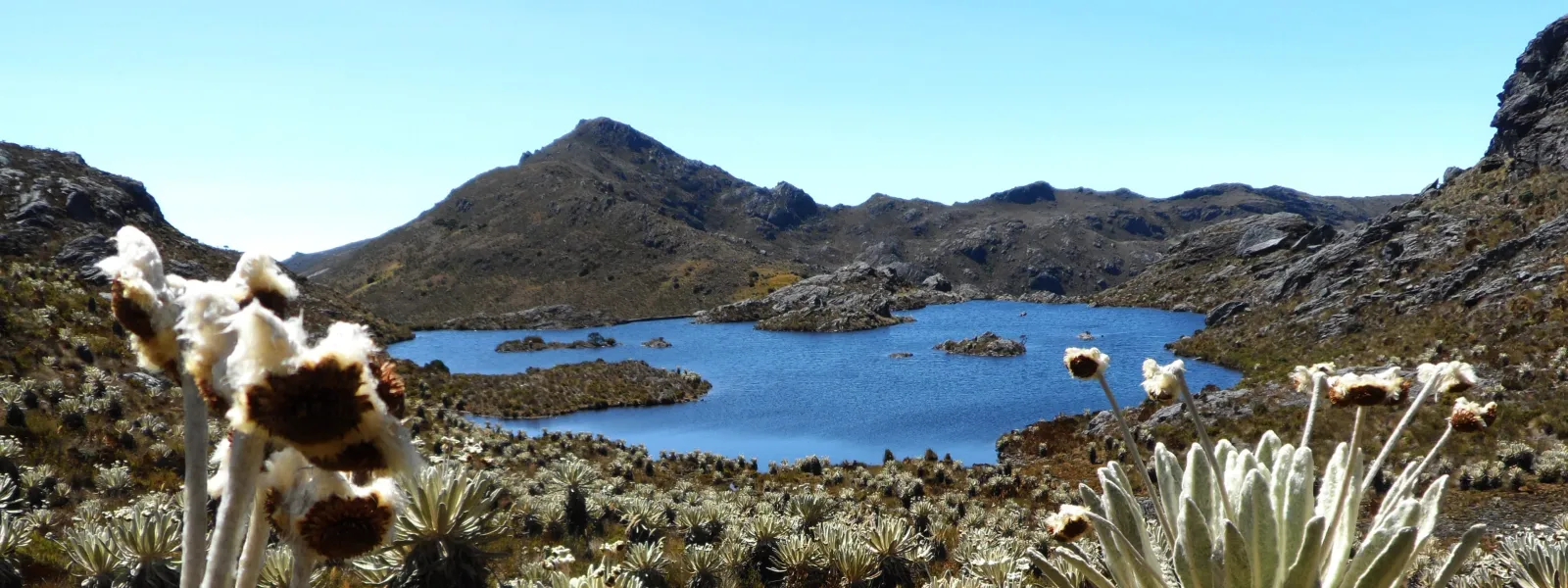
In the Andean region, high-mountain ecosystems known as páramos capture water from the fog and supply it to the lowlands. One such ecosystem is the Santurbán páramo, which provides fresh water to more than two million people in Colombia.
Santurbán, like the other páramos on the continent, also captures large amounts of carbon, making it a key ally in mitigating the climate crisis. It is also a refuge for hundreds of endangered species, including the iconic spectacled bear.
The land in and around the páramo contains gold and other minerals. This has put Santurbán in the spotlight of the multinational mining industry, which for decades has sought to establish large-scale projects in the ecosystem that threaten to degrade it.
The Committee for the Defense of Water and the Santurbán Páramo—a coalition of environmental advocates—has thwarted these ongoing attempts, with support from AIDA and other civil society organizations.
Background
The Santurbán páramo is located in the heart of the Eastern Cordillera of the Colombian Andes, in the departments of Santander and Norte de Santander, at an elevation ranging from 2,200 to 4,290 meters above sea level.
It covers an area of 129,743 hectares and is home to 57 lakes. It serves as a habitat for 457 plant species and 293 species of vertebrate fauna.
There are mineral deposits in Santurbán, primarily gold, but also silver and copper. This explains the region’s mining tradition, particularly in the part of the páramo located in Santander, in the province of Soto Norte. The communities in the area have built their culture and identity around gold mining, which is mainly artisanal and small-scale.
But since the 1990s, the gold deposits in the páramo have also attracted foreign mining conglomerates seeking to develop large-scale projects. This has raised concerns among the population that relies on the Santurbán water sources, who have mobilized in defense of water, their land, and life.
Although national and international regulations prohibit mining in páramos, the Colombian government has granted mining concessions to transnational corporations in Santurbán.

Photo: Keishpixl / Pixabay.
The long struggle to protect the páramo
One of the companies that sought to develop large-scale mining in Santurbán is Eco Oro Minerals Corp.—formerly Greystar Resources—a Canadian company that intended to establish the Angostura open-pit mine there to extract gold and silver. Between 1994 and 1995, the company acquired its mining titles and conducted exploration. And in 2010, it applied for a mining permit.
That was the year AIDA became involved in defending the ecosystem, supporting the Committee for the Defense of Water and the Santurbán Páramo. Our legal work helped convince the Colombian government to deny the mine an environmental permit in May 2011.
In January 2013, the government designated a portion of the páramo (11,700 hectares) as a Regional Natural Park. That year—together with the committee and partner organizations—we carried out a campaign and advocacy efforts to urge the government to recognize the entire Santurbán area as a páramo ecosystem through a delimitation based on scientific criteria. In December 2014, the Ministry of the Environment established a delimitation that protected 76% of the páramo (98,954 hectares).
Furthermore, as a result of a litigation supported by AIDA, in February 2016, Colombia’s highest court reaffirmed that mining in páramos is prohibited.
That same year, in December, the International Finance Corporation (IFC), the World Bank Group’s private sector arm, decided to divest from Eco Oro Minerals. This achievement was the result of a process that began in 2012, when the committee—advised and supported by AIDA and international partner organizations—filed a complaint before an independent accountability mechanism, which concluded that the IFC’s investment in the Angostura project failed to take into account the project’s social and environmental impacts, thereby contradicting the financial institution’s internal policies.
Also in 2016, Eco Oro Minerals filed an arbitration claim against the Colombian government with the International Centre for Settlement of Investment Disputes (ICSID), arguing that it had been adversely affected by government decisions aimed at protecting the country’s páramos, including the delimitation of Santurbán.
In 2017, the Constitutional Court invalidated the delimitation because the affected communities were not consulted. The high court ordered that a participatory delimitation be carried out.
And that year, a new threat to Santurbán emerged when the Canadian multinational Aris Mining applied for an environmental permit for Soto Norte, a gold mining project located near the páramo. Following citizen protests and technical objections, in October 2020, the National Environmental Licensing Authority shelved the project.

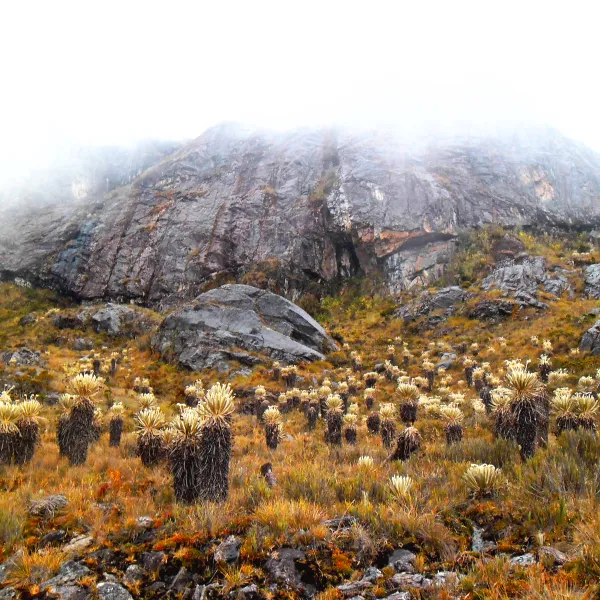
Photo: Aztlec.
Current situation
In March 2025, the Colombian government designated the western flank of the Santurbán massif as a temporary renewable natural resource reserve area, delimiting and protecting an area of 75,344.65 hectares. This resulted in a two-year suspension of the Soto Norte project. However, Aris Mining's contract to formalize Calimineros' small-scale mining activities through the purchase and processing of mineralized material remains in effect.
In addition, the Canadian mining company continues to move the project forward. In September 2025, it released its prefeasibility study, revising the mine’s original design.
Meanwhile, members of the Committee for the Defense of Water and the Santurbán Páramo face threats and stigmatization because of their work. In March 2025, UN Special Rapporteurs and the Working Group on Business and Human Rights denounced these incidents in communications sent to the governments of Colombia, Canada, and the United Arab Emirates, as well as to the companies Aris Mining and MDC Industry Holding Company LLC, the former co-owner of the Soto Norte project.
Regarding the arbitration claim filed by Eco Oro Minerals, in July 2024, ICSID ruled in favor of the Colombian government and rejected the Canadian company’s claim for USD 1.1 billion in compensation.
Concerning the delimitation of Santurbán, in July 2026, the Ministry of the Environment issued a resolution introducing the concept of "progressive delimitation." On that basis, the government proposes to progressively demarcate the páramo, covering 29,199 hectares across 19 municipalities—those where the participatory agreements required by the Constitutional Court in its 2017 ruling have already been finalized. It also proposes two measures on the creation and expansion of reserves to restrict mining in the ecosystem.
Learn more about the impacts of mining on the páramos of Latin America (in Spanish).
Partners:
Related projects

Strategic litigation and its role in the pursuit of justice
In La Guajira, Colombia, indigenous Wayuu and Afro-Colombian communities—accompanied by civil society organizations—initiated litigation to defend their rights to water, food security and ethnic integrity, all of which are at risk from the diversion of the Bruno stream for the expansion of El Cerrejón, the largest open-pit coal mine in Latin America. The goal of bringing this particular case to court is not only to prevent the loss of an important water source. The litigation also seeks to set a precedent in the country and on the continent for the protection of rural communities against the systematic violation of their rights. It also represents an important action in the face of the climate crisis, a global problem aggravated by the continued extraction and burning of coal and other fossil fuels. The case can be categorized as strategic litigation, also called impact litigation, which consists of selecting and filing a lawsuit in order to promote the protection of rights or changes in public policy, while achieving broad changes in society, i.e., those that extend beyond a particular case. Strategic litigation is a tool that, through the law, promotes social transformations and strengthens human rights protections. It is strategic because, based on a legal cause, it seeks to change unjust realities and position issues that are key to the formation of a democratic society. In this sense, the ultimate goal of strategic litigation is to leave a lasting mark, a judicial precedent that can be replicated. It is also strategic because it includes the use of communication strategies, social mobilization, and political advocacy to put relevant debates on the table regarding the recognition of rights. When legal actions involve local communities, they also become a tool to help strengthen their internal processes of defense. Its premises and characteristics have made strategic litigation an important means to promote the protection of key ecosystems and human rights, including the right to health and a healthy environment, and the rights of indigenous peoples, communities and groups in vulnerable situations. Components As described above, strategic litigation is consciously designed to achieve broad goals and to generate a roadmap for future litigation. It consists of many different elements, including the following: A robust legal strategy that, on many occasions, must be enriched with interdisciplinary technical and scientific arguments. A communications strategy. Social or community organizing, which means involving communities, networks and local organizations in all phases of the litigation under a perspective of active participation and collective strategy construction. A strategy to protect against scenarios of risk that the litigation may cause. Political advocacy before decision-makers. Objectives and scope Although there are many, three main objectives of strategic litigation are to: Place important debates in the public opinion. Promote social mobilization around a common cause. Strengthen the rule of law, which means that citizens invite the State and judges to recognize rights, make problems visible, and ultimately strengthen the democratic system. Strategic litigation has been especially important for struggles and causes in which it is difficult for social movements and communities to position the recognition of their rights in legislative and public policy agendas. At AIDA, we believe that all people should have full access to environmental justice, and strategic litigation has been a powerful tool to guarantee the individual and collective right to a healthy environment in Latin America. To achieve this, we select emblematic cases and projects where the strategic use of international law and scientific argumentation can set key precedents. We work closely with local organizations and allies to jointly build the litigation process, design communication campaigns, and complete risk analyses that promote the protection of all stakeholders involved in litigation.
Read more
Commitments to marine conservation: A look back at Our Ocean 2023
"Our ocean, our connection." That was the theme of the eighth Our Ocean Conference, held March 2-3 in Panama, the first Latin American country to host the annual event. The conference began in 2014 as an initiative of the U.S. State Department to draw international attention to the serious global threats to the ocean and to secure to concrete commitments for marine conservation and sustainable development. The event brought together heads of state and representatives of the private sector, civil society and academic institutions under the specific objective of highlighting the urgency of implementing effective area-based management measures as part of interconnected systems including marine protected areas, the development of a global blue economy, and approaching innovative solutions to marine pollution. An AIDA delegation attended the conference and participated in the plenary sessions and side events. The following is a summary of the event. The inspiring The focus of the conference Our Ocean is not a space for sharing knowledge about this vast ecosystem and its biodiversity. The environmental community already knows for certain that the ocean must be effectively protected as soon as possible and that there is no need to present further evidence of the multiple services it has provided to humanity for centuries. The conference brought together leaders and ministers to advance international agreements and pressure nations to commit to taking the necessary steps to protect the ocean. The power of a generation The voice of youth was prominent throughout the conference, represented for example by more than 70 members of the Sustainable Ocean Alliance (SOA), which since 2014 has built the world's largest network of new generations of people working to create solutions to the ocean's greatest challenges. Hearing youth leaders speak passionately about the importance of caring for the planet for generations to come was encouraging. As the youngest member of AIDA, I found inspiration in meeting other young people advocating for the ocean and its biodiversity. In my daily work I’m surrounded by news and numbers about the damage humanity has caused to the ocean and being part of this conference helped me see the other side of the coin. Those of us who are actively working for a healthier, cleaner and more protected ocean are part of the change and, in large part, it is thanks to us that high officials have stopped to look at the evidence and take concrete action. It is this generation that will inherit the management of the ecological crisis, whose voice deserves to be reflected in commitments to improve the way we relate to the ocean. The positive Support for seabed defense AIDA co-hosted a side event on deep-sea mining with the not-so-simple task of bringing together decision-makers to support a moratorium on deep-sea mining and seabed protection. Thanks to the impetus of a group of co-organizers—including young people from Comms Inc, The Oxygen Project, Only One and SOA—Palau President Surangel Whipps Jr. and Fiji Prime Minister Sitiveni Rabuka attended the event. High-level representatives from Latin American and European countries also attended. It was a space for dialogue between civil society and invited authorities that resulted in encouraging commitments, including France's commitment (seconded by Germany) to invest in scientific research of the seabed and to stop investments in industrial processes related to deep-sea mining. World-renowned oceanographer Sylvia Earle touched the audience with her love for the ocean and her undying commitment to its protection. Those who attended reaffirmed their commitment to the moratorium and the search for alternatives. Commitments to marine biodiversity Overall, the conference provided a unique platform for several nations to make valuable commitments. Participating government delegations made 341 commitments worth nearly $20 billion, including funds to expand and enhance marine protected areas and biodiversity corridors. In Latin America, Panama announced the expansion of Banco Volcán, a marine reserve in the Caribbean, from 14,212 to 93,000 square kilometers. With this, Panama will be protecting 54 percent of its exclusive economic zone, meeting the goal of protecting 30 percent of its territory by 2030. And Ecuador committed to protecting its first eighty nautical miles (14,800 square kilometers), allowing for only artisanal fishing. This decision positions Ecuador as a Latin American leader in marine conservation and sustainable natural resource management. Ecuador called on the other countries that make up the Pacific Marine Corridor—Costa Rica, Panama and Colombia—to take similar measures to preserve one of the most biodiverse spaces in the ocean. What's next? Nations are now expected to comply with their announced commitments. In the region, Panama and Ecuador must expand their protected territories, ensuring the adequate monitoring of biodiversity and the sustainable management of resources. Similarly, it is expected that the countries of the Pacific, Latin America and the European Union that have declared their support for halting deep-sea mining will continue with actions consistent with that position, including active participation in meetings of the Seabed Authority, supporting the moratorium or precautionary pause on extractive activity. While there is certainly a long way to go, each decision announced at the conference in favor of preserving marine biodiversity provides some hope and motivation for our work. We will continue to collaborate with governments and communities to preserve the ocean, the planet's largest and most diverse ecosystem.
Read more
The Transformative Water Pact
In March 2023, world leaders and stakeholders across sectors will gather in New York for the UN Water Conference, dedicated to address the global water crisis. From countless experiences of people around the globe, and supported by substantial scientific evidence, it is obvious that major changes are needed in the way we share and care for water. In the decades since the last UN Water Conference in 1977, water sources have been further exploited and polluted for the economic gains of a few. As a result, ecosystems have deteriorated and the majority of the world’s people have been left with too little and unsafe water to rely on.The Transformative Water Pact (TWP) was launched at the 2023 Conference and has been developed in response to the continued exploitation of nature, neglect of human rights and the extreme power-imbalances that characterize contemporary water governance throughout the world. It details an alternative vision of water governance based on the tenets of environmental justice, equality and care. The TWP spans two sections of key principles and a framework for action, that provide anchor-points and strategic priorities to guide decision-making for transformative change in water governance.The TWP was initiated by the Dutch environmental justice organization Both ENDS and the international water knowledge institute IHE-Delft. It was developed and authored by a diverse group of 40+ environmental justice advocates from civil society and academia, notably from the Global South, who work extensively on water-related issues throughout the world. It’s content was defined through a process of online round-tables and writing from December 2022 to February 2023. The TWP is a living document that can serve as a basis for further discussion and refinement.The TWP can be endorsed by any actor that supports the transformative principals and is committed to implementing the framework of action within their own area of expertise and sphere of influence, including Non Governmental Organizations (NGOs), policy-makers, academics, private sector actors, community groups and governmental organizations. Download the document
Read more