
Project
Alberto Peña Kay
Protecting the Santurban páramo from mining's damage
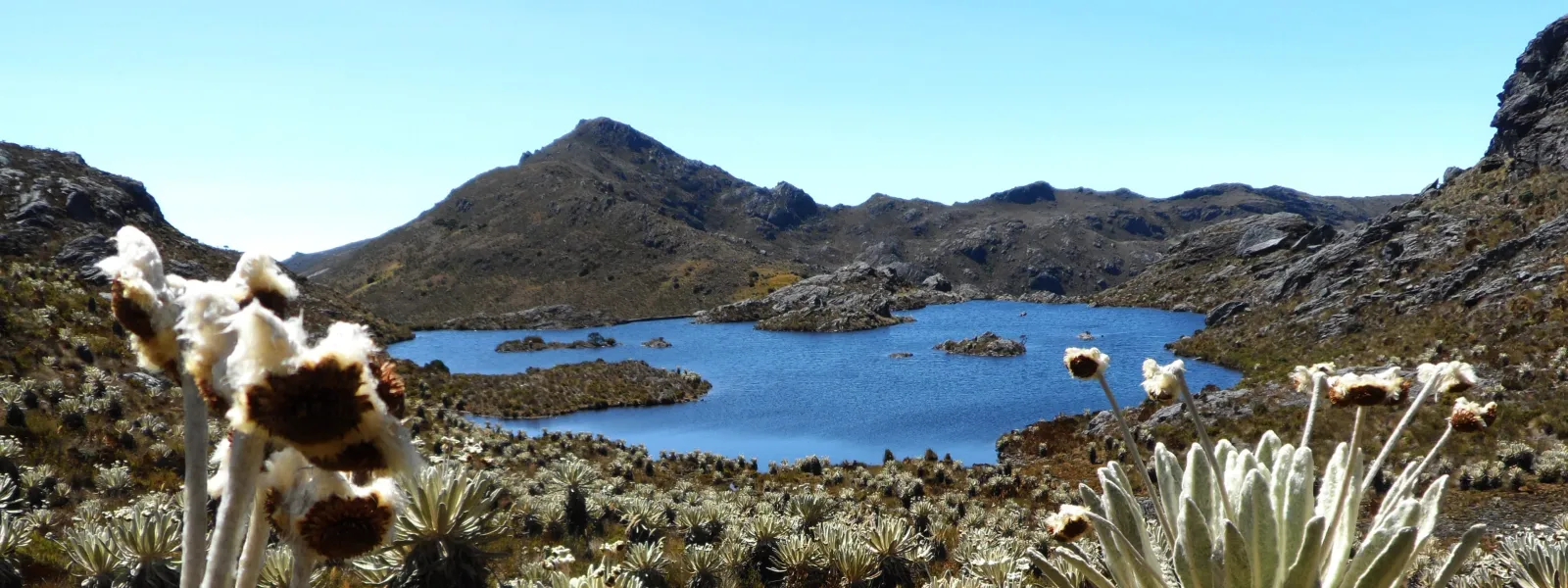
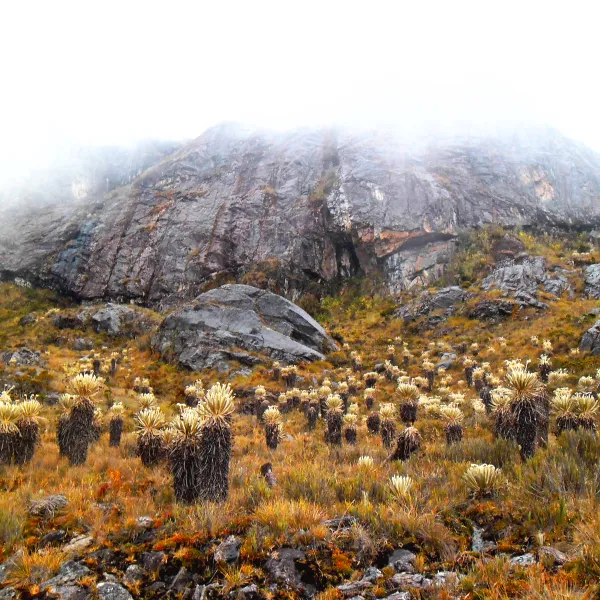
In the Andean region, high-mountain ecosystems known as páramos capture water from the fog and supply it to the lowlands. One such ecosystem is the Santurbán páramo, which provides fresh water to more than two million people in Colombia.
Santurbán, like the other páramos on the continent, also captures large amounts of carbon, making it a key ally in mitigating the climate crisis. It is also a refuge for hundreds of endangered species, including the iconic spectacled bear.
The land in and around the páramo contains gold and other minerals. This has put Santurbán in the spotlight of the multinational mining industry, which for decades has sought to establish large-scale projects in the ecosystem that threaten to degrade it.
The Committee for the Defense of Water and the Santurbán Páramo—a coalition of environmental advocates—has thwarted these ongoing attempts, with support from AIDA and other civil society organizations.
Background
The Santurbán páramo is located in the heart of the Eastern Cordillera of the Colombian Andes, in the departments of Santander and Norte de Santander, at an elevation ranging from 2,200 to 4,290 meters above sea level.
It covers an area of 129,743 hectares and is home to 57 lakes. It serves as a habitat for 457 plant species and 293 species of vertebrate fauna.
There are mineral deposits in Santurbán, primarily gold, but also silver and copper. This explains the region’s mining tradition, particularly in the part of the páramo located in Santander, in the province of Soto Norte. The communities in the area have built their culture and identity around gold mining, which is mainly artisanal and small-scale.
But since the 1990s, the gold deposits in the páramo have also attracted foreign mining conglomerates seeking to develop large-scale projects. This has raised concerns among the population that relies on the Santurbán water sources, who have mobilized in defense of water, their land, and life.
Although national and international regulations prohibit mining in páramos, the Colombian government has granted mining concessions to transnational corporations in Santurbán.
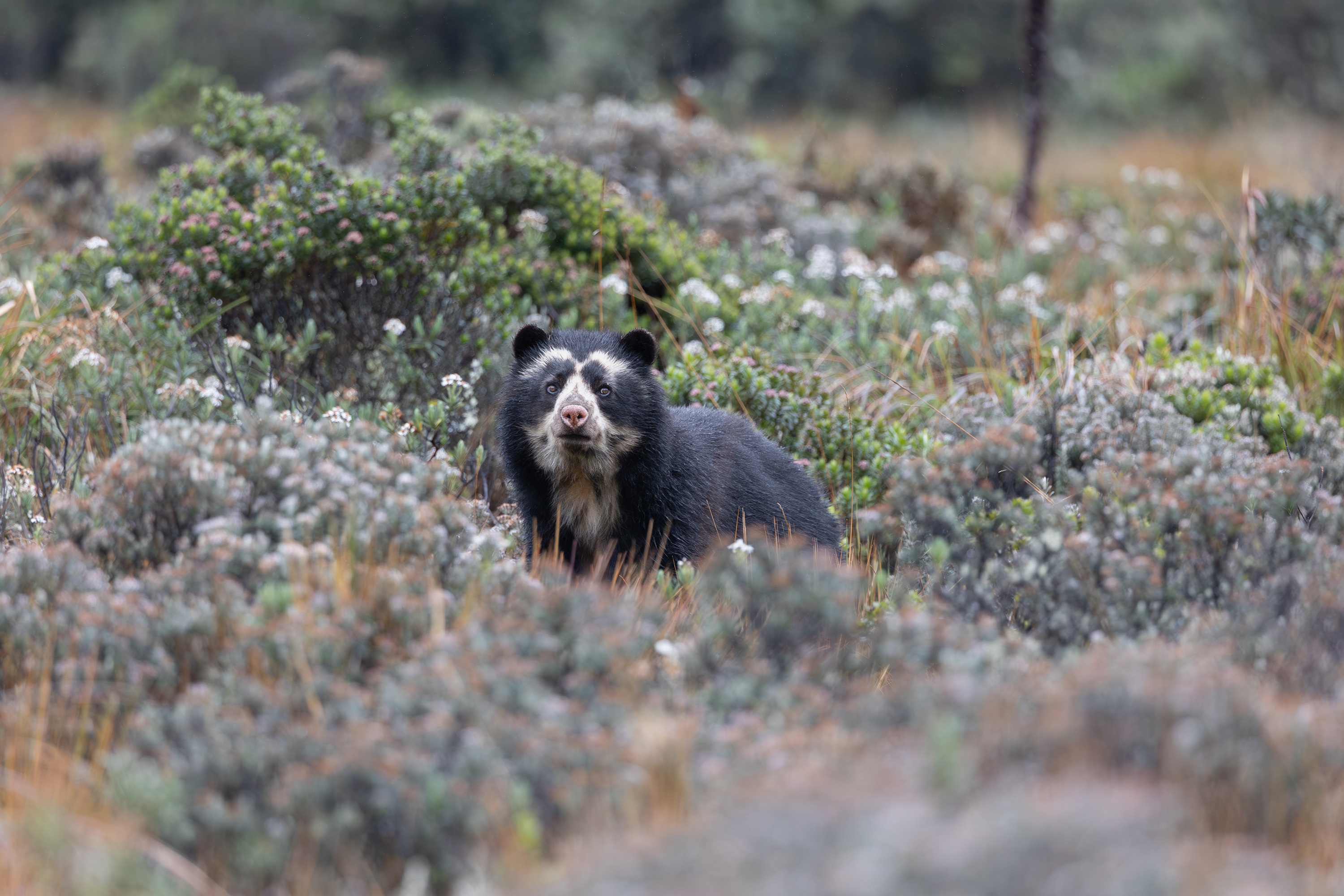
Photo: Keishpixl / Pixabay.
The long struggle to protect the páramo
One of the companies that sought to develop large-scale mining in Santurbán is Eco Oro Minerals Corp.—formerly Greystar Resources—a Canadian company that intended to establish the Angostura open-pit mine there to extract gold and silver. Between 1994 and 1995, the company acquired its mining titles and conducted exploration. And in 2010, it applied for a mining permit.
That was the year AIDA became involved in defending the ecosystem, supporting the Committee for the Defense of Water and the Santurbán Páramo. Our legal work helped convince the Colombian government to deny the mine an environmental permit in May 2011.
In January 2013, the government designated a portion of the páramo (11,700 hectares) as a Regional Natural Park. That year—together with the committee and partner organizations—we carried out a campaign and advocacy efforts to urge the government to recognize the entire Santurbán area as a páramo ecosystem through a delimitation based on scientific criteria. In December 2014, the Ministry of the Environment established a delimitation that protected 76% of the páramo (98,954 hectares).
Furthermore, as a result of a litigation supported by AIDA, in February 2016, Colombia’s highest court reaffirmed that mining in páramos is prohibited.
That same year, in December, the International Finance Corporation (IFC), the World Bank Group’s private sector arm, decided to divest from Eco Oro Minerals. This achievement was the result of a process that began in 2012, when the committee—advised and supported by AIDA and international partner organizations—filed a complaint before an independent accountability mechanism, which concluded that the IFC’s investment in the Angostura project failed to take into account the project’s social and environmental impacts, thereby contradicting the financial institution’s internal policies.
Also in 2016, Eco Oro Minerals filed an arbitration claim against the Colombian government with the International Centre for Settlement of Investment Disputes (ICSID), arguing that it had been adversely affected by government decisions aimed at protecting the country’s páramos, including the delimitation of Santurbán.
In 2017, the Constitutional Court invalidated the delimitation because the affected communities were not consulted. The high court ordered that a participatory delimitation be carried out.
And that year, a new threat to Santurbán emerged when the Canadian multinational Aris Mining applied for an environmental permit for Soto Norte, a gold mining project located near the páramo. Following citizen protests and technical objections, in October 2020, the National Environmental Licensing Authority shelved the project.
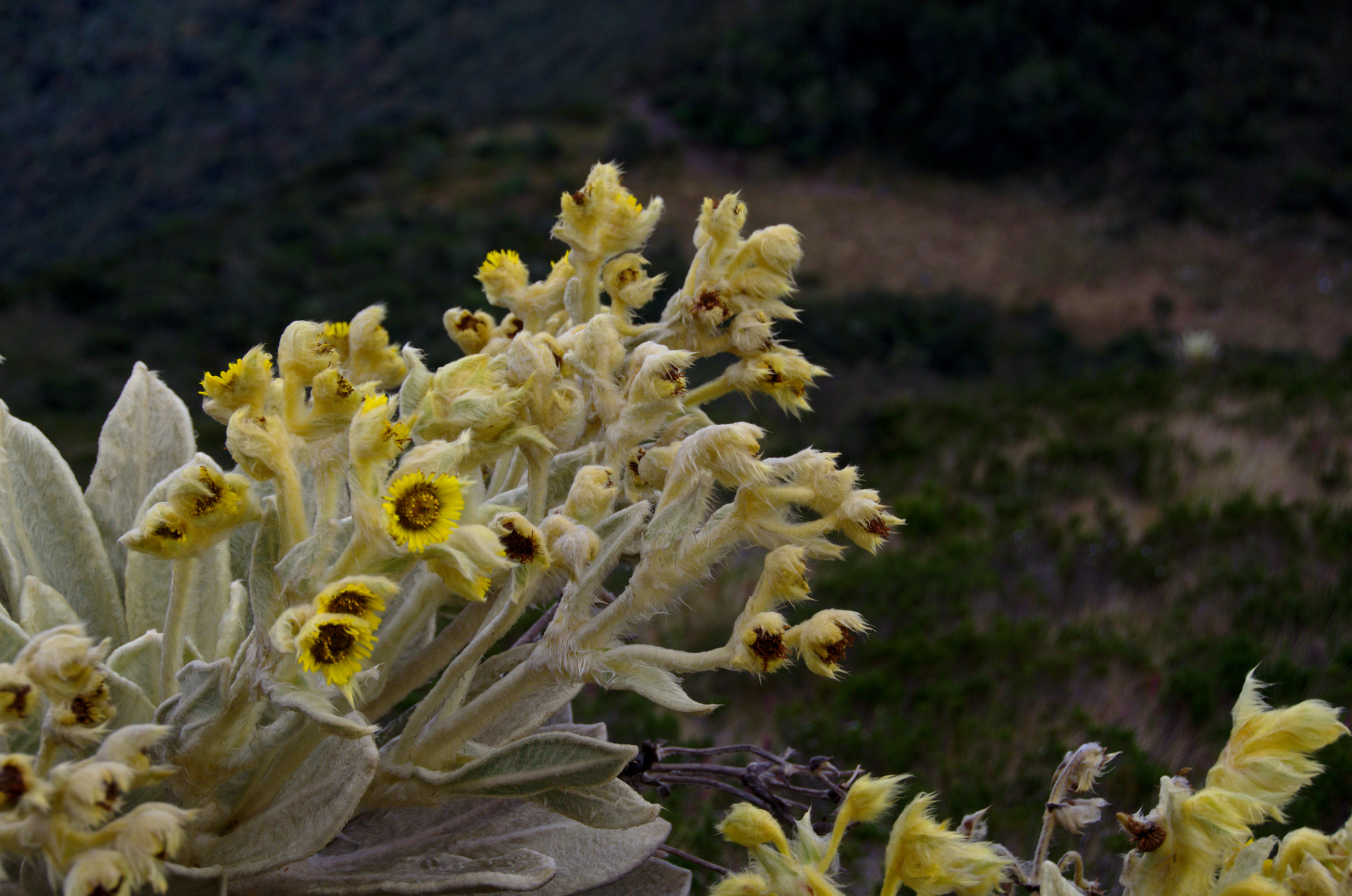
Photo: Aztlec.
Current situation
In March 2025, the Colombian government designated the western flank of the Santurbán massif as a temporary renewable natural resource reserve area, delimiting and protecting an area of 75,344.65 hectares. This resulted in a two-year suspension of the Soto Norte project. However, Aris Mining's contract to formalize Calimineros' small-scale mining activities through the purchase and processing of mineralized material remains in effect.
In addition, the Canadian mining company continues to move the project forward. In September 2025, it released its prefeasibility study, revising the mine’s original design.
Meanwhile, members of the Committee for the Defense of Water and the Santurbán Páramo face threats and stigmatization because of their work. In March 2025, UN Special Rapporteurs and the Working Group on Business and Human Rights denounced these incidents in communications sent to the governments of Colombia, Canada, and the United Arab Emirates, as well as to the companies Aris Mining and MDC Industry Holding Company LLC, the former co-owner of the Soto Norte project.
Regarding the arbitration claim filed by Eco Oro Minerals, in July 2024, ICSID ruled in favor of the Colombian government and rejected the Canadian company’s claim for USD 1.1 billion in compensation.
Concerning the delimitation of Santurbán, in July 2026, the Ministry of the Environment issued a resolution introducing the concept of "progressive delimitation." On that basis, the government proposes to progressively demarcate the páramo, covering 29,199 hectares across 19 municipalities—those where the participatory agreements required by the Constitutional Court in its 2017 ruling have already been finalized. It also proposes two measures on the creation and expansion of reserves to restrict mining in the ecosystem.
Learn more about the impacts of mining on the páramos of Latin America (in Spanish).
Partners:
Related projects
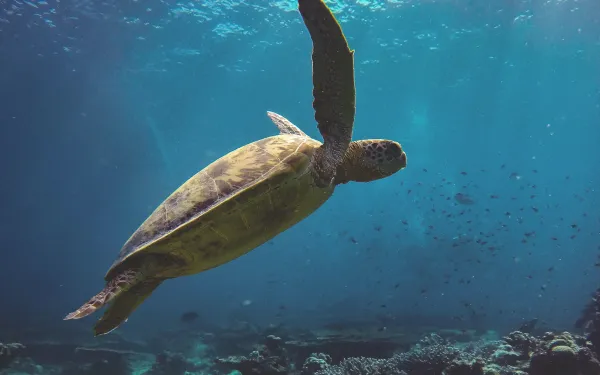
Agreement reached to advance High Seas Treaty
New Treaty agreed to protect half the planet but formal adoption still required. Late this evening governments meeting at the United Nations in New York reached agreement on key substantive issues for a new treaty to protect high seas marine life. To ensure this hard won progress is not lost, The High Seas Alliance is calling for the UN to conclude the formalities of adoption as soon as possible in the final resumed session. "Following a two week long rollercoaster ride of negotiations and super-hero efforts in the last 48 hours, governments reached agreement on key issues that will advance protection and better management of marine biodiversity in the high seas," said Rebecca Hubbard, Director of the High Seas Alliance. The high seas, the area of ocean that lies beyond countries’ national waters, is the largest habitat on Earth and home to millions of species. With currently just over 1% of the high seas protected, the new treaty will provide a pathway to establish marine protected areas in these waters. It is also a key tool to help deliver the recently agreed Kunming-Montreal target of at least 30% protection of the world’s ocean by 2030 that was just agreed in December- the minimum level of protection scientists warn is necessary to ensure a healthy ocean. But time is of the essence. The new Treaty will bring ocean governance into the 21st century, including establishing modern requirements to assess and manage planned human activities that would affect marine life in the high seas as well as ensuring greater transparency. This will greatly strengthen the effective area-based management of fishing, shipping and other activities that have contributed to the overall decline in ocean health. The issue of sufficient financing to fund the implementation of the treaty, as well as equity issues surrounding the sharing of benefits from marine genetic resources was one of the key sticking points between North and South throughout the meeting. However, right up to the final hours of the meeting, governments were able to land an agreement that provided for equitable sharing of these benefits from the deep sea and high seas. "It’s been a very long journey to get to a treaty. We will be looking to the 52 states that make up the High Ambition Coalition to lead the charge to adopt, ratify and identify important high seas areas to protect," said Hubbard. High Seas Alliance Member Quotes Gladys Martínez de Lemos, Executive Director, Interamerican Association for Environmental Defense (AIDA): "Governments have taken an important step that strengthens the legal protection of two-thirds of the ocean and with it marine biodiversity, the livelihoods of coastal communities and global food sovereignty. The agreement sets out a path for establishing areas of high and full protection on the High Seas, as well as for the environmental assessment of projects and activities that may harm this vast area." Laura Meller, oceans campaigner, Greenpeace Nordic: "This is a historic day for conservation and a sign that in a divided world, protecting nature and people can triumph over geopolitics. We praise countries for seeking compromises, putting aside differences and delivering a treaty that will let us protect the oceans, build our resilience to climate change and safeguard the lives and livelihoods of billions of people. We can now finally move from talk to real change at sea. Countries must formally adopt the treaty and ratify it as quickly as possible to bring it into force, and then deliver the fully protected ocean sanctuaries our planet needs. The clock is still ticking to deliver 30x30. We have half a decade left, and we can’t be complacent." Matthew Collis, Deputy Vice President for Policy, IFAW: "The agreement of a new Treaty to conserve the high seas is a wonderful way to celebrate World Wildlife Day for ocean animals and their high seas homes. IFAW congratulates governments on this significant step, which charts a course to protect 30% of the ocean by 2030. To achieve 30x30, governments must now adopt, ratify and implement the new Treaty without delay." Minna Epps, Director of Global Marine and Polar Programme, IUCN: "The High Seas Treaty opens the path for humankind to finally provide protection to marine life across our one ocean. Its adoption closes essential gaps in international law and offers a framework for governments to work together to protect global ocean heath, climate resilience, and the socioeconomic wellbeing and food security of billions of people." Lance Morgan, President, Marine Conservation Institute: "Coming on the heels of the Global Biodiversity Framework, this historic agreement is a huge step towards ensuring marine protected areas in the High Seas and reaching 30x30." Lisa Speer, Director of the International Ocean program, Natural Resources Defense Council (NRDC): "This text provides the basis for protecting key biodiversity hotspots in the high seas. We now have a pathway to achieve the goal of meaningfully protecting at least 30% of the ocean by 2030, a goal that scientists tell us is crucial to maintaining ocean health in the face of ocean warming, acidification and other impacts of climate change. Now let’s get started." Fabienne McLellan, Managing Director, OceanCare: "This Treaty will be the game-changer the ocean urgently needs. We particularly welcome the conservation focused elements, such as environmental impact assessments. EIAs are one of the most effective and important mechanisms to prevent, mitigate and manage harmful activities in cases where there is severe harm to marine life through, for instance, underwater noise pollution. While we advocated for more ambition in the EIA provisions, these requirements will nevertheless strengthen ocean conservation." Susanna Fuller, VP Conservation and Projects, Oceans North: "Following the Kunming Montreal Agreement, which sets out a global path for biodiversity protection, this treaty will bring a similar ambition to the high seas. Because Canada’s waters are bounded by three international ocean basins, it has an outsized role in ensuring that the treaty is fully implemented, once formally adopted." Liz Karan, Director of Ocean Governance project, Pew: "The effective implementation of this landmark treaty is the only pathway to safeguard high seas biodiversity for generations to come and provides a pathway for nations to fulfill the 30 by 30 target. Governments and civil society must now ensure that the agreement is adopted and rapidly enters into force." Christopher Chin, Executive Director, The Center for Oceanic Awareness, Research, and Education (COARE): "With this finalized text, the world is now one great step closer to embracing the importance of the High Seas, and to achieving the 30x30 objectives. Once adopted, however, member States must still ratify the treaty, and we call upon them to do so swiftly." Andrew Deutz, Director of Global Policy, Institutions & Conservation Finance, The Nature Conservancy: "While the treaty leaves room for improvement, we should nevertheless celebrate the fact that –after more than a decade of discussions and three concerted attempts to wrestle it across the line – we finally have a global framework in place for the conservation and sustainable use of biodiversity for almost half of our planet’s surface. Whether this has arrived in time to slow the accelerating ecological crisis happening in our ocean will depend on how quickly countries can ratify the treaty at national level and start mainstreaming ambitions like 30x30 into both their own decision-making, and that of the global bodies which manage human activity on the high seas. If they can do so swiftly, putting people and planet above politics, we may yet have a chance to move beyond the damaging status quo and into a new era of nature-positive stewardship for this most critical of ecosystems." Farah Obaidullah, Ocean Advocate and Founder, Women4Oceans: "This is an historic moment for humanity and for the protection of all living beings in our global ocean. A rare and welcome moment of hope for all of us rightfully concerned with the state of the world. Almost half our planet will now have a chance of some sort of protection from the ever-increasing onslaughts to the ocean. This treaty comes not a moment too soon. With the climate and global wildlife crises worsening and a reckless new industry of deep-sea mining on the horizon, we cannot afford any delays in putting this treaty into force." Press contacts: Patricia Roy (EU), +34 696 905 907 Michael Crocker (US), +1 (207) 522-1366 Mirella von Lindenfels, + 44 7717 844 352 Julio Whalen-Valeriano (UN), +1 (850) 292-4689
Read more
Open Letter from Civil Society Organizations to the President of the Inter-American Development Bank
The undersigned group of civil society organizations greet you as you begin your term as President of the Inter-American Development Bank. We extend to you our best wishes as you assume this task of great responsibility for the people of Latin America and the Caribbean.We take this opportunity to introduce ourselves and express our willingness to continue contributing to the Bank's actions pursuing the region's development. Since 2017, our organizations have been monitoring and making recommendations on the IDB policies and projects, in partnership with local communities and populations. In particular, we promote the Bank’s establishment of better social and environmental policies and practices, as well as adequate and transparent spaces for participation that allow improving the IDB's link and interaction with civil society. To mention just a few examples, we highlight our contributions to the Environmental and Social Policy Framework (ESPF), to the updates of the MICI policy and in the accompaniment of specific cases, and in the revision process of the Access to Information Policy and in the dialogues on the IDB-Amazon Initiative.In conjunction, we are permanently monitoring the Bank's policies and investments throughout the region, including in projects involved in the response to and recovery from the Covid pandemic and many others.We consider it essential that the Bank strengthen its practices and operations, facilitating the promotion and respect for human rights, with special attention paid to the needs of communities and indigenous peoples who are at the forefront in the defense of nature, as well as the protection of key ecosystems in the fight against climate change.Given the relevance of public participation in promoting full development, we reiterate our request to the Bank to generate constructive and lasting participation mechanisms. In particular, we request that the space for dialogue with civil society be reopened in the framework of the next IDB Annual Meetings. This space was a traditional practice that was interrupted in 2014 and has not been resumed to date.We understand that a space for IDB articulation with civil society (social organizations and movements, Indigenous groups, and others who are affected) is not only a good practice that other multilateral agencies are already implementing, but would also contribute to advance the objectives of your administration. As stated in your inaugural speech last January, you stressed your desire to "seize all opportunities for dialogue" and collaborate with different actors to address the most pressing problems of our region.Thus, your administration has an historic opportunity to generate greater openness towards civil society organizations and communities potentially affected by Bank-financed operations. We believe that this demand can no longer be postponed, and that this long-standing claim must be addressed in order to strengthen the work together with the peoples of the region.We remain at your disposal to discuss the points raised in this letter and other matters of common interest at your convenience. Kind regards, Accountability CounselAMATE El SalvadorArticulación Salvadoreña de Sociedad Salvadoreña de Sociedad Civil para la Incidencia en las Instituciones Financieras Internacionales (ASIFI)Asociación Ambiente y Sociedad (Environment and Society Association)Interamerican Association for the Defense of the Environment (AIDA)International Accountability ProjectBank Information CenterCenter for International Environmental Law (CIEL)Coalition for Human Rights In DevelopmentCohesión Comunitaria e Innovación Social A.C. (Mexico)Conectas Direitos HumanosDerecho, Ambiente y Recursos Naturales (DAR, Perú)Ecoa - Ecology and ActionFoundation for the Development of Sustainable Policies (Fundeps)CAUCE Foundation: Environmental Culture - Causa Ecologista (Argentina)Gender ActionInternational RiversMesa de Discapacidad y Derechos (Perú)International Platform against ImpunityProtection International MesoamericaSociedad y Discapacidad - SODIS (Perú)Sustentarse (Chile)Wetlands International / Fundacion Humedales (Argentina) Read and download the letter
Read moreOpen Letter from Civil Society Organizations to the President of the Inter-American Development Bank
The undersigned group of civil society organizations greet you as you begin your term as President of the Inter-American Development Bank. We extend to you our best wishes as you assume this task of great responsibility for the people of Latin America and the Caribbean.We take this opportunity to introduce ourselves and express our willingness to continue contributing to the Bank's actions pursuing the region's development. Since 2017, our organizations have been monitoring and making recommendations on the IDB policies and projects, in partnership with local communities and populations. In particular, we promote the Bank’s establishment of better social and environmental policies and practices, as well as adequate and transparent spaces for participation that allow improving the IDB's link and interaction with civil society. To mention just a few examples, we highlight our contributions to the Environmental and Social Policy Framework (ESPF), to the updates of the MICI policy and in the accompaniment of specific cases, and in the revision process of the Access to Information Policy and in the dialogues on the IDB-Amazon Initiative.In conjunction, we are permanently monitoring the Bank's policies and investments throughout the region, including in projects involved in the response to and recovery from the Covid pandemic and many others.We consider it essential that the Bank strengthen its practices and operations, facilitating the promotion and respect for human rights, with special attention paid to the needs of communities and indigenous peoples who are at the forefront in the defense of nature, as well as the protection of key ecosystems in the fight against climate change.Given the relevance of public participation in promoting full development, we reiterate our request to the Bank to generate constructive and lasting participation mechanisms. In particular, we request that the space for dialogue with civil society be reopened in the framework of the next IDB Annual Meetings. This space was a traditional practice that was interrupted in 2014 and has not been resumed to date.We understand that a space for IDB articulation with civil society (social organizations and movements, Indigenous groups, and others who are affected) is not only a good practice that other multilateral agencies are already implementing, but would also contribute to advance the objectives of your administration. As stated in your inaugural speech last January, you stressed your desire to "seize all opportunities for dialogue" and collaborate with different actors to address the most pressing problems of our region.Thus, your administration has an historic opportunity to generate greater openness towards civil society organizations and communities potentially affected by Bank-financed operations. We believe that this demand can no longer be postponed, and that this long-standing claim must be addressed in order to strengthen the work together with the peoples of the region.We remain at your disposal to discuss the points raised in this letter and other matters of common interest at your convenience. Kind regards, Accountability CounselAMATE El SalvadorArticulación Salvadoreña de Sociedad Salvadoreña de Sociedad Civil para la Incidencia en las Instituciones Financieras Internacionales (ASIFI)Asociación Ambiente y Sociedad (Environment and Society Association)Interamerican Association for the Defense of the Environment (AIDA)International Accountability ProjectBank Information CenterCenter for International Environmental Law (CIEL)Coalition for Human Rights In DevelopmentCohesión Comunitaria e Innovación Social A.C. (Mexico)Conectas Direitos HumanosDerecho, Ambiente y Recursos Naturales (DAR, Perú)Ecoa - Ecology and ActionFoundation for the Development of Sustainable Policies (Fundeps)CAUCE Foundation: Environmental Culture - Causa Ecologista (Argentina)Gender ActionInternational RiversMesa de Discapacidad y Derechos (Perú)International Platform against ImpunityProtection International MesoamericaSociedad y Discapacidad - SODIS (Perú)Sustentarse (Chile)Wetlands International / Fundacion Humedales (Argentina) Read and download the letter
Read more