
Project
Alberto Peña Kay
Protecting the Santurban páramo from mining's damage
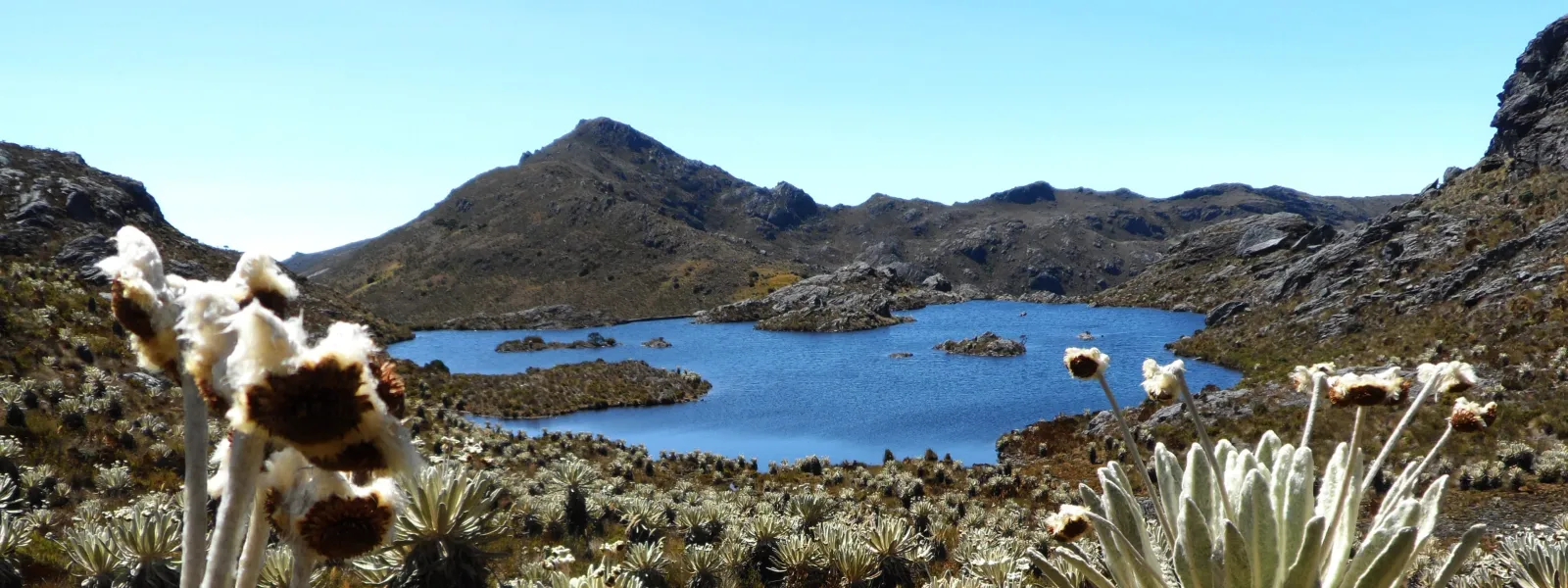
In the Andean region, high-mountain ecosystems known as páramos capture water from the fog and supply it to the lowlands. One such ecosystem is the Santurbán páramo, which provides fresh water to more than two million people in Colombia.
Santurbán, like the other páramos on the continent, also captures large amounts of carbon, making it a key ally in mitigating the climate crisis. It is also a refuge for hundreds of endangered species, including the iconic spectacled bear.
The land in and around the páramo contains gold and other minerals. This has put Santurbán in the spotlight of the multinational mining industry, which for decades has sought to establish large-scale projects in the ecosystem that threaten to degrade it.
The Committee for the Defense of Water and the Santurbán Páramo—a coalition of environmental advocates—has thwarted these ongoing attempts, with support from AIDA and other civil society organizations.
Background
The Santurbán páramo is located in the heart of the Eastern Cordillera of the Colombian Andes, in the departments of Santander and Norte de Santander, at an elevation ranging from 2,200 to 4,290 meters above sea level.
It covers an area of 129,743 hectares and is home to 57 lakes. It serves as a habitat for 457 plant species and 293 species of vertebrate fauna.
There are mineral deposits in Santurbán, primarily gold, but also silver and copper. This explains the region’s mining tradition, particularly in the part of the páramo located in Santander, in the province of Soto Norte. The communities in the area have built their culture and identity around gold mining, which is mainly artisanal and small-scale.
But since the 1990s, the gold deposits in the páramo have also attracted foreign mining conglomerates seeking to develop large-scale projects. This has raised concerns among the population that relies on the Santurbán water sources, who have mobilized in defense of water, their land, and life.
Although national and international regulations prohibit mining in páramos, the Colombian government has granted mining concessions to transnational corporations in Santurbán.
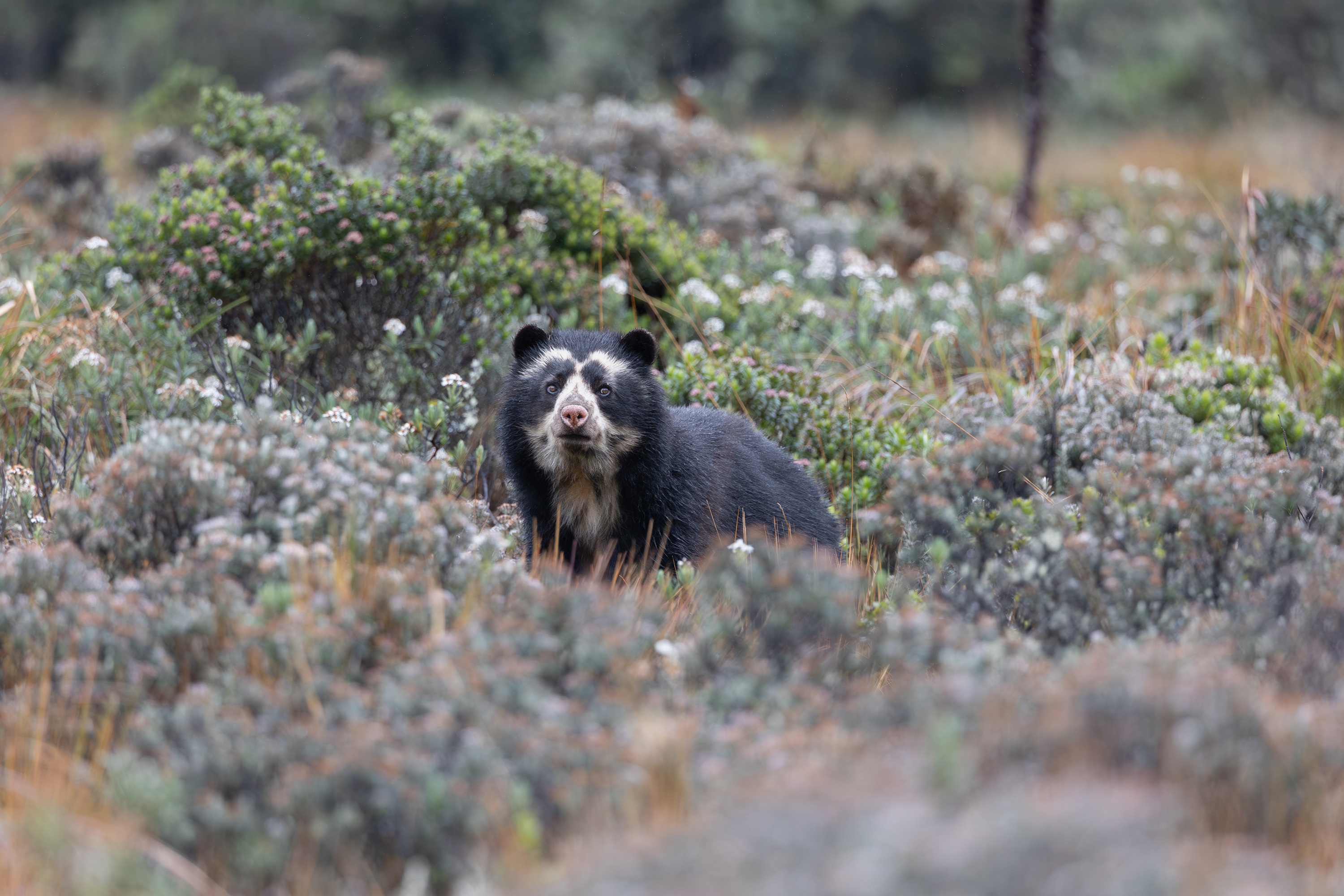
Photo: Keishpixl / Pixabay.
The long struggle to protect the páramo
One of the companies that sought to develop large-scale mining in Santurbán is Eco Oro Minerals Corp.—formerly Greystar Resources—a Canadian company that intended to establish the Angostura open-pit mine there to extract gold and silver. Between 1994 and 1995, the company acquired its mining titles and conducted exploration. And in 2010, it applied for a mining permit.
That was the year AIDA became involved in defending the ecosystem, supporting the Committee for the Defense of Water and the Santurbán Páramo. Our legal work helped convince the Colombian government to deny the mine an environmental permit in May 2011.
In January 2013, the government designated a portion of the páramo (11,700 hectares) as a Regional Natural Park. That year—together with the committee and partner organizations—we carried out a campaign and advocacy efforts to urge the government to recognize the entire Santurbán area as a páramo ecosystem through a delimitation based on scientific criteria. In December 2014, the Ministry of the Environment established a delimitation that protected 76% of the páramo (98,954 hectares).
Furthermore, as a result of a litigation supported by AIDA, in February 2016, Colombia’s highest court reaffirmed that mining in páramos is prohibited.
That same year, in December, the International Finance Corporation (IFC), the World Bank Group’s private sector arm, decided to divest from Eco Oro Minerals. This achievement was the result of a process that began in 2012, when the committee—advised and supported by AIDA and international partner organizations—filed a complaint before an independent accountability mechanism, which concluded that the IFC’s investment in the Angostura project failed to take into account the project’s social and environmental impacts, thereby contradicting the financial institution’s internal policies.
Also in 2016, Eco Oro Minerals filed an arbitration claim against the Colombian government with the International Centre for Settlement of Investment Disputes (ICSID), arguing that it had been adversely affected by government decisions aimed at protecting the country’s páramos, including the delimitation of Santurbán.
In 2017, the Constitutional Court invalidated the delimitation because the affected communities were not consulted. The high court ordered that a participatory delimitation be carried out.
And that year, a new threat to Santurbán emerged when the Canadian multinational Aris Mining applied for an environmental permit for Soto Norte, a gold mining project located near the páramo. Following citizen protests and technical objections, in October 2020, the National Environmental Licensing Authority shelved the project.
Photo: Aztlec.
Current situation
In March 2025, the Colombian government designated the western flank of the Santurbán massif as a temporary renewable natural resource reserve area, delimiting and protecting an area of 75,344.65 hectares. This resulted in a two-year suspension of the Soto Norte project. However, Aris Mining's contract to formalize Calimineros' small-scale mining activities through the purchase and processing of mineralized material remains in effect.
In addition, the Canadian mining company continues to move the project forward. In September 2025, it released its prefeasibility study, revising the mine’s original design.
Meanwhile, members of the Committee for the Defense of Water and the Santurbán Páramo face threats and stigmatization because of their work. In March 2025, UN Special Rapporteurs and the Working Group on Business and Human Rights denounced these incidents in communications sent to the governments of Colombia, Canada, and the United Arab Emirates, as well as to the companies Aris Mining and MDC Industry Holding Company LLC, the former co-owner of the Soto Norte project.
Regarding the arbitration claim filed by Eco Oro Minerals, in July 2024, ICSID ruled in favor of the Colombian government and rejected the Canadian company’s claim for USD 1.1 billion in compensation.
Concerning the delimitation of Santurbán, in July 2026, the Ministry of the Environment issued a resolution introducing the concept of "progressive delimitation." On that basis, the government proposes to progressively demarcate the páramo, covering 29,199 hectares across 19 municipalities—those where the participatory agreements required by the Constitutional Court in its 2017 ruling have already been finalized. It also proposes two measures on the creation and expansion of reserves to restrict mining in the ecosystem.
Learn more about the impacts of mining on the páramos of Latin America (in Spanish).
Partners:
Related projects
In-danger designation requested for Pantanal wetlands in Brazil, Bolivia and Paraguay
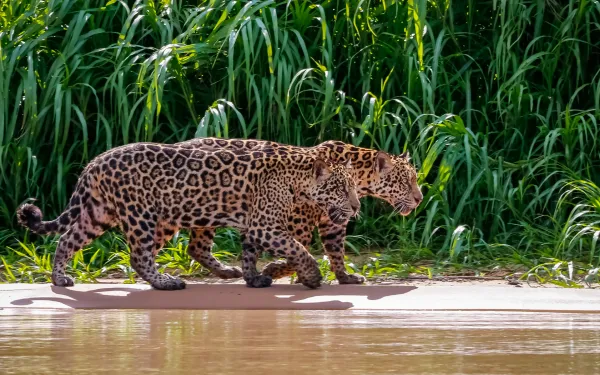
On World Wetlands Day, advocates urged the Ramsar Convention Secretariat to conduct an advisory visit to wetlands severely affected by fires, and for the governments of the three countries to inscribe the sites on the global list of wetlands at risk of disappearing. Gland, Switzerland -- Civil society organizations sent an urgent alert to the Ramsar Convention today requesting a full assessment of damage caused by recent fires in the Pantanal, the world’s largest tropical wetland, a natural area shared between Brazil, Bolivia and Paraguay. The groups requested that the Secretariat conduct an advisory mission to analyze the state of six wetlands, which the Convention has recognized as being sites of international importance, and for the wetlands to be included on the Montreux Record, a list of the world’s most at-risk wetlands. The Interamerican Association for Environmental Defense (AIDA), the Center for Biological Diversity and Ecologia e Ação (ECOA) sent the alert on World Wetlands Day. They also urged the three governments to urgently implement measures to preserve the Pantanal as a transboundary ecosystem. The Ramsar sites addressed in the request are the Bolivian Pantanal; the Reserva Particular do Patrimonio Natural SESC Pantanal, the Reserva Particular do Patrimonio Natural Fazenda Rio Negro, the Pantanal Matogrosense National Park and the Taiamã Ecological Station in Brazil; as well as the Rio Negro National Park in Paraguay. "A Ramsar in-danger designation is crucial to combating the Pantanal’s huge and unprecedented fires, which now threaten Bolivia, Brazil and Paraguay," said Alejandro Olivera, a senior scientist with the Center for Biological Diversity. "Public policies that promote agriculture and livestock expansion and allow burning within the Pantanal have combined with limited cross-border collaboration to create a tinderbox. Ecosystem-damaging fires will continue without stronger commitments to protect these critical wetland habitats." In 2020, fires devastated 4.3 million hectares of the Pantanal region, the highest number since monitoring began in 1998; the number of fires burning in the area was 508% more than average. That same year, fires burned 100 percent of the Pantanal National Park Matogrossense. At least 10 million animals died in just three months. Unusually large fires continued in July 2021. "We are asking the States to comply with the obligations acquired before the Convention, generating coherent mechanisms and implementing policies and norms to protect the Pantanal," explained AIDA attorney Claudia Velarde. "An advisory mission to the six Ramsar sites could provide specialized assistance to the Brazilian, Bolivian and Paraguayan governments to overcome the conditions that pose risks to the conservation and wise use of this key wetland.” Likewise, the inscription of the sites on the Montreux Record can result in economic aid, support and technical advice, for the recovery of the Pantanal in the three countries. "We sent an urgent alert for Bolivia, Brazil and Paraguay to focus on the Pantanal as the world's largest transboundary freshwater wetland," said Andre Siqueira, President Director of ECOA. "The Ramsar Convention cannot achieve its objectives if the ecosystems it protects are significantly damaged by the continued use of fire, agribusiness and the lack of adequate resources to fight fires." The biodiversity and ecological richness of the Pantanal is incalculable. At least 3,500 species of plants, about 600 birds, 150 mammals, 175 reptiles, 40 amphibians and 300 freshwater fish inhabit the biome. Many are in danger of extinction in other regions, such as the tuyuyú and the jaguar, the marsh deer, the giant otter and the macaw, all emblematic species of the biome. The Pantanal is home to the highest concentration of species such as the jaguar and the caiman. press contacts: Alejandro Olivera (Mexico), Center for Biological Diversity, +52 612 1040604, [email protected] Victor Quintanilla (Mexico), AIDA, +521 5570522107, [email protected] André Luiz Siqueira (Brazil), ECOA, +55 67 33243230, [email protected]
Read moreIn-danger designation requested for Pantanal wetlands in Brazil, Bolivia and Paraguay
On World Wetlands Day, advocates urged the Ramsar Convention Secretariat to conduct an advisory visit to wetlands severely affected by fires, and for the governments of the three countries to inscribe the sites on the global list of wetlands at risk of disappearing. Gland, Switzerland -- Civil society organizations sent an urgent alert to the Ramsar Convention today requesting a full assessment of damage caused by recent fires in the Pantanal, the world’s largest tropical wetland, a natural area shared between Brazil, Bolivia and Paraguay. The groups requested that the Secretariat conduct an advisory mission to analyze the state of six wetlands, which the Convention has recognized as being sites of international importance, and for the wetlands to be included on the Montreux Record, a list of the world’s most at-risk wetlands. The Interamerican Association for Environmental Defense (AIDA), the Center for Biological Diversity and Ecologia e Ação (ECOA) sent the alert on World Wetlands Day. They also urged the three governments to urgently implement measures to preserve the Pantanal as a transboundary ecosystem. The Ramsar sites addressed in the request are the Bolivian Pantanal; the Reserva Particular do Patrimonio Natural SESC Pantanal, the Reserva Particular do Patrimonio Natural Fazenda Rio Negro, the Pantanal Matogrosense National Park and the Taiamã Ecological Station in Brazil; as well as the Rio Negro National Park in Paraguay. "A Ramsar in-danger designation is crucial to combating the Pantanal’s huge and unprecedented fires, which now threaten Bolivia, Brazil and Paraguay," said Alejandro Olivera, a senior scientist with the Center for Biological Diversity. "Public policies that promote agriculture and livestock expansion and allow burning within the Pantanal have combined with limited cross-border collaboration to create a tinderbox. Ecosystem-damaging fires will continue without stronger commitments to protect these critical wetland habitats." In 2020, fires devastated 4.3 million hectares of the Pantanal region, the highest number since monitoring began in 1998; the number of fires burning in the area was 508% more than average. That same year, fires burned 100 percent of the Pantanal National Park Matogrossense. At least 10 million animals died in just three months. Unusually large fires continued in July 2021. "We are asking the States to comply with the obligations acquired before the Convention, generating coherent mechanisms and implementing policies and norms to protect the Pantanal," explained AIDA attorney Claudia Velarde. "An advisory mission to the six Ramsar sites could provide specialized assistance to the Brazilian, Bolivian and Paraguayan governments to overcome the conditions that pose risks to the conservation and wise use of this key wetland.” Likewise, the inscription of the sites on the Montreux Record can result in economic aid, support and technical advice, for the recovery of the Pantanal in the three countries. "We sent an urgent alert for Bolivia, Brazil and Paraguay to focus on the Pantanal as the world's largest transboundary freshwater wetland," said Andre Siqueira, President Director of ECOA. "The Ramsar Convention cannot achieve its objectives if the ecosystems it protects are significantly damaged by the continued use of fire, agribusiness and the lack of adequate resources to fight fires." The biodiversity and ecological richness of the Pantanal is incalculable. At least 3,500 species of plants, about 600 birds, 150 mammals, 175 reptiles, 40 amphibians and 300 freshwater fish inhabit the biome. Many are in danger of extinction in other regions, such as the tuyuyú and the jaguar, the marsh deer, the giant otter and the macaw, all emblematic species of the biome. The Pantanal is home to the highest concentration of species such as the jaguar and the caiman. press contacts: Alejandro Olivera (Mexico), Center for Biological Diversity, +52 612 1040604, [email protected] Victor Quintanilla (Mexico), AIDA, +521 5570522107, [email protected] André Luiz Siqueira (Brazil), ECOA, +55 67 33243230, [email protected]
Read more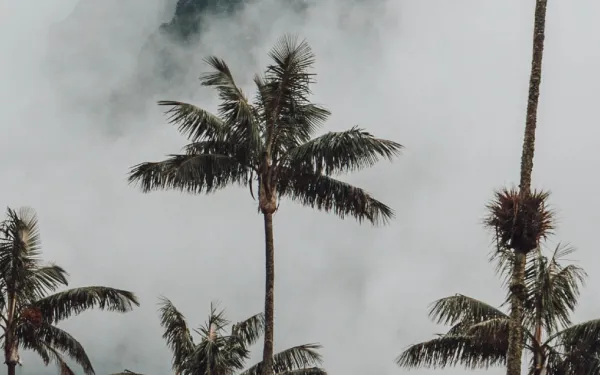
Environmental responsibility through supply chains
This report emphasizes the importance of binding legislation for companies to comply with environmental aspects as well as human rights throughout their supply chains.The document reviews environmental impact assessments as an instrument of due diligence and corporate responsibility in their supply chains. It examines the independent monitoring of impacts of business operations, and reflects on environmental guarantees and human rights for the legislative processes of due diligence. Download the publication
Read more