
Project
Alberto Peña Kay
Protecting the Santurban páramo from mining's damage
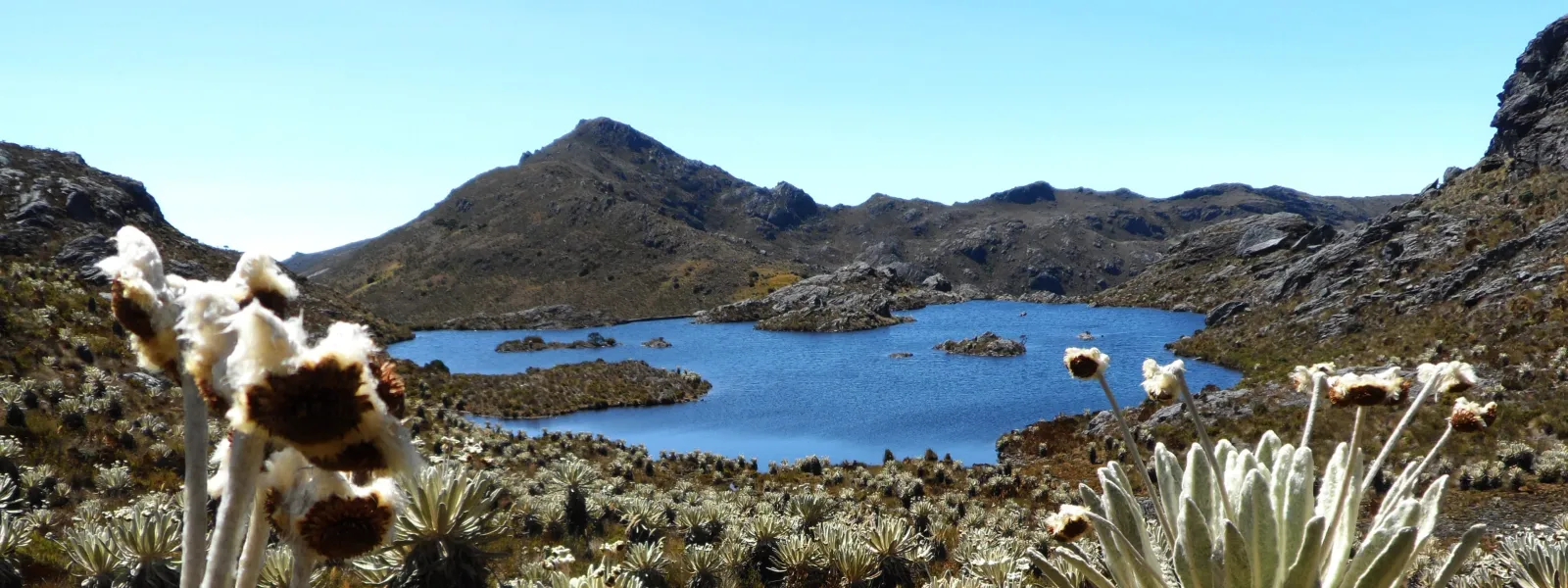
In the Andean region, high-mountain ecosystems known as páramos capture water from the fog and supply it to the lowlands. One such ecosystem is the Santurbán páramo, which provides fresh water to more than two million people in Colombia.
Santurbán, like the other páramos on the continent, also captures large amounts of carbon, making it a key ally in mitigating the climate crisis. It is also a refuge for hundreds of endangered species, including the iconic spectacled bear.
The land in and around the páramo contains gold and other minerals. This has put Santurbán in the spotlight of the multinational mining industry, which for decades has sought to establish large-scale projects in the ecosystem that threaten to degrade it.
The Committee for the Defense of Water and the Santurbán Páramo—a coalition of environmental advocates—has thwarted these ongoing attempts, with support from AIDA and other civil society organizations.
Background
The Santurbán páramo is located in the heart of the Eastern Cordillera of the Colombian Andes, in the departments of Santander and Norte de Santander, at an elevation ranging from 2,200 to 4,290 meters above sea level.
It covers an area of 129,743 hectares and is home to 57 lakes. It serves as a habitat for 457 plant species and 293 species of vertebrate fauna.
There are mineral deposits in Santurbán, primarily gold, but also silver and copper. This explains the region’s mining tradition, particularly in the part of the páramo located in Santander, in the province of Soto Norte. The communities in the area have built their culture and identity around gold mining, which is mainly artisanal and small-scale.
But since the 1990s, the gold deposits in the páramo have also attracted foreign mining conglomerates seeking to develop large-scale projects. This has raised concerns among the population that relies on the Santurbán water sources, who have mobilized in defense of water, their land, and life.
Although national and international regulations prohibit mining in páramos, the Colombian government has granted mining concessions to transnational corporations in Santurbán.

Photo: Keishpixl / Pixabay.
The long struggle to protect the páramo
One of the companies that sought to develop large-scale mining in Santurbán is Eco Oro Minerals Corp.—formerly Greystar Resources—a Canadian company that intended to establish the Angostura open-pit mine there to extract gold and silver. Between 1994 and 1995, the company acquired its mining titles and conducted exploration. And in 2010, it applied for a mining permit.
That was the year AIDA became involved in defending the ecosystem, supporting the Committee for the Defense of Water and the Santurbán Páramo. Our legal work helped convince the Colombian government to deny the mine an environmental permit in May 2011.
In January 2013, the government designated a portion of the páramo (11,700 hectares) as a Regional Natural Park. That year—together with the committee and partner organizations—we carried out a campaign and advocacy efforts to urge the government to recognize the entire Santurbán area as a páramo ecosystem through a delimitation based on scientific criteria. In December 2014, the Ministry of the Environment established a delimitation that protected 76% of the páramo (98,954 hectares).
Furthermore, as a result of a litigation supported by AIDA, in February 2016, Colombia’s highest court reaffirmed that mining in páramos is prohibited.
That same year, in December, the International Finance Corporation (IFC), the World Bank Group’s private sector arm, decided to divest from Eco Oro Minerals. This achievement was the result of a process that began in 2012, when the committee—advised and supported by AIDA and international partner organizations—filed a complaint before an independent accountability mechanism, which concluded that the IFC’s investment in the Angostura project failed to take into account the project’s social and environmental impacts, thereby contradicting the financial institution’s internal policies.
Also in 2016, Eco Oro Minerals filed an arbitration claim against the Colombian government with the International Centre for Settlement of Investment Disputes (ICSID), arguing that it had been adversely affected by government decisions aimed at protecting the country’s páramos, including the delimitation of Santurbán.
In 2017, the Constitutional Court invalidated the delimitation because the affected communities were not consulted. The high court ordered that a participatory delimitation be carried out.
And that year, a new threat to Santurbán emerged when the Canadian multinational Aris Mining applied for an environmental permit for Soto Norte, a gold mining project located near the páramo. Following citizen protests and technical objections, in October 2020, the National Environmental Licensing Authority shelved the project.
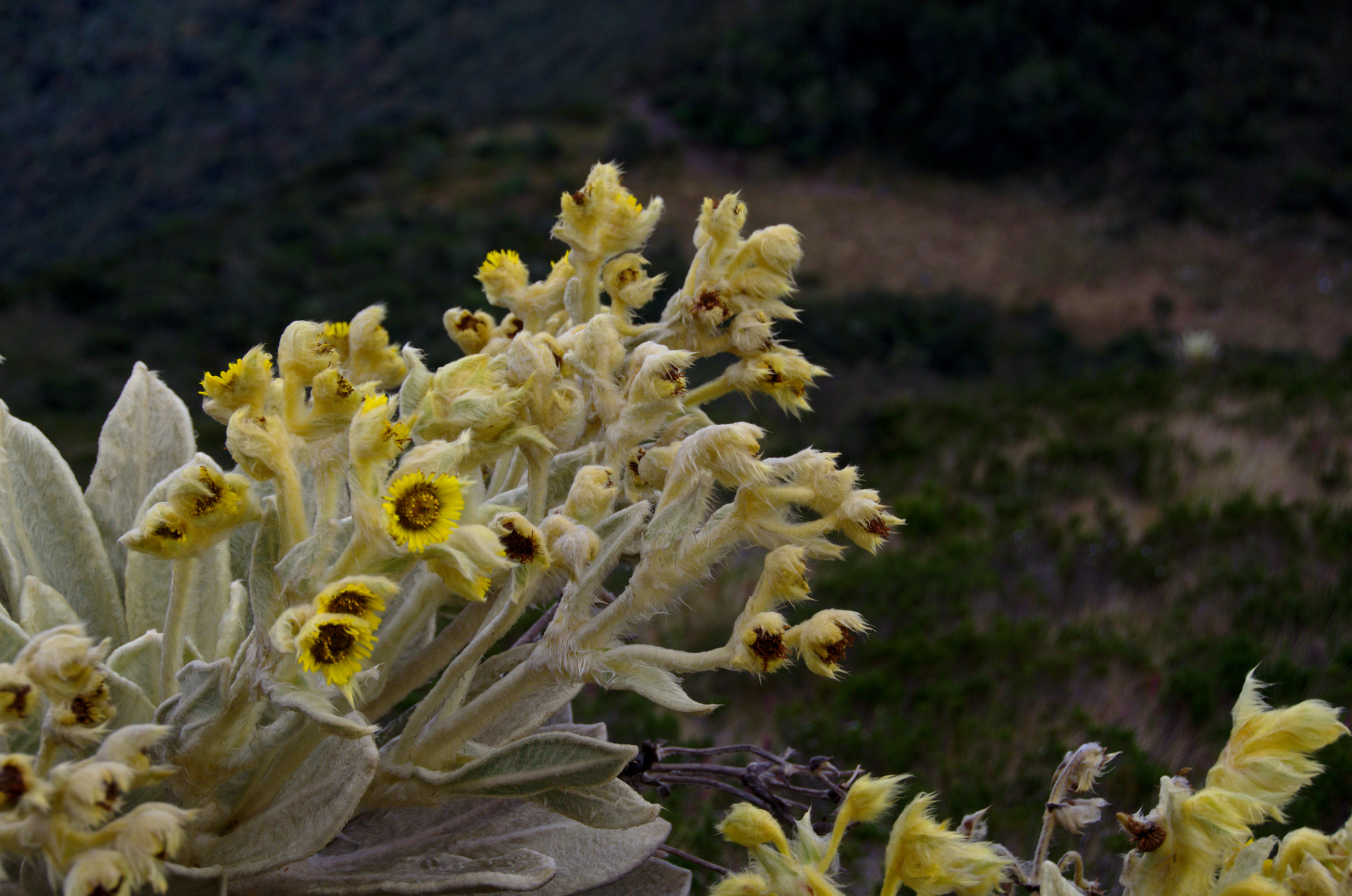
Photo: Aztlec.
Current situation
In March 2025, the Colombian government designated the western flank of the Santurbán massif as a temporary renewable natural resource reserve area, delimiting and protecting an area of 75,344.65 hectares. This resulted in a two-year suspension of the Soto Norte project. However, Aris Mining's contract to formalize Calimineros' small-scale mining activities through the purchase and processing of mineralized material remains in effect.
In addition, the Canadian mining company continues to move the project forward. In September 2025, it released its prefeasibility study, revising the mine’s original design.
Meanwhile, members of the Committee for the Defense of Water and the Santurbán Páramo face threats and stigmatization because of their work. In March 2025, UN Special Rapporteurs and the Working Group on Business and Human Rights denounced these incidents in communications sent to the governments of Colombia, Canada, and the United Arab Emirates, as well as to the companies Aris Mining and MDC Industry Holding Company LLC, the former co-owner of the Soto Norte project.
Regarding the arbitration claim filed by Eco Oro Minerals, in July 2024, ICSID ruled in favor of the Colombian government and rejected the Canadian company’s claim for USD 1.1 billion in compensation.
Concerning the delimitation of Santurbán, in July 2026, the Ministry of the Environment issued a resolution introducing the concept of "progressive delimitation." On that basis, the government proposes to progressively demarcate the páramo, covering 29,199 hectares across 19 municipalities—those where the participatory agreements required by the Constitutional Court in its 2017 ruling have already been finalized. It also proposes two measures on the creation and expansion of reserves to restrict mining in the ecosystem.
Learn more about the impacts of mining on the páramos of Latin America (in Spanish).
Partners:
Related projects

Science's call to action for climate and air
By Fabio López Alfaro y Luisa Gaona Quiroga, AIDA interns The first installment of the Intergovernmental Panel on Climate Change’s (IPCC) Sixth Assessment Report—which will be completed in 2022—devotes an unprecedented entire chapter to short-lived climate pollutants (SLCPs), the reduction of which can mitigate the climate crisis and improve air quality. The IPCC's emphasis on these pollutants reaffirms the intrinsic relationship between climate and air, as well as the urgent need to implement effective and joint measures for their protection. SLCPs are compounds that absorb or reflect solar energy. They have the capacity to heat or cool the Earth on short time scales (days to years), in contrast to greenhouse gases, such as carbon dioxide, whose climate impact can last decades, centuries or even longer. The best-known SLCPs include black carbon (small particles produced by burning diesel, biofuels and biomass), methane (which has a high global warming effect and is a precursor of other pollutants), tropospheric ozone and hydrofluorocarbons. Because they remain in the atmosphere for only short periods of time, their impacts on climate are regional and their changes are linked to changes in their emission sources. Although some SLCPs warm the planet and others cool it, the fact is that these pollutants cause between 30 and 45 percent of global warming, in addition to damaging air quality and affecting crop yields. Therefore, their integral management is decisive for mitigating the climate crisis and improving our quality of life. The situation in Latin America In this IPCC assessment cycle, the availability of information made it possible to emphasize the regional analysis of climate change, illustrating the relevance of SLCPs, whose impacts on climate and air are primarily local. However, the findings for Latin America are minor compared to those of Europe, Asia or North America, evidencing a lag in the region's knowledge. Closing this knowledge gap on SLCPs is fundamental because the region ranks third in terms of short-term (10 year) warming generation, surpassed by East Asia and North America. Despite having less information, the IPCC was able to identify the key sectors and pollutants to manage in Latin America. The report highlights that mitigation policies should focus on particulate matter and ozone generated in industry, energy production and open burning of biomass, sectors that are regionally responsible for the highest emissions. As the diameter of the particulate matter decreases, the negative health impacts are greater. Thus, fine particles— of particulate matter 2.5—cause the most harmful impacts on people's respiratory and cardiovascular systems. According to the World Health Organization, black carbon and organic carbon form a substantial part of particulate matter in air pollution, and are an important cause of morbidity and premature mortality worldwide. Moreover, methane and black carbon are the primary pollutants of concern in agriculture, fossil fuels, waste management and diesel engines, sectors that are projected to contribute 90 percent of non-OECD countries' black carbon emissions by 2100. Call to action The scientific evidence presented by the IPCC is also a call to action, a joint fight for climate and air. The report proves that it is vital to have crosscutting public policies that simultaneously seek to mitigate the climate crisis and SLCP emissions. The absence of such policies, coupled with weak air pollution control, implies short-term warming for Latin America, mainly because it is estimated that emissions of methane, ozone and hydrofluorocarbons—compounds characterized by high warming rates—will increase, as well as lower contributions from aerosols, which would decrease the cooling effect. However, with proper monitoring and in scenarios that combine efforts to reduce GHGs and SLCPs, high climate benefits and stabilization are expected after 2040. Although the climate results of these measures will be visible in 20 to 30 years, they will contribute to improving air quality and protecting human health in the short term. Public policies that work to lessen air pollution can reduce mortality rates due to poor air quality and contribute to meeting several of the Sustainable Development Goals (SDGs), especially those targets related to particulate matter exposure (targets 3.9 and 11.6), human health and cities (targets 3.8 and 11.7), and the health of people and the environment (targets 3.9 and 11.7). They can also contribute to access to clean and affordable energy, responsible consumption and production, climate action and biodiversity protection (SDGs 7, 12, 13, 14 and 15). Finally, reducing CCVC emissions will help reduce crop losses, contributing to achieving zero hunger (SDG 2). Now that we know the sectors and pollutants whose management will be key in the coming years, it is time to demand that authorities and companies implement concrete actions to reduce emissions of SLCPs and obtain co-benefits in the fight for climate and clean air.
Read more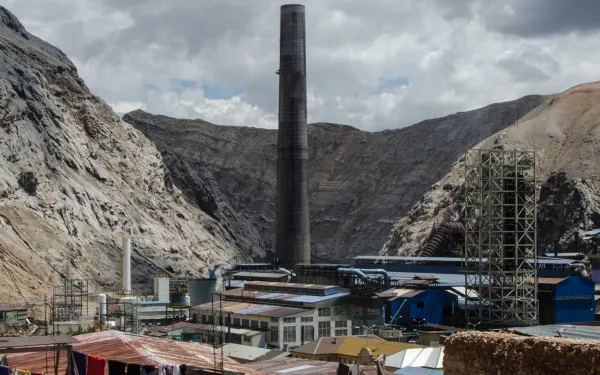
Victims of environmental contamination in La Oroya, Peru applaud the presentation of their case before the Inter-American Court of Human Rights
The decision, emitted by the Inter-American Commission on Human Rights, represents an important opportunity to restore the rights of affected residents. It’s the first time that a case of air pollution caused by business activities in an urban context has been brought before the Court. La Oroya, Peru. More than fifteen years after the case of environmental contamination in the city of La Oroya began, the Inter-American Commission on Human Rights established the Peruvian State’s responsibility for the violation of the affected population’s rights to life, integrity, health and a healthy environment. This month, the Commission referred the case to the Inter-American Court of Human Rights. "My sisters and I suffered exposure to heavy metals since we were children, having to migrate with our parents to an area far away from the contamination," said one of the victims, whose identity has been withheld due to the risk of reprisals for their role as environmental defenders. “We are thrilled to take one more step in this long process, in which so many of us have been involved. We are hopeful this will shine a ray of light on our path, and that our case will come to an end for the wellbeing of our health, so we can say 'Yes we could' in spite of so many falls.” The case originated with a petition, filed in 2005, by a group of La Oroya residents who, in the absence of responses at the national level, turned to the Commission to request precautionary measures. They subsequently denounced the violation of their rights resulting from chronic exposure to heavy metals (lead, cadmium and arsenic) from the metallurgical complex run by the company Doe Run Peru. The affected people appealed to the Inter-American Human Rights System because, although the Peruvian Constitutional Court ordered urgent measures for the protection of their rights in 2006, the State failed to comply with them. In an official communiqué on its decision, adopted on September 30, the Commission emphasized that "the State failed to comply with due diligence in its duties to regulate, supervise and oversee the behavior of the companies with respect to the rights they could affect, nor with its duty to prevent violations of these rights.” "We are happy for the news, so many years of waiting, frustration and fear. We are finally at the end,” said a mother whose parents and siblings were also affected by the contamination. “It’s a joy for all those who are present and for those who have left. We also thank the group of petitioners who have continued despite everything." The Interamerican Association for Environmental Defense (AIDA) and the Pro Human Rights Association (APRODEH), representatives of those affected in the case, welcome the Commission's decision, as it puts an end to several years of waiting and constitutes a great opportunity to restore the rights of the affected people. "It is a milestone for the Inter-American System because it is the first case to document a situation of environmental contamination, particularly air pollution, caused by business operations in an urban context," said Liliana Avila, Senior Attorney in AIDA's Human Rights Program. For Christian Huaylinos, Coordinator of APRODEH's Legal Department, "this case would allow the Court to advance State obligations regarding the special protection of populations that may be in a particularly vulnerable situation, such as children, adolescents and senior citizens. It would also address State responsibility, the obligations derived from the right to a healthy environment as an autonomous right, and its interdependence with other fundamental rights for human existence, such as health, life and personal integrity, as well as rights such as access to information, association and justice.” The contamination suffered by the inhabitants of La Oroya, many of them minors, particularly those who have come before the Commission, has had serious negative effects on their health with consequences that continue to this day. Although the metallurgical complex has implemented environmental management instruments, given the legal requirements at the national level aimed at mitigating and remediating the contamination caused, the State has granted extensions for their implementation without Doe Run Peru fully complying with its obligations. "I was very affected by the loss of my loved ones due to a lack of adequate healthcare, which lead to death. We’ve lost many people,” said one of the inhabitants of La Oroya, who has been affected since she was a minor and had to migrate to Lima with her mother. “We want to be treated well when we go to the doctor. I’ve lost my sisters and my father; we are all affected. I remember as I child I used to get spots from the arsenic.” She requests that the Court focus on the Peruvian health system when hearing the case and learning about its impacts. In all these years, the Peruvian State has failed to oversee, regulate and remedy the damage caused by the metallurgical complex. Its actions and omissions continue to violate human rights, to the detriment of the families of La Oroya. Members of the La Oroya community who have defended their right to a healthy environment have also been subjected to harassment and accusations. In this regard, the IACHR concluded that the State did not carry out "serious and effective criminal or administrative investigations to guarantee access to justice for the victims who were subjected to threats, harassment or reprisals by Doe Run Peru workers, as a result of the complaints made about the contamination." AIDA and APRODEH express their satisfaction with the presentation of the case before the Court and reiterate their commitment to the victims of La Oroya, to the defense of human rights, and the right to a healthy environment. press contacts: Victor Quintanilla (Mexico), AIDA, [email protected], +525570522107 Christian Huaylinos Camacuari (Peru), APRODEH, [email protected], +51959789232
Read more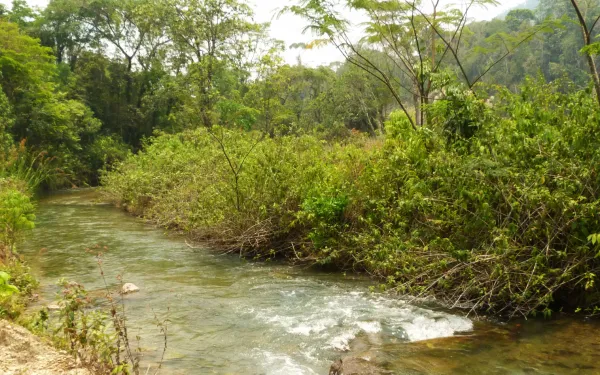
Historic recommendation paves the way for development bank to exit harmful hydroelectric projects in indigenous territory
For the first time, a case brought before the Inter-American Development Bank’s (IDB) Independent Consultation and Investigation Mechanism (MICI) opens the possibility for the bank to responsibly exit financing granted to hydroelectric projects, after concluding that the investment was made without acknowledging the presence of indigenous peoples, thus violating the bank’s operational policies. Washington DC, United States. The Independent Consultation and Investigation Mechanism (MICI) of the Inter-American Development Bank Group concluded that, within the framework of the financing granted to the Generadora San Mateo and Generadora San Andrés hydroelectric projects—located in the Yich K'isis micro-region, territory of the Native Maya Chuj Guatemala Nation—IDB Invest ignored the presence of indigenous peoples in the area by failing to verify their existence, thus ruling out the implementation of safeguards to protect them. MICI also established that the Bank failed to comply with several of its internal policies and, based on this, opened the possibility for a responsible withdrawal of the investment. These and other findings are contained in the case’s Final Report, approved by the IDB Board of Executive Directors, in which MICI resolved the complaint filed in 2018 by the affected communities—represented by the Ancestral Plurinational Government of the Maya Q'anjob'al, Maya Chuj, Maya Akateko, Maya Popti and Mestiza Native Nations; the Interamerican Association for Environmental Defense (AIDA); and the International Platform Against Impunity. Of the 29 recommendations issued in the report: 10 are aimed at institutional changes to avoid non-compliance with environmental and social safeguards in other IDB Invest operations; 18 are focused on implementing specific corrective actions to redirect the San Mateo and San Andrés projects; and one of them, number 29, opens the possibility for IDB Invest to withdraw its investment from the hydroelectric plants. "In case of exit from the Projects, IDB Invest should adopt the necessary provisions to ensure a responsible exit from Operations," the report reads. "Recommendation 29 is the most consistent with the findings of the Final Report and the one that best responds to the request that the communities have made since the beginning of the process: it is unsustainable for IDB Invest to finance projects that were developed in indigenous territories while ignoring their presence," said Liliana Ávila, senior attorney at AIDA. "In an effective accountability process, the bank must be held responsible for its mistakes and remedy the damage it has caused." This represents a milestone for the region, as it is the first time that MICI has made such a consistent recommendation regarding projects under investigation. The recommendation demonstrates improvements in the bank's accountability processes, increases opportunities for communities affected by IDB Group-financed projects, and sets a precedent for better financing practices. "The report sets a precedent for accountability in the region. It puts MICI and the compliance verification phase one step closer to responding to the requests and demands of affected communities," said Carolina Juaneda, Latin America Coordinator for the Bank Information Center. "Recommendation 29 is a novel and encouraging development, as it puts the requests and demands of the communities that have been negatively affected by the projects at center stage. Although there are still many challenges to continue working on, the report undoubtedly represents a clear and powerful step toward strengthening accountability in the region." For the communities, it is through full compliance with Recommendation 29 that their primary request may finally be answered. The bank’s divestment from the dams must incorporate a responsible, participatory and comprehensive withdrawal plan that respects the good faith consultation carried out in 2009, in which the communities decided not to carry out the such projects in their territory. The plan must include: 1) recognition and restoration of social and cultural damages caused; 2) respect for the rights of indigenous peoples and recognition and restoration of the damages generated; 3) recognition and restoration of the damages generated by the differentiated impacts on women; and 4) prevention, mitigation and restoration measures from an environmental perspective. "The measures proposed in Recommendation 29 should have been part of the project planning phase. By not having considered them in its initial phase, a series of impacts and damages to the community were generated," stated Mara Bocaletti, Regional Director of the International Platform Against Impunity. "Only a responsible exit process by the investors will be able to restore the conditions of credibility towards the accountability mechanisms of international financial institutions." Another of the communities' expectations is that the IDB Group will guarantee their access to information and participation in the following phases of the process, which would allow the effective guarantee of their rights and the improvement of the bank's protection strategies. "This report is very valuable because it recognizes the impacts generated by the projects and validates the complaints we have been making for years. It is an important report not only for us, but for all indigenous peoples in Guatemala," said Lucas Marcos, local authority. "The bank's responsible withdrawal from the projects will allow us to maintain our rivers and access to water for us and our families." In addition to non-compliance with the IDB's policy on indigenous peoples, MICI concluded that the development of the San Mateo and San Andres projects caused differentiated impacts on women, environmental impacts, increased conflict, and harm to the social fabric. It also found that the bank did not guarantee access to information for the communities. "It is a serious wrongdoing that the bank has prioritized the advancement of these projects despite failing to comply with its internal requirements, to the detriment of our life as communities and ignoring our presence as indigenous peoples," said Rigoberto Juarez, Coordinator of the Plurinational Government of the Maya Q'anjob'al, Maya Chuj, Maya Akateko, Maya Popti and Mestiza indigenous nations. "Our individual and collective rights cannot be undermined in the face of private interests; consequently, a responsible withdrawal is the least the bank can do in the face of the magnitude of the damages caused. We hope that this will not happen again in other cases, and that the bank will assume its responsibility to respect the rights of indigenous peoples." The outcome of this complaint, as well as the international attention surrounding the case, is the result of a process of organization and resistance undertaken by the Mayan men and women of Yich K'isis upon being faced with of the imposition of large-scale hydroelectric projects, developed without due diligence and without consultation. For years, they have been demanding respect for their ways of life, and the value they hold for their water and their culture. The MICI report, apart from supporting the allegations of the affected communities regarding the violations of their rights, also sets an important precedent for Guatemala. This decision should be taken into account on a national level to address the countless irregularities and rights violations denounced throughout the country in the context of the implementation of mega-development projects, specifically large dams. press contacts Victor Quintanilla (Mexico), AIDA, [email protected], +525570522107 Camila Castellanos, International Platform Against Impunity, [email protected]
Read more