
Project
Alberto Peña Kay
Protecting the Santurban páramo from mining's damage
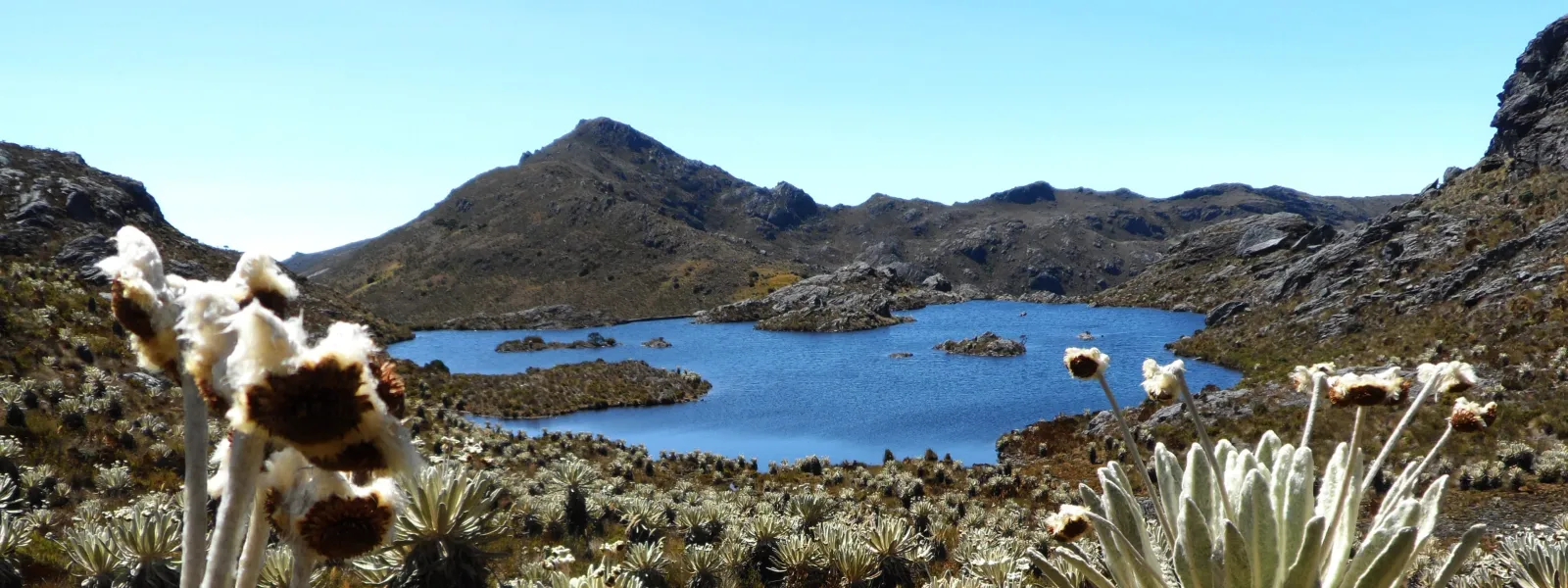
In the Andean region, high-mountain ecosystems known as páramos capture water from the fog and supply it to the lowlands. One such ecosystem is the Santurbán páramo, which provides fresh water to more than two million people in Colombia.
Santurbán, like the other páramos on the continent, also captures large amounts of carbon, making it a key ally in mitigating the climate crisis. It is also a refuge for hundreds of endangered species, including the iconic spectacled bear.
The land in and around the páramo contains gold and other minerals. This has put Santurbán in the spotlight of the multinational mining industry, which for decades has sought to establish large-scale projects in the ecosystem that threaten to degrade it.
The Committee for the Defense of Water and the Santurbán Páramo—a coalition of environmental advocates—has thwarted these ongoing attempts, with support from AIDA and other civil society organizations.
Background
The Santurbán páramo is located in the heart of the Eastern Cordillera of the Colombian Andes, in the departments of Santander and Norte de Santander, at an elevation ranging from 2,200 to 4,290 meters above sea level.
It covers an area of 129,743 hectares and is home to 57 lakes. It serves as a habitat for 457 plant species and 293 species of vertebrate fauna.
There are mineral deposits in Santurbán, primarily gold, but also silver and copper. This explains the region’s mining tradition, particularly in the part of the páramo located in Santander, in the province of Soto Norte. The communities in the area have built their culture and identity around gold mining, which is mainly artisanal and small-scale.
But since the 1990s, the gold deposits in the páramo have also attracted foreign mining conglomerates seeking to develop large-scale projects. This has raised concerns among the population that relies on the Santurbán water sources, who have mobilized in defense of water, their land, and life.
Although national and international regulations prohibit mining in páramos, the Colombian government has granted mining concessions to transnational corporations in Santurbán.

Photo: Keishpixl / Pixabay.
The long struggle to protect the páramo
One of the companies that sought to develop large-scale mining in Santurbán is Eco Oro Minerals Corp.—formerly Greystar Resources—a Canadian company that intended to establish the Angostura open-pit mine there to extract gold and silver. Between 1994 and 1995, the company acquired its mining titles and conducted exploration. And in 2010, it applied for a mining permit.
That was the year AIDA became involved in defending the ecosystem, supporting the Committee for the Defense of Water and the Santurbán Páramo. Our legal work helped convince the Colombian government to deny the mine an environmental permit in May 2011.
In January 2013, the government designated a portion of the páramo (11,700 hectares) as a Regional Natural Park. That year—together with the committee and partner organizations—we carried out a campaign and advocacy efforts to urge the government to recognize the entire Santurbán area as a páramo ecosystem through a delimitation based on scientific criteria. In December 2014, the Ministry of the Environment established a delimitation that protected 76% of the páramo (98,954 hectares).
Furthermore, as a result of a litigation supported by AIDA, in February 2016, Colombia’s highest court reaffirmed that mining in páramos is prohibited.
That same year, in December, the International Finance Corporation (IFC), the World Bank Group’s private sector arm, decided to divest from Eco Oro Minerals. This achievement was the result of a process that began in 2012, when the committee—advised and supported by AIDA and international partner organizations—filed a complaint before an independent accountability mechanism, which concluded that the IFC’s investment in the Angostura project failed to take into account the project’s social and environmental impacts, thereby contradicting the financial institution’s internal policies.
Also in 2016, Eco Oro Minerals filed an arbitration claim against the Colombian government with the International Centre for Settlement of Investment Disputes (ICSID), arguing that it had been adversely affected by government decisions aimed at protecting the country’s páramos, including the delimitation of Santurbán.
In 2017, the Constitutional Court invalidated the delimitation because the affected communities were not consulted. The high court ordered that a participatory delimitation be carried out.
And that year, a new threat to Santurbán emerged when the Canadian multinational Aris Mining applied for an environmental permit for Soto Norte, a gold mining project located near the páramo. Following citizen protests and technical objections, in October 2020, the National Environmental Licensing Authority shelved the project.
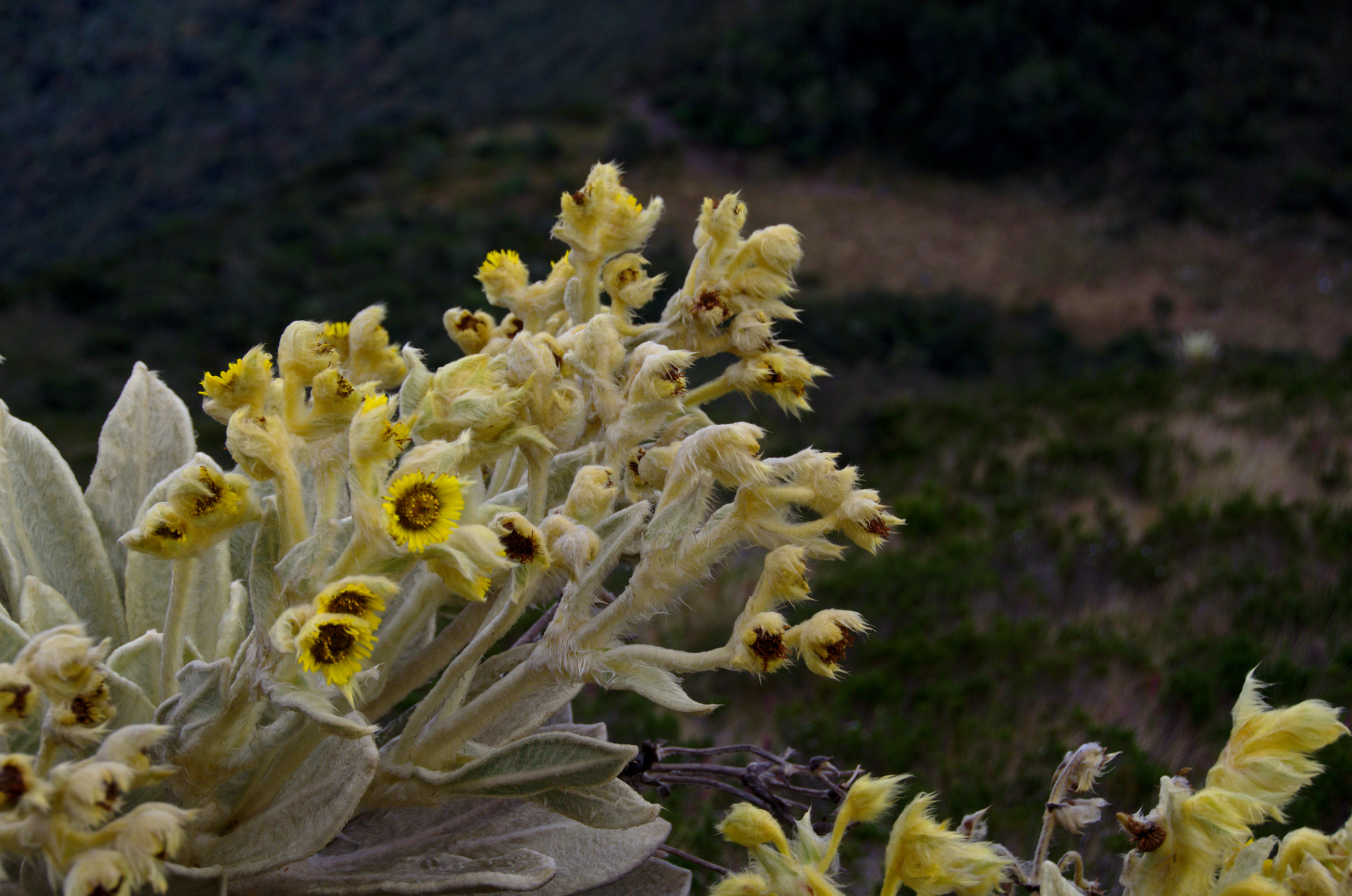
Photo: Aztlec.
Current situation
In March 2025, the Colombian government designated the western flank of the Santurbán massif as a temporary renewable natural resource reserve area, delimiting and protecting an area of 75,344.65 hectares. This resulted in a two-year suspension of the Soto Norte project. However, Aris Mining's contract to formalize Calimineros' small-scale mining activities through the purchase and processing of mineralized material remains in effect.
In addition, the Canadian mining company continues to move the project forward. In September 2025, it released its prefeasibility study, revising the mine’s original design.
Meanwhile, members of the Committee for the Defense of Water and the Santurbán Páramo face threats and stigmatization because of their work. In March 2025, UN Special Rapporteurs and the Working Group on Business and Human Rights denounced these incidents in communications sent to the governments of Colombia, Canada, and the United Arab Emirates, as well as to the companies Aris Mining and MDC Industry Holding Company LLC, the former co-owner of the Soto Norte project.
Regarding the arbitration claim filed by Eco Oro Minerals, in July 2024, ICSID ruled in favor of the Colombian government and rejected the Canadian company’s claim for USD 1.1 billion in compensation.
Concerning the delimitation of Santurbán, in July 2026, the Ministry of the Environment issued a resolution introducing the concept of "progressive delimitation." On that basis, the government proposes to progressively demarcate the páramo, covering 29,199 hectares across 19 municipalities—those where the participatory agreements required by the Constitutional Court in its 2017 ruling have already been finalized. It also proposes two measures on the creation and expansion of reserves to restrict mining in the ecosystem.
Learn more about the impacts of mining on the páramos of Latin America (in Spanish).
Partners:
Related projects
The IDB's opportunity to support the protection of the environment and human rights
The Inter-American Development Bank Group (IDB Group) is uniquely positioned not only to support recovery efforts in Latin America and the Caribbean, a region hard hit by the pandemic, but also to do so with respect for people and the environment. The IDB Group—composed of the IDB, which works with governments; IDB Invest, which collaborates with the private sector; and IDB Lab, the bank’s innovation laboratory— is the continent's most important development financing entity. In 2020, it approved a record US$21.6 billion for its 26 member countries in the region. In addition to the challenge of leading the recovery of public finances, the current economic and social crisis represents an opportunity for the IDB Group to successfully face another major challenge: the adoption of operational policies that comply with international environmental and human rights standards, as well as improved accountability processes. This is fundamental to the role the Bank plays in the region, and has become even more relevant in the current context: Regarding accountability and the evaluation of its current policies, it is important to consider that four hydroelectric projects financed by the IDB Group are or have been under scrutiny by the IDB's Independent Consultation and Investigation Mechanism (MICI) due to the impacts caused by their implementation in indigenous and rural communities in Guatemala, Chile and Colombia. These projects, financed by IDB Invest, have affected the livelihoods of those who live in their shadow. AIDA—together with the International Platform Against Impunity and the Plurinational Government of the Q'anjob'al, Chuj, Akateko, Popti and Mestiza Nation—has supported members of the Mayan communities of the Ixquisis micro-region in Guatemala in the face of the destruction caused by two of these projects: the San Mateo and San Andres dams. Personally, I’ve seen first hand the damages caused to the indigenous population. I’ve heard the fear and uncertainty in the voices of local women as they explained how their rivers were polluted, their children fell ill, and their lives forever changed. “One day we will run out of water and we won’t be able to live,” a female indigenous leader from Ixquisis told me. “Our children will suffer.” The women of Ixquisis have played a central role in the complaint presented before MICI, as a primary question at play centers on the supposed violation of the Bank’s operational policy on gender, which recognizes that development projects often have differential impacts on local women. For the women, the rivers are a vital element, since they enable access to fresh water and food, also playing a key role in their interactions with each other. In the complaint, affected communities also denounced the projects’ lack of compliance with the Bank’s operational policies indigenous rights and the environment, and for the resulting damages. They argue that the company implementing the San Mateo and San Andrés dams acted without due diligence and violated the right to consultation and the free, prior and informed consent of affected indigenous peoples. In fact, the implementation of the projects actually ignored the results of a good faith consultation, carried out in 2009, in which the majority of the local population decided they did not consent to the implementation of such mega-projects in their territory. What’s evident is that the Bank’s capacity to supervise the projects it finances is limited and, despite meeting minimum standards, its operational policies are often ineffective. What’s more, spaces in which the Bank verifies compliance are reduced and the consequences for that non-compliance, uncertain. Earlier this year, MICI published a report on Chile’s Alto Maipo hydroelectric project, finding that the dam violated several operational policies, including that on gender. Yet that report has come under scrutiny for failing to offer restitution measures for the ongoing damages incurred by affected communities. In the coming months, the preliminary report on the Ixquisis case will be released. Affected communities hope that the recommendations it holds are reflective of the realities on the ground, and oriented toward the adoption of corrective measures, including the immediate divestment of financing. With this case, the Bank has a key opportunity to demonstrate its commitment to accountability, as well as its openness to assess compliance with its own operational policies and to remedy the damages that failure to comply has caused to vulnerable groups. It’s also an opportunity for the entity to take preventive measures and lay the groundwork for changing its practices. When he was elected president of the institution, Mauricio Claver-Carone promised to "act on priority issues in the region.” This includes an evaluation of any global context that affects the very development the IDB Group seeks to promote. These days, that includes not just the current public health crisis, but also the global climate crisis, the serious situation facing environmental defenders, and resolving a number of pending complaints on gender equity and respect for indigenous rights. The actions taken by the IDB Group as a result of the Ixquisis case may be the first step in establishing a fundamental precedent for the protection of human rights and the environment among international financial institutions, a contribution that is undoubtedly as, if not more, valuable than the economic one.
Read more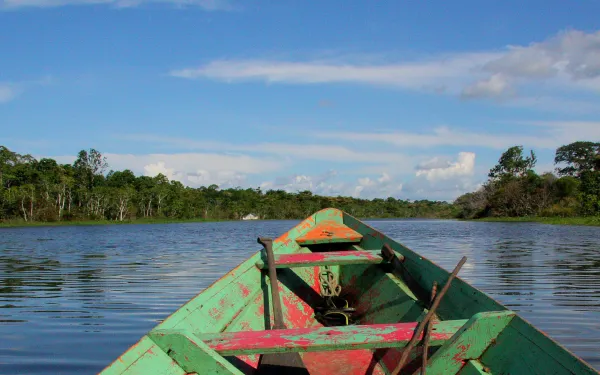
Investor Alert: Belo Sun discloses misleading information to investors regarding controversial gold mining project in the Brazilian Amazon
In a complaint to the Ontario Securities Commission, an international coalition of civil society organizations calls attention to the repeated dissemination of misleading information by Belo Sun Mining Corp (TSXV:BSX), including statements by CEO Peter Tagliamonte, downplaying socio-environmental, legal, and financial risks of the company’s “Volta Grande” project along the Xingu River. Canadian-based mining company Belo Sun Corp.(TSXV:BSX) is disseminating misleading and incomplete information to investors about the mining project it is trying to develop on the Xingu river (Volta Grande do Xingu), Pará State, Brazil. This is the central message of a warning letter sent to the Ontario Securities Commission (OSC) on July 29rd by an international coalition of civil society organizations and networks including Amazon Watch, Earthworks, Instituto Socioambiental (ISA), Interamerican Association for Environmental Defense (AIDA), International Rivers, MiningWatch Canada, Movimento Xingu Vivo para Sempre and Rede Xingu+. The OSC is an independent Canadian Crown corporation responsible for protecting shareholders and investors from unfair, improper and fraudulent practices from companies and industries. Drafted by a legal team and supported by independent technical and scientific analysis, the complaint letter challenges recent statements by Belo Sun’s CEO Peter Tagliamonte. In a speech at the Prospectors & Developers Association of Canada (PDAC) event in March 2021, the largest mining convention in the world, Tagliamonte cited the Covid-19 pandemic as the justification for repeated delays in the environmental licencing of the Volta Grande mine, claiming that the mining project was "fully authorized" and that construction was expected to begin at the end of 2021. Similar comments have been made in recent company statements, and by Tagliamonte himself in other occasions. According to the complaint, such declarations are patently false. There are seven public civil actions active in Brazilian courts asking for the suspension of permits and of the licencing process, filed by Federal and State public prosecutors’ and defenders’ offices. These lawsuits focus specifically on irregularities in the Environmental Impact Assessment (EIA), and the lack of free, prior and informed consultation and consent with Indigenous peoples and other traditional communities. The coalition argues that there is overwhelming evidence that Belo Sun breached the Securities Act disclosure requirements, which requires companies to disclose material changes “forthwith” (without delay). Companies must disclose factual and updated data to keep investors well informed. Misleading information disclosed by Belo Sun Mining Corp. According to the complaint, while the company acknowledges the generic risks associated with the licensing process, it fails to disclose the concrete details of the legal actions and suspensions in play regarding its project, relying on investors' lack of knowledge concerning licensing legislation in Brazil. One example refers specifically to the suspension of its construction licence (LI), due to the lack of "free and informed consultation" of Indigenous peoples. In its more recent Corporate Update, Belo Sun states that "it continues to advance financial discussions with various groups in preparation for the commencement of construction following the lifting of the suspension of the construction license (LI)". "The company has not even started a consultation process, - which is now delayed by COVID-19 - and it is already advertising the lifting of the suspension, as if it was just a matter of time", says Marcella Ribeiro, attorney from AIDA's Human Rights and the Environment Program. "The company is not in a position to guarantee the results of the consultation process, as negotiations around consent are time-consuming and will invariably result in major material changes to the project. None of that is being disclosed properly to investors", she adds. Among the risks associated with investments in Belo Sun, the complaint highlights the history of judicial proceedings; conflict around the project; the flaws and gaps in the environmental impact assessment; and the violation of the Indigenous Peoples’ right to prior consultation. The downplaying of environmental and social risks by the company’s studies and impact assessments has sounded the alarm among communities in the Volta Grande region, already affected by the Belo Monte dam. A series of independent technical studies challenge Belo Sun’s statements regarding impacts to water resources, to fauna and flora, and regarding dam safety. The company’s refusal to acknowledge impacts in Indigenous territories along the Xingu river has led to the court decision that suspended the installation licence of the Volta Grande project in 2017 until "free and informed consultation" was carried out. There are also increasing accounts of intimidation and harassment against project opponents, which demonstrate a much more complex and contentious situation as a result of the project than what has been disclosed by the company, the complaint stresses. The coalition concludes that "Belo Sun has failed to fully communicate to current and potential investors about the complex nature of its project" which has a "direct implication for delays, and raises fundamental questions about the project’s viability". The letter delivered to the OSC aims to increase visibility to the many irregularities of the project and to raise awareness among current and potential investors about the major reputational and legal risks attached to the project, at a moment when heightened attention is focused on the Amazon rainforest and its capacity to provide environmental services and mitigate climate change. About Belo Sun’s Volta Grande Project Proposed for development along the Volta Grande (Big Bend), a stretch of the Xingu River (a major tributary of the Amazon) that is one of the most biodiverse locations on the planet, Belo Sun’s project would be the largest open pit gold mine in Brazil. The region is home to indigenous people such as Juruna (Yudjá), Arara, and Xikrin, along other isolated Indigenous and riverside communities. From the outset, Belo Sun has faced numerous lawsuits regarding the Volta Grande Project filed by the Federal Public Prosecutor's Office, the State Public Prosecutor's Office, the State Public Defender's Office, and the Union Public Defender's Office. All of these lawsuits refer to the multiple flaws in its licensing process and in the project’s technical studies. Among other things, the lawsuits seek the cancellation of the company's licences and the suspension of the project's licensing process. One of them resulted in a court decision, still valid, to suspend Belo Sun’s construction licence. press contacts Viviana Herrera, MiningWatch Canada, [email protected] Camila Rossi, Amazon Watch, [email protected] Cecilia Garcia, International Rivers, [email protected] Victor Quintanilla, AIDA, [email protected]
Read more
Litigation to promote (and accelerate) climate action
In 1990, the United Nations Intergovernmental Panel on Climate Change (IPCC) produced its first assessment report. It was the first time that the international scientific community officially and accurately demonstrated that greenhouse gas emissions, produced by human activities, would lead to additional warming of the planet's surface, with global consequences. Over more than two decades of international climate negotiations and agreements to drastically reduce emissions, progress has been slow. And so, climate litigation has become a tool increasingly used by organizations and communities to hold governments and companies accountable for the climate crisis. Legal cases have forced nations to adopt more concrete and ambitious measures to curb emissions and mitigate the human rights impacts of the climate crisis. In May, a Dutch court set a landmark precedent when it ordered multinational oil company Shell to reduce its carbon dioxide emissions by 45 percent over less than 10 years, marking a global environmental victory. "This judgment has been of great significance because Shell is one of the companies that most contributes to climate change," says Verónica Méndez, an attorney with AIDA's Climate Change Program. AIDA's legal and scientific team provides legal support and technical information to organizations and communities initiating climate litigation against governments and companies in Latin America. AIDA also developed a climate litigation platform, which systematizes key information on the cases developed in the region. The mapping of data is being done collaboratively with other organizations and will allow for the strengthening of joint litigation strategies. A brief overview of climate litigation Climate litigation includes cases that raise issues related to the legal obligations that states and companies have in relation to the climate crisis. They are brought before judicial bodies to seek, among other things, the enforcement of existing climate laws; an expansion in the scope of other laws to address climate change; recognition of the relationship between fundamental human rights and the impacts of the climate crisis; and compensation for loss and damage. This, according to a report prepared by the United Nations Environment Programme, in collaboration with the Sabine Center for Climate Change Law at Columbia University (New York), which assesses the global situation of this type of litigation. According to the report, as of July 1, 2020, at least 1,550 climate litigations have been registered in 38 countries, almost doubling the number of cases registered in 24 countries in 2017. The United States leads the list where the most litigation has been filed (1,200), followed by Australia (97), the United Kingdom (58) and the European Union (55). Climate lawsuits are also booming in Latin America, particularly in Mexico, Brazil, Colombia and Chile. To date, AIDA has analyzed nearly 50 cases that will form part of the region's climate litigation platform. Challenges and opportunities in climate litigation While climate litigation seeks to achieve justice for communities affected by the impacts of the climate crisis, one of its great challenges lies the implementation of decisions. In 2018, a historic judgement ruled in favor of 25 young Colombians, who sued the government for deforestation in the Amazon and its direct link to the violation of the right to a healthy environment for future generations. This lawsuit is considered a climate litigation due to the increase in greenhouse gas emissions associated with deforestation. In it, the Supreme Court of Justice recognized the Colombian Amazon as an entity subject to rights and ordered the creation of an action plan to reduce deforestation, and the adoption of an intergenerational pact for the life of the Colombian Amazon. However, the conclusions of follow-up reports on the case indicate that, to date, there has not been full compliance with the ruling. "A judgment does not end with the sentence,” explains Méndez. “It must be followed up with to ensure compliance." Demonstrating that corporations and governments have an enormous responsibility in the fight against the climate crisis not only requires scientific information that proves that the emissions generated or allowed contribute to climate change. It requires linking the facts to human rights to provide more reasons for the courts to act and issue a favorable ruling. "A purely scientific climate change litigation has less chance of success," Méndez emphasizes. "It’s strategic to link a case to direct impacts on the human rights of those people who will be disproportionately affected." According to a report by the Environment and Natural Resources Foundation (FARN), the outlook for climate demands in Latin America is encouraging because governments are making more commitments to climate action and, in addition, climate science is establishing direct links between extreme weather events and climate change. The coming together of communities and environmental organizations is crucial in the movement to accelerate strong policies and actions that will ensure a sustainable, just transformation for both people and the environment. Visit the Climate Litigation Platform for Latin America and the Caribbean
Read more