
Project
Alberto Peña Kay
Protecting the Santurban páramo from mining's damage
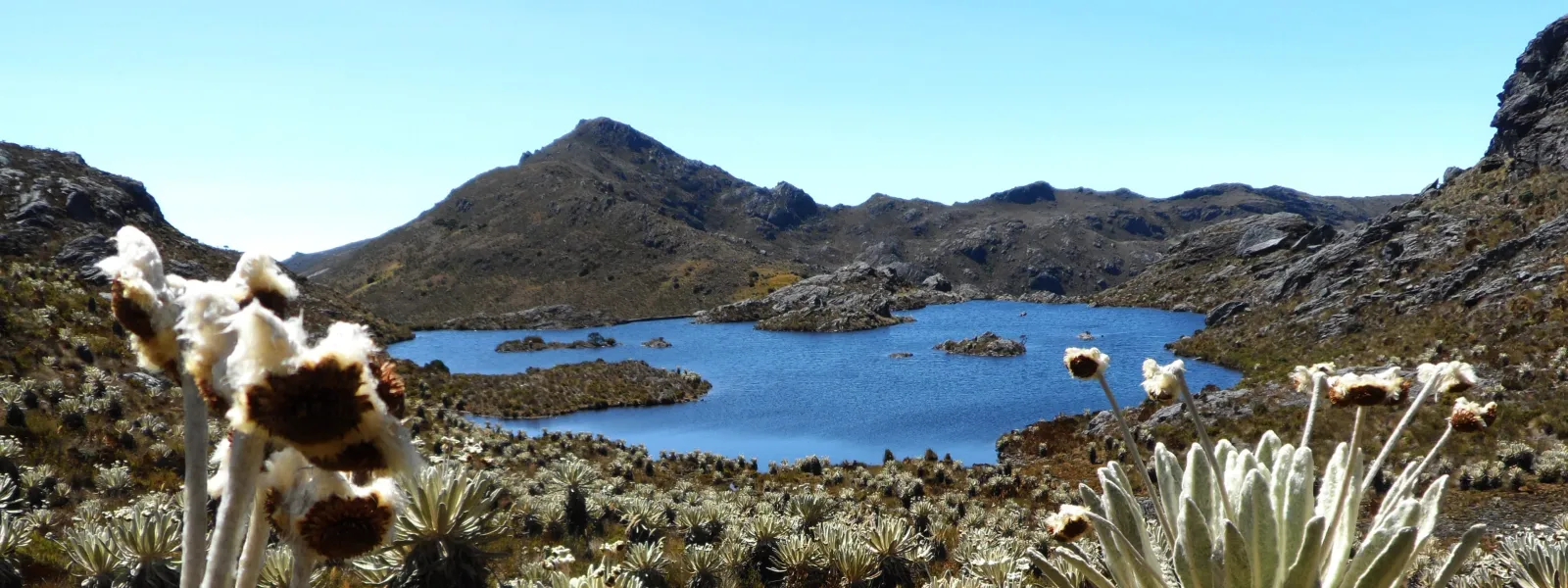
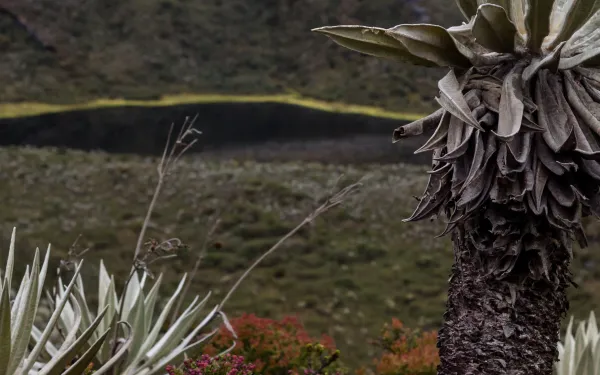
In the Andean region, high-mountain ecosystems known as páramos capture water from the fog and supply it to the lowlands. One such ecosystem is the Santurbán páramo, which provides fresh water to more than two million people in Colombia.
Santurbán, like the other páramos on the continent, also captures large amounts of carbon, making it a key ally in mitigating the climate crisis. It is also a refuge for hundreds of endangered species, including the iconic spectacled bear.
The land in and around the páramo contains gold and other minerals. This has put Santurbán in the spotlight of the multinational mining industry, which for decades has sought to establish large-scale projects in the ecosystem that threaten to degrade it.
The Committee for the Defense of Water and the Santurbán Páramo—a coalition of environmental advocates—has thwarted these ongoing attempts, with support from AIDA and other civil society organizations.
Background
The Santurbán páramo is located in the heart of the Eastern Cordillera of the Colombian Andes, in the departments of Santander and Norte de Santander, at an elevation ranging from 2,200 to 4,290 meters above sea level.
It covers an area of 129,743 hectares and is home to 57 lakes. It serves as a habitat for 457 plant species and 293 species of vertebrate fauna.
There are mineral deposits in Santurbán, primarily gold, but also silver and copper. This explains the region’s mining tradition, particularly in the part of the páramo located in Santander, in the province of Soto Norte. The communities in the area have built their culture and identity around gold mining, which is mainly artisanal and small-scale.
But since the 1990s, the gold deposits in the páramo have also attracted foreign mining conglomerates seeking to develop large-scale projects. This has raised concerns among the population that relies on the Santurbán water sources, who have mobilized in defense of water, their land, and life.
Although national and international regulations prohibit mining in páramos, the Colombian government has granted mining concessions to transnational corporations in Santurbán.
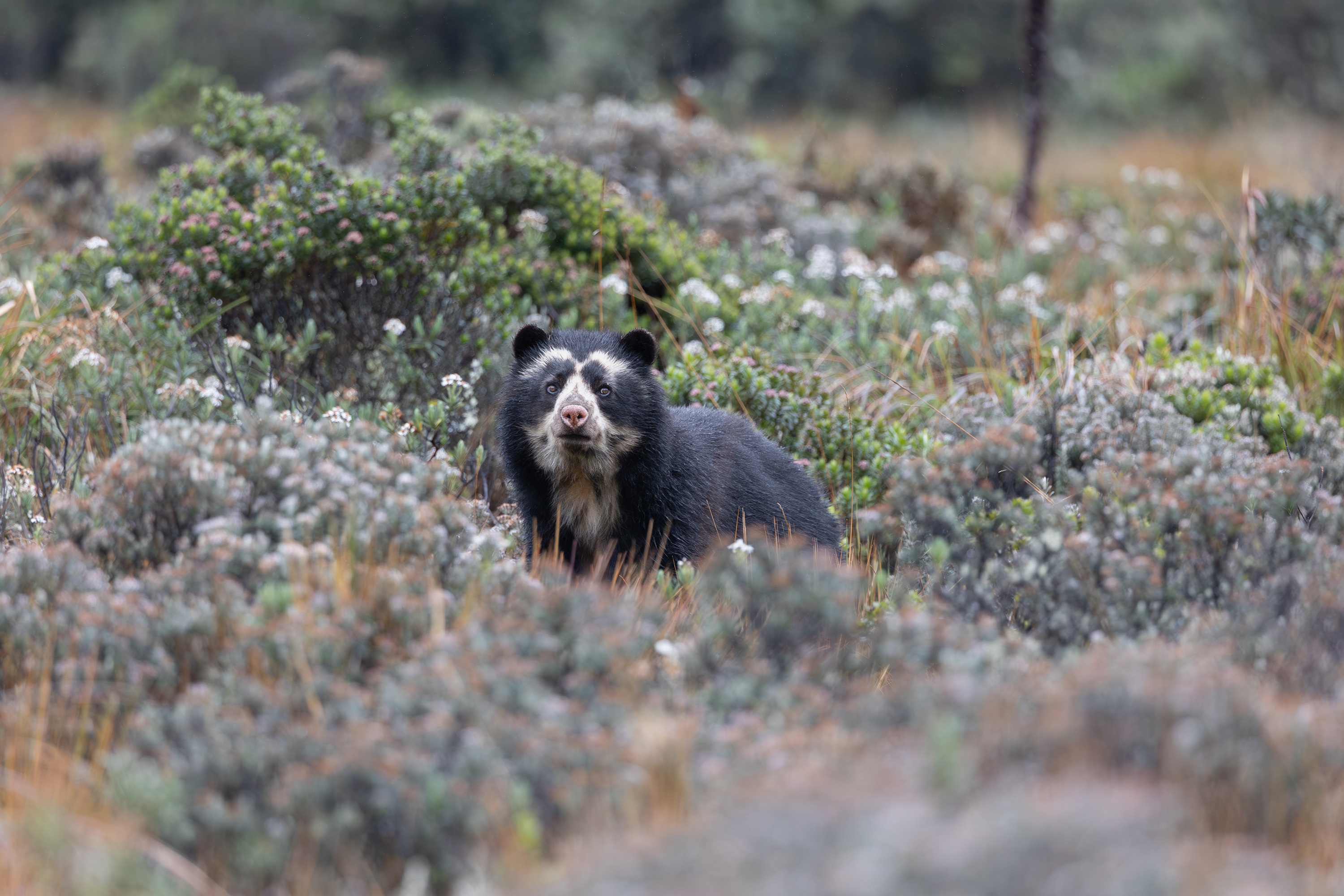
Photo: Keishpixl / Pixabay.
The long struggle to protect the páramo
One of the companies that sought to develop large-scale mining in Santurbán is Eco Oro Minerals Corp.—formerly Greystar Resources—a Canadian company that intended to establish the Angostura open-pit mine there to extract gold and silver. Between 1994 and 1995, the company acquired its mining titles and conducted exploration. And in 2010, it applied for a mining permit.
That was the year AIDA became involved in defending the ecosystem, supporting the Committee for the Defense of Water and the Santurbán Páramo. Our legal work helped convince the Colombian government to deny the mine an environmental permit in May 2011.
In January 2013, the government designated a portion of the páramo (11,700 hectares) as a Regional Natural Park. That year—together with the committee and partner organizations—we carried out a campaign and advocacy efforts to urge the government to recognize the entire Santurbán area as a páramo ecosystem through a delimitation based on scientific criteria. In December 2014, the Ministry of the Environment established a delimitation that protected 76% of the páramo (98,954 hectares).
Furthermore, as a result of a litigation supported by AIDA, in February 2016, Colombia’s highest court reaffirmed that mining in páramos is prohibited.
That same year, in December, the International Finance Corporation (IFC), the World Bank Group’s private sector arm, decided to divest from Eco Oro Minerals. This achievement was the result of a process that began in 2012, when the committee—advised and supported by AIDA and international partner organizations—filed a complaint before an independent accountability mechanism, which concluded that the IFC’s investment in the Angostura project failed to take into account the project’s social and environmental impacts, thereby contradicting the financial institution’s internal policies.
Also in 2016, Eco Oro Minerals filed an arbitration claim against the Colombian government with the International Centre for Settlement of Investment Disputes (ICSID), arguing that it had been adversely affected by government decisions aimed at protecting the country’s páramos, including the delimitation of Santurbán.
In 2017, the Constitutional Court invalidated the delimitation because the affected communities were not consulted. The high court ordered that a participatory delimitation be carried out.
And that year, a new threat to Santurbán emerged when the Canadian multinational Aris Mining applied for an environmental permit for Soto Norte, a gold mining project located near the páramo. Following citizen protests and technical objections, in October 2020, the National Environmental Licensing Authority shelved the project.
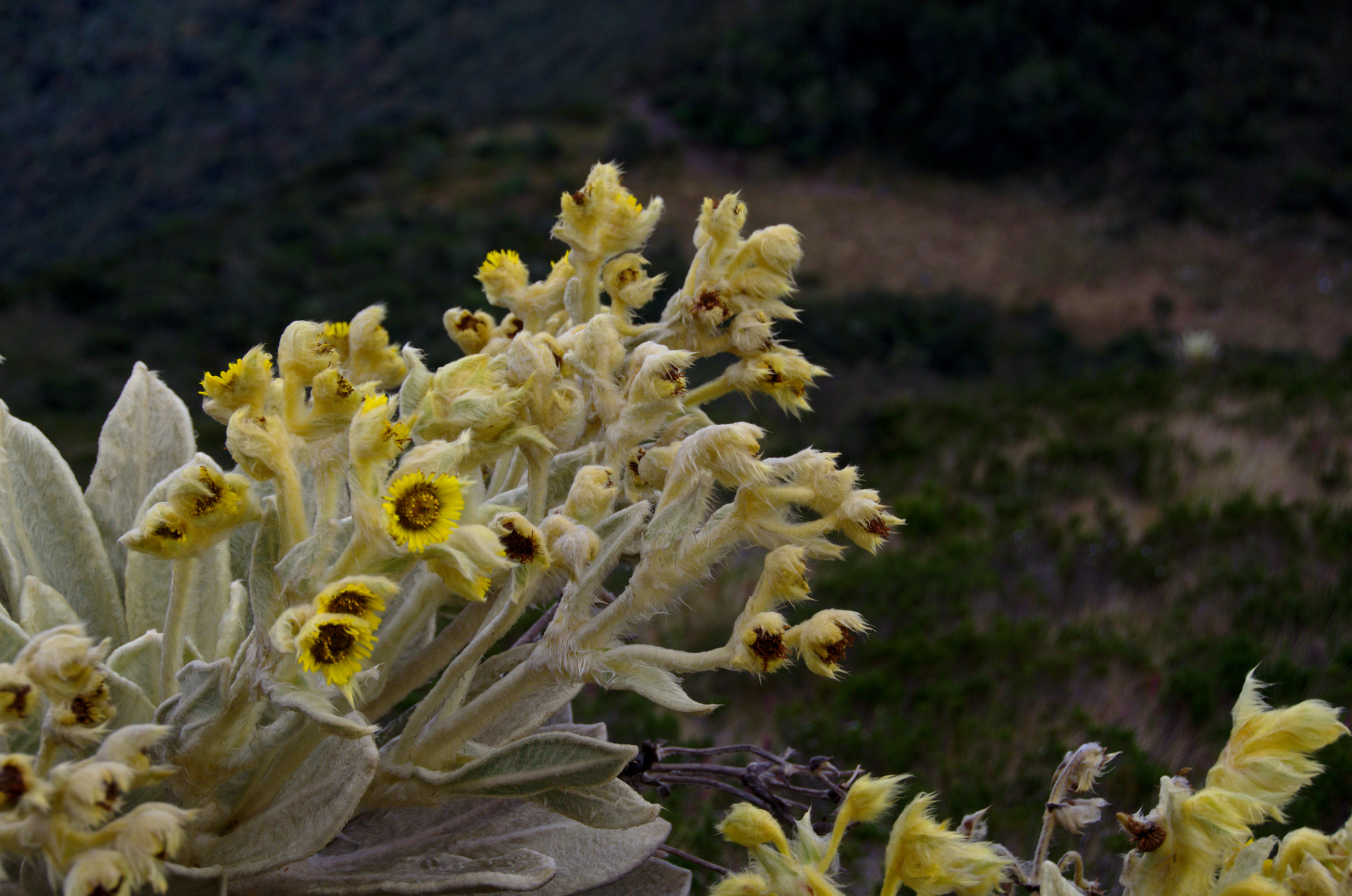
Photo: Aztlec.
Current situation
In March 2025, the Colombian government designated the western flank of the Santurbán massif as a temporary renewable natural resource reserve area, delimiting and protecting an area of 75,344.65 hectares. This resulted in a two-year suspension of the Soto Norte project. However, Aris Mining's contract to formalize Calimineros' small-scale mining activities through the purchase and processing of mineralized material remains in effect.
In addition, the Canadian mining company continues to move the project forward. In September 2025, it released its prefeasibility study, revising the mine’s original design.
Meanwhile, members of the Committee for the Defense of Water and the Santurbán Páramo face threats and stigmatization because of their work. In March 2025, UN Special Rapporteurs and the Working Group on Business and Human Rights denounced these incidents in communications sent to the governments of Colombia, Canada, and the United Arab Emirates, as well as to the companies Aris Mining and MDC Industry Holding Company LLC, the former co-owner of the Soto Norte project.
Regarding the arbitration claim filed by Eco Oro Minerals, in July 2024, ICSID ruled in favor of the Colombian government and rejected the Canadian company’s claim for USD 1.1 billion in compensation.
Concerning the delimitation of Santurbán, in July 2026, the Ministry of the Environment issued a resolution introducing the concept of "progressive delimitation." On that basis, the government proposes to progressively demarcate the páramo, covering 29,199 hectares across 19 municipalities—those where the participatory agreements required by the Constitutional Court in its 2017 ruling have already been finalized. It also proposes two measures on the creation and expansion of reserves to restrict mining in the ecosystem.
Learn more about the impacts of mining on the páramos of Latin America (in Spanish).
Partners:
Related projects
International Arbitration Tribunal rules in favour of a Canadian company and puts foreign investment above Colombia's legitimate right to protect Santurbán
Bucaramanga, Bogotá, Washington, Ottawa. National and international civil society organizations are widely rejecting the decision made by the International Centre for Settlement of Investment Disputes (ICSID) on September 10 in the case of Eco Oro v. Colombia, for at least three reasons: we consider that (i) it is inconsistent and reflects a profound ignorance of the socio-environmental complexity of the case; (ii) it is the result of an unfair and widely discretionary investment arbitration system that allows for arbitrary decisions made by those who oversee these cases and, (iii) increases the risk of further arbitrations being brought against the State of Colombia at the ICSID. ICSID is one of the institutions responsible for resolving disputes between States and international investors — in this case, within the context of the Canada-Colombia Free Trade Agreement. In the case of Eco Oro v. Colombia, the ICSID Tribunal concluded that, although the protection measures of the páramos adopted by Colombia were legitimate and did not constitute an expropriation of the rights of the Canadian company Eco Oro, its actions in the delimitation of the Páramo de Santurbán did violate the “minimum standard of treatment” to foreigners. The Tribunal has yet to decide on compensation for damages to Eco Oro and has asked both parties for more information to inform its decision. The Tribunal’s decision was the result of a process initiated by a supranational arbitration claim filed by the Canadian company Eco Oro against Colombia in 2016, which questioned the decisions made by the Colombian government to protect the páramos — the natural source of water for 70% of inhabitants. The Canadian investor [Eco Oro] intends to construct the Angostura gold mine in the Santurbán páramo, located in the northeast of the country. An inconsistent decision that ignores the socio-environmental complexities of the case. The majority of the Tribunal held that the decisions made by the Colombian government were in accordance with Colombian national law and were made with the legitimate aim of protecting the environment. In addition, the Tribunal recognized that the páramos are being threatened by both human intervention and climate change and that the possibility of their recovery from mining activities is very low, which is why it is necessary to protect them. As a result, the Tribunal rejected Eco Oro’s argument that the precautionary principle was not applicable, and pointed out that the Santurbán case was an example where it was, in fact, relevant. This was the grounds for rejecting one of Eco Oro’s claims that its rights had been indirectly expropriated by the State of Colombia. On the contrary, the Tribunal found that the measures adopted by the country were a legitimate exercise in environmental protection. However, when examining a second claim, the Tribunal explained that the inconsistency, hesitation and inaction of the State of Colombia in the delimitation of the Santurbán páramo had thwarted Eco Oro's investment expectations without any “apparent legitimate justification,” and had therefore not granted the investor "fair and equitable treatment" in accordance with the "minimum standard of treatment" for foreigners. This last ruling of the Tribunal is inconsistent. It ignores the socio-environmental complexity of the case and the challenges of materializing the right to environmental participation within the process of delimitation of the páramo. Although the decision recognizes that the delimitation involves managing widely disparate interests throughout the process, in the end — in a ruling far removed from the reality of Santurbán and its communities — the Tribunal took this process lightly, dismissing its complexities, and appears to have not taken it as legitimate and sufficient justification. An unpredictable, limiting and unfair arbitration system. "The Tribunal's decisions are not predictable, since decisions in one case do not bind future rulings on environmental issues. There is no precedent set, as traditionally understood in the system. The breadth of the clauses and the arbitrators' freedom of interpretation are excessive, which is problematic not only for Colombia but for all countries in the region," said Yeny Rodriguez, a lawyer with the Interamerican Association for Environmental Defense (AIDA). This decision allows mining investment to prevail over the Colombian State's obligation to protect the environment and the water of Colombians. We question the fact that the Tribunal has made its decision but has not judged the lack of due diligence by the Canadian company who knew from the beginning that its mining project overlapped with a páramo zone — a sensitive ecosystem protected by national law. This case demonstrates the arbitrary and overreaching nature of the supranational arbitration system, and the way in which it disciplines and punishes the governments of the Global South. It’s worth remembering that in February 2019, the Tribunal rejected the possible participation of the Santurbán Committee in the process. Uncertainty for Colombia. Carla García Zendejas, Director of the People, Land and Resources Program of the Center for International Environmental Law (CIEL) stated, "The legal uncertainty that the supranational investment arbitration system represents for Colombia is enormous. The high levels of arbitrariness that characterizes the system leads to penalizing States for any circumstance in which expected profits are affected. And this is especially critical for Colombia, as there are other lawsuits against the country resulting from extractive projects linked to Santurbán and other fragile ecosystems. This could mean a domino effect of lawsuits and heavy penalties against Colombians." Two other lawsuits are currently underway before ICSID against the country by Canadian mining companies — Red Eagle Exploration and Galway Gold — for measures taken to protect the Santurbán páramo. There are also other lawsuits filed by Cosigo Resources, South32 Investments Limited, Gran Colombia Gold, Glencore International and Anglo American in connection to other extractive projects. We call on the Colombian State to denounce the free trade agreements and bilateral investment protection agreements to which it is party and to refrain from signing such instruments in the future. It is for these reasons above that today the Comité para la Defensa del Agua y el Páramo de Santurbán (Committee for the Defense of Water and the Páramo of Santurbán) is holding a day of protest in front of the Canadian Embassy in Bogotá, demanding that ICSID respect their legitimate fight for the defense of water, Santurbán and the páramos of Colombia. Likewise, we are also in front of Congress, demanding that the Investment Protection Agreements with the United Arab Emirates-Minesa be rejected. press contacts Comité para la Defensa del Agua y el Páramo de Santurbán, [email protected], +57 3012080622 Carla García Zendejas, Center for International Environmental Law (CIEL), [email protected], +1 202 374 2550 Yeny Rodríguez Junco, Interamerican Association for Environmental Defense (AIDA), [email protected], +57 3107787601 Jamie Kneen, MiningWatch Canada, [email protected], +1(613) 761-2273 Manuel Pérez Rocha, Institute for Policy Studies, [email protected], +1 240 838 6623
Read more
AIDA applauds historic UN resolution recognizing the human right to a healthy environment
This Friday, the United Nations Human Rights Council adopted a resolution recognizing the human right to a safe, healthy, clean and sustainable environment. Getting to this point has involved decades of work by thousands of people who seek to ensure the well-being of all people and the planet we inhabit. It is now in the hands of the UN General Assembly to approve the resolution and make this human right global. Liliana Avila, Senior Attorney with AIDA’s Human Rights and Environment Program, states: "The United Nations has taken a historic step by recognizing a healthy environment as a universal right. It will strengthen the efforts of countries and peoples to protect human rights and nature, and to advance the struggle against the climate crisis. " This recognition is vital. Taking action to promote environmental and climate justice is an urgent mandate of States, and an urgent demand of the people.” Anna Cederstav, Interim Executive Director of AIDA, reflects: "Achieving this recognition at the global level has been a decades-long struggle on the part of the environmental movement, from its first mention to the present day. It is a testament to the patience and dedication necessary to promote meaningful change. We applaud all those who have made it possible: Costa Rica, Slovenia, Maldives, Morocco and Switzerland who took the lead within the UN, and all the environmental organizations, movements and individuals around the world who fight every day for a healthy planet for all." It is urgent that all States, including those that abstained from voting, recognize the importance of all people having access to clean water, clean air, and ecosystems that promote well-being and the enjoyment of human rights. AIDA welcomes this decision, which recognizes the foundational right that has guided our work since 1998. We will use the globally recognized right to a healthy environment to advance climate justice for all those who live on this planet, and those yet to come. We extend our thanks and admiration to the people who initiated this work years ago, to those who were involved in the milestones that led to the resolution, and to all of our colleagues and team members---current and past--who have worked to bring us to this day.
Read more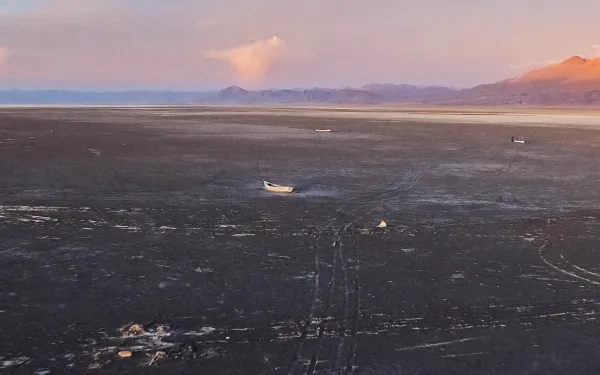
International technical assistance is consolidated to recover Uru Uru and Poopó lakes
At the request of organizations and communities, experts from the Ramsar Convention Secretariat will evaluate the degradation of the lakes and then issue technical recommendations for their recovery. Oruro, Bolivia. From October 11 to 15, a team of experts from the Ramsar Convention Secretariat will visit the Uru Uru and Poopó lakes, located in the central-eastern part of the Bolivian altiplano, to conduct a technical analysis of their degradation and then provide concrete recommendations to the Bolivian State for the recovery of the ecosystems. In July 2019—as part of the #LagoPoopóEsVida campaign—local communities and environmental, social and women's organizations sent the Ramsar Secretariat information on the state of the lakes and requested technical assistance to assess their health. The Bolivian government then made the formal request to make the visit feasible. "We recognize the political will of national authorities to obtain international support for the environmental crisis facing the lakes, on whose preservation the livelihoods of peasant and indigenous populations depend," said Claudia Velarde, an attorney with the Interamerican Association for Environmental Defense (AIDA). "Ramsar Advisory Missions are an effective tool offering independent and specialized advice geared toward the preservation of wetlands." Poopó is the second largest lake in Bolivia. In 2002, in order to preserve its biodiversity—which includes endemic and migratory birds and the largest number of flamingos in South America—Poopó and Uru Uru were declared a Wetland of International Importance under the Ramsar Convention, an intergovernmental treaty for the protection of these natural environments. "The Uru Uru and Poopó lakes guarantee the recharging of wells and other water sources, regulate the climate, provide habitat for birdlife, food security and sovereignty for surrounding populations, and shelter millenary cultures," said Limbert Sánchez, of the Center for Ecology and Andean Peoples (CEPA). Several factors have led to the catastrophic situation currently facing Lake Poopó, including: mining activities, which have not stopped during the pandemic and permanently generate acidic water and tons of mining waste; the diversion of tributaries like the Mauri River; the fact that the TDSP (Titicaca-Desaguadero-Poopó-Salar Water System) is not guaranteeing water for the entire basin; and the climate crisis. Cumulatively, these situations have damaged the lake and placed the life systems that depend on it at risk. "In December 2015, the water levels of Lake Poopó were completely reduced, one of the biggest environmental catastrophes in the country. Currently, what is left of the water mirror is minimal compared to historical records," corroborated Yasin Peredo, of the Center for Andean Communication and Development (CENDA). In addition to causing serious environmental damage, what’s happening to Lakes Poopó and Uru Uru is a serious violation of surrounding communities’ rights to water, health, territory, food and livelihood. "It’s with great sadness that we witness the disappearing of Lake Poopó, and the risk to our Lake Uru Uru," said Margarita Aquino, coordinator of the National Network of Women Defenders of Mother Earth (RENAMAT). "Mining contamination is stripping us of our water sources and is violating the rights of us women and our communities." Indigenous Aymara and Quechua communities depend on the health of these ecosystems, as do the Uru Murato, one of Bolivia's oldest native nations. The members of this millenary culture once lived from fishing, but the contamination of Poopó and its scarce water supply has forced them to migrate in search of other ways to survive. Don Pablo Flores, a native authority of the Uru de Puñaca community explains: "In August, authorities arrived and with them we went to the lake and found that there is no more water; the Panza Island sector is also dry. As Urus, how are we living? Before we used to go for parihuanas [Andean flamingos], but not now. In February they used to lay eggs and change their feathers. This year there are none. The flamingos are dead. The lake does not exist now. The three Uru communities are suffering; we used to live from hunting and fishing. We ask the municipal, departmental and national authorities for more attention because, so far, practically nothing has been done to save, protect and recover our lake Poopó." By including the Uru Uru and Poopó lakes as a Ramsar site, the Bolivian State committed itself to conserving the ecological characteristics of these wetlands. In this sense, the visit from the mission of experts is a key opportunity to obtain objective and specialized recommendations aimed at fulfilling this commitment. "Environmental organizations, communities and the people of Bolivia are awaiting the visit of the Ramsar Mission. We believe that the current situation of the ecosystem must be taken into account, but also the factors that continue to influence its degradation. As long as strategies to combat climate change are not adopted, mining pollution is not stopped, and the amount of water needed for the entire TDPS is not guaranteed, the critical situation of our Uru Uru and Poopó lakes cannot be reversed," said Ángela Cuenca, coordinator of the CASA Collective. PRESS CONTACTS: Victor Quintanilla (MExico), AIDA, [email protected], +5215570522107 Angela Cuenca (Bolivia), Colectivo CASA, [email protected], +59172485221 Limbert Sanchez (Bolivia), CEPA, [email protected], +59172476802 Sergio Vasquez Rojas (Bolivia), CENDA, [email protected], +59172734594
Read more