
Project
Alberto Peña Kay
Protecting the Santurban páramo from mining's damage
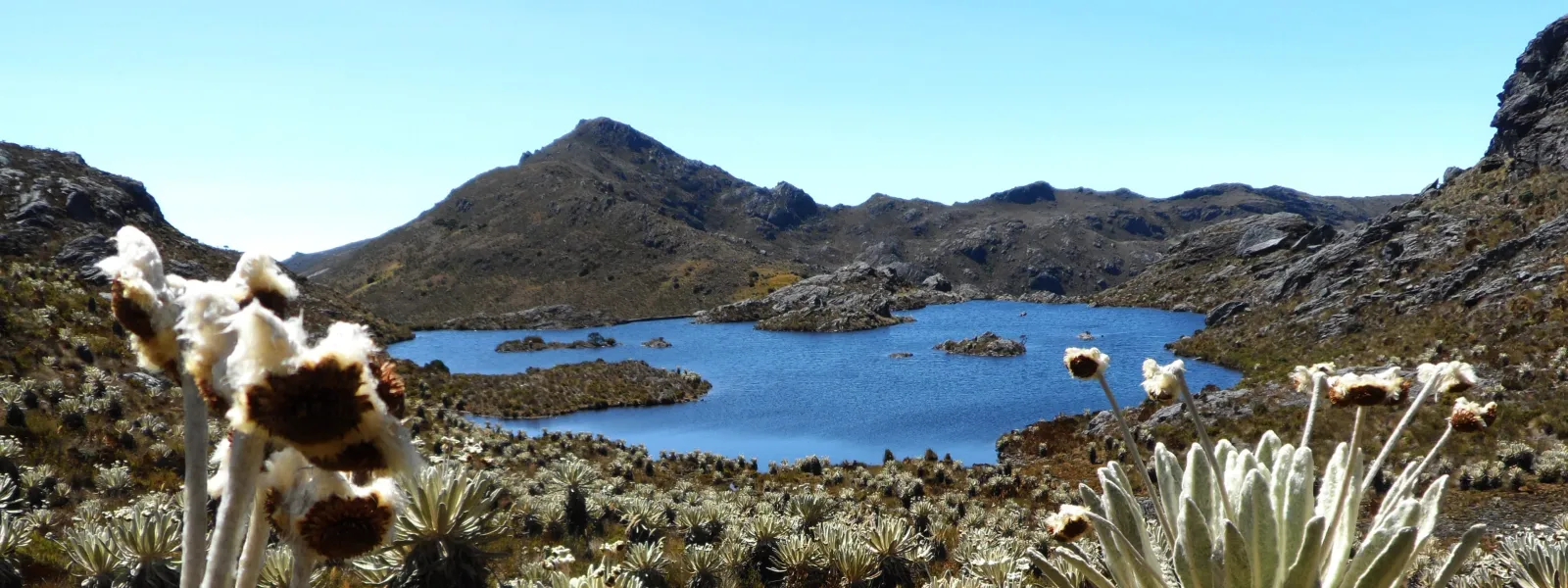
In the Andean region, high-mountain ecosystems known as páramos capture water from the fog and supply it to the lowlands. One such ecosystem is the Santurbán páramo, which provides fresh water to more than two million people in Colombia.
Santurbán, like the other páramos on the continent, also captures large amounts of carbon, making it a key ally in mitigating the climate crisis. It is also a refuge for hundreds of endangered species, including the iconic spectacled bear.
The land in and around the páramo contains gold and other minerals. This has put Santurbán in the spotlight of the multinational mining industry, which for decades has sought to establish large-scale projects in the ecosystem that threaten to degrade it.
The Committee for the Defense of Water and the Santurbán Páramo—a coalition of environmental advocates—has thwarted these ongoing attempts, with support from AIDA and other civil society organizations.
Background
The Santurbán páramo is located in the heart of the Eastern Cordillera of the Colombian Andes, in the departments of Santander and Norte de Santander, at an elevation ranging from 2,200 to 4,290 meters above sea level.
It covers an area of 129,743 hectares and is home to 57 lakes. It serves as a habitat for 457 plant species and 293 species of vertebrate fauna.
There are mineral deposits in Santurbán, primarily gold, but also silver and copper. This explains the region’s mining tradition, particularly in the part of the páramo located in Santander, in the province of Soto Norte. The communities in the area have built their culture and identity around gold mining, which is mainly artisanal and small-scale.
But since the 1990s, the gold deposits in the páramo have also attracted foreign mining conglomerates seeking to develop large-scale projects. This has raised concerns among the population that relies on the Santurbán water sources, who have mobilized in defense of water, their land, and life.
Although national and international regulations prohibit mining in páramos, the Colombian government has granted mining concessions to transnational corporations in Santurbán.

Photo: Keishpixl / Pixabay.
The long struggle to protect the páramo
One of the companies that sought to develop large-scale mining in Santurbán is Eco Oro Minerals Corp.—formerly Greystar Resources—a Canadian company that intended to establish the Angostura open-pit mine there to extract gold and silver. Between 1994 and 1995, the company acquired its mining titles and conducted exploration. And in 2010, it applied for a mining permit.
That was the year AIDA became involved in defending the ecosystem, supporting the Committee for the Defense of Water and the Santurbán Páramo. Our legal work helped convince the Colombian government to deny the mine an environmental permit in May 2011.
In January 2013, the government designated a portion of the páramo (11,700 hectares) as a Regional Natural Park. That year—together with the committee and partner organizations—we carried out a campaign and advocacy efforts to urge the government to recognize the entire Santurbán area as a páramo ecosystem through a delimitation based on scientific criteria. In December 2014, the Ministry of the Environment established a delimitation that protected 76% of the páramo (98,954 hectares).
Furthermore, as a result of a litigation supported by AIDA, in February 2016, Colombia’s highest court reaffirmed that mining in páramos is prohibited.
That same year, in December, the International Finance Corporation (IFC), the World Bank Group’s private sector arm, decided to divest from Eco Oro Minerals. This achievement was the result of a process that began in 2012, when the committee—advised and supported by AIDA and international partner organizations—filed a complaint before an independent accountability mechanism, which concluded that the IFC’s investment in the Angostura project failed to take into account the project’s social and environmental impacts, thereby contradicting the financial institution’s internal policies.
Also in 2016, Eco Oro Minerals filed an arbitration claim against the Colombian government with the International Centre for Settlement of Investment Disputes (ICSID), arguing that it had been adversely affected by government decisions aimed at protecting the country’s páramos, including the delimitation of Santurbán.
In 2017, the Constitutional Court invalidated the delimitation because the affected communities were not consulted. The high court ordered that a participatory delimitation be carried out.
And that year, a new threat to Santurbán emerged when the Canadian multinational Aris Mining applied for an environmental permit for Soto Norte, a gold mining project located near the páramo. Following citizen protests and technical objections, in October 2020, the National Environmental Licensing Authority shelved the project.
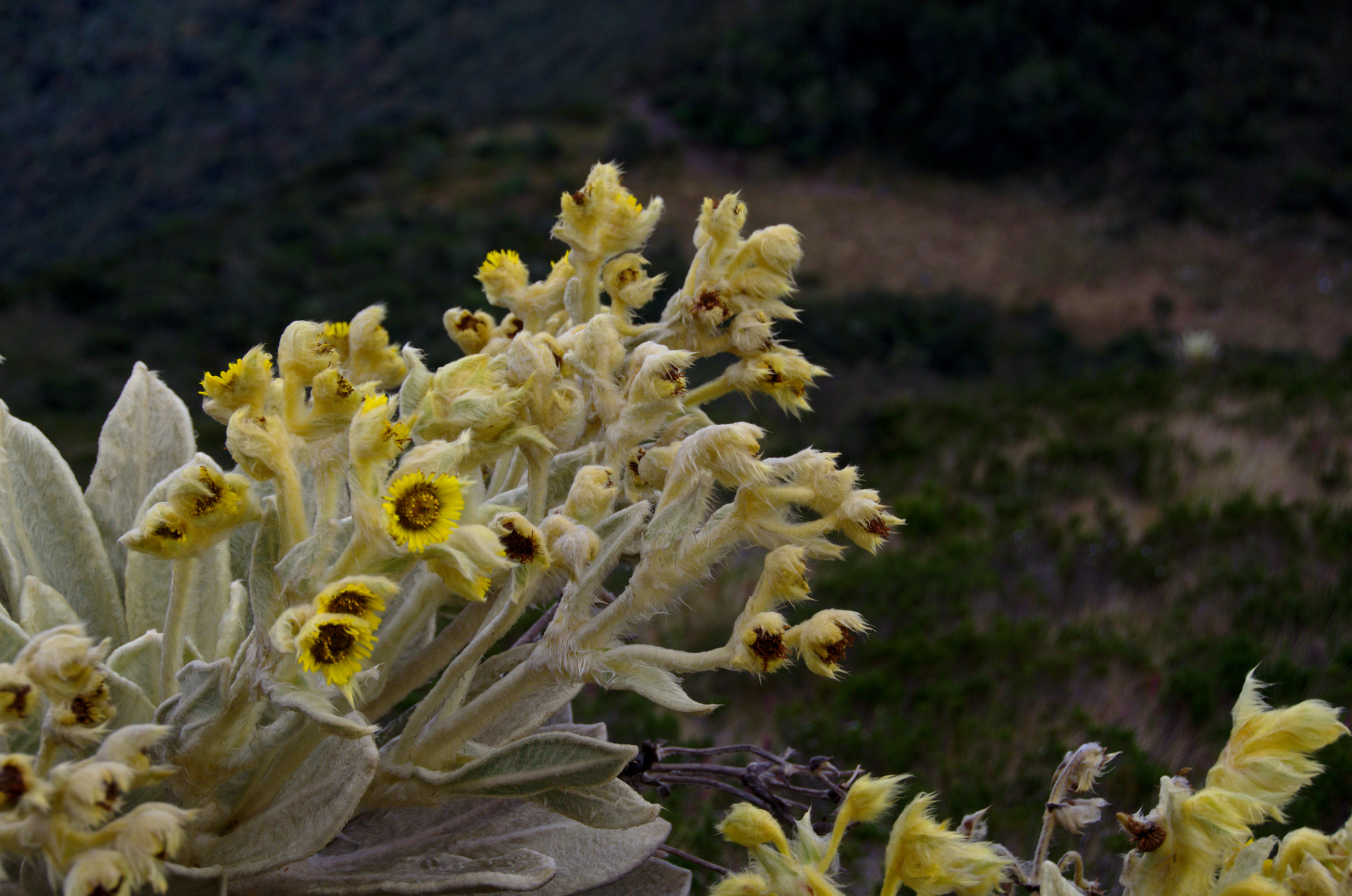
Photo: Aztlec.
Current situation
In March 2025, the Colombian government designated the western flank of the Santurbán massif as a temporary renewable natural resource reserve area, delimiting and protecting an area of 75,344.65 hectares. This resulted in a two-year suspension of the Soto Norte project. However, Aris Mining's contract to formalize Calimineros' small-scale mining activities through the purchase and processing of mineralized material remains in effect.
In addition, the Canadian mining company continues to move the project forward. In September 2025, it released its prefeasibility study, revising the mine’s original design.
Meanwhile, members of the Committee for the Defense of Water and the Santurbán Páramo face threats and stigmatization because of their work. In March 2025, UN Special Rapporteurs and the Working Group on Business and Human Rights denounced these incidents in communications sent to the governments of Colombia, Canada, and the United Arab Emirates, as well as to the companies Aris Mining and MDC Industry Holding Company LLC, the former co-owner of the Soto Norte project.
Regarding the arbitration claim filed by Eco Oro Minerals, in July 2024, ICSID ruled in favor of the Colombian government and rejected the Canadian company’s claim for USD 1.1 billion in compensation.
Concerning the delimitation of Santurbán, in July 2026, the Ministry of the Environment issued a resolution introducing the concept of "progressive delimitation." On that basis, the government proposes to progressively demarcate the páramo, covering 29,199 hectares across 19 municipalities—those where the participatory agreements required by the Constitutional Court in its 2017 ruling have already been finalized. It also proposes two measures on the creation and expansion of reserves to restrict mining in the ecosystem.
Learn more about the impacts of mining on the páramos of Latin America (in Spanish).
Partners:
Related projects

Reaction: IUCN Congress votes yes to a moratorium on deep-sea mining
Marseille, France - A motion calling for a moratorium on deep-sea mining was adopted with overwhelming support by the IUCN World Conservation Congress today. Among government and government agencies 81 voted for the moratorium with 18 against and 28 abstentions. Among NGOs and civil society organization the vote was 577 for, 32 against and 35 abstentions, sending a strong message to governments that there is global opposition to deep-sea mining. “We are very pleased to see so many governments, agencies and NGOs voting for a moratorium on deep-sea mining; the support has been overwhelming” said Matthew Gianni Co-Founder of the Deep Sea Conservation Coalition (DSCC). “Member countries of the ISA, including France which hosted this Congress, need to wake up and act on behalf of civil society and the environment now, and take action in support of a moratorium”. Scientists have warned that deep-sea mining will cause large-scale, irreversible biodiversity loss and ecosystem degradation if permitted to occur, particularly in the international areas of the world’s ocean. The International Seabed Authority (ISA), a multilateral regulatory body established under the UN Convention on the Law of the Sea in 1994, is debating whether to begin licensing commercial deep-sea mining in as little as two years. 167 countries plus the EU are members of the ISA. The German Environment Ministry, the government of Fiji and many other government agencies voted to support motion 069. Nauru has triggered a so-called Two Year rule at the ISA which it expects will result in the Authority issuing a commercial license to mine. 47 African countries have challenged the trigger and Sian Owen, Director of the DSCC says: "Hopefully the vote in Marseille will translate into a vote at the ISA to adopt a moratorium on deep sea mining." Motion 069 - Protection of deep-ocean ecosystems and biodiversity through a moratorium on seabed mining was sponsored by Fauna and Flora International and co-sponsored by Fundación MarViva (Costa Rica), Natural Resources Defense Council (USA), Sylvia Earle Alliance/Mission Blue (USA), Synchronicity Earth (UK), Wildlands Conservation Trust (South Africa), World Wide Fund for Nature – International. For further information Matthew Gianni, IUCN, 31 646 168 899 Sian Owen, IUCN, 31 648 502 659 Patricia Roy, 34 696 905 907
Read more
Climate change: are you part of the problem or part of the solution?
Last week, the IPCC published the first part of its sixth assessment on the global state of climate change (AR6), reflecting the latest scientific information. The existence and assessment of damage to the planet is not entirely new information for those of us who have been working in this field for decades. What’s new is the level of scientific certainty, the magnitude and scale of climate impacts, and the projections for our future. In short, the global situation today is worse than previously believed. As an attorney working for climate justice, the report is very disturbing, even frustrating. As a mom, it is devastating. I want the best for my children. Yet, despite having no responsibility for the climate disaster, their future will be determined by it and by the impacts that my generation, and previous ones, left them. This reality is shared by all children, as well as by millions of people and communities in the most vulnerable situations, who suffer the worst consequences of the climate crisis without having caused it. Faced with this bleak scenario, we can succumb to fear and depression, and be indifferent; or we can act. I choose to act. I decided to write this last column as co-executive director of AIDA, where I’ve had the honor of working for 18 years. I will highlight the most important findings of the IPCC, and explain the importance of differentiating responsibility for the climate crisis in order to move towards effective solutions. I consider these elements essential to crafting a complete picture of climate solutions. I invite you to renounce indifference and the (understandable) feeling of helplessness, defeat or frustration; and replace it instead with collective and effective action. Words matter, even in science. The IPCC report is blunt in concluding for the first time that it is "unequivocal" that the atmosphere, ocean and land have been affected by human influence. This was established by hundreds of scientists from around the world. Unequivocal means that there is no doubt, that something is incontrovertible, that it is unambiguous. Although it sounds obvious, it’s relevant to emphasize because, very recently, I heard presidents of countries responsible for the greatest emissions deny the existence or seriousness of the climate crisis. Such denial has cost us decades of progress. The IPCC also concluded that the temperature of the planet has increased, that "each of the last four decades has been successively warmer than any decade that has preceded it since 1850," and that the negative impacts on our planet are real, current and will become increasingly intense as temperatures and greenhouse gas (GHG) emissions continue to rise. The impacts suffered in Latin America and the Caribbean have cost us thousands of human lives, millions in losses, and displaced several thousand people, whose vulnerability is increasing. Yet the region continues to increasingly rely on fossil fuels, deforestation remains uncontrolled, and cities, where 80 percent of the population lives, are growing without planning and with severe air pollution. The IPCC identified the problem in cities as one of fundamental concern because the reduction of greenhouse gases and short-lived climate pollutants (SLCPs) could both help the climate and improve air quality (and, with it, public health). RESPONSIBILITY AND ACTION TOWARDS CLIMATE SOLUTIONS Solutions exist, but to implement them it is essential to understand the cause and magnitude of the climate crisis. This is the role and importance of the IPCC. On the other hand, it’s necessary to understand the source of emissions as well as those responsible for them, since not all people, entities and countries are equally responsible for this crisis. It is precisely the lack of climate responsibility that is one of the greatest challenges to finding solutions today. On the one hand, there are the governments, which despite international commitments like the Paris Agreement, have not yet translated them into ambitious and effective action. For example, governmental targets for Nationally Determined Contributions (NDC) remain far from the needed commitments. In fact, no country in Latin America has an NDC of the required level of ambition and effectiveness. On the other hand, there are companies that fail to acknowledge their responsibility, supported governments and an international community thus fair incapable of demanding they do so. This is essential not only because of ethical issues, but also de facto ones. According to scientific research, just 90 corporate entities are responsible for 63 percent of the global carbon dioxide and methane emissions from 1751 to 2010. And then, there is individual responsibility. According to the United Nations, the richest 1 percent of the population generates more than twice as many emissions as the poorest 50 percent. The inequality is evident: those who are least responsible for the climate crisis are those who are experiencing its impacts the most, as the UN has concluded in multiple reports. This lack of action has led affected communities, people and organizations to seek solutions through strategic litigation. With the intervention of the courts, there have been landmark climate decisions out of the Netherlands, Colombia and Pakistan, among others. This is what it means to see climate justice as a starting point to solving the climate crisis. Climate justice implies looking beyond the reduction of tons of CO2 other GHGs, and the beyond conservation of millions of hectares of forest. Climate justice is the search for comprehensive solutions—incorporating the perspective of human rights and the environment; putting people and communities at the center, with participatory and inclusive processes, and a gender perspective; seeking for those who have caused this crisis, emitting for decades, to assume their historical responsibility; and so that those who are suffering the most from the impacts, be compensated. This is the backbone of our work at AIDA, which we promote together with dozens of communities and organizations in Latin America, in coordination with colleagues from the Global South and the Global North. Today, the scientific evidence and the level of urgency demand that we finally change course to avoid a major debacle. It’s our decision, as a society, to either continue business as usual, ignoring the IPCC, or to finally pay attention and act comprehensively towards the climate justice that the planet requires of us. We have the information, the tools and the call of urgency. I am confident that we can make it happen and we will continue to work towards solutions. Each person, company and State can join in and decide to be part of the solution. Otherwise, they will continue to be part of the problem.
Read more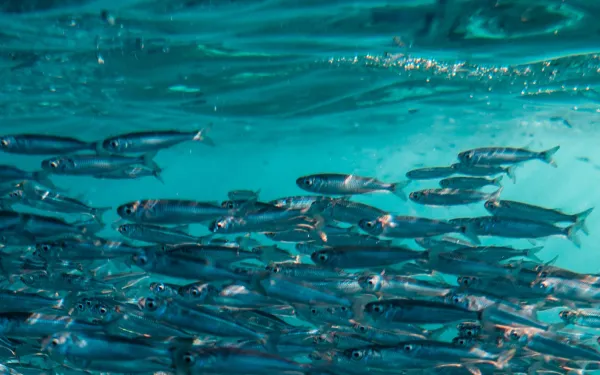
Our responsibility in the conservation of fisheries resources
It’s increasingly common to hear people say that they identify themselves as flexitarian, or semi-vegetarian. Being flexitarian means a person eats mostly a vegetarian diet, but occasionally consumes animal products like meat, poultry, seafood and fish. There are also pescetarians, or pesco-vegetarians, who only consume different varieties of fish and seafood As with any consumption habit, it is important to reflect on its environmental impact. While the current pattern of meat consumption is not sustainable, largely due to its impacts on the climate, the situation for fish consumption is no more encouraging. According to the biennial report of the Food and Agriculture Organization (FAO), for more than 60 years global fish consumption has increased at a rate considerably higher than the growth of the world population. In addition, it is estimated that more than 30 percent of the world's fish stocks are overexploited and 60 percent are overfished. The continued increase in overfishing has consequences not only for biodiversity and ecosystem functioning, but also causes a decrease in fish production, with negative economic and social repercussions. Why fish consumption is increasing There are many reasons why people change their eating habits. They are often linked to health, weight and ethical considerations that reflect an ideology of respect for animals and environmental sustainability related to the reduction of red meat consumption. In recent years, fish-rich diets have been strongly promoted, mainly for their nutritional benefits. The nutritional content of fish varies according to factors such as species, age, environment, diet and even the time of capture. However, in general terms, fish are characterized by being sources of vitamins and proteins with high biological value. Oily or fatty fish—among them salmon, sardines and tuna—are usually exceptionally rich in Omega-3 and in minerals such as potassium, magnesium and phosphorus. Nutritionally, it’s advisable to consume them two to three times a week since rational consumption of fish helps regulate blood pressure, and reduce coronary risk and triglyceride levels. Although it’s necessary to eat in a healthy and balanced way to have a full life, it is also crucial to take into account the origin of the food we consume and to question where it comes from, and under what conditions it was caught or processed. An example of the relevance of answering these questions is the case of salmon, whose nutritional value lies in wild species and not in farm-raised ones, which are fed with an excessive amount of antibiotics. Overfishing, incentives and consequences According to the FAO, about 90 percent of marine fish stocks worldwide are fully exploited, overfished or depleted. Negative fisheries subsidies account for much of this problem. By increasing fishing capacity, these subsidies provide short-term benefits, but threaten the long-term sustainability of ecosystems and coastal communities. Worldwide, negative subsidies represent an investment of $22 billion each year. The most widely used are those for the purchase of fuel and the modernization of vessels to increase catches. Ecologically, these incentives reduce fish stocks and hinder their recovery. They destroy marine habitats and exacerbate overfishing. Given that nearly 60 million people work directly in the world's fisheries, it is vital that fish stocks be allowed to regenerate properly, thus ensuring the continued livelihoods of fishing communities. The responsible use of fishery and aquaculture resources must be recognized as a priority for global food security and nutrition, as well as for local development opportunities. The promotion and adoption of responsible fishing practices, from catch to consumption, is a joint effort in which consumers play a fundamental role. How to eat fish responsibly Sustainable fishing allows fish stocks to reproduce adequately and continuously, keeping them healthy and productive. While this task necessitates the active involvement of the fishing sector and government authorities, as consumers we also have a responsibility to promote sustainability through our purchasing decisions. Here are some simple tips fish eaters can implement in their daily lives: Verify the origin and size of the fish or seafood: Learn aspects such as the origin and method of capture, in addition to the size of the piece, which determines whether it reached sufficient maturity. Diversify consumption habits: Consume fish and seafood according to seasonality, a phenomenon related to the times of reproduction and movement of species, which are highly dependent on characteristics such as water temperature. Consuming seasonal fish and seafood allows for proper reproduction and recovery of species, ensuring greater balance and helping to avoid overfishing. Buy from authorized sites: Know if the place of sale actually complies with sustainability and traceability criteria for the products it sells. Traceability is the set of measures and procedures that make it possible to follow the trail of a fishery product from its capture to its final sale. Check labels: Where possible, choose products with certifications in sustainable fishing and marketing practices, such as the MSC (Marine Stewardship Council) seal or the Environmental Responsibility Standard for Fish Marketing, granted by Marviva in Costa Rica, Panama and Colombia. If we as a society allow for the gradual recovery of our ocean, we will be making a positive contribution to food security, the economy, the wellbeing of coastal communities, and future generations.
Read more