
Project
Alberto Peña Kay
Protecting the Santurban páramo from mining's damage
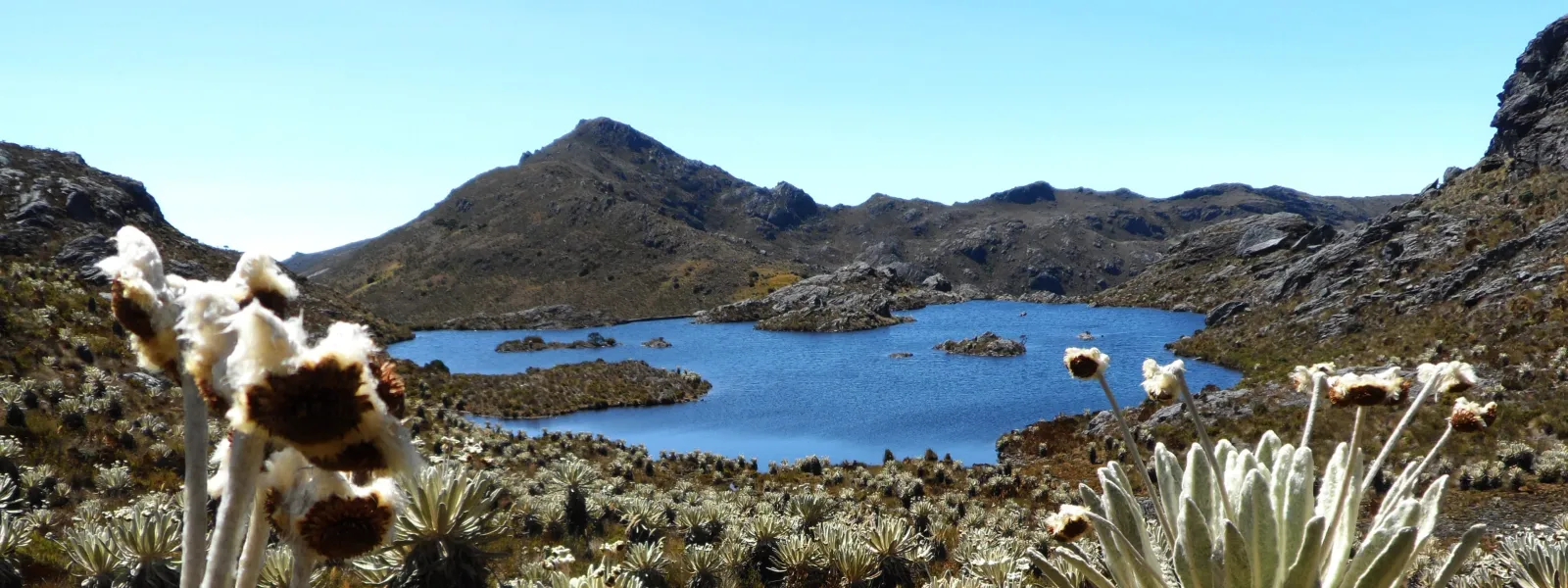
In the Andean region, high-mountain ecosystems known as páramos capture water from the fog and supply it to the lowlands. One such ecosystem is the Santurbán páramo, which provides fresh water to more than two million people in Colombia.
Santurbán, like the other páramos on the continent, also captures large amounts of carbon, making it a key ally in mitigating the climate crisis. It is also a refuge for hundreds of endangered species, including the iconic spectacled bear.
The land in and around the páramo contains gold and other minerals. This has put Santurbán in the spotlight of the multinational mining industry, which for decades has sought to establish large-scale projects in the ecosystem that threaten to degrade it.
The Committee for the Defense of Water and the Santurbán Páramo—a coalition of environmental advocates—has thwarted these ongoing attempts, with support from AIDA and other civil society organizations.
Background
The Santurbán páramo is located in the heart of the Eastern Cordillera of the Colombian Andes, in the departments of Santander and Norte de Santander, at an elevation ranging from 2,200 to 4,290 meters above sea level.
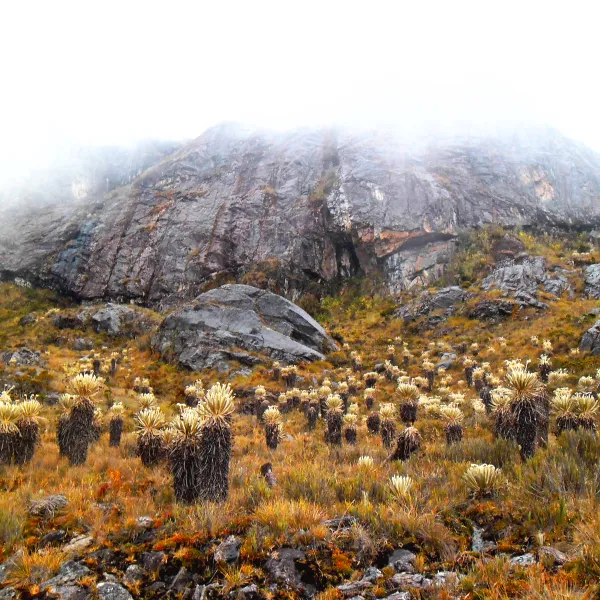
It covers an area of 129,743 hectares and is home to 57 lakes. It serves as a habitat for 457 plant species and 293 species of vertebrate fauna.
There are mineral deposits in Santurbán, primarily gold, but also silver and copper. This explains the region’s mining tradition, particularly in the part of the páramo located in Santander, in the province of Soto Norte. The communities in the area have built their culture and identity around gold mining, which is mainly artisanal and small-scale.
But since the 1990s, the gold deposits in the páramo have also attracted foreign mining conglomerates seeking to develop large-scale projects. This has raised concerns among the population that relies on the Santurbán water sources, who have mobilized in defense of water, their land, and life.
Although national and international regulations prohibit mining in páramos, the Colombian government has granted mining concessions to transnational corporations in Santurbán.

Photo: Keishpixl / Pixabay.
The long struggle to protect the páramo
One of the companies that sought to develop large-scale mining in Santurbán is Eco Oro Minerals Corp.—formerly Greystar Resources—a Canadian company that intended to establish the Angostura open-pit mine there to extract gold and silver. Between 1994 and 1995, the company acquired its mining titles and conducted exploration. And in 2010, it applied for a mining permit.
That was the year AIDA became involved in defending the ecosystem, supporting the Committee for the Defense of Water and the Santurbán Páramo. Our legal work helped convince the Colombian government to deny the mine an environmental permit in May 2011.
In January 2013, the government designated a portion of the páramo (11,700 hectares) as a Regional Natural Park. That year—together with the committee and partner organizations—we carried out a campaign and advocacy efforts to urge the government to recognize the entire Santurbán area as a páramo ecosystem through a delimitation based on scientific criteria. In December 2014, the Ministry of the Environment established a delimitation that protected 76% of the páramo (98,954 hectares).
Furthermore, as a result of a litigation supported by AIDA, in February 2016, Colombia’s highest court reaffirmed that mining in páramos is prohibited.
That same year, in December, the International Finance Corporation (IFC), the World Bank Group’s private sector arm, decided to divest from Eco Oro Minerals. This achievement was the result of a process that began in 2012, when the committee—advised and supported by AIDA and international partner organizations—filed a complaint before an independent accountability mechanism, which concluded that the IFC’s investment in the Angostura project failed to take into account the project’s social and environmental impacts, thereby contradicting the financial institution’s internal policies.
Also in 2016, Eco Oro Minerals filed an arbitration claim against the Colombian government with the International Centre for Settlement of Investment Disputes (ICSID), arguing that it had been adversely affected by government decisions aimed at protecting the country’s páramos, including the delimitation of Santurbán.
In 2017, the Constitutional Court invalidated the delimitation because the affected communities were not consulted. The high court ordered that a participatory delimitation be carried out.
And that year, a new threat to Santurbán emerged when the Canadian multinational Aris Mining applied for an environmental permit for Soto Norte, a gold mining project located near the páramo. Following citizen protests and technical objections, in October 2020, the National Environmental Licensing Authority shelved the project.
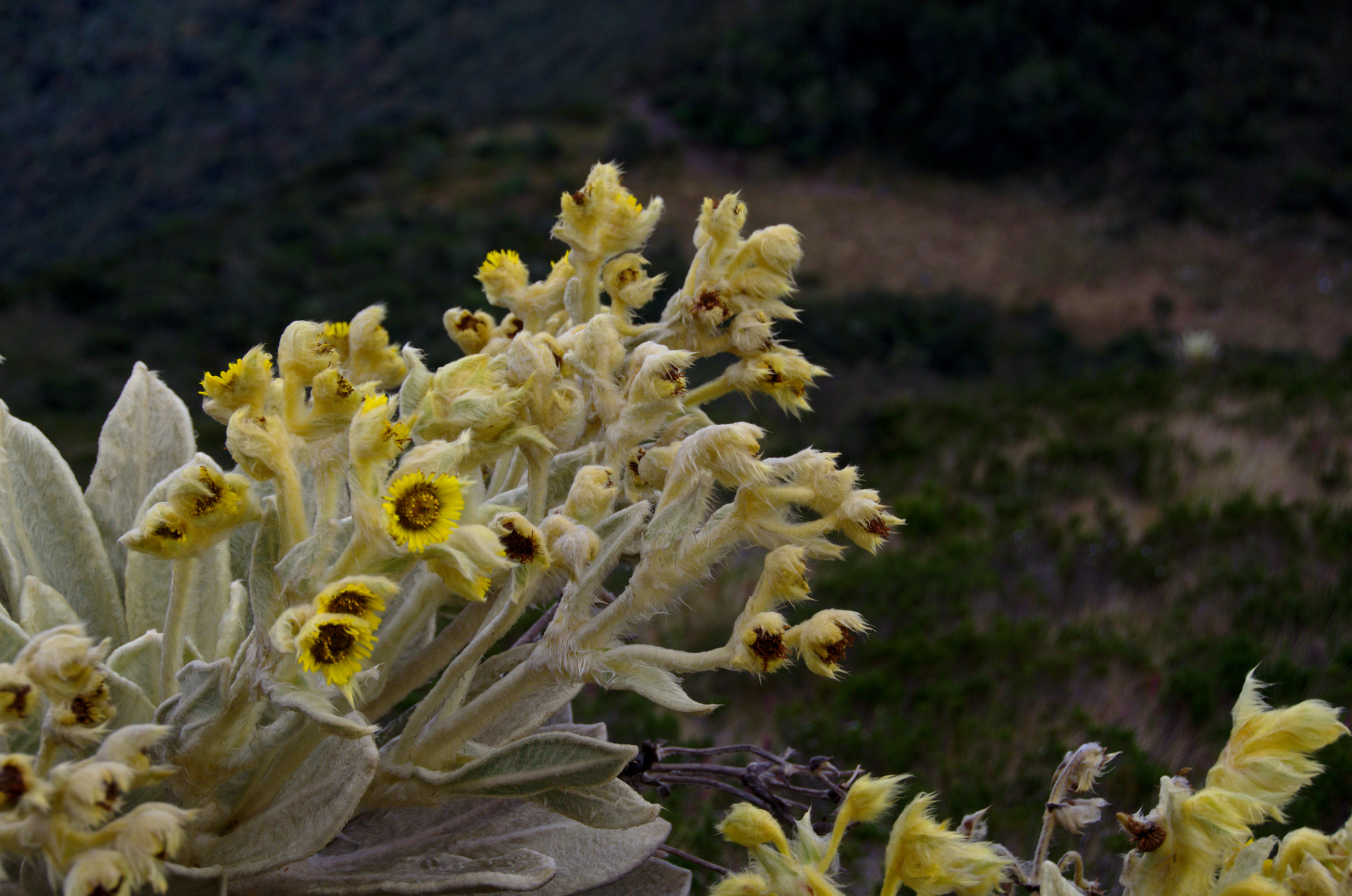
Photo: Aztlec.
Current situation
In March 2025, the Colombian government designated the western flank of the Santurbán massif as a temporary renewable natural resource reserve area, delimiting and protecting an area of 75,344.65 hectares. This resulted in a two-year suspension of the Soto Norte project. However, Aris Mining's contract to formalize Calimineros' small-scale mining activities through the purchase and processing of mineralized material remains in effect.
In addition, the Canadian mining company continues to move the project forward. In September 2025, it released its prefeasibility study, revising the mine’s original design.
Meanwhile, members of the Committee for the Defense of Water and the Santurbán Páramo face threats and stigmatization because of their work. In March 2025, UN Special Rapporteurs and the Working Group on Business and Human Rights denounced these incidents in communications sent to the governments of Colombia, Canada, and the United Arab Emirates, as well as to the companies Aris Mining and MDC Industry Holding Company LLC, the former co-owner of the Soto Norte project.
Regarding the arbitration claim filed by Eco Oro Minerals, in July 2024, ICSID ruled in favor of the Colombian government and rejected the Canadian company’s claim for USD 1.1 billion in compensation.
Concerning the delimitation of Santurbán, in July 2026, the Ministry of the Environment issued a resolution introducing the concept of "progressive delimitation." On that basis, the government proposes to progressively demarcate the páramo, covering 29,199 hectares across 19 municipalities—those where the participatory agreements required by the Constitutional Court in its 2017 ruling have already been finalized. It also proposes two measures on the creation and expansion of reserves to restrict mining in the ecosystem.
Learn more about the impacts of mining on the páramos of Latin America (in Spanish).
Partners:
Related projects
¡Gracias totales!
I’m ending an era of 18 great years at AIDA, my second home. Words are not enough to describe how grateful, proud and happy I feel as I take stock of the achievements, progress and lessons learned. I treasure the wonder of meeting and sharing this journey with so many people in every corner of our Americas and beyond; the blessing of traveling rivers, mountains and territories and learning with and from each and every person and community. For all of this, I can only say: ¡Gracias totales! This has been the work of my dreams and the great honor of my life: to be able to build and lead this organization, alongside great people, building community from our female leadership, contributing throughout the continent to the protection of territories, rights and the environment. I am deeply grateful for the company, support, mentorship, inspiration, and sisterhood of Anna Cederstav, with whom I shared the dream and leadership of AIDA during this time, and who will continue in the organization supporting the new executive leadership. It is impossible to imagine a better co-director. Infinite thanks also to the Board of Directors for their trust and continued support. It is great to know that the organization has your back to ensure its growth and transcendence in these times of change. To each of the people of my current team and of all these years, words cannot express my admiration and deep gratitude for their invaluable commitment, professionalism, love and dedication. The results achieved are thanks to you all. It is very gratifying to have contributed to important advances in the region, including making visible and supporting the fights for justice in La Oroya, Peru, and in the Xingu River basin in Brazil; helping to protect the San Pedro Mezquital and Papagayo rivers in Mexico, the páramos in Colombia, the corals and mangroves on our coasts; conserving turtle nesting areas such as Las Baulas in Costa Rica; helping improve the Constitution in Mexico; helping include human rights in climate agreements and improving standards to protect rivers and mangroves; helping improve the safeguards of some international financial institutions; and contributing to the advancement of jurisprudence in the Inter-American System, including the recognition that climate change impacts human rights. It has been even more gratifying to have achieved all this together with great people both in our team and in various organizations, networks, communities and national and international entities. Today especially, and in view of the climate crisis and the reality of our region, it is essential to continue advancing in the collective work with and from the territories, motivating the diversity of knowledge and seriously including the perspective of women, youth and communities to reach the solutions that have so far proved elusive. This has all been a learning experience, because each achievement has been the result of close coordination, and of the diverse and complementary contribution of multiple visions. I am confident that this perspective will continue to be strengthened in order to make further progress towards finding solutions for our collective challenges. The magnitude of the climate and biodiversity crisis, the imperative need for a transformative recovery, and effective protection of human rights defenders, the environment and territory are three priorities that require our best efforts and impact. It is comforting to know that we have helped strengthen and build a great regional and global community with whom we share the goal of advancing the outcomes that people, communities, nature, and our societies and countries so desperately need. It is one of my greatest rewards after so many years of work. For all these reasons, and given that the only constant in life is change, the time has come to give free rein to new leadership. This decision has been difficult because this has been my home for so long. I first heard about AIDA in July 1997, when the organization was still in its infancy and I was studying law and working at Fundepúblico in Colombia. Upon learning of their intention to work on public interest environmental law in and from Latin America, I knew immediately that it was my place. I started as an intern in May 2003 and, a few months later, the Board of Directors hired me as an attorney. My heart did not fit in my chest and the ideas did not stop running through my mind. Today I have the satisfaction of having done my best to make a positive contribution to my region, putting law and science at the service of people, communities and the environment. In the process, I was also able to grow as a lawyer, and a leader, while building my family and becoming a wife and mother. After countless adventures, learning, successes and failures, it is time to embark on other paths and embrace change. I will continue to contribute to the understanding of the climate crisis and especially to identify how we can move towards climate justice with and from a feminist perspective and from the South, of course. We will continue to share this path towards climate and environmental justice, which is also social. I reiterate my deepest gratitude for so many lessons learned, opportunities and achievements. I am confident that AIDA is in the best hands and ready to move on to an exciting new stage.
Read more
The IPCC's Sixth Report: the stark reality we must face with agency and hope
“Adults keep saying: “We owe it to the young people to give them hope.” But I don’t want your hope. I don’t want you to be hopeful. I want you to panic. I want you to feel the fear I feel every day. And then I want you to act”. - Greta Thumberg, addressing the World Economic Forum in January 2019. The Intergovernmental Panel on Climate Change’s (IPCC) Sixth Assessment Report confirmed what we’ve all feared. With more refined scientific evidence than ever before, the report warns that climate change is intensifying, affecting all regions of the planet. Humanity's influence on this imbalance is now referred to as "unequivocal." As such, there’s no doubt that it’s our responsibility to confront the problem. Recent and aggressive climate events demonstrate that the world is transitioning from mere warnings to real, apocalyptic experiences. The Panel is not exaggerating. Over the last few months, floods have killed hundreds of people in some of the richest countries on the planet, and fires have ravaged thousands of hectares across the globe. Despite all this, there is still hope! And hope is our main ally in changing course. The report projected five scenarios, from the least to the most ambitious, according to the mitigation measures that humanity could implement. All of them, even the most ambitious, result in exceeding the 1.5 °C average temperature of the planet by 2040. Despite the starkness of that forecast, the report also shows that, by taking aggressive action to reduce greenhouse gas emissions, we could stabilize the increase at 1.4°C by 2100. The battle is not over, let alone lost. The most important consequences of this planetary imbalance are still uncertain and are being played out in the field. So what’s next? Drastic reductions of greenhouse gases will only be possible with systemic changes at the government and corporate levels. We also need to adjust our narratives so as to not fall into defeatism and hopelessness, because there is no scientific evidence to support surrender. Nor should we allow the environmental movement to become divided; we must be alert to the campaigns of fear and diversion practiced by our opponents. Hopelessness, defeatism and the division of our voices are precisely the winning cards of those who resist change. Given the global context, what follows are some necessary and urgent actions that will allow us to advance toward the future we need: Aiming for a rapid and just energy transition that respects human rights and includes a gender focus; as well as a new type of development that does not bulldoze nature, but cherishes and respects it. These changes should not produce fear. The technology to generate energy with minimal emissions and environmental impacts exists, is proven, and has greater potential to create jobs than the fossil fuel industry. A world powered by clean, renewable energy is a fairer, greener world. Holding the industries and companies that drive our economy accountable for what their activities leave behind. The subsidy nature has paid in the name of economic development has already exceeded what is reasonable. Projects that impact the environment, that attack the balance of nature, are no longer viable. The institutional framework and the principles of national and international law that protect the environment and human rights are on our side. We must interpret and use them for what they are: sources of binding and obligatory law. Ensuring the protection of natural sites that have not yet been disturbed, especially those of high environmental value. Nature has the capacity to regenerate and heal itself, but we must give it a chance. Indigenous and traditional peoples, guardians of their forests and territories, play a key role in this. Advocating for the correct use of climate funds at the international level, ensuring that they work toward climate justice and not false solutions that do more harm than the disease itself. National and international financial institutions move huge amounts of money each year to address climate change. Funds for mitigation and adaptation are available and projects to be financed must comply with environmental and social safeguards. The monetary cost of not acting or not acting enough is much higher than the cost of taking immediate, effective and decisive action. Being strategic and relying on science to take advantage of every mitigation opportunity. One example is the reduction of short-lived climate pollutants, which were specifically addressed in the recent IPCC report. These pollutants have historically lacked the attention they deserve, despite the incredible opportunity their mitigation implies. One of them is methane, whose presence in the environment is at an all-time high. Methane—the sources of which include coal mining, fracking, large dam reservoirs and intensive livestock farming—has 67 times more power than carbon dioxide (CO2) to warm the planet over a 20-year period, and its emissions cause almost 25% of that warming. Reducing these pollutants also means improving air quality in cities across the global. Achieving ambitious results in international negotiations and honoring the treaties that protect the planet, taking advantage of the strength we have when we act in coordination. It’s true that we have been attending UN conferences on climate change for 25 years without managing to reduce emissions, but it’s also true that we have an agreement signed by all member states that is binding and that orders each country to do its part to avoid exceeding the dangerous barriers of warming. Let us not dismiss what has been achieved; rather, let’s continue to build on it. We must demand these actions and not settle for less. We must be on alert to vote for leaders who have what it takes to lead us that way. Every small victory, every ton of CO2 that is kept in the ground, every natural space that is preserved, moves us away from the worst effects of this crisis. It's our turn, and nature must come first. We owe it to those who will inhabit this beautiful planet in the near and distant future.
Read more
A Guide for GCF Watch Coordinators
A publication for coordinators of GCF Watch, a civil society initiative from the global South aimed at improving monitoring of the Green Climate Fund (GCF), the world's leading multilateral climate finance institution. DOWNLOAD THE FULL GUIDEBasics of the Green Climate Fund (GCF)The Green Climate Fund (GCF) is the operating entity of the funding mechanism of the United Nations Framework Convention on Climate Change (UNFCCC). As such, it provides funding to developing countries for climate change mitigation and adaptation projects and programs.Read and downloadNational Designated Authorities and Green Climate Fund Focal PointsNational Designated Authorities (NDAs), Government institutions, and Focal Points (FPs) are responsible for all matters related to the Green Climate Fund (GCF) in developing countries. They represent the GCF and serve as a liaison or point of contact between the GCF and developing countries. Read and downloadFunding Proposals before the Green Climate FundProposals for project and program funding can be classified according to several criteria: type of access, public or private, amount of funds requested, and risk category.Read and downloadGuide to Reviewing a Funding Proposal before the Green Climate FundThe GCF Watch will consolidate all observations made by civil society before sending to the GCF Board. Your comments will be part of the message directly delivered to the Board!Read and downloadAccredited Entities before the Green Climate FundThe funding granted by the Green Climate Fund (GCF) is channeled through accredited entities (AEs), which are in charge of managing the resources and implementing the projects and programs. The AEs must ensure that projects and programs comply with GCF safeguards, as well as oversee compliance when implementation is the responsibility of executing entities.Read and downloadThe Independent Redress Mechanism (IRM)The Independent Redress Mechanism (IRM) was created to respond to complaints from individuals, groups or communities who feel that they have been adversely affected by projects or programs financed by the Green Climate Fund (GCF) due to non-compliance with its operational policies and procedures, including its environmental and social safeguards.Read and downloadGCF Watch: A Southern Civil Society-Led InitiativeThe platform aims to improve the monitoring of the operations of the GCF through collaboration between organizations working at the level of the GCF Board and organizations and communities in the region that are close to the territories where projects supported by the entity are implemented.Read and downloadGlossary of useful terms for monitoring the Green Climate FundRead and download
Read more