
Project
Amazon Watch / Maíra Irigaray
The Belo Monte Dam on the Xingu River: 10 years of impacts in the Amazon and the search for reparations
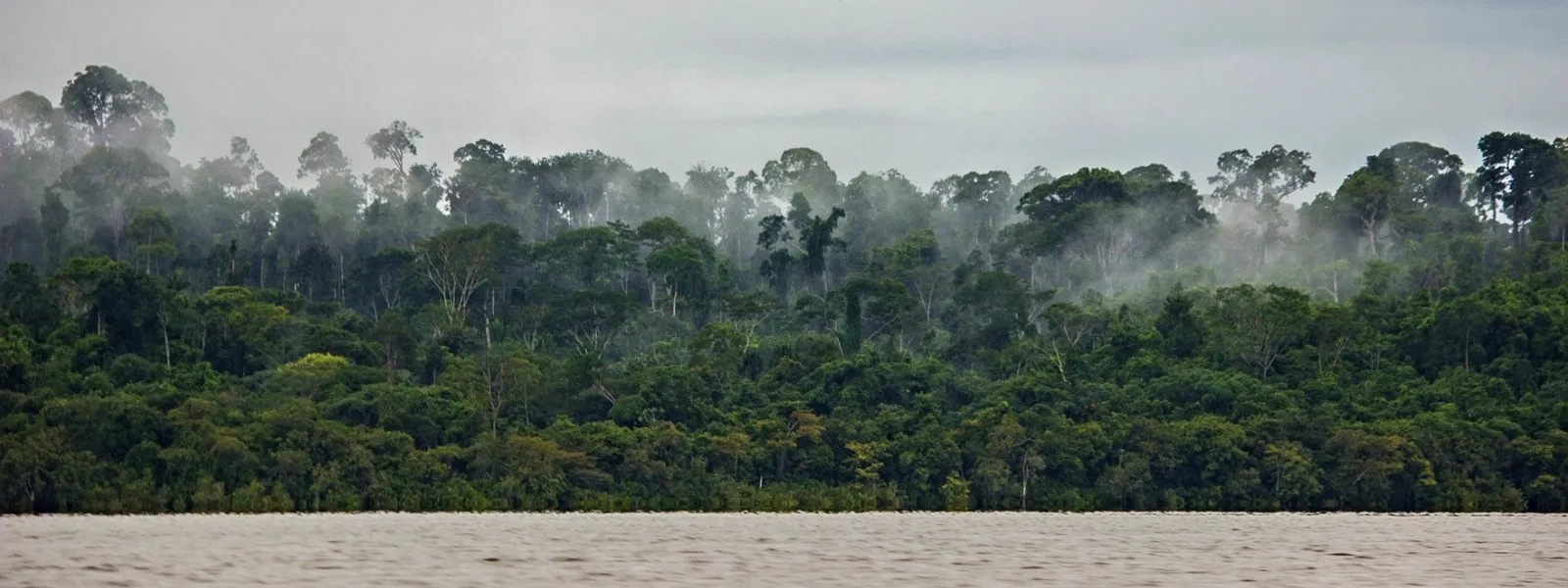
The Belo Monte Dam has caused an environmental and social disaster in the heart of the Amazon—one of the most important ecosystems on the planet.
This situation has only worsened since the hydroelectric plant began operations in 2016. The quest for justice and reparations by the affected indigenous, fishing, and riverine communities continues to this day.
In 2011, the Inter-American Commission on Human Rights (IACHR) granted them protective measures that, to date, have not been fully implemented by the Brazilian State.
Furthermore, since June of that same year, the IACHR has yet to rule on a complaint against the State regarding its international responsibility in the case.
The IACHR may refer the case to the Inter-American Court of Human Rights, which has the authority to issue a ruling condemning the Brazilian State.
After 10 years of the hydroelectric plant's operation and more than 15 years of documented human rights violations, it is time for justice to be served for the affected communities.
Read the open letter from the organizations bringing the case before the IACHR
Background
The Belo Monte hydroelectric plant—the fourth largest in the world by installed capacity (11,233 MW)—was built on the Xingu River in Pará, a state in northern Brazil.
It was inaugurated on May 5, 2016, with a single turbine. At that time, 80% of the river’s course was diverted, flooding 516 km² of land—an area larger than the city of Chicago. Of that area, 400 km² was native forest. The dam began operating at full capacity in November 2019.
Belo Monte was built and is operated by the Norte Energia S.A. consortium, which is composed primarily of state-owned companies. It was financed by the Brazilian Development Bank (BNDES), which provided the consortium with 25.4 billion reais (approximately US$10.16 billion), the largest investment in the bank’s history. Therefore, the BNDES is also legally responsible for the socio-environmental impacts associated with the hydroelectric plant.
Decades of harm to the environment and people
Human rights violations and degradation of the Amazon have been occurring since the project’s inception. In March 2011, Norte Energía began construction of the dam without adequate consultation and without the prior, free, and informed consent of the affected communities.
The construction caused the forced displacement of more than 40,000 people, severing social and cultural ties. The resettlement plan in Altamira—a city directly affected by the hydroelectric dam—involved housing units located on the outskirts, lacking adequate public services and decent living conditions for the relocated families, with no special provisions for those from indigenous communities.
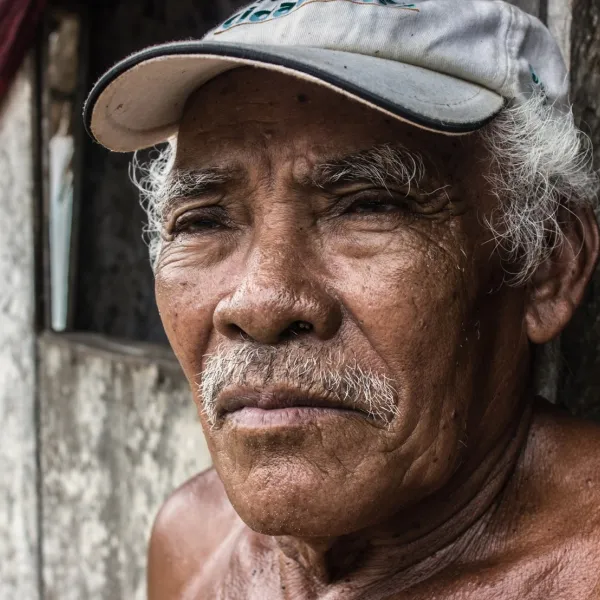
Belo Monte's operations have caused a permanent, man-made drought in the Volta Grande (or "Great Bend") of the Xingu River, exacerbated by the historic droughts in the Amazon in 2023 and 2024. As a result, the deaths of millions of fish eggs were documented for four consecutive years (from 2021 to 2024), and for the past three years, there has been no upstream migration of fish to spawn and reproduce. Thus, artisanal fishing, the main source of protein for indigenous peoples and riverside communities, was severely affected: fish dropped from 50% to 30% of total protein consumed, replaced by processed foods. In summary, there was an environmental and humanitarian collapse that resulted in the breakdown of fishing as a traditional way of life, food insecurity, and access to drinking water for thousands of families, impoverishment, and disease.
Furthermore, the construction of the dam increased deforestation and intensified illegal logging and insecurity on indigenous and tribal lands, putting the survival of these communities at risk. Another consequence was the deepening of poverty and social conflicts, as well as the strain on health, education, and public safety systems in Altamira—a city ranked as the most violent in the country in 2017, where human trafficking and sexual violence increased. Violence was also reported against human rights defenders involved in the case.
In 2025, during the 30th UN Climate Change Conference (COP30), held in Brazil, the Federal Public Prosecutor’s Office labeled the damage caused by the Belo Monte dam as ecocide.
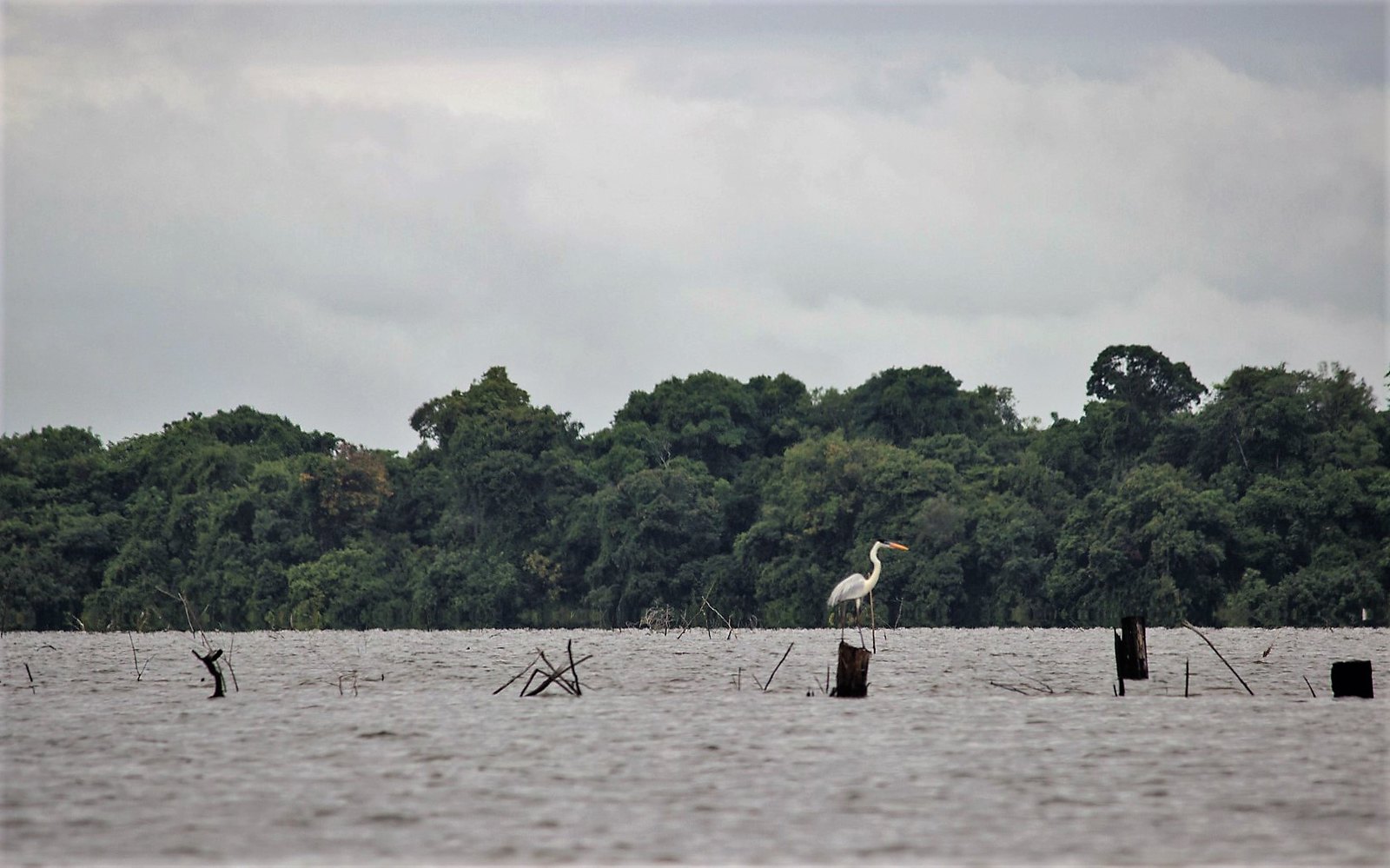
Photo: Amazon Watch / Maíra Irigaray.
The search for justice and reparations
Over the years, the Federal Public Prosecutor’s Office in Pará, the Public Defender’s Office, and civil society organizations have filed dozens of legal actions in Brazilian courts to challenge the project’s various irregularities and its impacts. Most of the claims are still pending resolution, some for more than 10 years.
These efforts have failed because the national government has repeatedly overturned rulings in favor of the affected communities by invoking a mechanism that allowed a court president to suspend a judicial decision based solely on generic arguments such as "the national interest" or "economic order."
In the absence of effective responses at the national level, AIDA, together with a coalition of partner organizations, brought the case before the Inter-American Commission on Human Rights (IACHR) and, in 2010, requested precautionary measures to protect the lives, safety, and health of the affected indigenous communities.
On April 1, 2011, the IACHR granted these measures and requested that the Brazilian government suspend environmental permits and any construction work until the conditions related to prior consultation and the protection of the health and safety of the communities are met.
And on June 16, 2011 —together with the Xingu Vivo Para Sempre Movement, the Coordinating Committee of Indigenous Organizations of the Brazilian Amazon, the Diocese of Altamira, the Indigenous Missionary Council, the Pará Society for the Defense of Human Rights and Global Justice— we filed a formal complaint against the Brazilian State for its international responsibility in the violation of the human rights of the people affected in the case. The case was opened for processing in December 2015.
On August 3, 2011, the IACHR amended the precautionary measures to request, instead of the suspension of permits and construction, the protection of people living in voluntary isolation, the health of indigenous communities, and the regularization and protection of ancestral lands.
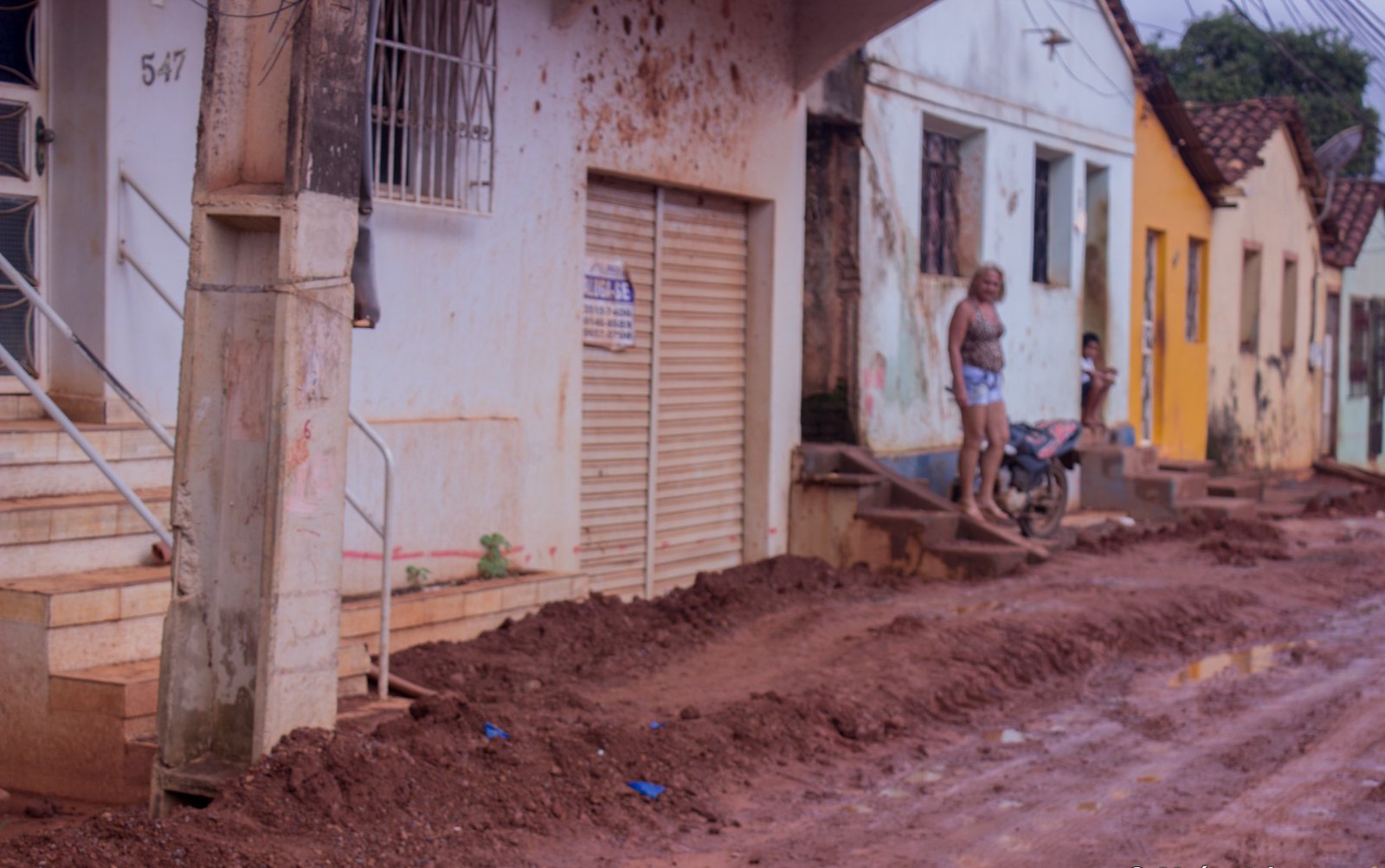
Photo: Amazon Watch / Maíra Irigaray.
Current situation
The protective measures granted by the IACHR remain in effect, but the Brazilian government has not fully complied with them, reporting only on general actions. The communities have documented the ongoing violations of their rights. The situation that prompted the request for these measures—the risk to the lives, physical integrity, and ways of life of the communities—persists and has worsened with the hydroelectric plant operating at full capacity and the recent extreme droughts in the Amazon.
In addition to the impacts of Belo Monte, there is a risk of further social and environmental impacts from the implementation of another mining megaproject in the Volta Grande do Xingu. There, the Canadian company Belo Sun plans to build Brazil’s largest open-pit gold mine.
The combined and cumulative impacts of the dam and the mine were not assessed. The government excluded Indigenous peoples, riverine and peasant communities from the project’s environmental permitting process. Despite protests by Indigenous communities and other irregularities surrounding the project, the government of Pará formally authorized the mine in April 2026.
Like other hydroelectric dams, Belo Monte exacerbates the climate emergency by generating greenhouse gas emissions in its reservoir. And it is inefficient amid the longer, more intense droughts caused by the crisis, as it loses its ability to generate power.
The case before the Inter-American Commission
In October 2017, the IACHR announced that it would rule jointly on the admissibility (whether the case meets the requirements for admission) and the merits (whether a human rights violation actually occurred) of the international complaint against the Brazilian State.
Fifteen years after the complaint was filed, the affected communities and the organizations representing them are still awaiting this decision. If the IACHR concludes that human rights violations occurred and issues recommendations that the Brazilian State fails to comply with, it may refer the case to the Inter-American Court of Human Rights, whose rulings are binding.
A potential ruling by the international court in this case would set a regional legal precedent regarding the rights of indigenous and riverine peoples, public participation in megaprojects, and state responsibility in the context of the climate crisis—a precedent that is particularly relevant in light of the Court’s Advisory Opinion No. 32, which reaffirmed the obligations of States to protect the people and communities of the continent from the climate emergency.
Partners:
Related projects
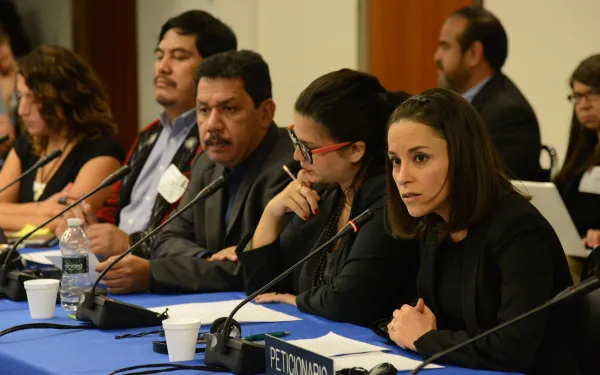
NGOs testify before IACHR regarding violation of the right to water by extractive activities
In a hearing before the Commission, advocates explained how extractive activities, especially mining and energy projects, restrict individual and community water use. They also documented the failure of states to protect the right to water and effectively control companies and projects that affect this right. Washington, DC, United States. Civil society organizations[i] drew the attention of the Inter-American Commission on Human Rights (IACHR) to the growing pressure to use natural resources for the development of extractive activities in the Americas, including the construction of dams and mining projects. They did so at a hearing in which they showed how this situation has resulted in the systematic violation of the right to water in the region. "We have identified four patterns that characterize this problem: the use of judicial frameworks that favor the appropriation of water resources for extractive projects, ownership of the resource that favor its use for mining projects over human use and consumption, pollution and deterioration of water sources, and the lack of consultation and free, prior and informed consent in the implementation of these projects," explained Maria José Veramendi Villa, lawyer from the Interamerican Association for Environmental Defense, at the beginning of the hearing. The organizations presented cases of appropriation, pollution and irreversible damage to water sources due to the implementation of extractive projects. This situation not only affects water rights but also infringes upon other rights such as health, decent life, integrity, healthy environment, food and culture. The participating organizations noted the impacts both on individuals and communities that are in areas directly influenced by projects for which there was no prior consultation, as well as for those who are outside of the immediate project area but depend on affected water sources for their livelihood. Such cases have been documented extensively in a report that was delivered to the IACHR. "In Argentina, the exploitation of the Alumbrera mine has caused the leakage of toxic waste into three rivers and, although a court case on the pollution is open, measures to effectively remediate the damage have yet to be taken. We are concerned that none of our countries are implementing plans to prevent additional damage, nor are they taking measures to remediate the cumulative damage from the pollution," said Johana Rocha, of the Centro de Estudios para la Justicia Social “Tierra Digna” of Colombia. The hearing before the IACHR highlighted the failure of States in the region to implement effective measures to ensure the right to water. The participating organizations reported that existing legal frameworks favor the appropriation of water for mining projects over the use and human consumption. They also explained the failure of national mechanisms to control and monitor the performance of companies that implement extractive projects - a situation which allows them to continue to commit gross violations of human rights. "We have found a contradiction in the States' obligations to protect and guarantee the right to water, which has been incorporated into their Constitutions and legislation. They instead give preference to corporations, thus denying the right to water of the communities," stated Pedro Landa, of the Equipo de Reflexión, Investigación y Comunicación de la Compañía de Jesús (ERIC-SJ) of Honduras. Raphaela Lopes, of Justiça Global, spoke of the easing of legal frameworks, which violates human rights. "With the energy reform recently approved in Mexico, for example, the right to water is undermined in favor of hydrocarbons and electricity." Lastly, the organizations asked the IACHR, among other things, to reaffirm at a national level the recognition of water as a human right; to consider the importance of water as a fundamental element to the right to a healthy environment; to remind States of their obligations to protect the rights to water and environment above any extractive activity or infrastructure; to highlight the obligation of the states to effectively control the activities that could affect the right to water, including the companies that operate within their territory and the national companies that operate externally; and to remind states of the importance of the right to free, and prior, informed consent before the implementation of any project. [i] Acción Solidaria para el Desarrollo (COOPERACCIÓN) – Perú, Asociación Interamericana para la Defensa del Ambiente (AIDA) – Regional, Asociación Pro Derechos Humanos (APRODEH) – Perú, Bienaventurados los Pobres (BePe) - Colectivo SumajKawsay – Argentina, Centro de Acción Legal Ambiental y Social (CALAS) – Guatemala, Centro de Derechos Humanos “Bartolomé Carrasco Briseño A.C.” (BARCA-DH) – México, Centro de Estudios para la Justicia Social ‘Tierra Digna’ – Colombia, Centro de Incidencia Ambiental (CIAM) – Panamá, Centro de Investigación sobre Desarrollo y Comercio (CEICOM) – El Salvador, Comité de Unidad Campesina (CUC) – Guatemala, Comitê Nacional em Defesa dos Territórios frente a Mineração – Brasil, Equipo de Reflexión, Investigación y Comunicación de la Compañía de Jesús (ERIC-SJ) – Honduras, Fundación para el Debido Proceso Legal (DPLF) – Regional, Grupo Internacional de Trabajo sobre Asuntos Indígenas (IWGIA) – Regional, Justiça Global – Brasil, Observatorio Ciudadano – Chile, Pensamiento y Acción Social (PAS) – Colombia, y Pax Christi – Internacional.
Read more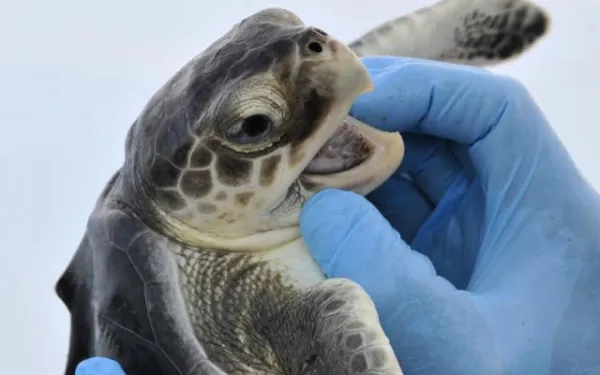
Protecting Sea Turtles in the Gulf of Mexico
By Sandra Moguel Every few years, hundreds of hawksbill and kemp’s ridley turtles glide through the warm, shallow waters of the Veracruz Reef System. There they swim and feed amongst the brightly colored corals, which stretch for miles through the Gulf of Mexico. When the sun goes down, many of the females make their way back to the very beach from which they hatched, to lay the eggs of the next generation. This ritual has happened for centuries, as the migratory turtles move and feed and breed their way through the Gulf and Caribbean waters. But it’s happening less and less. As their critical habitats are threatened by reckless human activities and a changing climate, the population of hawksbill turtles in the region has declined by 95 percent, making them a critically endangered species. The hawksbill (eretmochelys imbricata) and Kemps’ ridley (lepidochelys kempii) turtles are just two of the five neotropical species of sea turtle that spend a portion of their migratory cycles along the coast of Veracruz, Mexico, and within the confines its reefs. Now, these turtles are facing a new threat – the expansion of the Port of Veracruz. To raise awareness of the risk posed to these threatened species, AIDA and the Mexican Center for Environmental Law (CEMDA) on September 22 presented a petition (in Spanish) before the Scientific Committee of the Inter-American Sea Turtle Convention (IAC), under which Mexico has obligations to protect turtles found within its borders. In the petition, we detailed the direct and indirect impacts that the expansion of the Port would have on the various turtle species and their habitat. We also mentioned that in the project’s environmental impact statement, the Veraruz Port Authority stated that the port expansion “will never have a direct effect on protected species.” They therefore failed to present protection measures for sea turtles, particularly the hawksbill, which is listed as threatened under both the Sea Turtle Convention and Mexican law. Our petition before the IAC requests they take measures to understand the threat and urge Mexico to act, including: conduct an investigation on the impacts the port expansion would have on the turtles and their habitat; conduct a site visit; make recommendations for the protection of the species and their habitat; and urge the Mexican government to apply precautionary measures while evaluating potential environmental impacts on the turtles. Also on September 22, alongside CEMDA, we delivered more than 36,000 signatures from a citizens’ petition urging the Secretariat of Environment & Natural Resources to revoke the environmental authorization granted for the Port’s expansion. The petition argues that the expansion project would put in danger two of Mexico’s natural treasures – the Veracruz Reef System and Los Tuxtlas Reserve, a natural protected area from which basaltic rock for the construction would be extracted. The permit has been approved without considering the severe environmental impacts it would have on the unique ecosystems of the region and the creatures that call them home. The Mexican government has thus violated national and international obligations to conserve biodiversity and protect its natural heritage. As long as the Port of Veracruz expansion project threatens sensitive species and ecosystems, we will continue to advocate through national and international bodies to stop it. Thank you for supporting our work to defend the health and biodiversity of the Veracruz Reef System!
Read more
5 Major AIDA Achievements of the Past 6 Months
1. Colombia Suspends Aerial Spraying of Glyphosate In May 2015, Colombia announced its intentions to suspend the aerial spraying of a toxic herbicide containing glyphosate, the main ingredient in RoundUp, which has been used for more than 20 years to eradicate coca and poppy crops. The decision was made final on September 30, when the environmental management plan allowing such spraying was suspended. Pressure on the government mounted with a couple of key court decisions after AIDA and allies in Colombia and the U.S. launched an online petition. Together we collected almost 25,000 signatures from people calling on President Juan Manuel Santos and the Minister of Justice to end the spraying. Colombia’s spraying has doused homes, farms, forests, and water in vast rural areas, wreaking havoc in sensitive ecosystems, and damaging water sources and food crops in one of the most biodiverse nations on our planet. It has even forced families, including some in indigenous communities, off their lands. AIDA has worked to end the spraying over a period spanning 17 years. When the Minister of Health recently recommended suspending the program over fears that the chemical causes cancer, AIDA worked with the media and organized partners to generate and participate in a national debate. 2. Panamanian Congress Protects Panama Bay Wetland Wildlife Refuge After years of legal wrangling, Panama passed a law on February 2, 2015—World Wetlands Day—that grants permanent protection to the ecologically critical Panama Bay. The law staves off proposed tourist resorts that would harm mangrove forests essential for wildlife, coastal protection, the local fishing industry, and climate change mitigation. AIDA’s collaboration with its local partner, CIAM (the Center for Environmental Defense), ensured that this law is strong enough to guarantee rational uses of wetland resources throughout the country. Panama Bay is one of the world’s most important nesting sites for migratory birds and provides a home for endangered loggerhead turtles and jaguars. Mangroves in the bay buffer increasingly strong storm surges and capture 50 times more carbon than tropical forests. Under the Ramsar Convention, an international treaty for wetland conservation, the Bay is listed as a Wetland of International Importance. AIDA’s work is helping protect all the ecosystem services that this critical area provides. 3. Colombian Government Protects 76% of the Santurbán Páramo AIDA joined with local organizations to build public support for protection of Colombia’s páramos, high-altitude wetlands unique to Latin America. Our work garnered 20,000 petition signatures and generated significant media attention. The Colombian government’s decision to enlarge the protected area of the páramo known as the Santurbán is an important victory for the people of Colombia. The Santurbán supplies fresh water to nearly two million people and provides habitat for threatened species. It also captures large amounts of carbon, mitigating climate change. Several years ago, Colombia passed a law that protects páramos—an important step, because the land in and around the Santurbán contains gold and other minerals that international corporations are eager to mine. To implement the law and truly protect the Santurbán, Colombia had to establish the borders of the protected area. The boundaries initially proposed included only a small fraction of the páramo. Now most of it is protected. 4. Major Reference Reports Published One of the key services AIDA provides—producing Spanish-language reports based on legal research and analysis—benefits government officials, journalists, civil society groups and industry decision makers who are striving to protect our shared environment. We compile extensive information about threats to natural resources and best practices for environmental protection. Our reports fill gaps in knowledge among key Latin American policymakers and advocates. Recent AIDA publications that can help guide efforts toward environmental protection include: International Regulatory Best Practices For Coral Reef Protection. Protecting Coral Reefs in Mexico: Rescuing Marine Biodiversity and Its Benefits for Humankind. Basic Guidelines for the Environmental Impact Assessment of Mining Projects: Recommended Terms of Reference. 5. Regional Fracking Group Established: 30 Organizations in Seven Nations In Latin America, many countries are opening their doors to fracking—the practice of injecting water, sand and chemicals at high pressure to shatter rocks and release natural gas from deep underground. Governments are doing so with little or no understanding of the environmental and health impacts of this technology, and with the absence of adequate processes to inform, consult, and engage affected communities. With AIDA’s help, the Regional Group on Fracking was formed to raise awareness, generate public debate, and prevent risks associated with fracking. The group seeks to ensure that the rights to life, public health, and a healthy environment are respected in Latin America. The Group consists of civil society organizations and academic institutions mainly from Argentina, Brazil, Bolivia, Colombia, and Mexico, collaborating to: Identify affected communities and fracking operations in the region, and document impacts; Advance strategies to stop harmful projects and slow the spread of fracking; and Organize seminars and provide educational materials about the risks and impacts of fracking to ensure that a precautionary approach is taken.
Read more