
Project
Amazon Watch / Maíra Irigaray
Barragem de Belo Monte no rio Xingu: 10 anos de impactos na Amazônia e de busca por reparações
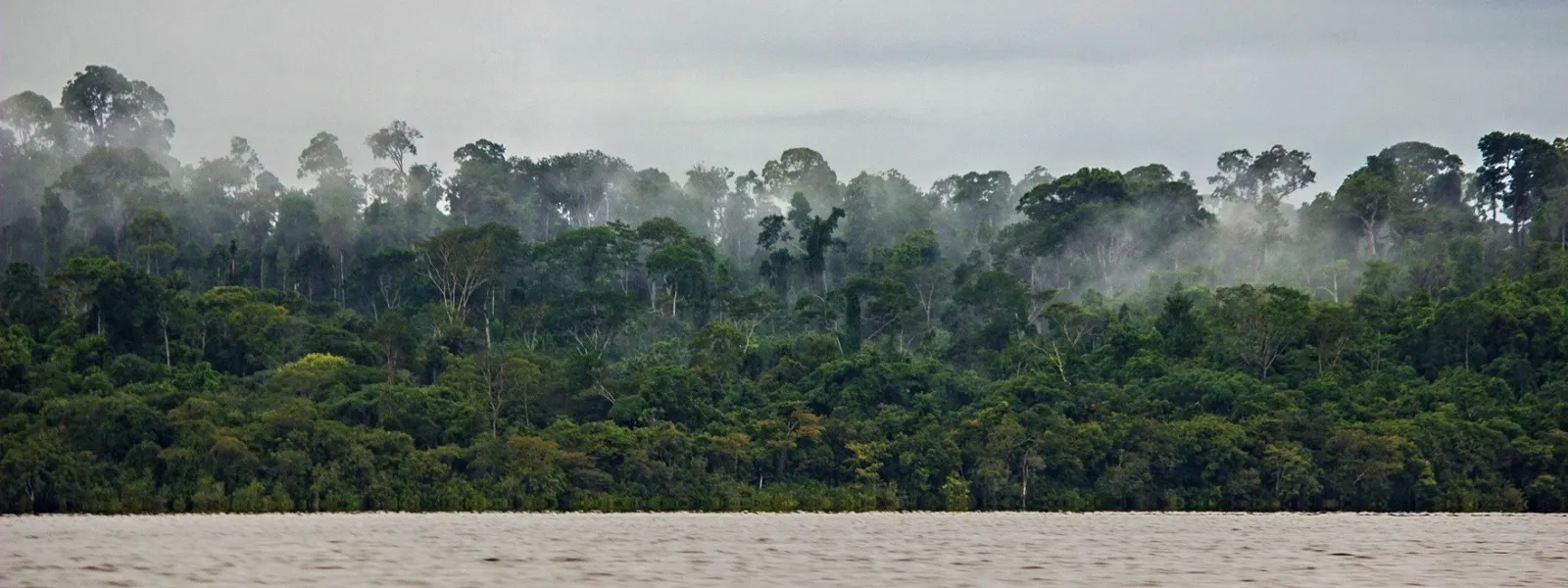
A usina hidrelétrica de Belo Monte causou um desastre ambiental e social no coração da Amazônia: um dos ecossistemas mais importantes do planeta.
Essa situação só piorou desde que a usina começou a operar em 2016. A busca por justiça e reparação para as comunidades indígenas e ribeirinhas afetadas continua até hoje.
Em 2011, a Comissão Interamericana de Direitos Humanos (CIDH) concedeu a essas comunidades medidas de proteção, que até hoje não foram totalmente implementadas pelo Estado brasileiro.
E, desde junho daquele mesmo ano, a CIDH mantém um processo contra o Estado por sua responsabilidade internacional no caso.
A CIDH pode encaminhar o caso à Corte Interamericana de Direitos Humanos, que tem o poder de emitir uma sentença condenatória contra o Estado brasileiro.
Consulta o expediente de fatos do caso
Após 10 anos de operação da usina hidrelétrica e mais de 15 anos de violações de direitos humanos documentadas, é hora da justiça ser feita para as comunidades afetadas.
Leia a carta aberta das organizações que levam o caso à CIDH
Leia nosso comunicado à imprensa
Contexto
A usina hidrelétrica de Belo Monte — a quarta maior do mundo em capacidade instalada (11.233 MW) — foi construída no rio Xingu, no estado do Pará, norte do Brasil.
Foi inaugurada em 5 de maio de 2016, com uma única turbina. Naquela época, 80% do curso do rio foi desviado e 516 km² de terra foram inundados, uma área maior que a cidade de Chicago. Desse total, 400 km² eram de mata nativa. A usina começou a operar em plena capacidade em novembro de 2019.
Belo Monte foi construída e é operada pelo consórcio Norte Energia S.A., composto principalmente por empresas estatais. Foi financiada pelo Banco Nacional de Desenvolvimento Econômico e Social (BNDES), que aportou ao consórcio 25,4 bilhões de reais (aproximadamente US$ 10,16 bilhões), o maior investimento de sua história. Portanto, o BNDES também é legalmente responsável pelos impactos socioambientais associados ao projeto hidrelétrico.
Décadas de danos ambientais e humanos
As violações dos direitos humanos e a degradação da Amazônia remontam ao início do projeto. Em março de 2011, a Norte Energia iniciou a construção da barragem sem consulta adequada e sem o consentimento prévio, livre e informado das comunidades afetadas.
A construção levou ao deslocamento forçado de mais de 40.000 pessoas, rompendo laços sociais e culturais. O plano de reassentamento em Altamira — cidade diretamente afetada pelo projeto hidrelétrico — incluía moradias na periferia da cidade, sem serviços públicos adequados, moradias dignas para as famílias reassentadas e moradias diferenciadas para aqueles pertencentes a comunidades indígenas.
A operação da barragem de Belo Monte impôs uma seca permanente e artificial na Volta Grande do rio Xingu, agravada pelas secas históricas na Amazônia em 2023 e 2024. Como resultado, a morte de milhões de ovos de peixe foi documentada por quatro anos consecutivos (de 2021 a 2024) e, nos últimos três anos, não houve migração de peixes rio acima para desovar e se reproduzir. Assim, a pesca artesanal, principal fonte de proteína para os povos indígenas e comunidades ribeirinhas, foi severamente afetada: o consumo de peixe caiu de 50% para 30% do total de proteínas consumidas, sendo substituído por alimentos processados. Em suma, houve um colapso ambiental e humanitário que resultou no colapso da pesca como modo de vida tradicional, insegurança alimentar e falta de acesso à água potável para milhares de famílias, empobrecimento e doenças.
Além disso, a construção da barragem aumentou o desmatamento e intensificou a extração ilegal de madeira e a insegurança em terras indígenas e tribais, colocando em risco a sobrevivência dessas comunidades. Outra consequência foi o agravamento da pobreza e dos conflitos sociais, bem como a sobrecarga dos sistemas de saúde, educação e segurança pública em Altamira, cidade considerada a mais violenta do país em 2017, onde houve aumento do tráfico de pessoas e da violência sexual. Também foram registrados casos de violência contra defensores de direitos humanos envolvidos no caso.
Em 2025, durante a 30ª Conferência das Nações Unidas sobre Mudanças Climáticas (COP30), realizada no Brasil, o Ministério Público Federal classificou os danos causados por Belo Monte como ecocídio.
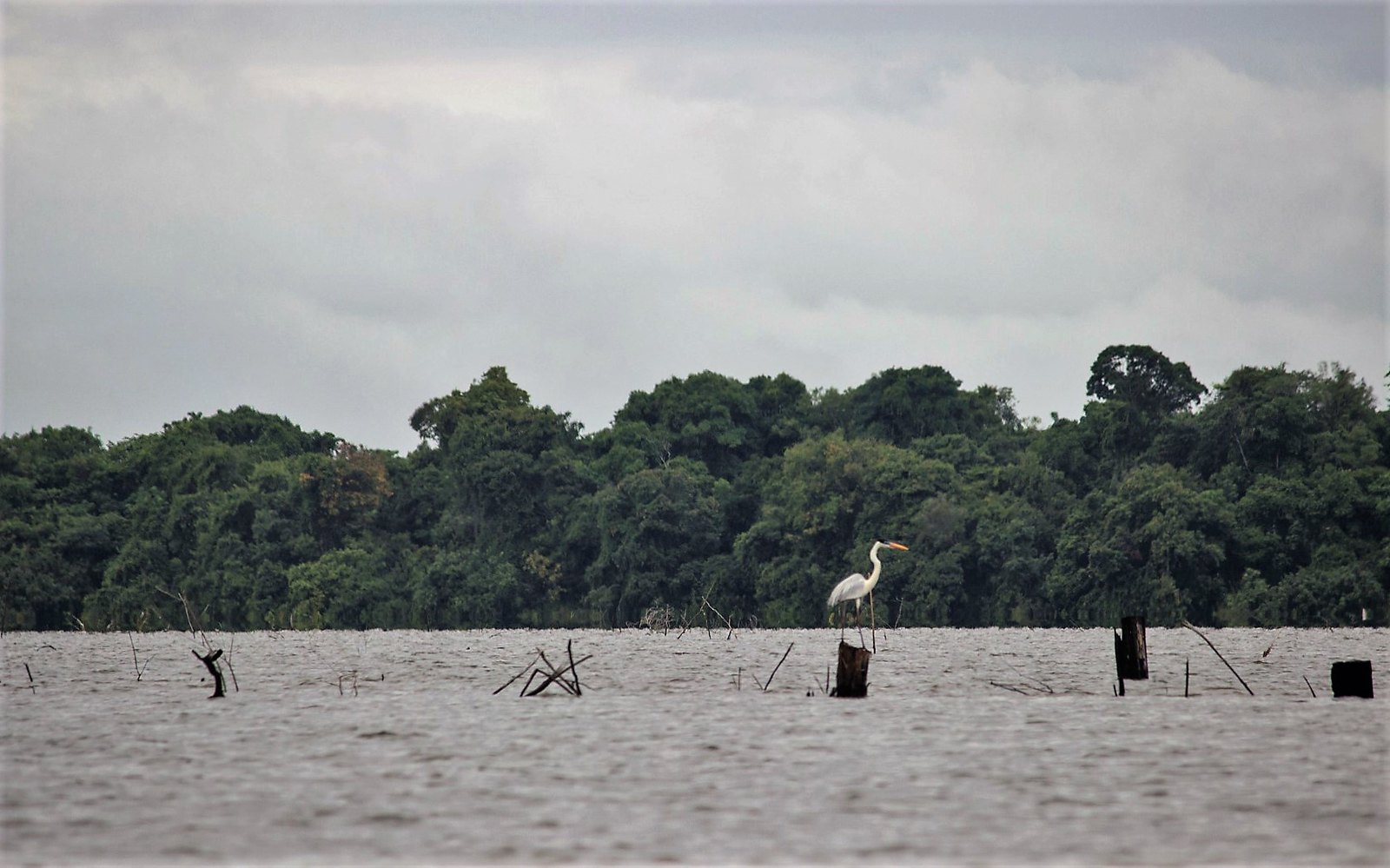
Foto: Amazon Watch / Maíra Irigaray.
A busca por justiça e reparação
Ao longo dos anos, o Ministério Público Federal do Pará, a Defensoria Pública e organizações da sociedade civil impetraram dezenas de ações judiciais em tribunais brasileiros para contestar as diversas irregularidades do projeto, bem como seus impactos. A maioria das ações permanece sem solução, algumas há mais de 10 anos.
Essas ações não obtiveram sucesso porque o governo federal tem reiteradamente anulado decisões favoráveis às comunidades afetadas, recorrendo a um mecanismo pelo qual o presidente do Supremo Tribunal Federal pode suspender uma decisão judicial com base unicamente em argumentos genéricos como "interesse nacional" ou "ordem econômica".
Diante da falta de respostas eficazes em nível nacional, a AIDA — juntamente com uma coalizão de organizações aliadas — levou o caso à Comissão Interamericana de Direitos Humanos (CIDH) e, em 2010, solicitou medidas cautelares para proteger a vida, a integridade e a saúde das comunidades indígenas afetadas.
Em 1º de abril de 2011, a CIDH concedeu essas medidas e solicitou ao Estado brasileiro a suspensão das licenças ambientais e de quaisquer obras de construção até que as condições relativas à consulta prévia e à proteção da saúde e integridade das comunidades fossem atendidas.
E, em 16 de junho de 2011, apresentamos uma denúncia formal à CIDH — juntamente com o Movimento Xingu Vivo Para Siempre, a Coordenação das Organizações Indígenas da Amazônia Brasileira, a Diocese de Altamira, o Conselho Missionário Indígena, a Sociedade Pará de Defesa dos Direitos Humanos e a Global Justice — contra o Estado brasileiro por sua responsabilidade internacional nas violações de direitos humanos contra os povos afetados neste caso. A denúncia foi apresentada em dezembro de 2015.
Em 3 de agosto de 2011, a CIDH modificou as medidas cautelares para solicitar — em vez da suspensão de licenças e obras — a proteção dos povos que vivem em isolamento voluntário, a saúde das comunidades indígenas e a regularização e proteção das terras ancestrais.
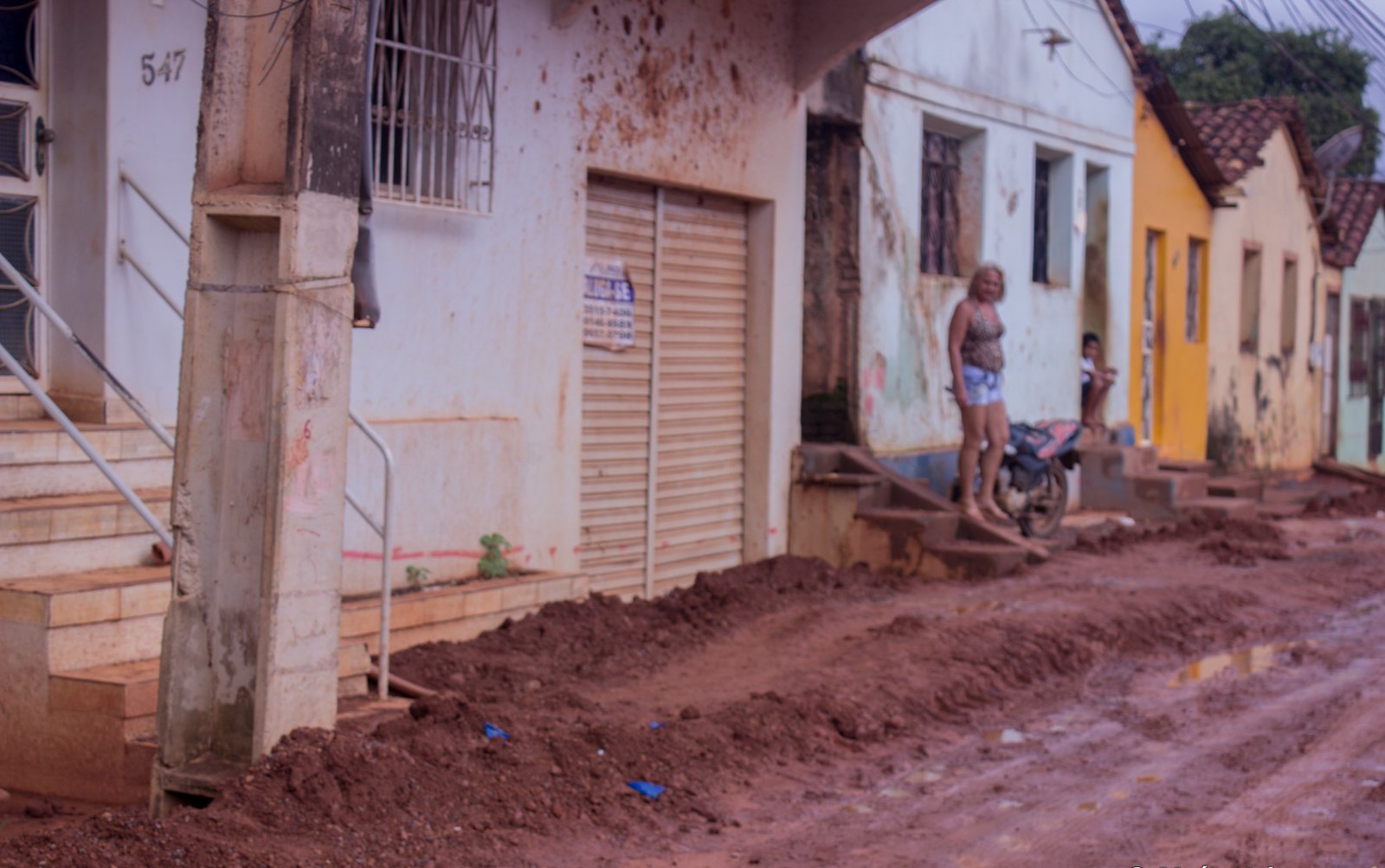
Foto: Amazon Watch / Maíra Irigaray.
Situação atual
As medidas de proteção concedidas pela CIDH permanecem em vigor, mas o Estado brasileiro não as cumpriu integralmente, relatando apenas ações genéricas. As comunidades documentaram as contínuas violações de seus direitos. A situação que motivou o pedido dessas medidas — o risco à vida, à segurança e aos meios de subsistência das comunidades — persiste e se agravou com a usina hidrelétrica operando em plena capacidade e com as recentes secas extremas na Amazônia.
Além do ocorrido em Belo Monte, existe o risco de maiores danos sociais e ambientais decorrentes da implementação de outro megaprojeto de mineração na Volta Grande do Xingu. Lá, a empresa canadense Belo Sun pretende construir a maior mina de ouro a céu aberto do Brasil.
Os impactos sinérgicos e cumulativos da usina e da mina não foram avaliados. O Estado excluiu povos indígenas, comunidades ribeirinhas e comunidades camponesas do processo de licenciamento ambiental do projeto. Apesar disso, dos protestos indígenas e de outras irregularidades em torno do projeto, o governo do estado do Pará autorizou formalmente a mina em abril de 2026.
Belo Monte, assim como outras usinas hidrelétricas, agrava a emergência climática ao gerar emissões de gases de efeito estufa em seu reservatório. Além disso, é ineficiente diante das secas prolongadas e intensas causadas pela crise, pois perde capacidade de geração de energia.
O caso perante a Comissão Interamericana
Em outubro de 2017, a CIDH anunciou que decidiria conjuntamente sobre a admissibilidade (se o caso preenche os requisitos para admissão) e o mérito (se houve, de fato, violação de direitos humanos) da denúncia internacional contra o Estado brasileiro.
Quinze anos após a apresentação da denúncia, as comunidades afetadas e as organizações que as representam ainda aguardam essa decisão. Caso a CIDH conclua que houve violações de direitos humanos e emita recomendações que o Estado brasileiro não cumpra, poderá encaminhar o caso à Corte Interamericana de Direitos Humanos, cujas decisões são vinculativas.
Uma possível decisão da Corte Internacional de Direitos Humanos neste caso estabeleceria um precedente jurídico regional em relação aos direitos dos povos indígenas e ribeirinhos, à participação pública em megaprojetos e à responsabilidade do Estado no contexto da crise climática. Isso é particularmente relevante à luz do Parecer Consultivo nº 32 da Corte, que reafirmou as obrigações dos Estados de proteger pessoas e comunidades em todo o continente da emergência climática.
Partners:
Related projects
Calling on Chile to stop salmon industry’s impact on Patagonia
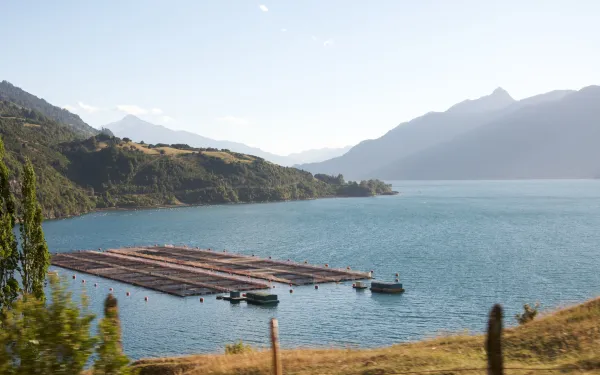
AIDA alerted six international treaties to the damages the salmon industry is causing to Chilean Patagonia, and requested that they visit the Magallanes region to investigate the impacts and urge the Chilean government to protect the region. Santiago, Chile. In an Urgent Alert to international authorities, the Interamerican Association of Environmental Defense (AIDA) requested that experts visit the Magallanes region of Chilean Patagonia—where the expansion of the salmon industry is causing serious environmental damage—and asked them to urge the government to adopt appropriate measures to address them. “These six treaties were signed and ratified by Chile to protect its natural wealth, including the endemic species of the Magallanes region,” said Florencia Ortuzar, AIDA attorney. “The government is violating these agreements by failing to prevent the salmon industry from damaging the country’s marine environments.” The document details the principal damages caused by the salmon farms in Magallanes, among them: contamination of the seabed from large amounts of fish feces, excess chemical waste, and the over-saturation of waters with fish, all of which create oxygen-free dead zones where marine life cannot survive. The alert was sent to authorities in charge of the Convention on Biological Diversity, the Convention on the Conservation of Migratory Species of Wild Animals, the International Whaling Commission, the Inter-American Convention for the Protection and Conservation of Sea Turtles, the United Nations Convention on the Law of the Sea, and the Antarctic Treaty. The situation was also reported to the Food and Agriculture Organization of the United Nations and the World Health Organization. The Magallanes region is home to many protected species, including the blue whale, the sperm whale, the Magellanic penguin, the elephant seal, the leatherback turtle, the Southern dolphin and the Chilean dolphin. A remote and pristine area, Magallanes is poorly studied and it is thus virtually impossible to understand the consequences of the industry’s current and potential impacts. “More than half the farms operating in Magallanes are causing a total or partial lack of oxygen in the waters,” explained Ortuzar. “This demonstrates that the salmon concessions are being granted without the scientific support needed to guarantee they won’t cause environmental damage.” Another problem raised in the alert is the excessive use of antibiotics in Chilean salmon farms—higher than that of any other salmon-producing nation. This excessive use provokes antimicrobial resistance in humans, a problem that has been recognized by the World Health Organization as a serious threat to global public health. In the alert, AIDA requested the international authorities: support the Chilean State in the investigation of the salmon industry’s real and potential impacts on Patagonia; remind Chile of its obligations under the treaties; investigate the damage described; and, when needed, request the application of sanctions and the suspension or cancellation of concessions in Magallanes. Consult the Urgent Alert. Find more information on the case here. press contact Victor Quintanilla (Mexico), AIDA, [email protected], +521 5570522107
Read more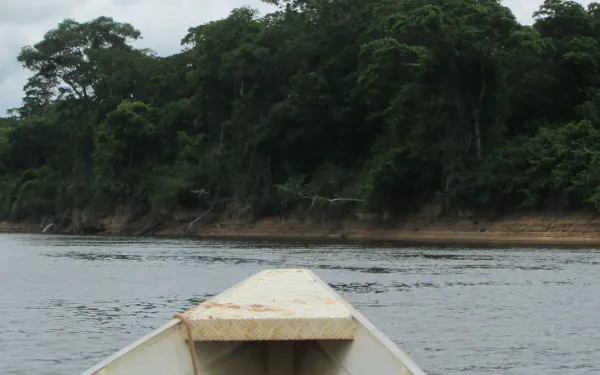
In Xingu management plan, Brazil leaves communities without water
The proposed Xingu River management plan puts at risk the people, plants and animals of the Amazon region. AIDA requested that the Inter-American Commission on Human Rights urge Brazil to stop the plan and establish a socially and environmentally appropriate alternative. Washington, D.C. and Altamira, Brazil. By authorizing the construction of the Belo Monte Dam in the heart of the Amazon, the Brazilian government endorsed a management plan for the flow of the Xingu River that would leave the indigenous and riverine communities of the area without the water they need to survive. The plan is in a testing phase but is expected to be implemented next year, once all the turbines of the hydroelectric plant are installed. The Interamerican Association of Environment Defense (AIDA) sent a report to the Inter-American Commission on Human Rights detailing the serious socio-environmental risks of the plan. In it, we requested that the Commission urge Brazil to stop the plan’s implementation and create an alternative plan that guarantees biodiversity and protects the communities’ ways of life. “The authorized plan for the management of the river’s flow threatens the existence of indigenous and riverine communities, and places at risk of extinction the fish and the forests—natural resources on which the physical and cultural lives of the communities depend,” said Liliana Ávila, Senior AIDA Attorney. The plan, called a consensual hydrogram, establishes the volume of water that will pass through a specific part of the river, called the Vuelta Grande, and the part that will be diverted for energy production. It is intended to artificially reproduce the natural flow of the river in times of flood and drought. Norte Energía, the consortium in charge of the dam, proposes an average minimum flow rate of 4,000 cubic meters per second over the course of a year, and 8,000 cubic meters per second for the following year, beginning in 2019. It proposes a minimum flow rate of 700 cubic meters per second for the dry season. The report sent to the Commission, however, details scientific and social evidence that demonstrates that these water levels are significantly lower than the historical river flow and do not guarantee that fish and alluvial forests can survive the proposed reduction in the short- and medium-term. The evidence—which includes information from both the Brazilian Institute of the Environment and Renewable Natural Resources and community monitoring—also shows that some aquatic species, such as chelonians, can only feed and reproduce with minimum flows of 13,000 cubic meters per second in times of flooding, and that the volume proposed for the dry season could make the river unnavigable. “The management plan did not take into account the monitoring done by the Juruna people in collaboration with the Federal University of the State of Pará and the Socio-environmental Institute (ISA),” said AIDA attorney Marcella Ribeiro. “In 2016, with water levels higher than those proposed, communities were already reporting the mass die-off of fish.” AIDA sent the report to the Commission as part of a formal complaint against the Brazilian State for the human rights violations caused by the dam’s construction. In May, together with partner organizations, we presented our final arguments in the case, evidencing damages already caused, including the forced displacement of indigenous and riverine communities, the massive death of fish, differentiated damages to men and women, and threats to the survival of the communities. Find more information on the case here. press contacts Victor Quintanilla (Mexico), AIDA, [email protected], +521 5570522107 Isabel Harari (Brazil), ISA, [email protected], +5561998261213
Read more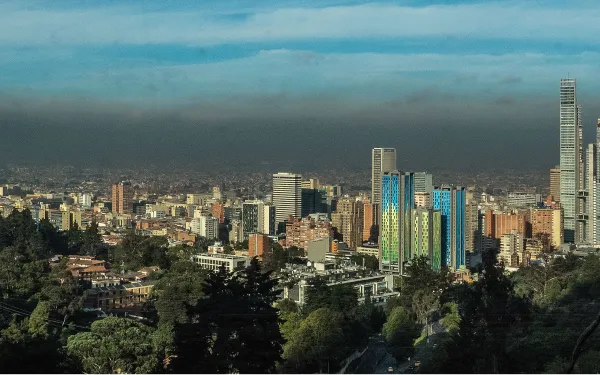
We all deserve to breathe clean air
I was born and raised in Bogota, Colombia’s bustling capital city. When I was a child, I grew accustomed to the chaos of the streets—thousands of cars and buses spewing black smoke into the air, the endless honking of horns. It was normal to see massive smokestacks and smell bad odors. I thought all cities were that way, and that nature and clean air only existed in places far from home. I was used to having health problems: headaches, rashes, eye and throat irritation, coughs and hay fever. I never questioned why my sisters and I were constantly fighting these “environmental allergies.” Pollution even prevented me from enjoying the outdoors. I couldn’t easily walk or ride my bike, for example, because my lungs struggled from the soot emitted by passing trucks and buses. There were days I had to leave my house wearing a mask, and times when we were forbidden from playing outside due to the pollution. Air pollution: a silent killer As an adult, I realized that environmental allergies are not the norm. Often, they are caused by constantly breathing in black carbon, ozone, sulfur dioxide and other pollutants that cars, buses and factories emit into the atmosphere each day. I realized that air pollution is a serious threat to quality of life and to a person’s health, especially among the most vulnerable, like our children and the elderly. According to the World Health Organization, millions of people die each year from illnesses related to air pollution. In Latin America, it is the number one environmental health risk, and causes more than 150,000 premature deaths per year. Cities like Mexico City, Monterrey (Mexico), Cochabamba (Bolivia), Santiago de Chile, Lima (Peru), Medellin (Colombia), San Salvador (El Salvador) and Bogota have the highest levels of air pollution in the region. When cities are allowed to expand without regulation, population skyrockets—and with it, so do the number of cars and trucks and factories. I worry about the future of my family in that scenario. I don’t want the air we breathe to negatively impact our health. My husband, who is not from Bogota, moved there to be with me. One year later, he was diagnosed with asthma. When my daughter was just two months old, she had a respiratory infection that put her in intensive care for several days. The cause of both their illnesses: the city’s poor air quality. Stopping the contamination The majority of the world’s population lives in cities. And while we can’t expect our cities to be pristine, natural ecosystems, they should provide people with the minimal conditions they need to lead dignified, healthy lives. That’s why AIDA works to improve air quality in Latin America, advocating for the protection of our children and other populations highly vulnerable to atmospheric contamination. We are raising awareness among policy makers about the importance of regulating short-lived climate pollutants (SLCPs), which stay in the atmosphere for a relatively short period of time. Unlike carbon dioxide, which can stay in the atmosphere for centuries, SLCPs remain in the air from a few days to a few decades. SLCPs include soot (also known as black carbon) and methane gas. These contaminants are major contributors to climate change, degrade air quality and have serious impacts on food security and human health. Effectively reducing them could significantly improve air quality and advance the fight against climate change in the short-term. Through our experience in international law, we’re seeking ways to regulate these short-lived pollutants across Latin America. Because having clean air to breath is one of life’s basic needs. Clean air shouldn’t be a luxury.
Read more