
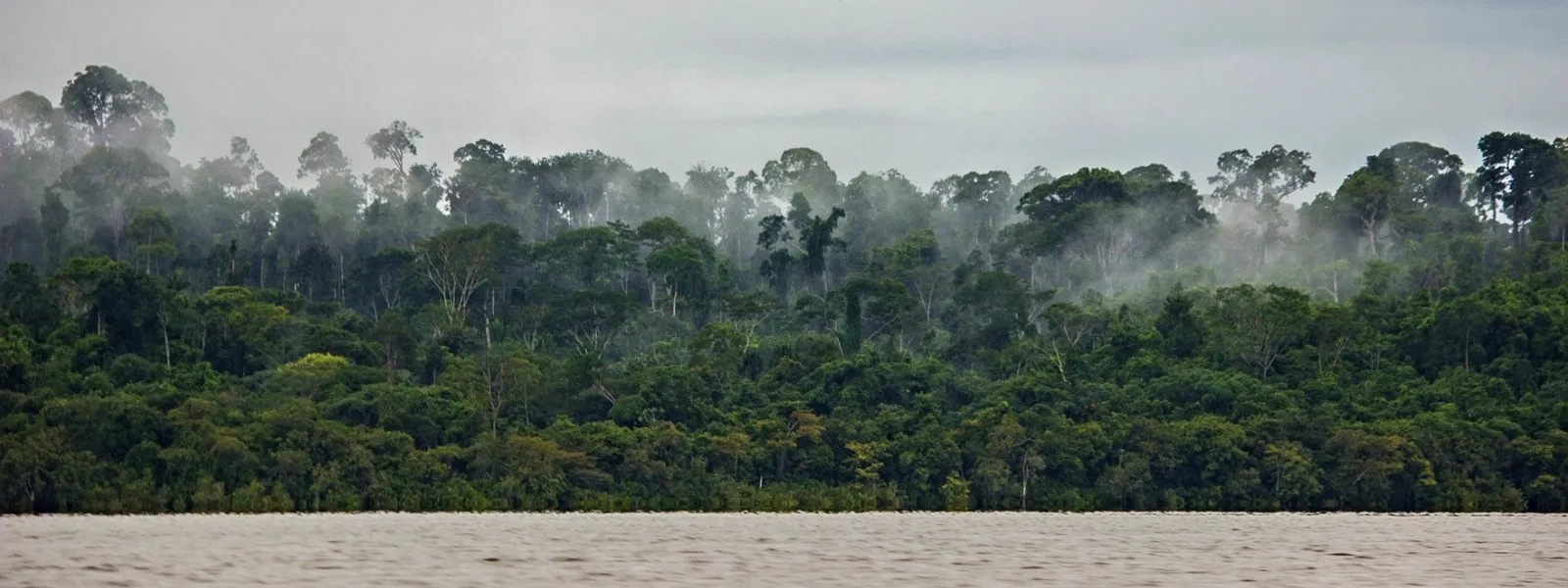
Project
Amazon Watch / Maíra Irigaray
Barragem de Belo Monte no rio Xingu: 10 anos de impactos na Amazônia e de busca por reparações
A usina hidrelétrica de Belo Monte causou um desastre ambiental e social no coração da Amazônia: um dos ecossistemas mais importantes do planeta.
Essa situação só piorou desde que a usina começou a operar em 2016. A busca por justiça e reparação para as comunidades indígenas e ribeirinhas afetadas continua até hoje.
Em 2011, a Comissão Interamericana de Direitos Humanos (CIDH) concedeu a essas comunidades medidas de proteção, que até hoje não foram totalmente implementadas pelo Estado brasileiro.
E, desde junho daquele mesmo ano, a CIDH mantém um processo contra o Estado por sua responsabilidade internacional no caso.
A CIDH pode encaminhar o caso à Corte Interamericana de Direitos Humanos, que tem o poder de emitir uma sentença condenatória contra o Estado brasileiro.
Consulta o expediente de fatos do caso
Após 10 anos de operação da usina hidrelétrica e mais de 15 anos de violações de direitos humanos documentadas, é hora da justiça ser feita para as comunidades afetadas.
Leia a carta aberta das organizações que levam o caso à CIDH
Leia nosso comunicado à imprensa
Contexto
A usina hidrelétrica de Belo Monte — a quarta maior do mundo em capacidade instalada (11.233 MW) — foi construída no rio Xingu, no estado do Pará, norte do Brasil.
Foi inaugurada em 5 de maio de 2016, com uma única turbina. Naquela época, 80% do curso do rio foi desviado e 516 km² de terra foram inundados, uma área maior que a cidade de Chicago. Desse total, 400 km² eram de mata nativa. A usina começou a operar em plena capacidade em novembro de 2019.
Belo Monte foi construída e é operada pelo consórcio Norte Energia S.A., composto principalmente por empresas estatais. Foi financiada pelo Banco Nacional de Desenvolvimento Econômico e Social (BNDES), que aportou ao consórcio 25,4 bilhões de reais (aproximadamente US$ 10,16 bilhões), o maior investimento de sua história. Portanto, o BNDES também é legalmente responsável pelos impactos socioambientais associados ao projeto hidrelétrico.
Décadas de danos ambientais e humanos
As violações dos direitos humanos e a degradação da Amazônia remontam ao início do projeto. Em março de 2011, a Norte Energia iniciou a construção da barragem sem consulta adequada e sem o consentimento prévio, livre e informado das comunidades afetadas.
A construção levou ao deslocamento forçado de mais de 40.000 pessoas, rompendo laços sociais e culturais. O plano de reassentamento em Altamira — cidade diretamente afetada pelo projeto hidrelétrico — incluía moradias na periferia da cidade, sem serviços públicos adequados, moradias dignas para as famílias reassentadas e moradias diferenciadas para aqueles pertencentes a comunidades indígenas.
A operação da barragem de Belo Monte impôs uma seca permanente e artificial na Volta Grande do rio Xingu, agravada pelas secas históricas na Amazônia em 2023 e 2024. Como resultado, a morte de milhões de ovos de peixe foi documentada por quatro anos consecutivos (de 2021 a 2024) e, nos últimos três anos, não houve migração de peixes rio acima para desovar e se reproduzir. Assim, a pesca artesanal, principal fonte de proteína para os povos indígenas e comunidades ribeirinhas, foi severamente afetada: o consumo de peixe caiu de 50% para 30% do total de proteínas consumidas, sendo substituído por alimentos processados. Em suma, houve um colapso ambiental e humanitário que resultou no colapso da pesca como modo de vida tradicional, insegurança alimentar e falta de acesso à água potável para milhares de famílias, empobrecimento e doenças.
Além disso, a construção da barragem aumentou o desmatamento e intensificou a extração ilegal de madeira e a insegurança em terras indígenas e tribais, colocando em risco a sobrevivência dessas comunidades. Outra consequência foi o agravamento da pobreza e dos conflitos sociais, bem como a sobrecarga dos sistemas de saúde, educação e segurança pública em Altamira, cidade considerada a mais violenta do país em 2017, onde houve aumento do tráfico de pessoas e da violência sexual. Também foram registrados casos de violência contra defensores de direitos humanos envolvidos no caso.
Em 2025, durante a 30ª Conferência das Nações Unidas sobre Mudanças Climáticas (COP30), realizada no Brasil, o Ministério Público Federal classificou os danos causados por Belo Monte como ecocídio.
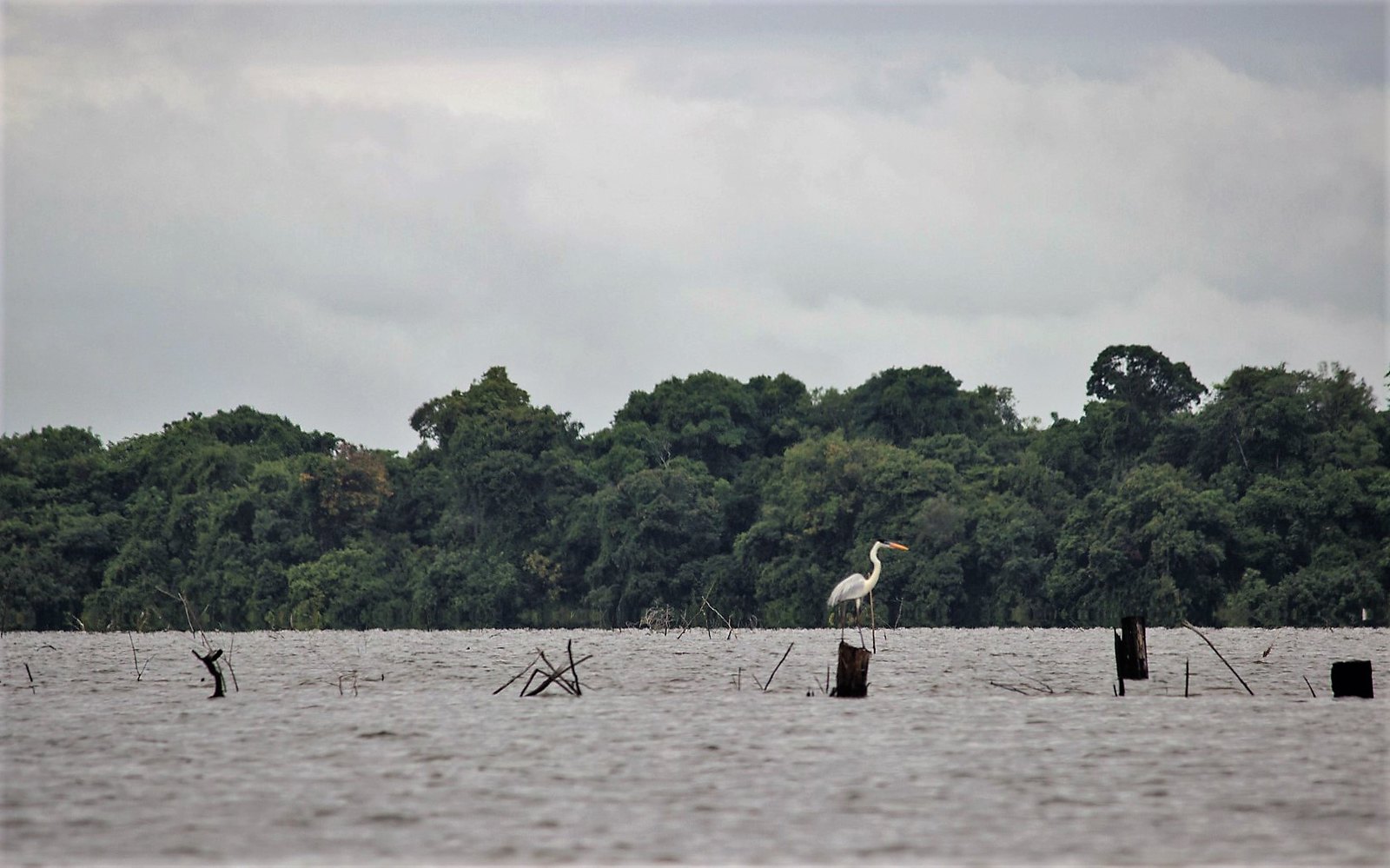
Foto: Amazon Watch / Maíra Irigaray.
A busca por justiça e reparação
Ao longo dos anos, o Ministério Público Federal do Pará, a Defensoria Pública e organizações da sociedade civil impetraram dezenas de ações judiciais em tribunais brasileiros para contestar as diversas irregularidades do projeto, bem como seus impactos. A maioria das ações permanece sem solução, algumas há mais de 10 anos.
Essas ações não obtiveram sucesso porque o governo federal tem reiteradamente anulado decisões favoráveis às comunidades afetadas, recorrendo a um mecanismo pelo qual o presidente do Supremo Tribunal Federal pode suspender uma decisão judicial com base unicamente em argumentos genéricos como "interesse nacional" ou "ordem econômica".
Diante da falta de respostas eficazes em nível nacional, a AIDA — juntamente com uma coalizão de organizações aliadas — levou o caso à Comissão Interamericana de Direitos Humanos (CIDH) e, em 2010, solicitou medidas cautelares para proteger a vida, a integridade e a saúde das comunidades indígenas afetadas.
Em 1º de abril de 2011, a CIDH concedeu essas medidas e solicitou ao Estado brasileiro a suspensão das licenças ambientais e de quaisquer obras de construção até que as condições relativas à consulta prévia e à proteção da saúde e integridade das comunidades fossem atendidas.
E, em 16 de junho de 2011, apresentamos uma denúncia formal à CIDH — juntamente com o Movimento Xingu Vivo Para Siempre, a Coordenação das Organizações Indígenas da Amazônia Brasileira, a Diocese de Altamira, o Conselho Missionário Indígena, a Sociedade Pará de Defesa dos Direitos Humanos e a Global Justice — contra o Estado brasileiro por sua responsabilidade internacional nas violações de direitos humanos contra os povos afetados neste caso. A denúncia foi apresentada em dezembro de 2015.
Em 3 de agosto de 2011, a CIDH modificou as medidas cautelares para solicitar — em vez da suspensão de licenças e obras — a proteção dos povos que vivem em isolamento voluntário, a saúde das comunidades indígenas e a regularização e proteção das terras ancestrais.
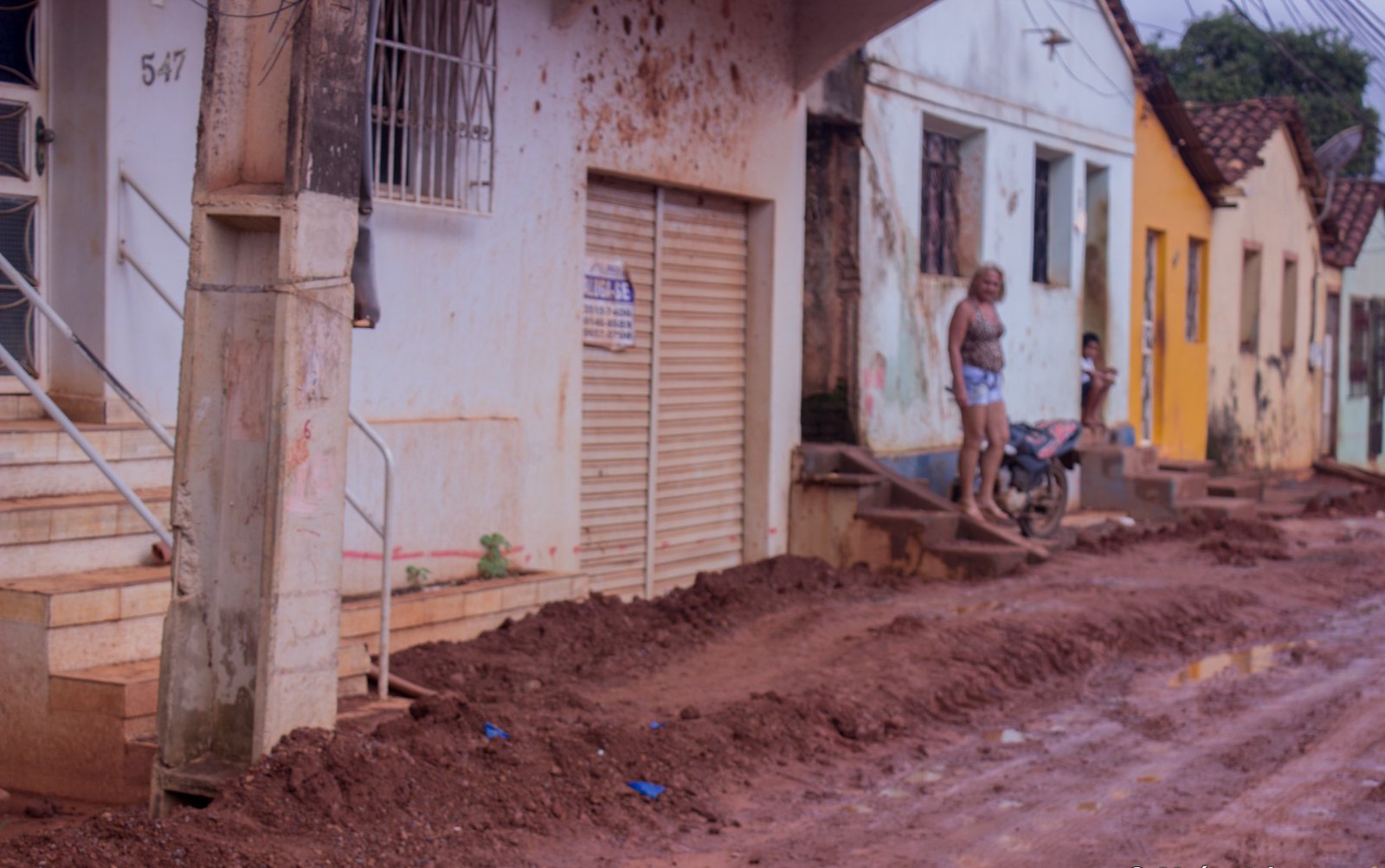
Foto: Amazon Watch / Maíra Irigaray.
Situação atual
As medidas de proteção concedidas pela CIDH permanecem em vigor, mas o Estado brasileiro não as cumpriu integralmente, relatando apenas ações genéricas. As comunidades documentaram as contínuas violações de seus direitos. A situação que motivou o pedido dessas medidas — o risco à vida, à segurança e aos meios de subsistência das comunidades — persiste e se agravou com a usina hidrelétrica operando em plena capacidade e com as recentes secas extremas na Amazônia.
Além do ocorrido em Belo Monte, existe o risco de maiores danos sociais e ambientais decorrentes da implementação de outro megaprojeto de mineração na Volta Grande do Xingu. Lá, a empresa canadense Belo Sun pretende construir a maior mina de ouro a céu aberto do Brasil.
Os impactos sinérgicos e cumulativos da usina e da mina não foram avaliados. O Estado excluiu povos indígenas, comunidades ribeirinhas e comunidades camponesas do processo de licenciamento ambiental do projeto. Apesar disso, dos protestos indígenas e de outras irregularidades em torno do projeto, o governo do estado do Pará autorizou formalmente a mina em abril de 2026.
Belo Monte, assim como outras usinas hidrelétricas, agrava a emergência climática ao gerar emissões de gases de efeito estufa em seu reservatório. Além disso, é ineficiente diante das secas prolongadas e intensas causadas pela crise, pois perde capacidade de geração de energia.
O caso perante a Comissão Interamericana
Em outubro de 2017, a CIDH anunciou que decidiria conjuntamente sobre a admissibilidade (se o caso preenche os requisitos para admissão) e o mérito (se houve, de fato, violação de direitos humanos) da denúncia internacional contra o Estado brasileiro.
Quinze anos após a apresentação da denúncia, as comunidades afetadas e as organizações que as representam ainda aguardam essa decisão. Caso a CIDH conclua que houve violações de direitos humanos e emita recomendações que o Estado brasileiro não cumpra, poderá encaminhar o caso à Corte Interamericana de Direitos Humanos, cujas decisões são vinculativas.
Uma possível decisão da Corte Internacional de Direitos Humanos neste caso estabeleceria um precedente jurídico regional em relação aos direitos dos povos indígenas e ribeirinhos, à participação pública em megaprojetos e à responsabilidade do Estado no contexto da crise climática. Isso é particularmente relevante à luz do Parecer Consultivo nº 32 da Corte, que reafirmou as obrigações dos Estados de proteger pessoas e comunidades em todo o continente da emergência climática.
Partners:
Related projects
Attacks against Guatemalan human rights defenders denounced
Communities and organizations appealed to the Inter-American Commission on Human Rights, urging the State of Guatemala, private businesses, and investors to guarantee the human rights of people and communities affected by large hydroelectric projects. They presented a report, outlining 10 different cases, which documents 273 incidents of threats, criminalization, and attacks against defenders, traditional authorities, journalists, and communities. Criminalization included 103 arrest warrants, imprisonment of 36 defenders, and the murder of 11. Washington, DC, United States. A coalition of communities and organizations denounced human rights violations against traditional and indigenous communities in Guatemala, at a hearing before the Inter-American Commission on Human Rights. Because of their opposition to large hydroelectric projects, the human rights defenders have been threatened, assaulted, treated as criminals, and assassinated. A report presented before the Commission, featuring 10 different cases, notes that various communities confronting these projects have faced rights abuses including violations of their rights to free, prior, informed, and culturally appropriate consultation; self-determination; due process; and life. The report also outlines how those who defend affected people and communities have been victims of threats and aggressions. The most common attacks include arrest warrants (103), assaults resulting in injuries (56), imprisonment (36), detention (25), criminalization (16), and threats (15). There have been 11 documented murders and three conflict-related deaths in communities that oppose these hydroelectric projects. At least 19 companies are linked to hydroelectric projects in Guatemala, of which 55 percent are national, 40 percent are transnational, and five percent are State-owned. The complaints emphasized that it is the duty of the State to guarantee the rights of communities, and of the people who defend them. The obligation to respect human rights also extends to operating companies and project funders. Therefore, the organizations and communities ask the Guatemalan State to: Comprehensively respect the rights of indigenous people, including the rights to self-determination; consultation; and free, prior, informed, and culturally appropriate consent. Ensure the safety of human rights defenders. Include the participation of indigenous communities in the design and implementation of their energy-development policies. They also request the companies involved to: Comply with due diligence in matters of business and human rights. Refrain from taking actions, such as filing lawsuits, that result in criminalization of and attacks on human rights defenders. Publicly recognize the positive and fundamental role of human rights defenders in democracy. The complete report (in Spanish) is available here. Authors Include: Acompañamiento de Austria (ADA); Asamblea Departamental de Pueblos de Huehuetenango (ADH); Asociación de Abogados Mayas de Guatemala; Asociación Indígena Ch`Orti` Nuevo Día; Interamerican Association for Environmental Defense (AIDA); Business and Human Rights Resource Center; Consejo del Pueblo Maya (CPO) Consejo Mam; Guatemala Human Rights Commission, USA (GHRC); Guatemala Solidarity Network; Microregión de Ixquisis, San Mateo Ixtatán; The Swedish Fellowship of Reconciliation (SweFOR); PAYXAIL YAJAW KONOB (Gobierno Ancestral Plurinacional) AKATEKA, CHUJ, POPTI’, Q’ANJOB’AL; International Platform Against Impunity; Protection International; Proyecto Acompañamiento Quebec Guatemala Montréal, Canadá; Resistencia Río Dolores and Unidad de Protección a Defensoras y Defensores de Derechos Humanos (UDEFEGUA). Press contacts: Karen Hudlet, Business and Human Rights Resource Center, [email protected] Rodrigo da Costa Sales, Interamerican Association for Environmental Defense (AIDA), [email protected]
Read more
Changing the way we approach large dams
Cigarettes once served to cure cough; lead-based makeup was fashionable; and DDT, a highly toxic insecticide, was used in gardens where children played. At the time, little was known of their grave impacts on health and the environment. These facts may shock us now, but once they were normal. Cigarettes, lead, and DDT were widely believed to be more beneficial than harmful to humanity. Thanks to science, we learned of their serious health and environmental impacts. We’re learning the same now about large dams. A photograph of a dam surrounded by trees is as misleading as the doctor-approved cigarette ads once were. In the last decade, we’ve seen that the damage dams do to communities and ecosystems is far greater than the benefits they provide. Recently, an academic study confirmed something even more worrying: large dams aggravate climate change. At the end of 2016, researchers from Washington State University (WSU) concluded that reservoirs around the world, not just those in tropical areas, generate 1.3 percent of the total greenhouse gases produced by mankind. Dams, they found, are an “underestimated” source of contaminating emissions, particularly methane, a pollutant 34 times more effective at trapping heat than carbon dioxide. These findings have not yet been properly absorbed. Large dams continue to be funded and promoted as clean energy. Some countries boast nearly 100 percent renewable energy, yet reports show that at least half of that is hydroelectric energy, produced primarily by large dams. Violating human rights Even before WSU’s study was made public, the damage large dams do to communities and the environment was well documented. Dams disrupt traditional lifestyles, and affected communities are forced to adapt to new environmental conditions, such as altered river flow and species migration. Many communities have also been victims of forced displacement and fall into poverty as a result. In the Brazilian Amazon, the Belo Monte Dam provides a prime example of the ways dams cause negative impacts on both people and the environment. At AIDA, we’ve worked hand-in-hand with the indigenous and river communities of the Xingu River Basin, who have seen the trees fall around them, the red earth spread like a stain across their forest, the fish disappear from their rivers, and their small islands submerged. For those living in Altamira, the city nearest the dam, living conditions also worsened significantly, with increased violence, substance abuse, and prostitution. This story has been repeated thousands of times around the world. According to International Rivers, 57 thousand large dams had been built by 2015, disrupting more than half of the world’s rivers and causing the displacement of at least 40 million people. What can we do? Although the WSU study may surprise governments and corporations that promote the construction of large dams, for the health of the planet the trend must be stopped. Environmentally friendly alternatives exist, which do not imply the same social, economic and climatic impacts as dams. Hope can be found in the Brazilian Amazon with the Munduruku tribe. Last year, their long fight paid off with the cancellation of a large dam project on the Tapajós River, the sacred waterway on which their lifestyle depends. The decision to cancel the dam was backed with evidence of the impacts dams have on communities and ecosystems, exemplified by the case of Belo Monte. Recently, the Munduruku gathered to discuss and find solutions for the threats they continue to face as development rages in the Amazon. Solutions include the decentralization of energy sources, the promotion of small-scale projects, and solar and geothermal energy, all of which must be accompanied by adequate community-consultation processes. But they must be studied on a case-by-case basis and according to available resources, as what’s best for one community may not be best for another. Funding must carefully evaluate which projects to support, analyzing in detail the potential socio-environmental impacts. It may sound like people are making all the wrong decisions, but now is no time to be discouraged. We have the scientific information we need to care for our planet. Societal changes prove that we can change our actions to prioritize our health. Why can’t we do the same for the health of our planet? In the last several decades, the number of smokers has drastically decreased, we’ve stopped lacing makeup and other products with lead, and DDT has been regulated. In terms of large dams, the solution lies in re-thinking the way we produce energy and prioritizing the preservation of our free-flowing rivers.
Read more
Letter to Green Climate Fund Board and Advisors: Concern regarding the use of GCF resources to support large hydropower
We write to express our concern regarding the use of GCF resources to support large hydropower in general, and in particular the following proposals in the GCF pipeline: Qairokkum Hydropower Rehabilitation, Tajikistan Upper Trishuli-1, Nepal Tina River Hydro Project, Solomon Islands Large hydropower is a non-innovative, last-century technology with dubious climate mitigation benefits and a long track record of exceedingly high financial, environmental, and social costs. Supporting such proposals would not be consistent with the Fund’s goal, to promote a paradigm shift toward lowemission, climate resilient development, in the context of sustainable development. Further, large hydropower projects would not meet the GCF’s selection criteria related to impact, paradigm shift potential, sustainable development, and efficiency and effectiveness. The reasons why the GCF should not support large hydropower are described in the annex, and briefly summarized here: Large dams are vulnerable to climate change: more frequent droughts make them inefficient and increased rainfall reduces their lifespan. Large dams exacerbate climate change: considerable amounts of greenhouse gasses, notably methane (30 times more potent than CO2), are emitted from reservoirs; and their construction damages carbon sinks, including forests and rivers. Large dams harm biodiversity, which in turn impairs communities’ capacity to adapt to a changing climate. Large dams can negatively affect local communities by impoverishing them, breaking social networks, and negatively affecting livelihoods and cultures. Large dams can become dangerous: climate change-related extreme weather events and earthquakes can cause dams to fail, jeopardizing lives and property downstream. Large dams are not economical and are ill suited to address urgent energy needs: recent studies clearly demonstrate that large dams typically suffer significant cost and time overruns. Better energy options are widely available and the GCF should play a fundamental role in promoting them.
Read more