Project
Amazon Watch / Maíra Irigaray
Barragem de Belo Monte no rio Xingu: 10 anos de impactos na Amazônia e de busca por reparações
A usina hidrelétrica de Belo Monte causou um desastre ambiental e social no coração da Amazônia: um dos ecossistemas mais importantes do planeta.
Essa situação só piorou desde que a usina começou a operar em 2016. A busca por justiça e reparação para as comunidades indígenas e ribeirinhas afetadas continua até hoje.
Em 2011, a Comissão Interamericana de Direitos Humanos (CIDH) concedeu a essas comunidades medidas de proteção, que até hoje não foram totalmente implementadas pelo Estado brasileiro.
E, desde junho daquele mesmo ano, a CIDH mantém um processo contra o Estado por sua responsabilidade internacional no caso.
A CIDH pode encaminhar o caso à Corte Interamericana de Direitos Humanos, que tem o poder de emitir uma sentença condenatória contra o Estado brasileiro.
Consulta o expediente de fatos do caso
Após 10 anos de operação da usina hidrelétrica e mais de 15 anos de violações de direitos humanos documentadas, é hora da justiça ser feita para as comunidades afetadas.
Leia a carta aberta das organizações que levam o caso à CIDH
Leia nosso comunicado à imprensa
Contexto
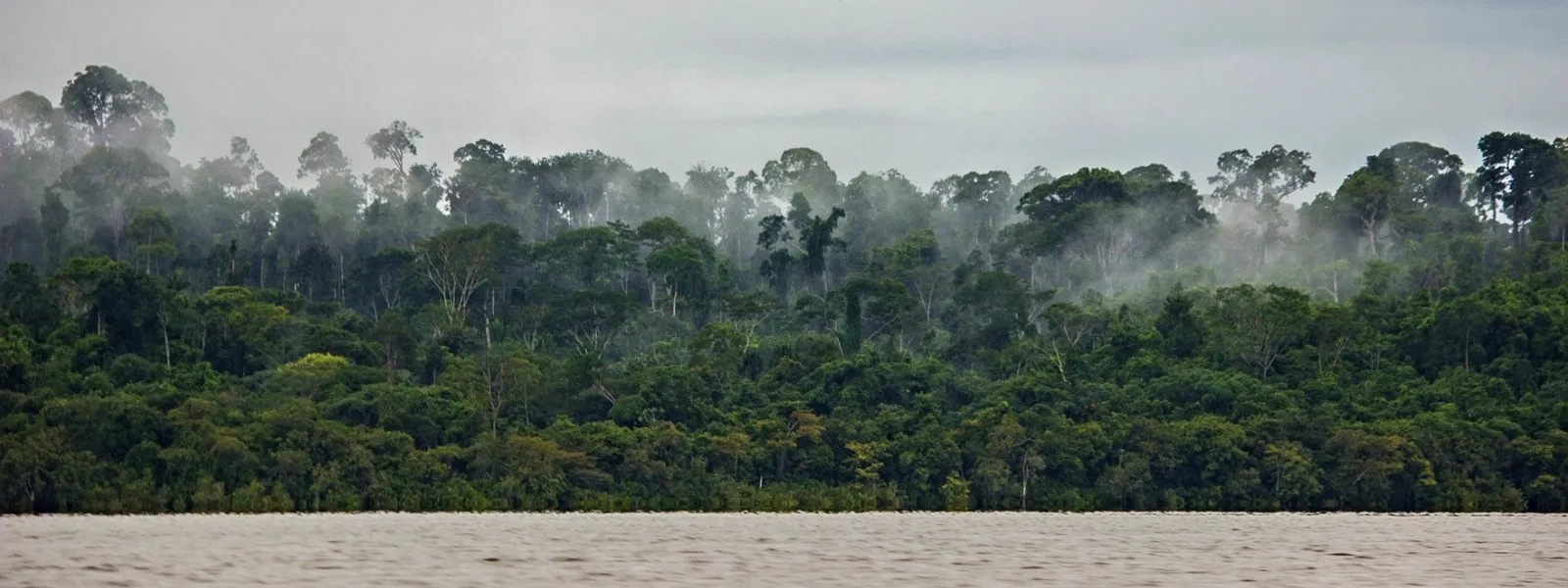
A usina hidrelétrica de Belo Monte — a quarta maior do mundo em capacidade instalada (11.233 MW) — foi construída no rio Xingu, no estado do Pará, norte do Brasil.
Foi inaugurada em 5 de maio de 2016, com uma única turbina. Naquela época, 80% do curso do rio foi desviado e 516 km² de terra foram inundados, uma área maior que a cidade de Chicago. Desse total, 400 km² eram de mata nativa. A usina começou a operar em plena capacidade em novembro de 2019.
Belo Monte foi construída e é operada pelo consórcio Norte Energia S.A., composto principalmente por empresas estatais. Foi financiada pelo Banco Nacional de Desenvolvimento Econômico e Social (BNDES), que aportou ao consórcio 25,4 bilhões de reais (aproximadamente US$ 10,16 bilhões), o maior investimento de sua história. Portanto, o BNDES também é legalmente responsável pelos impactos socioambientais associados ao projeto hidrelétrico.
Décadas de danos ambientais e humanos
As violações dos direitos humanos e a degradação da Amazônia remontam ao início do projeto. Em março de 2011, a Norte Energia iniciou a construção da barragem sem consulta adequada e sem o consentimento prévio, livre e informado das comunidades afetadas.
A construção levou ao deslocamento forçado de mais de 40.000 pessoas, rompendo laços sociais e culturais. O plano de reassentamento em Altamira — cidade diretamente afetada pelo projeto hidrelétrico — incluía moradias na periferia da cidade, sem serviços públicos adequados, moradias dignas para as famílias reassentadas e moradias diferenciadas para aqueles pertencentes a comunidades indígenas.
A operação da barragem de Belo Monte impôs uma seca permanente e artificial na Volta Grande do rio Xingu, agravada pelas secas históricas na Amazônia em 2023 e 2024. Como resultado, a morte de milhões de ovos de peixe foi documentada por quatro anos consecutivos (de 2021 a 2024) e, nos últimos três anos, não houve migração de peixes rio acima para desovar e se reproduzir. Assim, a pesca artesanal, principal fonte de proteína para os povos indígenas e comunidades ribeirinhas, foi severamente afetada: o consumo de peixe caiu de 50% para 30% do total de proteínas consumidas, sendo substituído por alimentos processados. Em suma, houve um colapso ambiental e humanitário que resultou no colapso da pesca como modo de vida tradicional, insegurança alimentar e falta de acesso à água potável para milhares de famílias, empobrecimento e doenças.
Além disso, a construção da barragem aumentou o desmatamento e intensificou a extração ilegal de madeira e a insegurança em terras indígenas e tribais, colocando em risco a sobrevivência dessas comunidades. Outra consequência foi o agravamento da pobreza e dos conflitos sociais, bem como a sobrecarga dos sistemas de saúde, educação e segurança pública em Altamira, cidade considerada a mais violenta do país em 2017, onde houve aumento do tráfico de pessoas e da violência sexual. Também foram registrados casos de violência contra defensores de direitos humanos envolvidos no caso.
Em 2025, durante a 30ª Conferência das Nações Unidas sobre Mudanças Climáticas (COP30), realizada no Brasil, o Ministério Público Federal classificou os danos causados por Belo Monte como ecocídio.
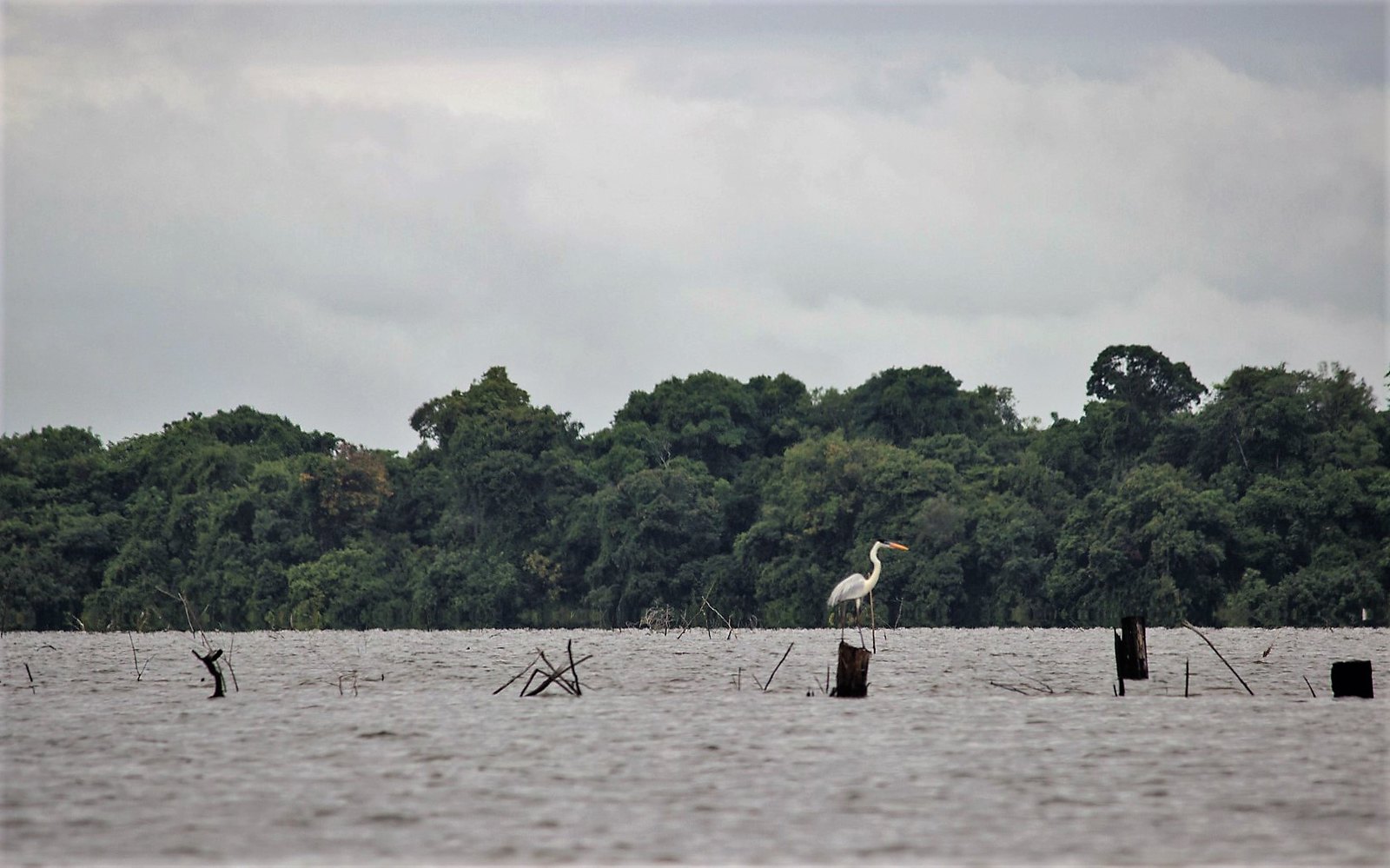
Foto: Amazon Watch / Maíra Irigaray.
A busca por justiça e reparação
Ao longo dos anos, o Ministério Público Federal do Pará, a Defensoria Pública e organizações da sociedade civil impetraram dezenas de ações judiciais em tribunais brasileiros para contestar as diversas irregularidades do projeto, bem como seus impactos. A maioria das ações permanece sem solução, algumas há mais de 10 anos.
Essas ações não obtiveram sucesso porque o governo federal tem reiteradamente anulado decisões favoráveis às comunidades afetadas, recorrendo a um mecanismo pelo qual o presidente do Supremo Tribunal Federal pode suspender uma decisão judicial com base unicamente em argumentos genéricos como "interesse nacional" ou "ordem econômica".
Diante da falta de respostas eficazes em nível nacional, a AIDA — juntamente com uma coalizão de organizações aliadas — levou o caso à Comissão Interamericana de Direitos Humanos (CIDH) e, em 2010, solicitou medidas cautelares para proteger a vida, a integridade e a saúde das comunidades indígenas afetadas.
Em 1º de abril de 2011, a CIDH concedeu essas medidas e solicitou ao Estado brasileiro a suspensão das licenças ambientais e de quaisquer obras de construção até que as condições relativas à consulta prévia e à proteção da saúde e integridade das comunidades fossem atendidas.
E, em 16 de junho de 2011, apresentamos uma denúncia formal à CIDH — juntamente com o Movimento Xingu Vivo Para Siempre, a Coordenação das Organizações Indígenas da Amazônia Brasileira, a Diocese de Altamira, o Conselho Missionário Indígena, a Sociedade Pará de Defesa dos Direitos Humanos e a Global Justice — contra o Estado brasileiro por sua responsabilidade internacional nas violações de direitos humanos contra os povos afetados neste caso. A denúncia foi apresentada em dezembro de 2015.
Em 3 de agosto de 2011, a CIDH modificou as medidas cautelares para solicitar — em vez da suspensão de licenças e obras — a proteção dos povos que vivem em isolamento voluntário, a saúde das comunidades indígenas e a regularização e proteção das terras ancestrais.
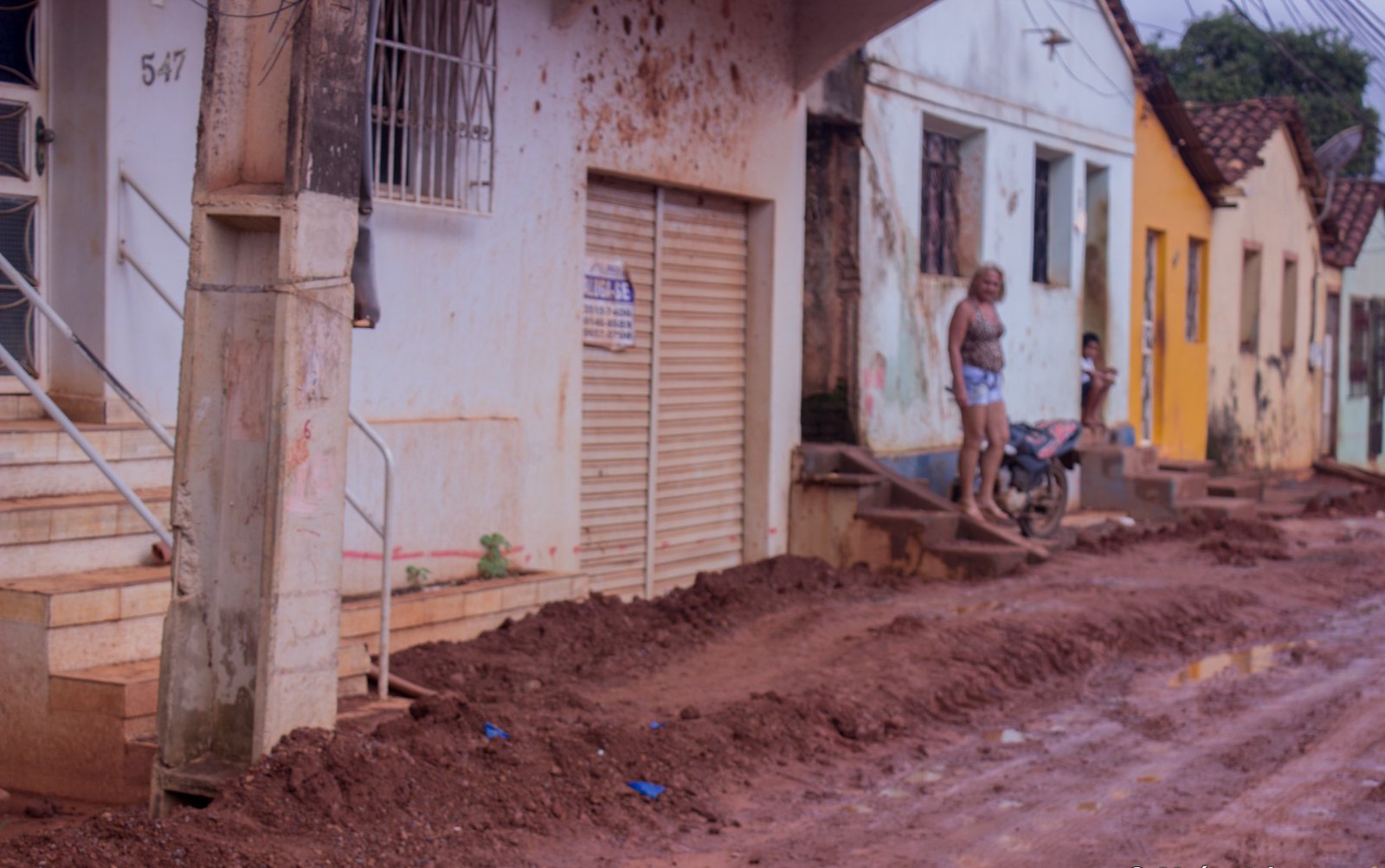
Foto: Amazon Watch / Maíra Irigaray.
Situação atual
As medidas de proteção concedidas pela CIDH permanecem em vigor, mas o Estado brasileiro não as cumpriu integralmente, relatando apenas ações genéricas. As comunidades documentaram as contínuas violações de seus direitos. A situação que motivou o pedido dessas medidas — o risco à vida, à segurança e aos meios de subsistência das comunidades — persiste e se agravou com a usina hidrelétrica operando em plena capacidade e com as recentes secas extremas na Amazônia.
Além do ocorrido em Belo Monte, existe o risco de maiores danos sociais e ambientais decorrentes da implementação de outro megaprojeto de mineração na Volta Grande do Xingu. Lá, a empresa canadense Belo Sun pretende construir a maior mina de ouro a céu aberto do Brasil.
Os impactos sinérgicos e cumulativos da usina e da mina não foram avaliados. O Estado excluiu povos indígenas, comunidades ribeirinhas e comunidades camponesas do processo de licenciamento ambiental do projeto. Apesar disso, dos protestos indígenas e de outras irregularidades em torno do projeto, o governo do estado do Pará autorizou formalmente a mina em abril de 2026.
Belo Monte, assim como outras usinas hidrelétricas, agrava a emergência climática ao gerar emissões de gases de efeito estufa em seu reservatório. Além disso, é ineficiente diante das secas prolongadas e intensas causadas pela crise, pois perde capacidade de geração de energia.
O caso perante a Comissão Interamericana
Em outubro de 2017, a CIDH anunciou que decidiria conjuntamente sobre a admissibilidade (se o caso preenche os requisitos para admissão) e o mérito (se houve, de fato, violação de direitos humanos) da denúncia internacional contra o Estado brasileiro.
Quinze anos após a apresentação da denúncia, as comunidades afetadas e as organizações que as representam ainda aguardam essa decisão. Caso a CIDH conclua que houve violações de direitos humanos e emita recomendações que o Estado brasileiro não cumpra, poderá encaminhar o caso à Corte Interamericana de Direitos Humanos, cujas decisões são vinculativas.
Uma possível decisão da Corte Internacional de Direitos Humanos neste caso estabeleceria um precedente jurídico regional em relação aos direitos dos povos indígenas e ribeirinhos, à participação pública em megaprojetos e à responsabilidade do Estado no contexto da crise climática. Isso é particularmente relevante à luz do Parecer Consultivo nº 32 da Corte, que reafirmou as obrigações dos Estados de proteger pessoas e comunidades em todo o continente da emergência climática.
Partners:
Related projects
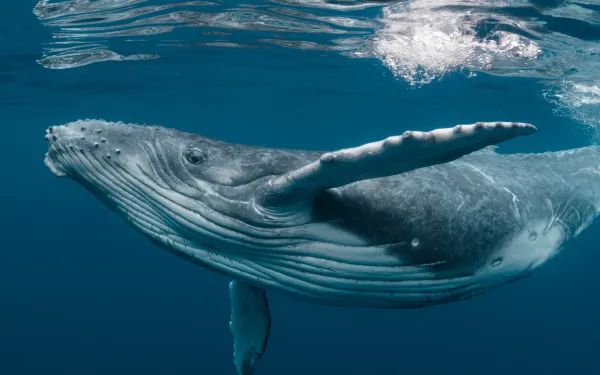
Whales and salmon farming: how does the industry impact our gentle marine giants?
Chile is by nature a country of marine mammals. Of the 94 species of cetaceans existing in the world, 43 have their habitat in the country's waters. And just over a quarter of them are found in Patagonia. But Chile is also a country of salmon, occupying the second place in the world production, surpassed only by Norway. The overlap of the salmon industry with the habitat of these emblematic marine mammals represents a significant threat to cetaceans in Chile about which not enough is known.The recent deaths of three whales in protected areas of Chile's southern seas force us to ask ourselves why they are dying and how they are affected by the growing industry with which they share their habitat.Civil society is responding. In early November 2024, Greenpeace - together with the Kawésqar community Grupos Familiares Nómadas del Mar and with the support of AIDA - filed two criminal complaints against those responsible for the deaths of humpback whales in protected areas.These lawsuits, which have already been declared admissible, represent an unprecedented milestone in the country's criminal history, as they are the first take advantage of the amendaments made to the Penal Code by Law 21,595 on Economic and Environmental Crimes to the Penal Code to file a lawsuit for possible violations committed inside protected areas.In this context, AIDA, together with Greenpeace and the NGO FIMA - historical allies in the resistance to the expansion of salmon farming in the waters of Chilean Patagonia - commissioned a scientific report entitle “Cetaceans and Salmon Farming: Challenges for the Protection of Marine Biodiversity in Chilean Patagonia.”The report is currently available in Spanish, which lays out the available information on the impacts of salmon farming on the whales and dolphins of Chilean Patagonia. The results are alarming: serious risks have been identified, in addition to a lack of data that makes it difficult to understand the magnitude and consequences of the threats.One of the most evident impacts is the incidental capture of small and large cetaceans in farming centers. There are documented cases of entanglement and deaths, although the lack of official records makes it difficult to measure the severity of the problem.Another significant threat is the Intense maritime traffic in Patagonia, largely related to the salmon industry. Although there is no official data in Chile, there is evidence of deaths and serious injuries due to collisions between boats and whales. In addition, underwater noise from boat engines affects the health and well-being of the whales and dolphins, which depend on sound for communication and orientation.In addition to these, there are other problems of the industry, whose effects on whales and dolphins have not been adequately studied, but which we should consider while the studies are being conducted. One of these is the escape of salmonids, which compete with native species for food resources and may carry diseases that could affect smaller cetaceans in particular by reducing the availability of prey that serve as food.Microplastic pollution, 40 percent of which comes from salmon farming centers, is another under-researched environmental concern in terms of its impact on cetaceans. And the excessive use of antibiotics in Chilean salmon farming, one of the highest rates in the world, could be having negative indirect effects on the ecosystems that support these marine mammals.Finally, one of the most significant environmental impacts of the salmon farming in Chilean Patagonia is the generation of hypoxia and anoxia due to the excess of organic matter in the farming centers, coming from salmon feces and uneaten food that falls to the seabed. The decomposition of this matter consumes the oxygen in the water, creating zones in the sea where life becomes difficult or impossible.We hope that this report will fill the information gap that has become uncomfortable and even untenable in light of recent whale deaths.With this evidence, even in a scenario of limited knowledge, we will be able to encourage a governmental response towards the rapid implementation of effective protection measures for whales and dolphins in Chilean waters.Chile is a country of cetaceans, and as their guardians, we must ensure that our waters are a safe space for their development and well-being. Read and download the report (in Spanish)
Read more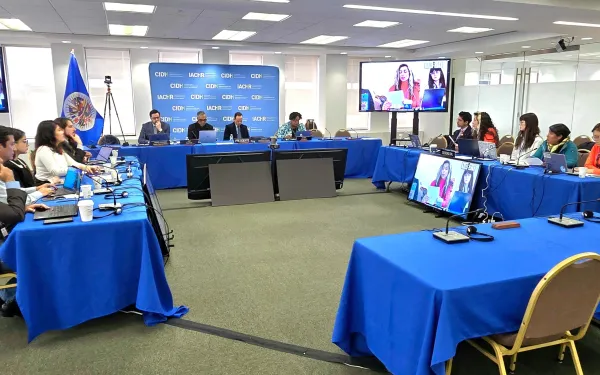
Organizations and communities call for intervention by the IACHR in response to the human rights impacts of mining for the energy transition
On Friday, November 15, representatives of national and regional organizations from Latin America, together with members of indigenous communities and peoples, participated in a regional public hearing before Commissioners and the Rapporteur on Economic, Social, Cultural, and Environmental Rights (REDESCA) of the Inter-American Commission on Human Rights (IACHR) to discuss the Human Rights violations that mineral extraction for the energy transition is causing on the continent.Specifically, they asked the IACHR to urge States to:Create or strengthen intangible mining-free zones in consideration of their cultural, climate, or ecosystem values.Refrain from modifying regulatory frameworks that protect the environment and indigenous peoples to facilitate investment in mining projects for the energy transition, without considering the protection of human rights.Respect and ensure the framework for protecting the right to a healthy environment, considering synergistic, cumulative, and perpetual impacts, as well as climate impacts; and implement effective mechanisms to supervise and monitor public and private actors involved in the extraction of these minerals.Strengthen their justice systems, taking into account the principles of prevention and precaution against irreparable damage to ecosystems, people, and communities. They also requested that the IACHR prepare a report examining the measures that should be adopted by the States of the region to ensure that the promotion of minerals for the transition does not lead to human rights violations, especially in communities living in areas that are highly vulnerable to the impacts of mining activities.The hearing highlighted, based on specific cases, the serious human rights issues associated with the mining of lithium, cadmium, copper, cobalt, and other minerals used in the development of renewable energy technologies.At the outset, Felipe Pino, Project Coordinator at ONG FIMA, Chile, emphasized that as the rollout of energy transition projects accelerates, there are growing calls for a just transition, which should be interpreted as a wake-up call about the lack of coherence between transition strategies and the basis for climate action: protecting people and ecosystems on the planet. “The communities most affected by the climate crisis are now threatened by strategies to combat climate change. The success of our efforts will depend on whether we are able to resolve this supposed paradox of acceleration versus justice, which is particularly evident in our region,” he said.Pia Marchegiani, Deputy Executive Director of Fundación Ambiente y Recursos Naturales (FARN), Argentina, said: “The great interest surrounding these minerals is also reflected in the enormous geopolitical dispute to gain control over them. Countries in North America, Europe, and Asia have enacted regulations to exploit these minerals and ensure their supply. International organizations such as the World Bank Group and the G20 have developed policies to ensure financing with certain safeguards in place for their use.”Marchegiani also noted that this issue has become so significant that the United Nations Secretary-General himself established a set of guiding principles to ensure justice, equity, and sustainability in the global energy transition. The first of these principles emphasizes the importance of placing human rights at the center of mineral value chains. The second highlights the need to address the transition comprehensively, with a focus on protecting the planet, biodiversity, and the environment.“It is estimated that demand for these minerals will grow exponentially in the coming years. Some forecasts suggest that global demand could quadruple by 2040 if climate agreements are fulfilled. Electric vehicles and batteries account for approximately half of the growth in this demand over the next two decades. This increase in demand translates into enormous pressure for Latin America, which already supplies 40% of the world’s copper production and 35% of lithium,” added Marchegiani.To explain the link between lithium extraction and human rights violations, Óscar Campanini, Executive Director of the Centro de Documentación e Información Bolivia (CEDIB), pointed out: “Lithium is extracted from the salt water beneath the salt flats, which requires the removal of tens of millions of cubic meters of salt water and fresh water. The salt flats in the so-called lithium triangle are located in desert areas where life is only possible thanks to fossil groundwater.”Verónica Gostissa, lawyer and activist at the Asamblea PUCARÁ in Catamarca, Argentina, said: “Since 1997, transnational companies have been extracting lithium from the Salar del Hombre Muerto, a sensitive high-altitude wetland. Due to the use of millions of liters of fresh and salt water, the companies—with the endorsement of the state—have already caused irreversible environmental damage: they have dried up the Trapiche River vega—that is, more than 5 km of river—which has died.”For her part, Lady Sandón, representative of the Environment Unit of the Consejo de Pueblos Atacameños, Chile, stated: “They are trying to secure production for 30 years to exploit lithium in fragile ecosystems such as salt flats, without having carried out consultation processes with indigenous communities, without adequate transparency, without considering those of us who live in the salt flats, arbitrarily choosing which salt flats to protect, without understanding that there is an interconnection of water.”Verónica Chávez, a member of the Comunidad de Santuario de Tres Pozos, one of more than 38 indigenous communities living in the Salinas Grandes Basin and Guayatayoc Lagoon, in the provinces of Salta and Jujuy in Argentina, said: “What we are defending is our life, that of plants, domestic and wild animals, vicuñas, llamas, etc. The lives of our ancestors, lagoons, and salt flats, which are part of our families. We all need water to live; clean water and a healthy territory. We are aware that this is not a task for the future. It is bread for today, hunger for tomorrow, and we will be sacrificed in order to extract this mineral.”Juan Sebastian Anaya, advocacy advisor at the Gaia Amazonas Foundation in Colombia, indicated that the human rights of indigenous peoples, Afro-descendants, and peasants in the Amazon are being affected by the legal and illegal extraction of minerals for the transition. “Today, there are extraction sites for rare earth elements, coltan, copper, and other strategic minerals, most of which operate without any state control… Mining activity is alien to the knowledge systems and legal order of the vast majority of Amazonian indigenous peoples,” he emphasized.Finally, Liliana Ávila, director of the Human Rights and Environment Program at the Interamerican Association for Environmental Defense (AIDA), highlighted that the testimonies reveal at least three cross-cutting elements: violations of the right to water, violations of the right to a healthy environment, and aggravated impacts on indigenous peoples and local communities. “The region has experienced decades of human rights impacts resulting from fossil fuel extraction. It is essential that new forms of energy production overcome this legacy of abuse,” she said.The hearing was requested during the 191st session of the IACHR by the Due Process of Law Foundation (DPLF), the Gaia Amazonas Foundation, and the organizations that make up the Alliance for Andean Wetlands: the Interamerican Association for Environmental Defense (AIDA), a regional organization; the Fundación Ambiente y Recursos Naturales (FARN) and Asamblea PUCARÁ of Argentina; the Centro de Documentación e Información Bolivia (CEDIB) and the Human Rights Collective Empodérate of Bolivia; ONG FIMA, Defensa Ambiental, and Fundación Tantí of Chile. Press contactVíctor Quintanilla (Mexico), AIDA, [email protected], +52 5570522107
Read more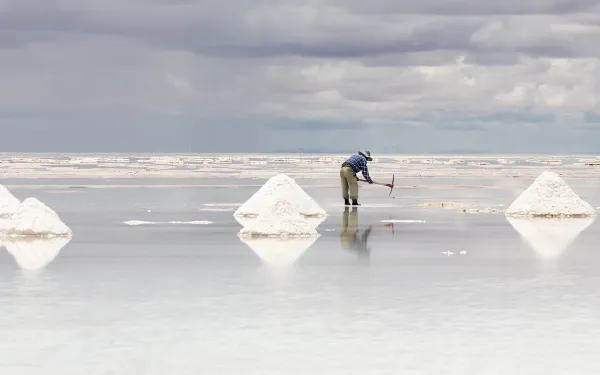
Organizations and communities alert to human rights impacts of mineral extraction for the energy transition
A public hearing before the Inter-American Commission on Human Rights will focus on the impact of the expansion and intensification of extractive operations for transition minerals like lithium and copper on communities in Latin America. Washington DC. On November 15, at a public hearing before the Inter-American Commission on Human Rights, representatives of national and regional organizations, as well as members of communities and indigenous peoples, will present updated information on how the exponential increase in the demand for and extraction of transition minerals has caused serious human rights violations as part of a transition process that is proposed only as a change in the energy matrix and is incapable of addressing inequalities in energy production and consumption, particularly in the Global South.Transition minerals like lithium, copper, cadmium, and cobalt—also called “critical” minerals—have been proposed in many global discussions as one of the main solutions to the climate crisis, as they are used in the development of technologies for the production of renewable energy, thus reducing or replacing the use of fossil fuels. A large part of these minerals are located in Latin America, in areas of great biocultural diversity.At the hearing, participants will present the main threats that mining for energy transition poses to the rights of indigenous peoples and local communities, the right to a healthy environment, access to environmental information, citizen participation, and justice. In addition, concrete cases of human rights violations in the context of mining for energy transition will be presented through testimonies.These impacts are already occurring in countries such as Argentina, Bolivia and Chile, which concentrate about 53 percent of the world's known lithium deposits in their Andean wetlands, extremely fragile ecosystems confronting water scarcity; in Chile and Peru, where 40 percent of the world’s copper is mined; and in the Colombian Amazon, where concessions, mining claims and illegal extraction of transition minerals are violating the rights of indigenous peoples.Several international organizations have spoken out about human rights abuses related to climate crisis response, particularly energy transition processes. In September, the UN Panel on Critical Minerals for Energy Transition issued a set of recommendations and voluntary principles for governments, industry and other stakeholders to ensure equitable, fair and sustainable management of these minerals. These guidelines aim to ensure that the transition to renewable energy is based on fairness and equity, and that it promotes sustainable development, respect for people, and environmental protection in developing countries.The hearing will take place during the 191st period of sessions of the Inter-American Commission. It was requested by the Due Process of Law Foundation (DPLF), the Gaia Amazonas Foundation and the organizations that are members of the the Alliance for Andean Wetlands (Alianza por los Humedales Andinos): the Interamerican Association for Environmental Defense (AIDA), a regional organization; the Fundación Ambiente y Recursos Naturales (FARN) and the PUCARÁ Assembly, of Argentina; the Centro de Documentación e Información Bolivia (CEDIB) and the Colectivo de Derechos Humanos Empodérate, of Bolivia; ONG FIMA, Defensa Ambiental and Fundación Tantí, of Chile.The hearing will be held from 9:00 a.m. to 10:30 a.m. (Washington DC time) and will be broadcast via Zoom, which requires prior registration at the following link: https://www.zoomgov.com/webinar/register/WN_dsEZdrDqSyOA8-i7ikveJQ#/registration. Quotes from representatives of organizations and communities Verónica Chávez, representative of the communities of Salinas Grandes and Laguna de Guayatayoc, Argentina:"All of us who are part of the Salinas Grande watershed are living a situation in which our rights are being affected. We hope that the IACHR can resolve this situation because it is very serious; they are damaging our territories, living beings, and nature itself." Liliana Ávila, director of the Human Rights and Environment Program at the Interamerican Association for Environmental Defense (AIDA):"The energy transition in our countries should be an opportunity to move towards more just and equitable energy production and distribution processes. The human rights framework and the role of the international protection system are fundamental in this regard. It is very important that the Inter-American Commission closely follows this process and promotes the protection of human rights." Verónica Gostissa, attorney with Asamblea Pucará of Catamarca, Argentina:"In our territory, the province of Catamarca, Argentina, we are living a serious violation of our rights, which is reflected first and foremost in the visible environmental impacts. Since 1997, lithium mining has caused significant environmental damage, including the drying up of a branch of the Trapiche River, a damage that persists to this day. Water continues to be taken from this damaged river, despite recognition of the damage by the company and government authorities. Access to public information, participation and consultation, and access to justice are also affected. For years, extractive projects have been approved without adequate procedures, and although a lawsuit filed by the Atacameños del Altiplano indigenous community resulted in a regulation, it does not meet the standards for effective indigenous consultation. In addition, more than 10 lithium projects are being developed in the same territory, the Salar del Hombre Muerto, without any cumulative and comprehensive impact assessment to date." Vivian Lagrava Flores, coordinator of the Colectivo de Derechos Humanos Empodérate, Bolivia:"Indigenous communities reject mining projects, they can even issue their resolutions and say no in the mining consultation process, but their decisions are not binding for governments. International standards are not respected, and the subjugation of territories and the imposition of mining rights are legitimized with discourses of progress and development, but it is not development from the vision of the indigenous peoples, nor from ours." Lady Sandón, representative of the Environment Unit of the Consejo de Pueblos Atacameños, Chile:"There is a lot of ignorance of the law for the native/indigenous people, which favors the state, and that is why the inhabitants of the land, by not knowing, do not enforce their guarantees. The state institutions violate the social, environmental, and cultural aspects; sometimes they use the indigenous people themselves to create divisions and to have supporters or political and mining operators who promote the change of the thinking of the genetic memory that we have as native people. I hope that we can revisit the situation of ancestral indigenous justice as a mechanism that previously established corrections so that the values and principles of ‘Buen Vivir’ are respected." Daniel Cerqueira, program director of the Due Process of Law Foundation (DPLF):"This hearing is an opportunity for the Inter-American Commission to clarify the parameters of action for both States and companies in the management of transition minerals. It is imperative to have specific obligations in this area, as human rights violations resulting from the extraction of these minerals are a reality that tends to worsen in several countries in the region." Juan Sebastian Anaya, advocacy advisor at the Gaia Amazonas Foundation (Colombia):"The indigenous governments of the Amazon exercise their territorial and environmental authority in accordance with the Law of Origin, which guides their knowledge systems and principles of relationship with the elements of the territory, such as minerals. The decarbonization of the energy matrix to maintain consumption standards in the global north should not be done at the expense of indigenous territories and the communities that protect them, govern them and make them flourish with their daily practices."Press contactsVíctor Quintanilla (Mexico), AIDA, [email protected], +52 5570522107Rocío Wischñevsky (Argentina), FARN, [email protected], +54 91159518538 Karen Arita (Mexico), DPLF, [email protected], +52 442 471 9626
Read more