

Project
Amazon Watch / Maíra Irigaray
Barragem de Belo Monte no rio Xingu: 10 anos de impactos na Amazônia e de busca por reparações
A usina hidrelétrica de Belo Monte causou um desastre ambiental e social no coração da Amazônia: um dos ecossistemas mais importantes do planeta.
Essa situação só piorou desde que a usina começou a operar em 2016. A busca por justiça e reparação para as comunidades indígenas e ribeirinhas afetadas continua até hoje.
Em 2011, a Comissão Interamericana de Direitos Humanos (CIDH) concedeu a essas comunidades medidas de proteção, que até hoje não foram totalmente implementadas pelo Estado brasileiro.
E, desde junho daquele mesmo ano, a CIDH mantém um processo contra o Estado por sua responsabilidade internacional no caso.
A CIDH pode encaminhar o caso à Corte Interamericana de Direitos Humanos, que tem o poder de emitir uma sentença condenatória contra o Estado brasileiro.
Consulta o expediente de fatos do caso
Após 10 anos de operação da usina hidrelétrica e mais de 15 anos de violações de direitos humanos documentadas, é hora da justiça ser feita para as comunidades afetadas.
Leia a carta aberta das organizações que levam o caso à CIDH
Leia nosso comunicado à imprensa
Contexto
A usina hidrelétrica de Belo Monte — a quarta maior do mundo em capacidade instalada (11.233 MW) — foi construída no rio Xingu, no estado do Pará, norte do Brasil.
Foi inaugurada em 5 de maio de 2016, com uma única turbina. Naquela época, 80% do curso do rio foi desviado e 516 km² de terra foram inundados, uma área maior que a cidade de Chicago. Desse total, 400 km² eram de mata nativa. A usina começou a operar em plena capacidade em novembro de 2019.
Belo Monte foi construída e é operada pelo consórcio Norte Energia S.A., composto principalmente por empresas estatais. Foi financiada pelo Banco Nacional de Desenvolvimento Econômico e Social (BNDES), que aportou ao consórcio 25,4 bilhões de reais (aproximadamente US$ 10,16 bilhões), o maior investimento de sua história. Portanto, o BNDES também é legalmente responsável pelos impactos socioambientais associados ao projeto hidrelétrico.
Décadas de danos ambientais e humanos
As violações dos direitos humanos e a degradação da Amazônia remontam ao início do projeto. Em março de 2011, a Norte Energia iniciou a construção da barragem sem consulta adequada e sem o consentimento prévio, livre e informado das comunidades afetadas.
A construção levou ao deslocamento forçado de mais de 40.000 pessoas, rompendo laços sociais e culturais. O plano de reassentamento em Altamira — cidade diretamente afetada pelo projeto hidrelétrico — incluía moradias na periferia da cidade, sem serviços públicos adequados, moradias dignas para as famílias reassentadas e moradias diferenciadas para aqueles pertencentes a comunidades indígenas.
A operação da barragem de Belo Monte impôs uma seca permanente e artificial na Volta Grande do rio Xingu, agravada pelas secas históricas na Amazônia em 2023 e 2024. Como resultado, a morte de milhões de ovos de peixe foi documentada por quatro anos consecutivos (de 2021 a 2024) e, nos últimos três anos, não houve migração de peixes rio acima para desovar e se reproduzir. Assim, a pesca artesanal, principal fonte de proteína para os povos indígenas e comunidades ribeirinhas, foi severamente afetada: o consumo de peixe caiu de 50% para 30% do total de proteínas consumidas, sendo substituído por alimentos processados. Em suma, houve um colapso ambiental e humanitário que resultou no colapso da pesca como modo de vida tradicional, insegurança alimentar e falta de acesso à água potável para milhares de famílias, empobrecimento e doenças.
Além disso, a construção da barragem aumentou o desmatamento e intensificou a extração ilegal de madeira e a insegurança em terras indígenas e tribais, colocando em risco a sobrevivência dessas comunidades. Outra consequência foi o agravamento da pobreza e dos conflitos sociais, bem como a sobrecarga dos sistemas de saúde, educação e segurança pública em Altamira, cidade considerada a mais violenta do país em 2017, onde houve aumento do tráfico de pessoas e da violência sexual. Também foram registrados casos de violência contra defensores de direitos humanos envolvidos no caso.
Em 2025, durante a 30ª Conferência das Nações Unidas sobre Mudanças Climáticas (COP30), realizada no Brasil, o Ministério Público Federal classificou os danos causados por Belo Monte como ecocídio.
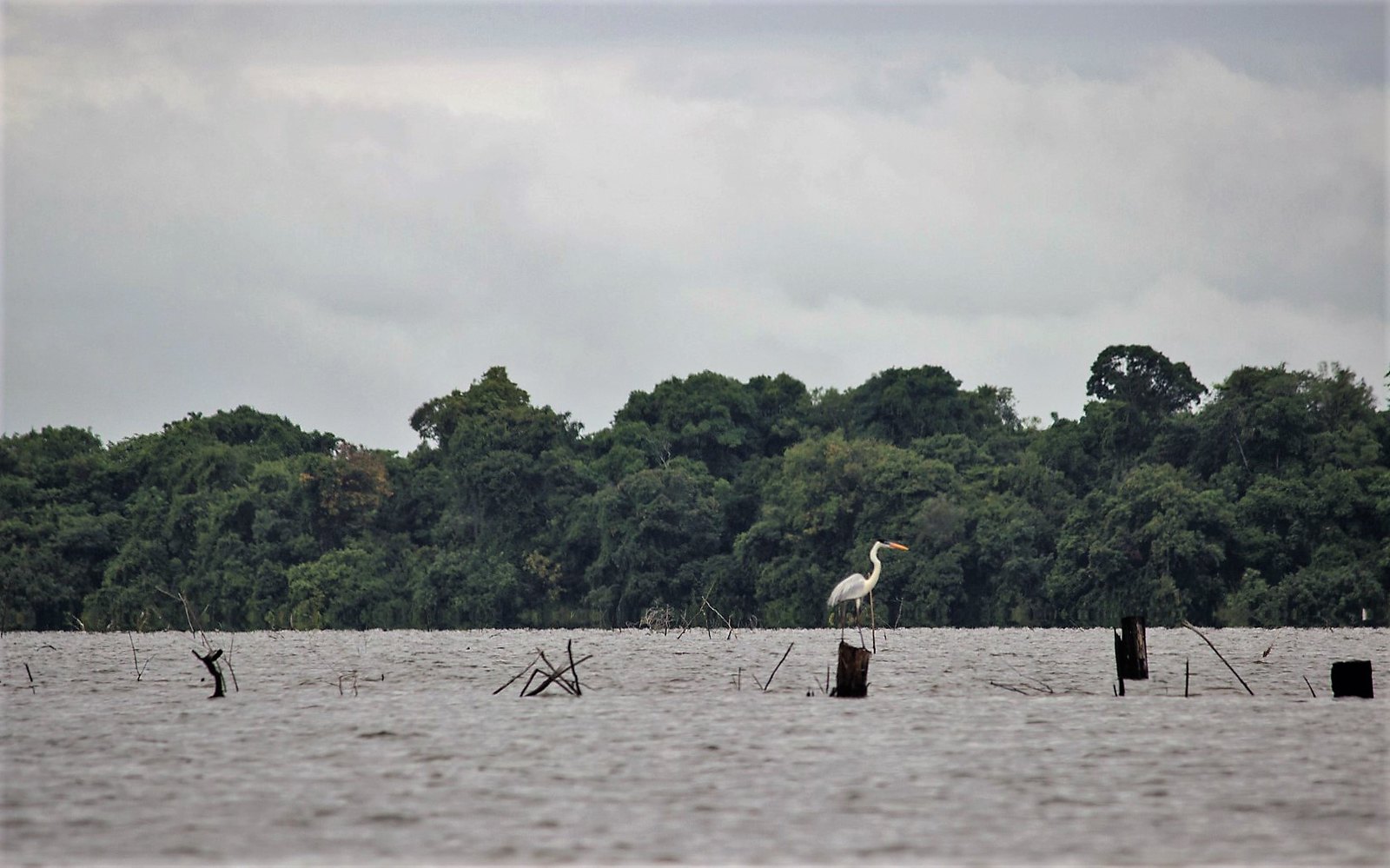
Foto: Amazon Watch / Maíra Irigaray.
A busca por justiça e reparação
Ao longo dos anos, o Ministério Público Federal do Pará, a Defensoria Pública e organizações da sociedade civil impetraram dezenas de ações judiciais em tribunais brasileiros para contestar as diversas irregularidades do projeto, bem como seus impactos. A maioria das ações permanece sem solução, algumas há mais de 10 anos.
Essas ações não obtiveram sucesso porque o governo federal tem reiteradamente anulado decisões favoráveis às comunidades afetadas, recorrendo a um mecanismo pelo qual o presidente do Supremo Tribunal Federal pode suspender uma decisão judicial com base unicamente em argumentos genéricos como "interesse nacional" ou "ordem econômica".
Diante da falta de respostas eficazes em nível nacional, a AIDA — juntamente com uma coalizão de organizações aliadas — levou o caso à Comissão Interamericana de Direitos Humanos (CIDH) e, em 2010, solicitou medidas cautelares para proteger a vida, a integridade e a saúde das comunidades indígenas afetadas.
Em 1º de abril de 2011, a CIDH concedeu essas medidas e solicitou ao Estado brasileiro a suspensão das licenças ambientais e de quaisquer obras de construção até que as condições relativas à consulta prévia e à proteção da saúde e integridade das comunidades fossem atendidas.
E, em 16 de junho de 2011, apresentamos uma denúncia formal à CIDH — juntamente com o Movimento Xingu Vivo Para Siempre, a Coordenação das Organizações Indígenas da Amazônia Brasileira, a Diocese de Altamira, o Conselho Missionário Indígena, a Sociedade Pará de Defesa dos Direitos Humanos e a Global Justice — contra o Estado brasileiro por sua responsabilidade internacional nas violações de direitos humanos contra os povos afetados neste caso. A denúncia foi apresentada em dezembro de 2015.
Em 3 de agosto de 2011, a CIDH modificou as medidas cautelares para solicitar — em vez da suspensão de licenças e obras — a proteção dos povos que vivem em isolamento voluntário, a saúde das comunidades indígenas e a regularização e proteção das terras ancestrais.
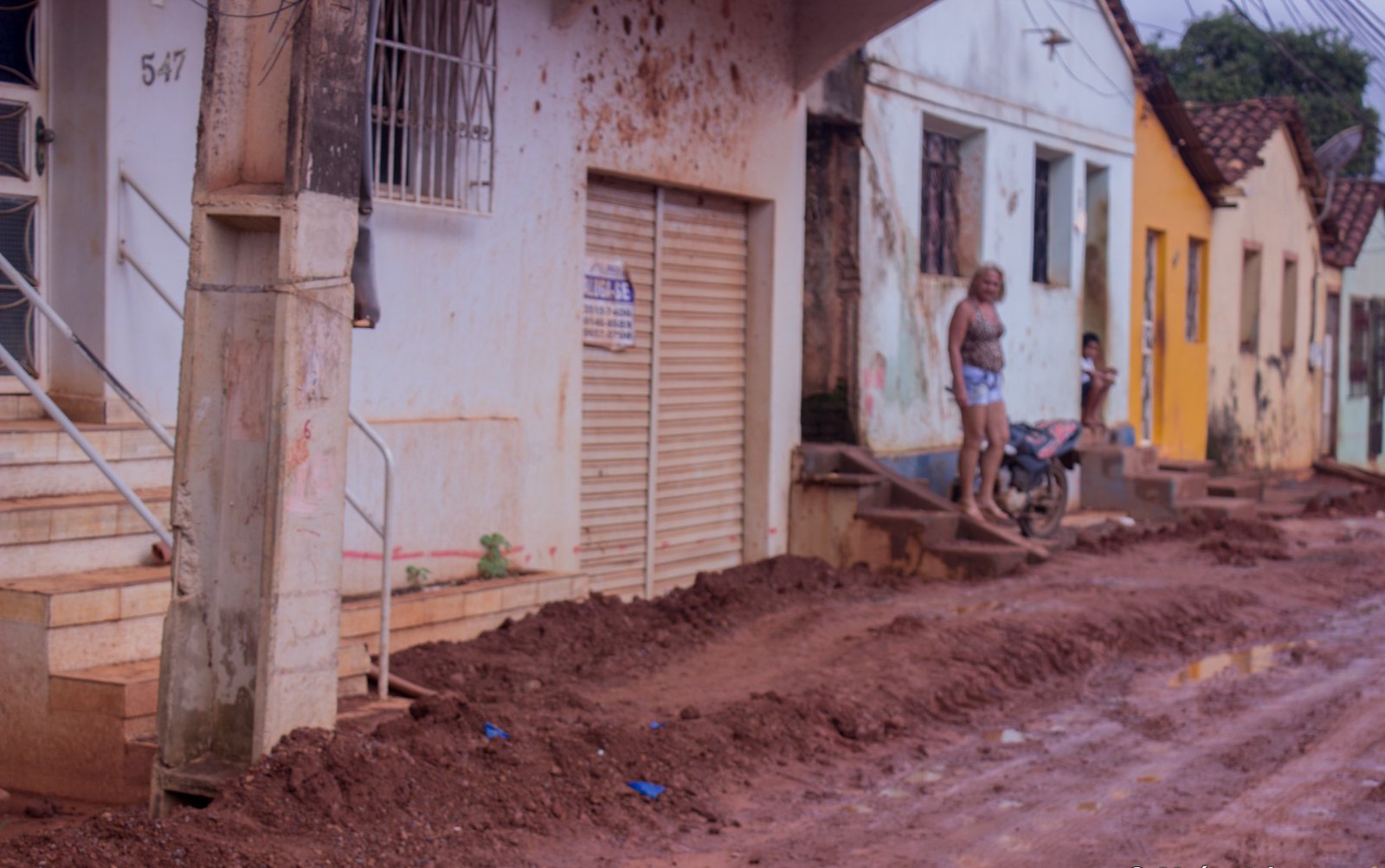
Foto: Amazon Watch / Maíra Irigaray.
Situação atual
As medidas de proteção concedidas pela CIDH permanecem em vigor, mas o Estado brasileiro não as cumpriu integralmente, relatando apenas ações genéricas. As comunidades documentaram as contínuas violações de seus direitos. A situação que motivou o pedido dessas medidas — o risco à vida, à segurança e aos meios de subsistência das comunidades — persiste e se agravou com a usina hidrelétrica operando em plena capacidade e com as recentes secas extremas na Amazônia.
Além do ocorrido em Belo Monte, existe o risco de maiores danos sociais e ambientais decorrentes da implementação de outro megaprojeto de mineração na Volta Grande do Xingu. Lá, a empresa canadense Belo Sun pretende construir a maior mina de ouro a céu aberto do Brasil.
Os impactos sinérgicos e cumulativos da usina e da mina não foram avaliados. O Estado excluiu povos indígenas, comunidades ribeirinhas e comunidades camponesas do processo de licenciamento ambiental do projeto. Apesar disso, dos protestos indígenas e de outras irregularidades em torno do projeto, o governo do estado do Pará autorizou formalmente a mina em abril de 2026.
Belo Monte, assim como outras usinas hidrelétricas, agrava a emergência climática ao gerar emissões de gases de efeito estufa em seu reservatório. Além disso, é ineficiente diante das secas prolongadas e intensas causadas pela crise, pois perde capacidade de geração de energia.
O caso perante a Comissão Interamericana
Em outubro de 2017, a CIDH anunciou que decidiria conjuntamente sobre a admissibilidade (se o caso preenche os requisitos para admissão) e o mérito (se houve, de fato, violação de direitos humanos) da denúncia internacional contra o Estado brasileiro.
Quinze anos após a apresentação da denúncia, as comunidades afetadas e as organizações que as representam ainda aguardam essa decisão. Caso a CIDH conclua que houve violações de direitos humanos e emita recomendações que o Estado brasileiro não cumpra, poderá encaminhar o caso à Corte Interamericana de Direitos Humanos, cujas decisões são vinculativas.
Uma possível decisão da Corte Internacional de Direitos Humanos neste caso estabeleceria um precedente jurídico regional em relação aos direitos dos povos indígenas e ribeirinhos, à participação pública em megaprojetos e à responsabilidade do Estado no contexto da crise climática. Isso é particularmente relevante à luz do Parecer Consultivo nº 32 da Corte, que reafirmou as obrigações dos Estados de proteger pessoas e comunidades em todo o continente da emergência climática.
Partners:
Related projects
Our responsibility in the conservation of fisheries resources
It’s increasingly common to hear people say that they identify themselves as flexitarian, or semi-vegetarian. Being flexitarian means a person eats mostly a vegetarian diet, but occasionally consumes animal products like meat, poultry, seafood and fish. There are also pescetarians, or pesco-vegetarians, who only consume different varieties of fish and seafood As with any consumption habit, it is important to reflect on its environmental impact. While the current pattern of meat consumption is not sustainable, largely due to its impacts on the climate, the situation for fish consumption is no more encouraging. According to the biennial report of the Food and Agriculture Organization (FAO), for more than 60 years global fish consumption has increased at a rate considerably higher than the growth of the world population. In addition, it is estimated that more than 30 percent of the world's fish stocks are overexploited and 60 percent are overfished. The continued increase in overfishing has consequences not only for biodiversity and ecosystem functioning, but also causes a decrease in fish production, with negative economic and social repercussions. Why fish consumption is increasing There are many reasons why people change their eating habits. They are often linked to health, weight and ethical considerations that reflect an ideology of respect for animals and environmental sustainability related to the reduction of red meat consumption. In recent years, fish-rich diets have been strongly promoted, mainly for their nutritional benefits. The nutritional content of fish varies according to factors such as species, age, environment, diet and even the time of capture. However, in general terms, fish are characterized by being sources of vitamins and proteins with high biological value. Oily or fatty fish—among them salmon, sardines and tuna—are usually exceptionally rich in Omega-3 and in minerals such as potassium, magnesium and phosphorus. Nutritionally, it’s advisable to consume them two to three times a week since rational consumption of fish helps regulate blood pressure, and reduce coronary risk and triglyceride levels. Although it’s necessary to eat in a healthy and balanced way to have a full life, it is also crucial to take into account the origin of the food we consume and to question where it comes from, and under what conditions it was caught or processed. An example of the relevance of answering these questions is the case of salmon, whose nutritional value lies in wild species and not in farm-raised ones, which are fed with an excessive amount of antibiotics. Overfishing, incentives and consequences According to the FAO, about 90 percent of marine fish stocks worldwide are fully exploited, overfished or depleted. Negative fisheries subsidies account for much of this problem. By increasing fishing capacity, these subsidies provide short-term benefits, but threaten the long-term sustainability of ecosystems and coastal communities. Worldwide, negative subsidies represent an investment of $22 billion each year. The most widely used are those for the purchase of fuel and the modernization of vessels to increase catches. Ecologically, these incentives reduce fish stocks and hinder their recovery. They destroy marine habitats and exacerbate overfishing. Given that nearly 60 million people work directly in the world's fisheries, it is vital that fish stocks be allowed to regenerate properly, thus ensuring the continued livelihoods of fishing communities. The responsible use of fishery and aquaculture resources must be recognized as a priority for global food security and nutrition, as well as for local development opportunities. The promotion and adoption of responsible fishing practices, from catch to consumption, is a joint effort in which consumers play a fundamental role. How to eat fish responsibly Sustainable fishing allows fish stocks to reproduce adequately and continuously, keeping them healthy and productive. While this task necessitates the active involvement of the fishing sector and government authorities, as consumers we also have a responsibility to promote sustainability through our purchasing decisions. Here are some simple tips fish eaters can implement in their daily lives: Verify the origin and size of the fish or seafood: Learn aspects such as the origin and method of capture, in addition to the size of the piece, which determines whether it reached sufficient maturity. Diversify consumption habits: Consume fish and seafood according to seasonality, a phenomenon related to the times of reproduction and movement of species, which are highly dependent on characteristics such as water temperature. Consuming seasonal fish and seafood allows for proper reproduction and recovery of species, ensuring greater balance and helping to avoid overfishing. Buy from authorized sites: Know if the place of sale actually complies with sustainability and traceability criteria for the products it sells. Traceability is the set of measures and procedures that make it possible to follow the trail of a fishery product from its capture to its final sale. Check labels: Where possible, choose products with certifications in sustainable fishing and marketing practices, such as the MSC (Marine Stewardship Council) seal or the Environmental Responsibility Standard for Fish Marketing, granted by Marviva in Costa Rica, Panama and Colombia. If we as a society allow for the gradual recovery of our ocean, we will be making a positive contribution to food security, the economy, the wellbeing of coastal communities, and future generations.
Read more
The IDB's opportunity to support the protection of the environment and human rights
The Inter-American Development Bank Group (IDB Group) is uniquely positioned not only to support recovery efforts in Latin America and the Caribbean, a region hard hit by the pandemic, but also to do so with respect for people and the environment. The IDB Group—composed of the IDB, which works with governments; IDB Invest, which collaborates with the private sector; and IDB Lab, the bank’s innovation laboratory— is the continent's most important development financing entity. In 2020, it approved a record US$21.6 billion for its 26 member countries in the region. In addition to the challenge of leading the recovery of public finances, the current economic and social crisis represents an opportunity for the IDB Group to successfully face another major challenge: the adoption of operational policies that comply with international environmental and human rights standards, as well as improved accountability processes. This is fundamental to the role the Bank plays in the region, and has become even more relevant in the current context: Regarding accountability and the evaluation of its current policies, it is important to consider that four hydroelectric projects financed by the IDB Group are or have been under scrutiny by the IDB's Independent Consultation and Investigation Mechanism (MICI) due to the impacts caused by their implementation in indigenous and rural communities in Guatemala, Chile and Colombia. These projects, financed by IDB Invest, have affected the livelihoods of those who live in their shadow. AIDA—together with the International Platform Against Impunity and the Plurinational Government of the Q'anjob'al, Chuj, Akateko, Popti and Mestiza Nation—has supported members of the Mayan communities of the Ixquisis micro-region in Guatemala in the face of the destruction caused by two of these projects: the San Mateo and San Andres dams. Personally, I’ve seen first hand the damages caused to the indigenous population. I’ve heard the fear and uncertainty in the voices of local women as they explained how their rivers were polluted, their children fell ill, and their lives forever changed. “One day we will run out of water and we won’t be able to live,” a female indigenous leader from Ixquisis told me. “Our children will suffer.” The women of Ixquisis have played a central role in the complaint presented before MICI, as a primary question at play centers on the supposed violation of the Bank’s operational policy on gender, which recognizes that development projects often have differential impacts on local women. For the women, the rivers are a vital element, since they enable access to fresh water and food, also playing a key role in their interactions with each other. In the complaint, affected communities also denounced the projects’ lack of compliance with the Bank’s operational policies indigenous rights and the environment, and for the resulting damages. They argue that the company implementing the San Mateo and San Andrés dams acted without due diligence and violated the right to consultation and the free, prior and informed consent of affected indigenous peoples. In fact, the implementation of the projects actually ignored the results of a good faith consultation, carried out in 2009, in which the majority of the local population decided they did not consent to the implementation of such mega-projects in their territory. What’s evident is that the Bank’s capacity to supervise the projects it finances is limited and, despite meeting minimum standards, its operational policies are often ineffective. What’s more, spaces in which the Bank verifies compliance are reduced and the consequences for that non-compliance, uncertain. Earlier this year, MICI published a report on Chile’s Alto Maipo hydroelectric project, finding that the dam violated several operational policies, including that on gender. Yet that report has come under scrutiny for failing to offer restitution measures for the ongoing damages incurred by affected communities. In the coming months, the preliminary report on the Ixquisis case will be released. Affected communities hope that the recommendations it holds are reflective of the realities on the ground, and oriented toward the adoption of corrective measures, including the immediate divestment of financing. With this case, the Bank has a key opportunity to demonstrate its commitment to accountability, as well as its openness to assess compliance with its own operational policies and to remedy the damages that failure to comply has caused to vulnerable groups. It’s also an opportunity for the entity to take preventive measures and lay the groundwork for changing its practices. When he was elected president of the institution, Mauricio Claver-Carone promised to "act on priority issues in the region.” This includes an evaluation of any global context that affects the very development the IDB Group seeks to promote. These days, that includes not just the current public health crisis, but also the global climate crisis, the serious situation facing environmental defenders, and resolving a number of pending complaints on gender equity and respect for indigenous rights. The actions taken by the IDB Group as a result of the Ixquisis case may be the first step in establishing a fundamental precedent for the protection of human rights and the environment among international financial institutions, a contribution that is undoubtedly as, if not more, valuable than the economic one.
Read more
Investor Alert: Belo Sun discloses misleading information to investors regarding controversial gold mining project in the Brazilian Amazon
In a complaint to the Ontario Securities Commission, an international coalition of civil society organizations calls attention to the repeated dissemination of misleading information by Belo Sun Mining Corp (TSXV:BSX), including statements by CEO Peter Tagliamonte, downplaying socio-environmental, legal, and financial risks of the company’s “Volta Grande” project along the Xingu River. Canadian-based mining company Belo Sun Corp.(TSXV:BSX) is disseminating misleading and incomplete information to investors about the mining project it is trying to develop on the Xingu river (Volta Grande do Xingu), Pará State, Brazil. This is the central message of a warning letter sent to the Ontario Securities Commission (OSC) on July 29rd by an international coalition of civil society organizations and networks including Amazon Watch, Earthworks, Instituto Socioambiental (ISA), Interamerican Association for Environmental Defense (AIDA), International Rivers, MiningWatch Canada, Movimento Xingu Vivo para Sempre and Rede Xingu+. The OSC is an independent Canadian Crown corporation responsible for protecting shareholders and investors from unfair, improper and fraudulent practices from companies and industries. Drafted by a legal team and supported by independent technical and scientific analysis, the complaint letter challenges recent statements by Belo Sun’s CEO Peter Tagliamonte. In a speech at the Prospectors & Developers Association of Canada (PDAC) event in March 2021, the largest mining convention in the world, Tagliamonte cited the Covid-19 pandemic as the justification for repeated delays in the environmental licencing of the Volta Grande mine, claiming that the mining project was "fully authorized" and that construction was expected to begin at the end of 2021. Similar comments have been made in recent company statements, and by Tagliamonte himself in other occasions. According to the complaint, such declarations are patently false. There are seven public civil actions active in Brazilian courts asking for the suspension of permits and of the licencing process, filed by Federal and State public prosecutors’ and defenders’ offices. These lawsuits focus specifically on irregularities in the Environmental Impact Assessment (EIA), and the lack of free, prior and informed consultation and consent with Indigenous peoples and other traditional communities. The coalition argues that there is overwhelming evidence that Belo Sun breached the Securities Act disclosure requirements, which requires companies to disclose material changes “forthwith” (without delay). Companies must disclose factual and updated data to keep investors well informed. Misleading information disclosed by Belo Sun Mining Corp. According to the complaint, while the company acknowledges the generic risks associated with the licensing process, it fails to disclose the concrete details of the legal actions and suspensions in play regarding its project, relying on investors' lack of knowledge concerning licensing legislation in Brazil. One example refers specifically to the suspension of its construction licence (LI), due to the lack of "free and informed consultation" of Indigenous peoples. In its more recent Corporate Update, Belo Sun states that "it continues to advance financial discussions with various groups in preparation for the commencement of construction following the lifting of the suspension of the construction license (LI)". "The company has not even started a consultation process, - which is now delayed by COVID-19 - and it is already advertising the lifting of the suspension, as if it was just a matter of time", says Marcella Ribeiro, attorney from AIDA's Human Rights and the Environment Program. "The company is not in a position to guarantee the results of the consultation process, as negotiations around consent are time-consuming and will invariably result in major material changes to the project. None of that is being disclosed properly to investors", she adds. Among the risks associated with investments in Belo Sun, the complaint highlights the history of judicial proceedings; conflict around the project; the flaws and gaps in the environmental impact assessment; and the violation of the Indigenous Peoples’ right to prior consultation. The downplaying of environmental and social risks by the company’s studies and impact assessments has sounded the alarm among communities in the Volta Grande region, already affected by the Belo Monte dam. A series of independent technical studies challenge Belo Sun’s statements regarding impacts to water resources, to fauna and flora, and regarding dam safety. The company’s refusal to acknowledge impacts in Indigenous territories along the Xingu river has led to the court decision that suspended the installation licence of the Volta Grande project in 2017 until "free and informed consultation" was carried out. There are also increasing accounts of intimidation and harassment against project opponents, which demonstrate a much more complex and contentious situation as a result of the project than what has been disclosed by the company, the complaint stresses. The coalition concludes that "Belo Sun has failed to fully communicate to current and potential investors about the complex nature of its project" which has a "direct implication for delays, and raises fundamental questions about the project’s viability". The letter delivered to the OSC aims to increase visibility to the many irregularities of the project and to raise awareness among current and potential investors about the major reputational and legal risks attached to the project, at a moment when heightened attention is focused on the Amazon rainforest and its capacity to provide environmental services and mitigate climate change. About Belo Sun’s Volta Grande Project Proposed for development along the Volta Grande (Big Bend), a stretch of the Xingu River (a major tributary of the Amazon) that is one of the most biodiverse locations on the planet, Belo Sun’s project would be the largest open pit gold mine in Brazil. The region is home to indigenous people such as Juruna (Yudjá), Arara, and Xikrin, along other isolated Indigenous and riverside communities. From the outset, Belo Sun has faced numerous lawsuits regarding the Volta Grande Project filed by the Federal Public Prosecutor's Office, the State Public Prosecutor's Office, the State Public Defender's Office, and the Union Public Defender's Office. All of these lawsuits refer to the multiple flaws in its licensing process and in the project’s technical studies. Among other things, the lawsuits seek the cancellation of the company's licences and the suspension of the project's licensing process. One of them resulted in a court decision, still valid, to suspend Belo Sun’s construction licence. press contacts Viviana Herrera, MiningWatch Canada, [email protected] Camila Rossi, Amazon Watch, [email protected] Cecilia Garcia, International Rivers, [email protected] Victor Quintanilla, AIDA, [email protected]
Read more