
Project
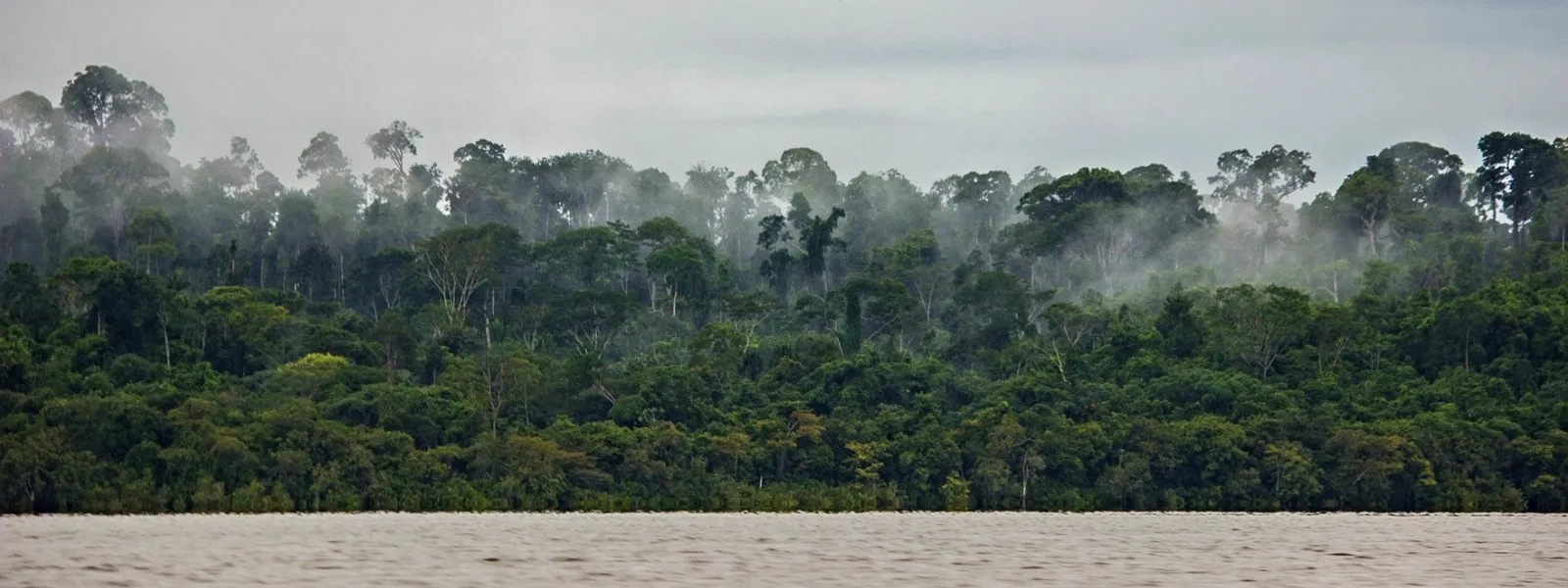
Amazon Watch / Maíra Irigaray
Barragem de Belo Monte no rio Xingu: 10 anos de impactos na Amazônia e de busca por reparações
A usina hidrelétrica de Belo Monte causou um desastre ambiental e social no coração da Amazônia: um dos ecossistemas mais importantes do planeta.
Essa situação só piorou desde que a usina começou a operar em 2016. A busca por justiça e reparação para as comunidades indígenas e ribeirinhas afetadas continua até hoje.
Em 2011, a Comissão Interamericana de Direitos Humanos (CIDH) concedeu a essas comunidades medidas de proteção, que até hoje não foram totalmente implementadas pelo Estado brasileiro.
E, desde junho daquele mesmo ano, a CIDH mantém um processo contra o Estado por sua responsabilidade internacional no caso.
A CIDH pode encaminhar o caso à Corte Interamericana de Direitos Humanos, que tem o poder de emitir uma sentença condenatória contra o Estado brasileiro.
Consulta o expediente de fatos do caso
Após 10 anos de operação da usina hidrelétrica e mais de 15 anos de violações de direitos humanos documentadas, é hora da justiça ser feita para as comunidades afetadas.
Leia a carta aberta das organizações que levam o caso à CIDH
Leia nosso comunicado à imprensa
Contexto
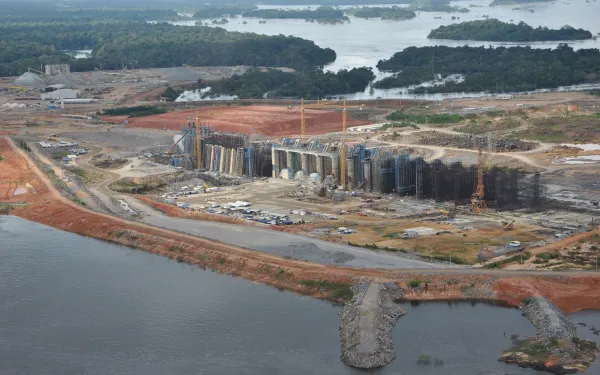
A usina hidrelétrica de Belo Monte — a quarta maior do mundo em capacidade instalada (11.233 MW) — foi construída no rio Xingu, no estado do Pará, norte do Brasil.
Foi inaugurada em 5 de maio de 2016, com uma única turbina. Naquela época, 80% do curso do rio foi desviado e 516 km² de terra foram inundados, uma área maior que a cidade de Chicago. Desse total, 400 km² eram de mata nativa. A usina começou a operar em plena capacidade em novembro de 2019.
Belo Monte foi construída e é operada pelo consórcio Norte Energia S.A., composto principalmente por empresas estatais. Foi financiada pelo Banco Nacional de Desenvolvimento Econômico e Social (BNDES), que aportou ao consórcio 25,4 bilhões de reais (aproximadamente US$ 10,16 bilhões), o maior investimento de sua história. Portanto, o BNDES também é legalmente responsável pelos impactos socioambientais associados ao projeto hidrelétrico.
Décadas de danos ambientais e humanos
As violações dos direitos humanos e a degradação da Amazônia remontam ao início do projeto. Em março de 2011, a Norte Energia iniciou a construção da barragem sem consulta adequada e sem o consentimento prévio, livre e informado das comunidades afetadas.
A construção levou ao deslocamento forçado de mais de 40.000 pessoas, rompendo laços sociais e culturais. O plano de reassentamento em Altamira — cidade diretamente afetada pelo projeto hidrelétrico — incluía moradias na periferia da cidade, sem serviços públicos adequados, moradias dignas para as famílias reassentadas e moradias diferenciadas para aqueles pertencentes a comunidades indígenas.
A operação da barragem de Belo Monte impôs uma seca permanente e artificial na Volta Grande do rio Xingu, agravada pelas secas históricas na Amazônia em 2023 e 2024. Como resultado, a morte de milhões de ovos de peixe foi documentada por quatro anos consecutivos (de 2021 a 2024) e, nos últimos três anos, não houve migração de peixes rio acima para desovar e se reproduzir. Assim, a pesca artesanal, principal fonte de proteína para os povos indígenas e comunidades ribeirinhas, foi severamente afetada: o consumo de peixe caiu de 50% para 30% do total de proteínas consumidas, sendo substituído por alimentos processados. Em suma, houve um colapso ambiental e humanitário que resultou no colapso da pesca como modo de vida tradicional, insegurança alimentar e falta de acesso à água potável para milhares de famílias, empobrecimento e doenças.
Além disso, a construção da barragem aumentou o desmatamento e intensificou a extração ilegal de madeira e a insegurança em terras indígenas e tribais, colocando em risco a sobrevivência dessas comunidades. Outra consequência foi o agravamento da pobreza e dos conflitos sociais, bem como a sobrecarga dos sistemas de saúde, educação e segurança pública em Altamira, cidade considerada a mais violenta do país em 2017, onde houve aumento do tráfico de pessoas e da violência sexual. Também foram registrados casos de violência contra defensores de direitos humanos envolvidos no caso.
Em 2025, durante a 30ª Conferência das Nações Unidas sobre Mudanças Climáticas (COP30), realizada no Brasil, o Ministério Público Federal classificou os danos causados por Belo Monte como ecocídio.
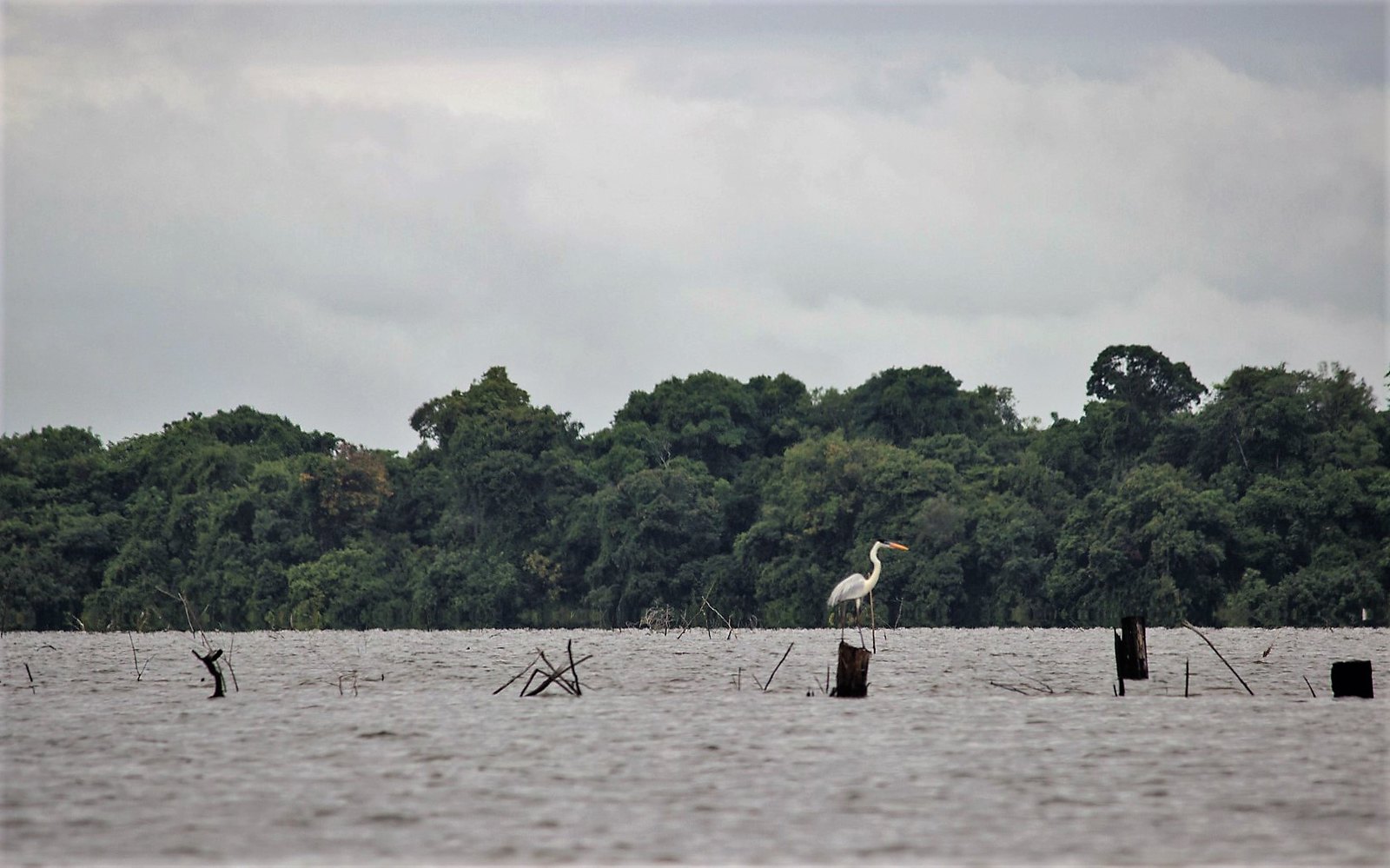
Foto: Amazon Watch / Maíra Irigaray.
A busca por justiça e reparação
Ao longo dos anos, o Ministério Público Federal do Pará, a Defensoria Pública e organizações da sociedade civil impetraram dezenas de ações judiciais em tribunais brasileiros para contestar as diversas irregularidades do projeto, bem como seus impactos. A maioria das ações permanece sem solução, algumas há mais de 10 anos.
Essas ações não obtiveram sucesso porque o governo federal tem reiteradamente anulado decisões favoráveis às comunidades afetadas, recorrendo a um mecanismo pelo qual o presidente do Supremo Tribunal Federal pode suspender uma decisão judicial com base unicamente em argumentos genéricos como "interesse nacional" ou "ordem econômica".
Diante da falta de respostas eficazes em nível nacional, a AIDA — juntamente com uma coalizão de organizações aliadas — levou o caso à Comissão Interamericana de Direitos Humanos (CIDH) e, em 2010, solicitou medidas cautelares para proteger a vida, a integridade e a saúde das comunidades indígenas afetadas.
Em 1º de abril de 2011, a CIDH concedeu essas medidas e solicitou ao Estado brasileiro a suspensão das licenças ambientais e de quaisquer obras de construção até que as condições relativas à consulta prévia e à proteção da saúde e integridade das comunidades fossem atendidas.
E, em 16 de junho de 2011, apresentamos uma denúncia formal à CIDH — juntamente com o Movimento Xingu Vivo Para Siempre, a Coordenação das Organizações Indígenas da Amazônia Brasileira, a Diocese de Altamira, o Conselho Missionário Indígena, a Sociedade Pará de Defesa dos Direitos Humanos e a Global Justice — contra o Estado brasileiro por sua responsabilidade internacional nas violações de direitos humanos contra os povos afetados neste caso. A denúncia foi apresentada em dezembro de 2015.
Em 3 de agosto de 2011, a CIDH modificou as medidas cautelares para solicitar — em vez da suspensão de licenças e obras — a proteção dos povos que vivem em isolamento voluntário, a saúde das comunidades indígenas e a regularização e proteção das terras ancestrais.
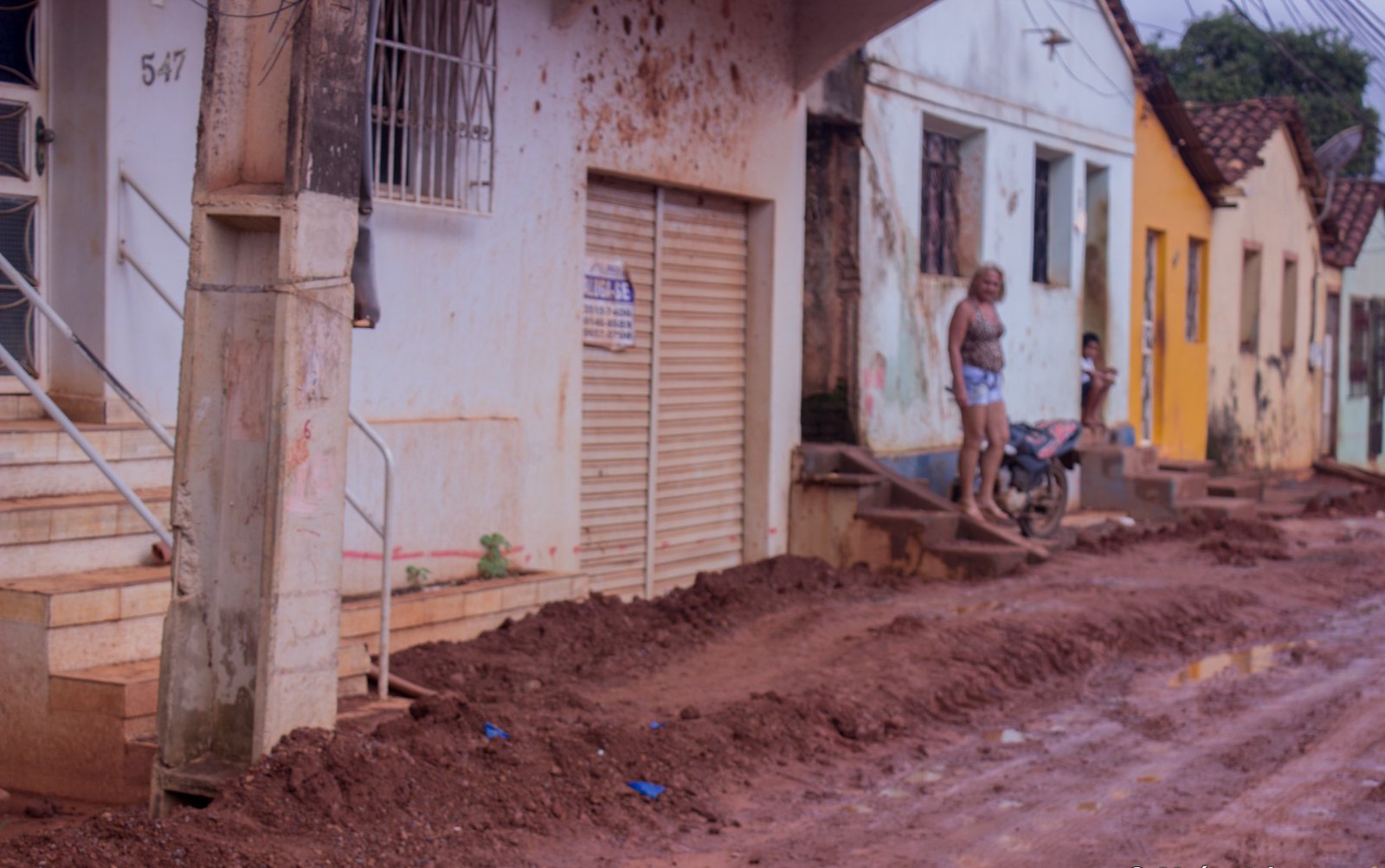
Foto: Amazon Watch / Maíra Irigaray.
Situação atual
As medidas de proteção concedidas pela CIDH permanecem em vigor, mas o Estado brasileiro não as cumpriu integralmente, relatando apenas ações genéricas. As comunidades documentaram as contínuas violações de seus direitos. A situação que motivou o pedido dessas medidas — o risco à vida, à segurança e aos meios de subsistência das comunidades — persiste e se agravou com a usina hidrelétrica operando em plena capacidade e com as recentes secas extremas na Amazônia.
Além do ocorrido em Belo Monte, existe o risco de maiores danos sociais e ambientais decorrentes da implementação de outro megaprojeto de mineração na Volta Grande do Xingu. Lá, a empresa canadense Belo Sun pretende construir a maior mina de ouro a céu aberto do Brasil.
Os impactos sinérgicos e cumulativos da usina e da mina não foram avaliados. O Estado excluiu povos indígenas, comunidades ribeirinhas e comunidades camponesas do processo de licenciamento ambiental do projeto. Apesar disso, dos protestos indígenas e de outras irregularidades em torno do projeto, o governo do estado do Pará autorizou formalmente a mina em abril de 2026.
Belo Monte, assim como outras usinas hidrelétricas, agrava a emergência climática ao gerar emissões de gases de efeito estufa em seu reservatório. Além disso, é ineficiente diante das secas prolongadas e intensas causadas pela crise, pois perde capacidade de geração de energia.
O caso perante a Comissão Interamericana
Em outubro de 2017, a CIDH anunciou que decidiria conjuntamente sobre a admissibilidade (se o caso preenche os requisitos para admissão) e o mérito (se houve, de fato, violação de direitos humanos) da denúncia internacional contra o Estado brasileiro.
Quinze anos após a apresentação da denúncia, as comunidades afetadas e as organizações que as representam ainda aguardam essa decisão. Caso a CIDH conclua que houve violações de direitos humanos e emita recomendações que o Estado brasileiro não cumpra, poderá encaminhar o caso à Corte Interamericana de Direitos Humanos, cujas decisões são vinculativas.
Uma possível decisão da Corte Internacional de Direitos Humanos neste caso estabeleceria um precedente jurídico regional em relação aos direitos dos povos indígenas e ribeirinhos, à participação pública em megaprojetos e à responsabilidade do Estado no contexto da crise climática. Isso é particularmente relevante à luz do Parecer Consultivo nº 32 da Corte, que reafirmou as obrigações dos Estados de proteger pessoas e comunidades em todo o continente da emergência climática.
Partners:
Related projects
Belo Monte noncompliant with conditions for operation, says environmental authority
Altamira, Brazil. In their technical analysis of the Belo Monte Dam released yesterday, the Brazilian Institute of Environment and Renewable Natural Resources (IBAMA) concluded that the conditions required to approve Belo Monte’s Operating License have not yet been met. Ten of twelve conditions identified by IBAMA as pending compliance are considered essential for granting the license. Until the operating consortium, Norte Energía, addresses these conditions, the project will be delayed and the dam’s reservoir will not be flooded. “We welcome IBAMA’s thorough evaluation of Belo Monte, a project that has already had severe impacts on the environment and human rights,” said Astrid Puentes Riaño, co-director of AIDA. “Moving forward, it is crucial that all conditions are met, and measures to protect the people and environment of the Xingú River basin are fully implemented before the license may be granted.” The Interamerican Association for Environmental Defense (AIDA) has for more than 5 years supported indigenous and local communities and organizations in their fight to denounce the irregularities of the Belo Monte project. The conclusions outlined by IBAMA reinforce the arguments of those who have long opposed the dam for its negative socio-environmental impacts. “If the Brazilian government approves Belo Monte’s operating license without first guaranteeing the protection of the environment and human rights, they would be violating their international commitments,” said María José Veramendi Villa, AIDA attorney. AIDA and partner organizations have long argued that conditions do not exist for the approval of licenses for Belo Monte. Essential services that would guarantee minimum rights to the displaced population remain outstanding, including potable water and health and sanitation services. In 2011, the Inter-American Commission for Human Rights granted precautionary measures in favor of affected indigenous communities. The severity of the project’s human rights violations have been reinforced in a report by the Socio-Environmental Institute (ISA) of Brazil, to which AIDA contributed, as well as in information gathered by the health and indigenous protection authorities and the Brazilian Public Ministry. AIDA expects that IBAMA’s technical report will be taken into consideration when making the final decision on the dam’s operating license. The outright denial of the license would serve as a paradigm for future mega-projects planned in the Brazilian Amazon, as well as other parts of the region, sending a clear message that economic development projects must not engage in human rights violations.
Read more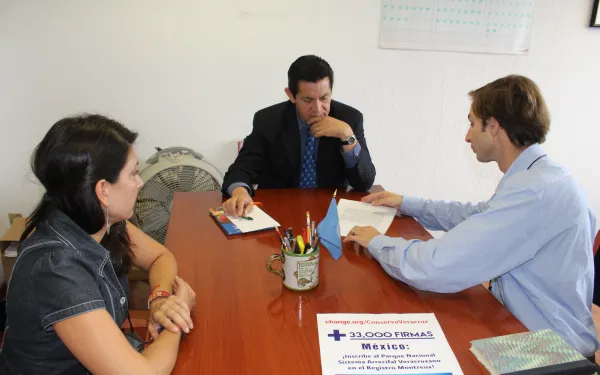
Nearly 37,000 people urge SEMARNAT to protect Mexico’s natural treasures
The Los Tuxtlas Biosphere Reserve and the Veracruz Reef System are at risk from the expansion of the Port of Veracruz, authorized by SEMARNAT. Signatures to protect the important natural sites were collected on a citizens’ petition at change.org/saveveracruz A coalition of organizations has alerted the Scientific Committee of the Inter-American Commission for the Protection of Sea Turtles of the threat the project poses to sea turtles. Yesterday civil society organizations delivered more than 36,000 signatures urging Mexico’s Secretary of Environment and Natural Resources (SEMARNAT) to revoke an environmental permit granted for the extraction of basaltic rock from Los Tuxtlas Biosphere Reserve for the expansion of the Port of Veracruz. The highly successful citizens’ petition was delivered to José Luis Juan Bravo Soto, the Director of Citizen Services at SEMARNAT, and David Gutiérrez Carbonell, the Director General of Conservation Development at CONANP. The authorization granted to the Port Authority of Veracruz by the government in June 2014 would increase the damage the port has historically cause to the surrounding coral reef ecosystem, and put in danger two of the most important natural treasures in Mexico: the Los Tuxtlas Biosphere Reserve and the Veracruz Reef System. The Interamerican Association for Environmental Defense (AIDA), the Centro Mexicano de Derecho Ambiental, A.C. (CEMDA) and the organizations Resistencia Organizada por la Conservación Ambiental (La Roca) and the Asamblea Veracruzana de Iniciativas y Defensa Ambiental (LAVIDA) stated in a press conference that the Veracruz Reef System is already in grave danger due to SEMARNAT’s approval, without sufficient technical and scientific information, of a plan to modify the borders of the Veracruz Reef System National Park in order to expand the Port of Veracruz. Permission granted for the extraction of basaltic rock from Los Tuxtlas Biosphere Reserve for construction of the port’s new jetties conflicts with the Reserve’s management program, which expressly prohibits the use of explosives in the area. This region contains one of the last rainforests in Mexico, serves as a natural barrier against hurricanes and tropical storms, provides a refuge to millions of plant and animal species, and is home to many communities. In addition to actions taken so far, on September 22 AIDA and CEMDA presented a report before the Scientific Committee of the Inter-American Convention for the Protection and Conservation of Sea Turtles (IAC), detailing the direct and indirect impacts that the expansion of the Port of Veracruz would have on sea turtles and their habitat. The Veracruz Reef System is the largest coral ecosystem in the Gulf of Mexico. It works as a natural barrier against waves and storms; in 2010 it protected the city of Veracruz from Hurricane Karl. It is also home to a large variety of flora and fauna. The coasts of Veracruz, including the reef system, receive at different times of year five species of neotropical sea turtles. The Port Authority said in its environmental impact statement that the project “will never have a direct effect on protected species.” The statement, however, failed to provide protection measures for sea turtles, particularly for the hawksbill turtle, listed as a threatened species under both the Sea Turtle Convention and Mexican law. This species is found in the Veracruz Reef System National Park and has migration routes throughout the Gulf of Mexico. SEMARNAT authorized the expansion project in December 2013, without requiring a special management plan for the conservation of the hawksbill sea turtle. The authorization, therefore, runs contrary to the obligation of the Mexican government to promote the protection, conservation and recovery of sea turtle populations and the habitat on which they depend, particularly spawning and feeding grounds. It does nothing to restrict human activities that could affect the turtles, particularly during periods of breeding and incubation. The Veracruz Reef System was declared a Natural Protected Area in 1992 and was registered, in 2004, as a Wetland of International Importance in accordance with the characteristics established by the Ramsar Convention. The authorization granted by the environmental authority therefore contravenes national and international standards and does not properly consider the cumulative impacts that the project would have on the ecosystem. It also ignores the Mexican government’s responsibility to protect the biodiversity found within its territory, and disregards the National Biodiversity Strategy and provisions of the Convention on Biological Diversity. Sign the petition at: change.org/saveveracruz Photos of the delivery of signatures: http://www.cemda.org.mx/?p=4555
Read more
A World Without Ozone
By Laura Yaniz In Mexico, on September 16th, people rest from a night of partying, and so does the sky. In that country, Independence Day begins contaminated by the excessive fireworks used in patriotic celebrations. The irony is that, worldwide, that same day is reserved to celebrate the preservation of the ozone layer. What would have happened had we not decided to care for the ozone? Each 16th of September, Mexico City wakes up with its air hanging thick and dirty. Although the streets are nearly empty, the government maintains a “Don’t Drive Today” program and sanctions distracted drivers whose plate numbers are forbidden from driving that day. I call them “distracted” because on holidays, the government often suspends the “Don’t Drive Today” program, but not on September 16th. On this day, everyone must recover from his or her hangover, including the sky. This is a result of September 15th, when Mexico celebrates its “motherland night.” In cities across the country, thousands of fireworks are launched from plazas packed full of partiers. And so, the next day, the sky hangs even greyer than usual. It’s a bit ironic that September 16th is International Day for the Preservation of the Ozone Layer. More ironic still is that a Mexican named Mario Molina was part of the group of scientists who discovered what was causing the hole in the ozone layer: chemicals expelled into the air by human beings. The discovery became a turning point in the war against gases that damage our atmosphere. It led to diplomatic actions worldwide: the Montreal Protocol was signed with the specific purpose of protecting the ozone, prohibiting the use of chlorofluorocarbons (CFCs, commonly known as Freon) and spurring the elimination of other harmful substances. “My first environmental panic,” is how Florencia Ortúzar, AIDA climate change attorney, remembers it. And why not? Destroying the ozone meant weakening protection against the UV rays that cause skin cancer and cataracts, not to mention the fact that extremely dangerous radiation could cause drastic changes in the ecosystems we rely upon in our own lives. We’ve had 40 years of scientific investigation into the effects of chemicals on the ozone, and 30 years of global and political actions to confront them. Have they mattered at all? Yes. The world we avoided NASA published a simulation that explains the world that might have been had we not acted so quickly to protect our ozone: By 2020, 17 percent of all ozone would have disappeared on a global level. By 2040, UV radiation would have reached an index of 15 in mid-latitudes. An index of 10 is considered extreme and can cause burns within 10 minutes. By 2065, we would have lost two-thirds of the ozone, causing never-before-seen UV radiation levels, which could cause burns in only 5 minutes of exposure. Would we have reached 2100? NASA didn’t say. The hope: What we can do Richard Stolarski, a scientific pioneer in ozone studies and the co-author of NASA’s simulation, expressed his admiration for the global work to confront the problem: “I didn’t think the Montreal Protocol would work, it was very naïve in terms of politics. Now it is a remarkable international agreement and should be studied by all those involved in seeking a global agreement on global warming.“ Certainly, what was achieved was inspirational, because a catastrophic situation was avoided. But we can’t let down our guard just yet. When the Montreal Protocol prohibited chlorofluorocarbons, industry replaced them with hydrofluorocarbons. Like the CFCs they replaced, HFCs are potent greenhouse gases. As part of our Climate Change program, we work to reduce emissions of short-lived climate pollutants, which include hydrofluorocarbons. Although they represent only a small percentage of greenhouse gases, their production and use are growing and will continue to increase if action is not taken. That’s why at AIDA we are working to identify ways to strengthen regulations that reduce emissions of short-lived climate pollutants. Because these pollutants persist in the atmosphere only briefly, reducing their concentrations can provide near-term climate benefit, giving us more time to implement renewable energy and efficiency programs that lessen the severity of climate change. Are you with us?
Read more